

P0202 on 2009-2014 Chevrolet Traverse: Injector Circuit Malfunction Causes and Fixes
P0202 on a Chevy Traverse indicates an electrical fault with the fuel injector in cylinder #2. The most common cause is a failed fuel injector, followed by wiring issues. Because the 3.6L LLT is a direct-injection engine, the injectors are located under the intake manifold, making replacement a more labor-intensive job. Expect to pay $70-$150 for a new injector, but shop costs can range from $978 to $1,401 due to labor.
- P0202 specifically points to an electrical problem with the fuel injector circuit for cylinder #2, not a spark or compression issue.
- The most likely culprit is a failed fuel injector, but due to the high labor cost of replacement (requiring intake manifold removal), thorough diagnosis is critical.
- Always inspect the wiring and connector at the #2 injector for damage before buying parts, as harness chafing is a known issue documented in GM TSB PIP4924D.
- Driving with this code is not advised as it will cause a constant misfire (P0302) that can lead to expensive catalytic converter damage.
- If replacing one injector, it is highly recommended to replace all six due to the labor involved in accessing them.
What's Unique About the 2009-2014 Chevrolet TRAVERSE
For the 2009-2014 Traverse with the 3.6L V6 direct-injection engine, this code is a specific electrical fault indicator for the cylinder 2 injector. Unlike port-injected engines, the injectors are located under the upper intake manifold, significantly increasing the labor required for replacement. While the injector itself is a common failure point, GM has issued a Technical Service Bulletin (TSB #PIP4924D) that includes P0202 in a long list of injector codes that can be caused by wiring issues. The bulletin specifically advises technicians to inspect the harness for chafing against the intake plenum, valve cover bolts, and fuel lines before replacing expensive components.
Diagnostic Flowchart
Tap your situation to follow the diagnostic path that matches what you're seeing on this vehicle.
Symptoms You May Notice
- Check Engine Light is on
- Rough or shaking idle
- Engine misfire, which may feel like a stumble or hesitation
- Poor acceleration and loss of power
- Reduced fuel economy
- Smell of gasoline from the exhaust
- Flashing Check Engine Light during misfire events
- Replacing the spark plug or ignition coil for cylinder #2. While these components cause a misfire code (P0302), they do not cause an injector *circuit* code like P0202. The P0202 code is specifically an electrical fault detected by the PCM related to the injector's control circuit.
Most Likely Causes
- Faulty Fuel Injector #2 🔴 High Probability → Shop Fuel Injector The 3.6L LLT uses direct injection, where injectors face high pressure and temperatures inside the combustion chamber. Over time, the internal coil windings can fail, creating an open circuit, or they can become clogged with carbon deposits.
How to confirm: After verifying the wiring is intact, the definitive test is to swap the suspect injector with an adjacent one (e.g., swap injector #2 with #4). This requires removing the intake manifold. Clear the codes and run the engine. If the code changes to P0204 (for cylinder #4), the injector is faulty. You can also test the injector's internal resistance with a multimeter before removal; an open circuit (infinite resistance) or a reading significantly different from other injectors indicates failure.
Typical fix: Replace the failed fuel injector. Due to the high labor cost to access the injectors, it is strongly recommended to replace all six injectors at the same time, especially on higher mileage vehicles, to prevent future failures and ensure balanced fuel flow.
Est. part cost: $70-$150 for a single OEM-quality injector - Wiring Harness or Connector Issue 🟡 Medium Probability The engine bay is a harsh environment. GM TSB #PIP4924D specifically calls out that the fuel injector wiring harness is prone to rubbing through (chafing) against the intake plenum, valve cover bolts, and fuel lines, causing an open or short in the circuit.
How to confirm: Visually inspect the wiring harness leading to the fuel injectors, paying close attention to the contact points mentioned in the TSB. Disconnect the connector at injector #2 and check for corrosion or backed-out pins. Use a noid light plugged into the connector; it should flash while cranking the engine, confirming a signal from the PCM. If there is no flash, and the injector itself tests good, the wiring is the likely culprit.
Typical fix: Repair the damaged section of wire or replace the pigtail connector. Ensure the connection is secure and use protective loom or reroute the harness slightly to prevent future chafing.
Est. part cost: $15-$40 for a connector pigtail - Faulty Powertrain Control Module (PCM) ⚪ Low Probability → Shop Engine Control Module (ECM) While less common, the injector driver circuit within the PCM can fail. This is more likely if the injector or wiring shorts to ground, potentially damaging the driver.
How to confirm: This is a diagnosis of exclusion. It should only be considered after the fuel injector and the entire wiring circuit from the PCM to the injector have been tested and confirmed to be good. If a noid light shows no pulse at the injector connector and the wire shows no breaks (good continuity) back to the PCM, the PCM's internal driver has likely failed.
Typical fix: The PCM must be replaced and programmed for the vehicle by a dealer or a specialized shop.
Est. part cost: $300-$700+
Diagnosis Steps
- Scan the vehicle's computer for all stored trouble codes. Confirm P0202 is present, and note the almost certain presence of P0302.
- Locate cylinder #2 on the 3.6L V6 engine. On the transversely mounted Traverse engine, the front bank (closer to the radiator) contains cylinders 2, 4, and 6, from the passenger side to the driver side. Cylinder #2 is at the front, on the passenger side.
- Visually inspect the engine wiring harness for any obvious signs of damage, especially where it might rub against the intake manifold or valve covers, as noted in TSB PIP4924D.
- If access allows, disconnect the connector for injector #2 and check for corrosion or loose pins.
- Use a 'noid light' to test for a signal. Plug it into the injector #2 harness connector and crank the engine. The light should flash rapidly. If it does not flash, the problem is in the wiring or the PCM. If it does flash, the PCM and wiring are likely good, pointing towards the injector itself.
- To definitively test the injector, the intake manifold must be removed. Once accessed, you can test the injector's resistance with a multimeter (typically 11-14 ohms) or swap it with another cylinder's injector (e.g., #4).
- After swapping injectors, reinstall the fuel rail and intake manifold, clear the codes, and run the engine. If the code returns as P0204, the injector you moved is faulty and needs replacement. If P0202 returns, the issue is in the wiring harness for cylinder #2 or the PCM.
Parts You'll Likely Need
- Fuel Injector
(OEM #12669384)— This is the most common failure point for a P0202 code. The internal coil winding fails, creating an open circuit.
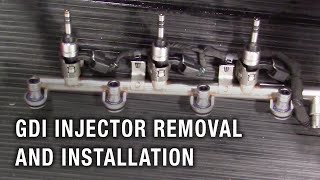
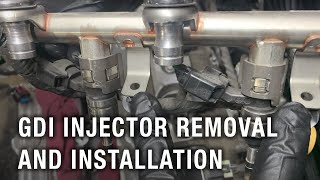
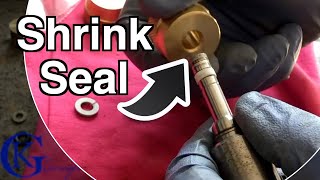
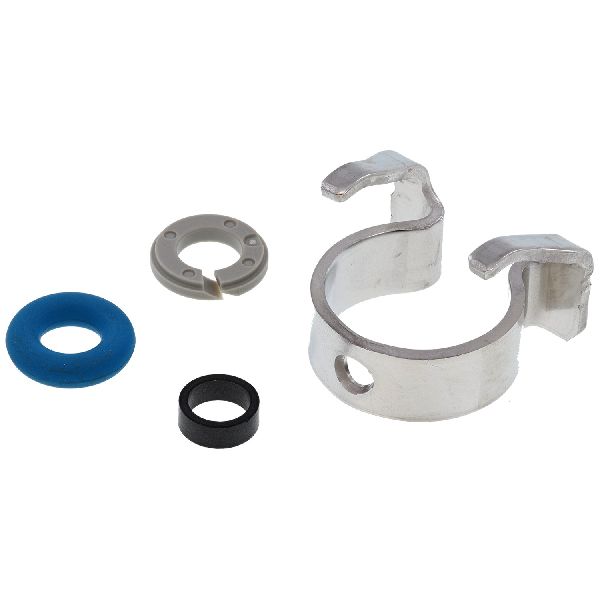
Trusted brands: ACDelco (OEM), Bosch, Standard Motor Products 🎬 Watch: How to properly replace direct injection fuel injector seals.
OEM price range: $100-$150
Aftermarket price range: $70-$120 - Upper and Lower Intake Manifold Gaskets — Required for the labor to access the fuel injectors.
Trusted brands: Fel-Pro, ACDelco, Mahle
OEM price range: $40-$60
Aftermarket price range: $25-$45
Related Codes That Often Appear With This One
- P0302 — P0302 means "Cylinder 2 Misfire Detected". Since a P0202 fault prevents the injector from delivering fuel, cylinder #2 cannot combust properly. This lack of combustion is detected by the crankshaft position sensor as a slowdown in rotation, triggering the P0302 misfire code almost every time.
- P0200 — P0200 is a general "Injector Circuit Malfunction" code. It may appear with P0202 if the issue is intermittent or if a wiring problem affects the entire injector bank.
Technical Service Bulletins (TSBs) & Recalls
- PIP4924D: Mentions that various DTCs including P0202 can be caused by wiring harness issues, leading to misfires. Instructs technicians to inspect for chafing against the intake, valve covers, and fuel lines before replacing injectors.
Platform-Specific Known Issues
- GM Technical Service Bulletin #PIP4924D is highly relevant, noting that codes P0201 through P0206 can be set due to the engine wiring harness rubbing through against the intake plenum, valve cover bolts, or fuel lines.
- The direct-injection (DI) nature of the 3.6L LLT engine means the fuel injectors are located under the intake manifold, requiring its removal for service. This makes the job significantly more labor-intensive (2.8-4+ hours) compared to port-injected engines.
Mechanic-Grade Diagnostic Values
- Fuel Injector Coil Resistance (2009-2011 3.6L LLT Engine) — expected: 11.8 - 12.6 Ohms. Failure: A reading of infinity (Open Loop), near zero (short), or significantly outside this range indicates a failed injector.
- Fuel Injector Coil Resistance (2012-2014 3.6L LFX Engine) — expected: 1.2 - 1.8 Ohms. Failure: A reading outside this range indicates a failed injector. Note the significantly lower resistance compared to the earlier LLT engine.
- High-Pressure Fuel System Pressure (at idle) — expected: 1.9-5.0 MPa (276-725 psi). Failure: Pressure significantly outside this range could indicate a problem with the high-pressure fuel pump or sensor, though this would typically set other codes.
- Low-Pressure Fuel System Pressure (Key On) — expected: 345-414 kPa (50-60 psi). Failure: Pressure below this range points to a weak in-tank fuel pump or a leak in the low-pressure side.
Scan Tool Commands That Help
- GDS2 (GM Dealer Software) or equivalent professional scan tool: Fuel Injector Balance Test — After confirming the electrical circuit is intact (wiring is good, noid light flashes), this test can identify a mechanically failed injector. The tool commands each injector to fire and measures the drop in fuel rail pressure. An injector causing a significantly different pressure drop than the others is likely clogged or leaking.
Wiring & Ground Locations
- ECM (Engine Control Module) — Located on the front of the engine, mounted to the right (Bank 1) valve cover.. This is the computer that controls the fuel injectors. All circuit tests ultimately lead back to the pins on this module. Its location is necessary for advanced wiring diagnostics.
- G103 / G104 — Primary engine grounds, typically located on the rear of the cylinder heads near the bellhousing, or on the front of the cylinder heads.. A loose or corroded ground at these points can cause a wide range of erratic electrical issues and voltage-related fault codes. While not a direct cause of a single injector circuit code, ensuring they are clean and tight is a crucial step in any electrical diagnosis.
- Injector Harness to ECM Connector — The main engine harness connector (X1 on LLT) at the ECM.. For advanced diagnostics, a continuity test can be performed between the pin for injector #2 at this connector and the pin at the injector itself to definitively rule out a break in the wire.
Real Owner Repair Stories
- GM Preliminary Information Bulletin analysis (2009-2014 Chevrolet Traverse (and platform mates)) — Engine misfire, rough running, and various injector group DTCs (e.g., P2155).
❌ Tried (didn't work) Replacing fuel injectors without checking wiring, Replacing the ECM without checking wiring
✅ What actually fixed it The wiring harness was found chafed on a metal tab of the EGR valve gasket. The fix was to repair the damaged wires and bend the gasket tab over to prevent it from happening again. - YouTube channel 'DCxCrush' (2010-2014 Chevrolet Camaro (with same 3.6L engine)) — Check Engine Light with codes P0202 and P0302, engine misfire.
❌ Tried (didn't work) Replacing the spark plug for cylinder #2, Swapping the ignition coil from cylinder #2 to #4 (code did not move)
✅ What actually fixed it Replacing the fuel injector for cylinder #2 resolved the misfire and cleared the codes.
OEM Part Supersession History
12638530→12669384— Standard part update by GM, likely for improved reliability or manufacturing process change.
Heads up: These parts are for the LLT engine (2009-2011). While they may physically fit, they should not be used on the LFX engine (2012-2014) which specifies different injectors due to its low-impedance design.
Model Year Variations Within This Range
- 2009-2011: These models use the 3.6L LLT V6 engine. The direct fuel injectors are high-impedance, with a coil resistance of approximately 11.8-12.6 Ohms.
- 2012-2014: These models use the updated 3.6L LFX V6 engine. The direct fuel injectors are low-impedance, with a coil resistance of approximately 1.2-1.8 Ohms. Using the resistance specification from the earlier LLT engine will lead to a misdiagnosis.
- 2013-2014: The Traverse received a significant cosmetic facelift for the 2013 model year, including new front/rear fascias and an updated interior with the MyLink infotainment system. However, the powertrain (3.6L LFX V6 and 6-speed automatic) was a carryover from the 2012 model.
Helpful Videos

We Have This Part in Stock


The information in this article is provided for general reference and educational purposes only. Vehicle specifications, procedures, and part compatibility can vary by production date, trim level, and region. Always consult your vehicle's factory service manual and verify part numbers before purchasing or performing repairs. Safety-critical components such as airbags, seat belts, and braking systems should be installed by a qualified professional.
- Chevrolet TRAVERSE:
- 🧭 Diagnostic Flowchart
- 🎬 Helpful Videos
- 🛍️ Shop This Part
- What's Unique About the 2009-2014 Chevrolet TRAVERSE
- Symptoms You May Notice
- Most Likely Causes
- Diagnosis Steps
- Parts You'll Likely Need
- Related Codes That Often Appear With This One
- Technical Service Bulletins (TSBs) & Recalls
- Platform-Specific Known Issues
- Mechanic-Grade Diagnostic Values
- Scan Tool Commands That Help
- Wiring & Ground Locations
- Real Owner Repair Stories
- OEM Part Supersession History
- Model Year Variations Within This Range
- 🎟️ Get 5% Off