

P0202 on 2004-2008 Chrysler Pacifica 3.5L: Injector Circuit Malfunction Causes and Fixes
This code means there's an electrical fault with the fuel injector for cylinder #2. The most likely cause is a failed fuel injector, followed by a wiring issue. On this Pacifica, cylinder #2 is easy to access on the front bank, making this a straightforward DIY repair. Expect to pay $40-$90 for a new injector.
- P0202 indicates an electrical problem with the cylinder 2 fuel injector, not a spark or compression issue.
- The most likely cause is a bad fuel injector, which is a relatively inexpensive part.
- On the 2004-2008 Pacifica 3.5L, cylinder #2 is the front-most cylinder on the passenger side and is easy to access without removing the intake manifold.
- Always test the circuit with a noid light or by swapping injectors before buying parts to avoid misdiagnosis.
- Do not drive extensively with this code, as it can lead to costly catalytic converter damage.
What's Unique About the 2004-2008 Chrysler Pacifica
The 2004-2008 Chrysler Pacifica uses a transverse (front-wheel-drive style) engine layout for the 3.5L V6. This is a major advantage for this specific repair. Unlike other Chrysler vehicles that use the same engine in a longitudinal (rear-wheel-drive) layout (like the Chrysler 300 or Dodge Charger), the front bank of cylinders is easily accessible. Cylinder #2 is located on this front bank, meaning you do not need to remove the large upper intake manifold to access and replace the fuel injector, which significantly simplifies the job.
Symptoms You May Notice
- Check Engine Light is on
- Engine misfires, which may feel like shaking or stumbling
- Rough or unstable idle
- Hesitation or lack of power during acceleration
- Reduced fuel economy
- Strong fuel smell from the engine bay or exhaust
- Replacing the spark plug or ignition coil for cylinder 2. While these parts can cause a misfire code (P0302), they will not cause an injector circuit code like P0202. If P0202 is present, the fault is electrical and related to the fuel injector or its circuit. 🎬 Watch this video on diagnosing and fixing P0202 codes.
Most Likely Causes
- Failed Cylinder 2 Fuel Injector 🔴 High Probability → Shop Fuel Injector The internal electronic coil within the injector can fail after millions of heat and vibration cycles, creating an open or short circuit. This is a common failure mode for fuel injectors of this era and mileage.
How to confirm: Swap the fuel injector from cylinder #2 with an adjacent one (e.g., cylinder #4). Clear the codes and run the engine. If the code changes to P0204, the injector is confirmed bad. Alternatively, disconnect the injector and measure its resistance with a multimeter; a good injector should read around 12-14 ohms. An open circuit (infinite resistance) or a dead short (zero resistance) indicates a failed injector.
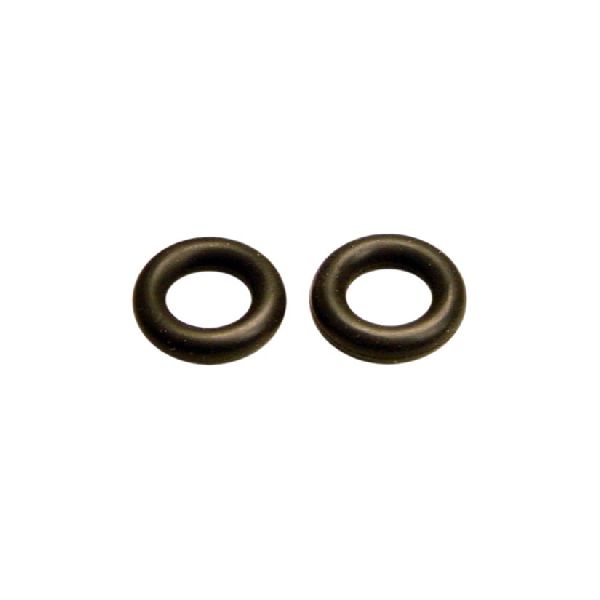
Typical fix: Replace the faulty fuel injector. It's good practice to replace the O-rings for any injectors that are removed and apply a small amount of silicone paste to the new O-rings before installation.
Est. part cost: $40-$90 - Wiring Harness or Connector Issue 🟡 Medium Probability The wiring harness is exposed to engine heat and vibration, which can cause wires to chafe, break, or corrode over time. The plastic locking tab on the injector connector can also become brittle and fail, leading to a poor connection. A known issue on some 3.5L platforms is the engine wiring harness chafing on the left transaxle mount, which can cause a short.
How to confirm: Visually inspect the wiring going to the cylinder 2 injector. With the engine running, carefully wiggle the connector and harness to see if it affects the idle. Use a 'noid light' plugged into the injector connector; it should flash steadily as the engine runs, confirming the PCM is sending a signal. 🎬 See this quick hack for testing fuel injectors yourself. If it doesn't flash, a wiring problem between the PCM and the connector is likely.
Typical fix: Repair the damaged section of wire or replace the injector connector pigtail. Protect the repair with wire loom.
Est. part cost: $10-$30
Rare But Worth Checking
- Faulty Powertrain Control Module (PCM): → Shop Engine Control Module (ECM) This is the least likely cause. The internal driver circuit (transistor) for the injector can fail within the PCM. This should only be considered after the injector and wiring have been definitively ruled out as the cause. A PCM failure is sometimes indicated by multiple injector circuit codes appearing simultaneously (e.g., P0201, P0202, P0203, etc.).
Diagnosis Steps
- Scan the vehicle for codes to confirm P0202 and note any other codes, like P0302.
- Identify Cylinder #2. On the Pacifica's 3.5L V6, the front bank of cylinders (near the radiator) is numbered 2, 4, 6, from the passenger side to the driver's side. Cylinder #2 is the one closest to the passenger side in the front.
- Visually inspect the wiring harness and connector for the #2 fuel injector. Look for any signs of melting, chafing, or corrosion. Pay attention to where the harness might rub against other components, particularly the left transaxle mount.
- Perform a 'wiggle test' by starting the engine and carefully moving the connector and wiring for the #2 injector to see if the idle changes, indicating a loose connection.
- Use a noid light to test the injector connector. Unplug the injector and plug in the noid light. Start the engine. The light should flash steadily. If it flashes, the PCM and wiring are likely good, and the injector itself is the prime suspect. If it does not flash, the problem is in the wiring or the PCM.
- If the noid light flashes, confirm a bad injector by swapping it. Swap the #2 injector with the #4 injector (the middle one on the same bank). Clear the codes and drive the vehicle. If the code returns as P0204, the injector is faulty and must be replaced.
- If the noid light does not flash, use a multimeter to check for continuity on both wires running from the injector connector back to the PCM connector to find a potential break in the harness. You should also check for 12V power on one of the pins in the connector with the key on.
- If wiring and the injector are confirmed good, the final step is to suspect a faulty PCM injector driver. This is rare and should be the last resort.
Parts You'll Likely Need
- Fuel Injector
(OEM #04591986AA (supercedes 04861615AA, fits 2004-2008))— This is the most common component to fail, causing an open or short in the internal coil. Part number 04591986AA is used across many Chrysler V6 engines from this era.
Trusted brands: Bosch, Mopar, Standard Motor Products
OEM price range: $90-$150
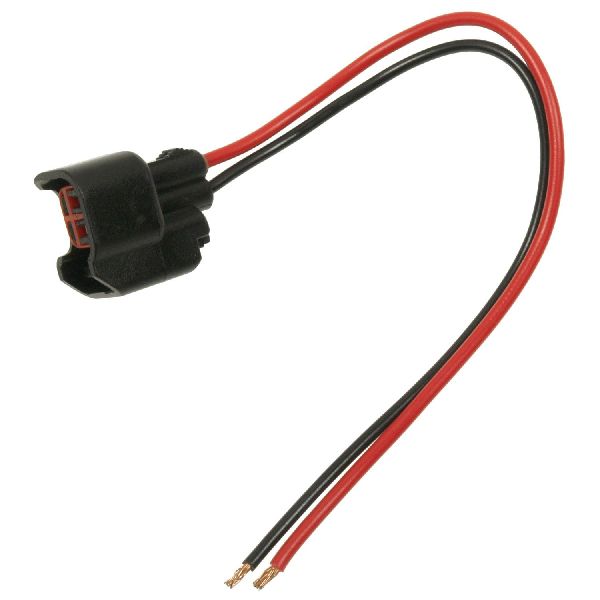
Aftermarket price range: $40-$90 - Fuel Injector Connector Pigtail — If the wiring or connector is damaged at the injector, replacing the pigtail is the standard repair. The locking tab often becomes brittle and breaks.
Trusted brands: Dorman, Standard Motor Products
OEM price range: $20-$40
Aftermarket price range: $10-$25
Related Codes That Often Appear With This One
- P0302 — This code means 'Cylinder 2 Misfire Detected.' Since P0202 indicates a fuel delivery problem for cylinder 2, a misfire is a direct and expected consequence.
Technical Service Bulletins (TSBs) & Recalls
- TSB 18-031-03: While not for P0202 specifically, this TSB addresses a rough idle after a hot soak on some Chrysler products with the 4.0L engine, caused by heat from the exhaust manifold creating a vapor lock in injector #3. It calls for installing a fuel injector insulator sleeve. This highlights that injector heat-related issues are a known concern on similar Chrysler engines.
Platform-Specific Known Issues
- The main engine wiring harness on the 3.5L can sometimes rub against the front of the engine or other components, causing chafing that can lead to a short or open in the injector circuit. Careful inspection of the harness routing is recommended during diagnosis. A specific recall-related issue 🎬 Watch this step-by-step Chrysler Pacifica injector repair guide. noted the harness could chafe on the left transaxle mount.
Mechanic-Grade Diagnostic Values
- Fuel Injector Coil Resistance — expected: 11.4 - 14.5 Ohms. Failure: Infinite resistance (OL) indicates an open coil; near-zero resistance indicates a shorted coil.
- Injector Connector Power Pin Voltage (Key On, Engine Off) — expected: 10V or more (should be close to battery voltage). Failure: Low or no voltage indicates a problem with the Auto Shutdown (ASD) relay or the power supply wiring.
- Scan Tool Injector Pulse Width (at warm idle) — expected: Typically 1.5 ms to 4.0 ms. Failure: A value of 0 or an unchanging value for cylinder 2 while other cylinders show normal pulsing points to a circuit or PCM driver issue.
Scan Tool Commands That Help
- Chrysler wiTECH or DRB III: Actuator Test: Fuel Injector — This bidirectional command allows a technician to command a specific injector to fire with the engine off. An audible click should be heard from the injector, confirming the PCM driver and wiring are capable of activating it. This can quickly isolate a dead injector from a wiring/PCM fault.
- Chrysler wiTECH or DRB III: Actuator Test: Auto Shutdown (ASD) Relay Control State — This command manually energizes the ASD relay, which supplies power to the fuel injectors. This allows for stable voltage testing at the injector's power supply pin without needing to crank or run the engine, helping to isolate power-side wiring issues.
Wiring & Ground Locations
- Injector #2 Control Wire — Runs from the fuel injector #2 connector to pin 9 of the C2 PCM connector.. This is the specific wire the PCM uses to ground-switch the injector to fire it. A break or short on this wire is a direct cause of P0202. The wire color is typically Brown/Dark Blue (BN/DB).
- Injector Power Feed Wire — Runs from the ASD relay to one of the two pins on each fuel injector connector.. This wire provides 12V+ power to all injectors. While a fault here would likely cause multiple injector codes, a poor connection at just the #2 injector could cause P0202. The wire color is typically Dark Green/Gray (DG/GY) on related platforms.
- G101 (Ground) — Lower left side of the engine block, sometimes a strap going to the transmission stud.. This is a primary engine and transmission ground. A poor connection here can cause a host of electrical issues, including erratic sensor readings and module behavior. A frayed strap at this location due to engine movement is a known issue.
- G102 / G103 (Ground) — Located on the left side of the engine compartment, sometimes on the cowl above the brake booster.. These are critical body and module grounds. A loose or corroded G103 ground has been documented to cause widespread electrical failure on the Pacifica, including loss of lights, radio, and instruments, mimicking a failed TIPM (fuse box).
Real Owner Repair Stories
- ChryslerForum.com user (2005 Chrysler Pacifica) — While driving, lost headlights, wipers, heat/AC, radio, and windows. Dash lights illuminated erratically. Car ran but was stuck in Park after shutting off.
❌ Tried (didn't work) Initially found a broken negative battery terminal clamp, replacing it fixed the issue temporarily.
✅ What actually fixed it The problem returned. The ultimate cause was a bad G103 ground connection. The user was initially unable to locate the specific ground wire but found a video detailing the diagnosis of identical symptoms which pointed to this ground point on the driver's side of the engine compartment. - DodgeForum.com user (2008 Dodge Grand Caravan 3.3L, 120,000 miles) — All six injector circuit codes (P0201-P0206) appeared simultaneously.
❌ Tried (didn't work) Replacing all six fuel injectors., Replacing the PCM with a reprogrammed unit (worked for 5 minutes, then codes returned)., Replacing the PCM a second time (worked for a week, then immobilizer light came on)., Replacing the PCM a third time (codes returned immediately).
✅ What actually fixed it The thread suggests the next step, after ruling out injectors and multiple PCMs, is to thoroughly inspect all power and ground feeds to the PCM and to check the large wiring connectors near the throttle body for corrosion or water intrusion, as this is a known issue. The final fix was not posted, but the story highlights that when multiple injector codes appear at once, the cause is almost certainly a common power, ground, or harness problem, not multiple failed injectors.
OEM Part Supersession History
04861615AA→04591986AA— Part update/revision by manufacturer.
Heads up: The part may also be listed under the remanufactured number RL591986AA.
Model Year Variations Within This Range
- 2004-2006: Primarily used the 3.5L V6 engine paired with a 4-speed automatic transmission.
- 2007-2008: The 3.5L engine was replaced by a new 4.0L SOHC V6 engine paired with a 6-speed automatic transmission in most trims. A 3.8L V6 was used in the base FWD model. While the P0202 code is similar, wiring and PCM specifics may differ for these later engine options.
Diagnostic Flowchart
Other Known Issues on This Vehicle
Issues unrelated to this code that are worth knowing about as an owner of this generation:
- Engine Cradle / Subframe Rust and Corrosion 🔴 High — Extremely common, especially in 'salt belt' states. Can occur as early as 94,000 miles. Leads to alignment issues, noise, and in severe cases, the engine can detach from the frame. (Ref: Multiple TSBs and a warranty extension were issued for 2004-2005 models, but were limited by date of manufacture, leaving many owners without coverage.)
- Premature Engine Mount Failure 🟠 Medium — Very common issue, particularly for the fluid-filled hydraulic mounts. Symptoms include excessive vibration at idle, and loud clunking noises when accelerating or shifting gears.
- Upper Intake Manifold Air Leaks 🟠 Medium → Shop Engine Intake Manifold — A chronic problem on the 3.5L V6 where the manifold tuning valve rod and bearings wear, causing a vacuum leak. This results in a distinct whistling or hissing noise from the engine bay and can set lean codes.
- Interference Engine Timing Belt Failure 🔴 High — The 3.5L V6 is an interference engine with a timing belt that has a 100,000-mile replacement interval. Failure to replace the belt, tensioner, and water pump as a set can lead to catastrophic engine damage if the belt breaks.
- Rocker Arm Shaft Retaining Pin Breakage 🟡 Low — Owners of the 3.5L V6 may experience a ticking noise from the engine caused by a broken retaining pin on the rocker arm shaft, which can allow the shaft to spin and block oil passages.
Used vs. New Parts: Buying Guide for This Vehicle
When a used part is the smart pick: A used OEM injector from a junkyard is a cost-effective choice for a 'swap test' to confirm if the injector is the problem. If the code moves with the used injector, you have your diagnosis. However, for a permanent repair, it's a gamble due to unknown mileage and potential for internal deposits.
Donor-vehicle mileage cap: roughly under 100000 miles for the part to have meaningful remaining life.
What to inspect on the donor part:
- Check for physical damage to the plastic body and connector.
- Ensure the nozzle tip is not bent or clogged with carbon.
- Look for clean electrical pins inside the connector.
- If possible, get injectors from a vehicle that was running prior to being salvaged.
OEM-only on this vehicle (don't cheap out):
- While not strictly 'OEM-only', many professional mechanics strongly advise against cheap, no-name aftermarket injectors. A bad injector can cause serious engine damage. If not buying Mopar, stick to reputable OEM suppliers like Bosch.
Aftermarket brands forum-validated for this vehicle:
- Bosch (often the original OEM manufacturer)
- Standard Motor Products (SMP)
- GB Remanufacturing (specializes in remanufactured injectors)
Brands owners have reported issues with on this vehicle:
- Unbranded, low-cost injector sets from online marketplaces are frequently cited by mechanics as having high failure rates, poor spray patterns, and inconsistent flow rates, leading to performance issues.
Real Owner Stories
Aggregated from forums and TSBs cited above. Mileages and costs reflect what owners reported in those sources.
2004 Chrysler Pacifica 3.5L V6
Symptoms: The P0202 code persisted even after the owner replaced the fuel injector, spark plug, and ignition coil.
What fixed it: The story highlights that the owner needed to diagnose the wiring and PCM rather than just replacing parts, as the initial part-swapping did not resolve the code.
Source hint: ChryslerForum.com
2007 Chrysler Pacifica 3.5L V6
Symptoms: Injector circuit problem requiring real-world diagnostic verification.
What fixed it: Verifying the fault using diagnostic steps before ordering parts.
Source hint: YouTube - 'Ralf's Automotive Diagnostics & Repair'
2006-2010 Dodge Charger 3.5L V6
Symptoms: P0202 injector circuit malfunction on the same 3.5L engine platform.
What fixed it: Standard diagnostic procedure including using a noid light, checking resistance with a multimeter, and swapping injectors to confirm failure.
Source hint: Reddit r/MechanicAdvice
Related OBD-II Codes
Frequently Asked Questions
Where is the cylinder #2 fuel injector located on my Pacifica's 3.5L V6 engine?
I heard there is a wiring issue near the transmission; could this cause my P0202 code?
Does TSB 18-031-03 apply to my P0202 code on the 3.5L Pacifica?
Can I test the injector myself before buying a new one for $40-$90?
My Pacifica has a P0202 and a loud clunking when shifting; are these related?
Is there a recall for the wiring harness rubbing on the transaxle mount?
Helpful Videos
We Have This Part in Stock


The information in this article is provided for general reference and educational purposes only. Vehicle specifications, procedures, and part compatibility can vary by production date, trim level, and region. Always consult your vehicle's factory service manual and verify part numbers before purchasing or performing repairs. Safety-critical components such as airbags, seat belts, and braking systems should be installed by a qualified professional.
- Chrysler Pacifica:
- 🧭 Diagnostic Flowchart
- 🎬 Helpful Videos
- 🛍️ Shop This Part
- What's Unique About the 2004-2008 Chrysler Pacifica
- Symptoms You May Notice
- Most Likely Causes
- Rare But Worth Checking
- Diagnosis Steps
- Parts You'll Likely Need
- Related Codes That Often Appear With This One
- Technical Service Bulletins (TSBs) & Recalls
- Platform-Specific Known Issues
- Mechanic-Grade Diagnostic Values
- Scan Tool Commands That Help
- Wiring & Ground Locations
- Real Owner Repair Stories
- OEM Part Supersession History
- Model Year Variations Within This Range
- Other Known Issues on This Vehicle
- Used vs. New Parts: Buying Guide for This Vehicle
- Real Owner Stories
- 2004 Chrysler Pacifica 3.5L V6
- 2007 Chrysler Pacifica 3.5L V6
- 2006-2010 Dodge Charger 3.5L V6
- Related OBD-II Codes
- Frequently Asked Questions
- 🎟️ Get 5% Off