

P0202 on 1998-2005 Dodge RAM 3500 5.9L Cummins: Injector Circuit Causes and Fixes
On a 5.9L Cummins, P0202 is almost always caused by a faulty injector wiring harness located under the valve cover, a well-documented issue. Before replacing the expensive fuel injector, inspect and likely replace this harness. The part costs between $40 and $135 depending on the year. The issue is so common that many owners on forums immediately suspect the harness when this code appears.
- For a P0202 code on a 1998-2005 Ram 3500 with the 5.9L Cummins, suspect the injector wiring harness under the valve cover before you suspect the injector.
- The replacement harness part is different depending on your truck's generation: a gasket with integrated wiring for 1998.5-2002, and a separate harness for 2003-2005.
- A simple way to diagnose is to swap the #2 injector with a neighboring one. If the code moves to the new cylinder, the injector is bad. If the code stays on cylinder #2, the wiring is the problem.
- This is a manageable DIY repair for someone with moderate mechanical skill, primarily involving the removal of the valve cover.
What's Unique About the 1998-2005 Dodge RAM 3500
The 5.9L Cummins engine in this era of Dodge Ram is legendary for its durability, but it has a well-known Achilles' heel: the injector wiring. The harnesses located under the valve cover are constantly exposed to high heat, engine vibration, and oil vapor, causing them to become brittle, crack, and fail over time. This issue is so common that Dodge issued a Technical Service Bulletin (TSB #9002688) advising technicians to check the wiring *before* condemning a fuel injector. Forum users frequently report that an intermittent P0202 code that goes away after a restart is a classic sign of a failing harness connection.
🎬 Watch: How to diagnose and fix the P0202 injector circuit.Diagnostic Flowchart
Tap your situation to follow the diagnostic path that matches what you're seeing on this vehicle.
Generation note: This year range covers two generations of the 5.9L Cummins with different fuel systems, which use different parts to fix the same common problem. - 2nd Gen (1998.5-2002): Uses a 24-valve VP44 injection system. The injector wiring is integrated into the valve cover gasket itself. The TSB #9002688 directly addresses this design. The OEM part number for this assembly has been superseded multiple times, with Cummins 5367847 being a current replacement. - 3rd Gen (2003-2005): Uses a Common Rail injection system. These engines have three separate injector wiring harnesses under the valve cover. The harness for cylinders 1 and 2 is the one related to code P0202 (Cummins P/N 3966805). The other two harnesses cover cylinders 3-4 and 5-6.
Symptoms You May Notice
- Check Engine Light is on
- Rough or shaking idle
- Engine misfire, feels like a stumble or bucking
- Poor acceleration and significant loss of power
- Increased fuel consumption
- Engine may run fine when cold, but starts to misfire as it warms up
- Audible injector knock or tick that changes with engine RPM
- Replacing the fuel injector before inspecting the under-valve-cover wiring harness. The TSB and countless forum posts confirm the wiring is the more likely culprit, making this a costly and unnecessary first step.
Most Likely Causes
- Faulty Under-Valve-Cover Injector Wiring Harness 🔴 High Probability → Shop Engine Wiring Harness As noted in TSB #9002688, the wiring under the valve cover is exposed to intense heat and vibration, leading to insulation breakdown, chafing, and open circuits. The plastic connectors become brittle and can break, and the terminal connections to the injectors can loosen. This is the most common cause for P0201-P0206 codes on this platform.
How to confirm: Remove the valve cover and visually inspect the harness for brittle, cracked, or oil-soaked wiring. Wiggle the connector at the #2 injector and see if the connection feels loose. Check for continuity with a multimeter from the main pass-through connector to the injector connector. Resistance on the harness circuit itself should be less than 5-10 ohms.
Typical fix: Replace the specific injector wiring harness. For 1998.5-2002 models, this is part of the valve cover gasket assembly. For 2003-2005 models, it is a separate harness (P/N 3966805) that serves two injectors.
Est. part cost: $40-$150 - Failed Fuel Injector Solenoid 🟡 Medium Probability → Shop Fuel Injector
How to confirm: After accessing the injector, disconnect its electrical connector. Measure the resistance across the two terminals of the injector solenoid with a multimeter. The reading should be less than 1 ohm. An open circuit (infinite resistance) or a reading significantly different from the other injectors indicates a failed solenoid. The most reliable field test is to swap the #2 injector with an adjacent cylinder (e.g., #1). Clear the codes and drive. If the code changes to P0201, the injector is confirmed to be faulty.
Typical fix: Replace the cylinder 2 fuel injector. It is highly recommended to also replace the high-pressure connector tube at the same time. When tightening the new injector's terminal nuts, be extremely careful as they are delicate and should only be torqued to 11-13 in-lbs (1.2-1.5 Nm).
Est. part cost: $250-$500 - Corroded or Damaged External Connectors ⚪ Low Probability The main engine harness connectors that plug into the valve cover pass-through can accumulate moisture and dirt, leading to corrosion.
How to confirm: Disconnect and inspect the main electrical connector where the engine harness plugs into the valve cover pass-through harness (often called the C135 connector). Look for green or white corrosion, bent pins, or a loose connection. Test for continuity through the connector.
Typical fix: Clean the connector terminals with electrical contact cleaner and a small brush. Apply dielectric grease upon reassembly to prevent future corrosion. If pins are damaged, a pigtail repair may be necessary.
Est. part cost: $10-$50
Rare But Worth Checking
- Faulty Powertrain Control Module (PCM): → Shop Engine Control Module (ECM) This is very rare. The internal driver circuit for the injector can fail, but this should only be considered after all wiring (both under and outside the valve cover) and the injector itself have been thoroughly tested and proven to be good. Usually, a PCM failure will affect an entire bank of injectors (e.g., P0201, P0202, and P0203 all at once) rather than a single cylinder.
Diagnosis Steps
- Read the trouble codes with an OBD-II scanner. Note if P0202 appears alone or with other codes like P2146.
- Perform an "injector swap test." Swap the #2 fuel injector with an adjacent one (like #1). Clear the codes and drive the vehicle. If the code moves to P0201, the injector is the problem. If the code remains P0202, the problem is in the wiring or PCM.
- If the code remains P0202, the wiring is the primary suspect. Begin by inspecting the external connectors at the valve cover for corrosion or damage.
- Remove the valve cover to access the internal harnesses. This involves removing the air intake horn and potentially the breather assembly.
- Visually inspect the injector wiring harness connected to injector #2. Look for signs of heat damage, such as cracked or brittle insulation, chafed wires, or broken plastic connector tabs.
- Disconnect the harness from the #2 injector. Use a multimeter set to Ohms to check the resistance of the injector solenoid. It should be very low, less than 1 Ohm. Compare it to a known good injector.
- With the harness disconnected, check the continuity of each wire in the harness from the main pass-through connector to the individual injector plug. Resistance should be less than 10 ohms, ideally close to zero.
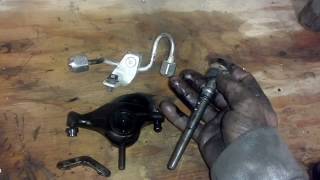
- If the harness appears damaged, replace it. Be extremely careful when tightening the small 8mm nuts on the injector terminals; torque to only 11-13 in-lbs (1.2-1.5 Nm) to avoid breaking the injector solenoid post.
- If wiring and the injector test good, the final possibility is a fault within the PCM, though this is highly unlikely.
Parts You'll Likely Need
- Fuel Injector Wiring Harness (for 2003-2005, Cylinders 1-2)
(OEM #3966805)— This is the most common failure point for P0202 on 3rd Gen Common Rail Cummins engines due to heat and vibration. Three are required per engine, but you only need to replace the one for the affected cylinders.
Trusted brands: Cummins (OEM)
OEM price range: $120-$140
Aftermarket price range: $40-$70 - Valve Cover Gasket with Injector Loom (for 1998.5-2002)
(OEM #5367847 (current Cummins P/N))— The injector wiring is integrated into this gasket and is the primary cause of P0202 on 2nd Gen 24v Cummins, as cited in TSB #9002688. Constant exposure to heat and oil causes failure.
Trusted brands: Cummins (OEM), Fel-Pro
OEM price range: $100-$150
Aftermarket price range: $60-$90 - Fuel Injector
(OEM #0986435503 (Bosch Reman for 2003-2004))— If the injector solenoid itself has failed (confirmed via resistance test or injector swap), the entire injector must be replaced.
Trusted brands: Bosch (OEM)
OEM price range: $400-$500
Aftermarket price range: $250-$350
Related Codes That Often Appear With This One
- P2146 — This code indicates a fault in 'Fuel Injector Group A Supply Voltage Circuit'. On 3rd Gen Cummins (2003+), injectors 1, 2, and 3 are in Group A. A wiring short related to P0202 can compromise the entire group's voltage supply, triggering P2146 simultaneously.
- P0201, P0203 — If the under-cover harness for 2003-2005 models is failing, it can affect both injectors it serves (e.g., the harness for cylinders 1 & 2). A major short in the 2nd Gen integrated gasket-harness could also affect adjacent injector circuits, causing multiple codes to appear.
Technical Service Bulletins (TSBs) & Recalls
- Bulletin #9002688: Advises checking the under-valve-cover wiring loom/connector before replacing injectors for P0201-P0206 codes.
Platform-Specific Known Issues
- Intermittent Nature of Failure: A common owner experience is that the P0202 code will appear, causing a rough run condition, but may disappear after the engine is shut off and restarted, with the truck running normally again. This intermittent behavior is a strong indicator of a failing wiring harness connection rather than a completely failed injector.
- TSB #9002688: This Technical Service Bulletin from the manufacturer specifically advises technicians to check the under-valve-cover wiring loom and connectors for faults before replacing injectors for codes P0201 through P0206. This officially confirms that the wiring is a known weak point and a more probable cause of failure than the injector itself.
Mechanic-Grade Diagnostic Values
- Fuel Injector Solenoid Resistance — expected: Less than 1.0 Ohm, and greater than 0 Ohms.. Failure: An open loop (infinite resistance) or a reading significantly higher than other injectors (e.g., 3.2 Ohms) indicates a failed injector solenoid.
- Injector Harness / Engine Harness Circuit Resistance — expected: Less than 10 Ohms, ideally below 5 Ohms.. Failure: Resistance higher than 10 Ohms indicates an open or high resistance in the wiring harness that needs to be repaired or replaced.
- Injector Terminal Nut Torque — expected: 11-13 in-lbs (1.2-1.5 Nm).. Failure: Overtightening can break the injector solenoid post, causing an open circuit and requiring injector replacement.
- Injector Hold-Down Bolt Torque (3rd Gen) — expected: 89 in-lbs (7.4 ft-lbs).. Failure: Incorrect torque can lead to improper sealing, causing leaks or poor performance.
- High-Pressure Connector Tube Nut Torque (3rd Gen) — expected: 37 ft-lbs.. Failure: Improper torque can cause high-pressure fuel leaks.
Scan Tool Commands That Help
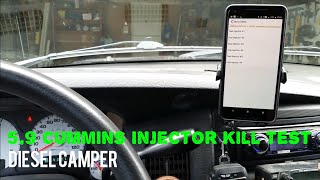
- Cummins Insite or compatible professional scan tool (e.g., DRBIII): Cylinder Cutout Test — This bidirectional test allows a technician to command individual injectors to stop firing. When cylinder #2 is cut out, there should be a noticeable change in engine sound and vibration. If there is NO change when cylinder #2 is disabled, it confirms that the injector was not firing in the first place. This helps isolate the problem to a specific cylinder.
Wiring & Ground Locations
- Injector #2 Control Signal at ECM (2nd Gen) — On the Engine Control Module (ECM) C2 connector (50-way), the control signal for injector #2 is typically on pin K18.. This is the pin to test for continuity back to the injector harness connector when diagnosing a potential break in the main engine harness.
- Injector #2 Control Signal at ECM (3rd Gen) — On the Engine Control Module (ECM), the control signal for injector #2 is on the C1 connector. The wire is typically Brown/Yellow.. When all under-valve-cover tests pass, a technician can test for signal continuity directly from this ECM pin to the valve cover pass-through connector to isolate a fault in the main engine harness.
- Injector Harness Banks (3rd Gen) — The injector wiring is split into two banks. The front connector/harness serves cylinders 1, 2, and 3 (Group A), while the rear connector/harness serves cylinders 4, 5, and 6 (Group B).. This is critical for diagnosing codes like P2146, which refers to Group A. A problem with P0202 will be located in the front harness group.
Real Owner Repair Stories
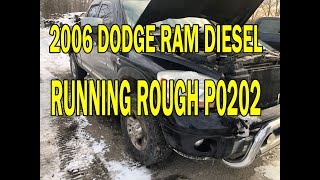
- YouTube user 'Video Service Information' (2006 Dodge Ram 5.9L Cummins with 129,000 miles) — Vehicle was running rough.
✅ What actually fixed it The technician scanned and found an active P0202 code. A resistance test on the #2 injector solenoid measured 3.2 Ohms. Since the specification is less than 1 Ohm, the high resistance confirmed the injector itself had failed. Replacing the cylinder 2 injector resolved the issue. - YouTube user 'western truck and tractor repair' (Dodge Ram with 5.9L Cummins (year not specified, 3rd Gen)) — Engine running fine intermittently, then would stumble. Codes P0203 and P2146 appeared.
❌ Tried (didn't work) Initial visual inspection of external wiring showed no issues.
✅ What actually fixed it After removing the valve cover, the technician performed a resistance check on injectors 1, 2, and 3. The #3 injector showed high resistance, confirming a failed injector solenoid. The video notes that this procedure is the same for any P020x code in that bank and that the wiring harness is also a common culprit.
Model Year Variations Within This Range
- 2003-2004 vs 2004.5-2005: The injectors for 2003-2004 (305hp) and 2004.5+ (325hp) engines are NOT interchangeable, despite looking physically similar. The later injectors have a different nozzle design (5-hole vs 8-hole) and spray angle to match a revised piston bowl design. Installing the wrong injectors can cause poor performance, smoke, and eventual piston damage. The injector part number is laser-etched on the body and must be verified before replacement.
Helpful Videos
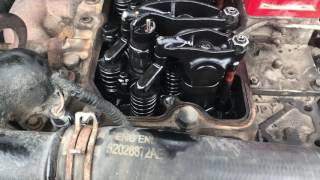
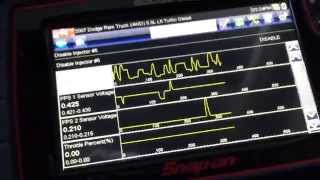
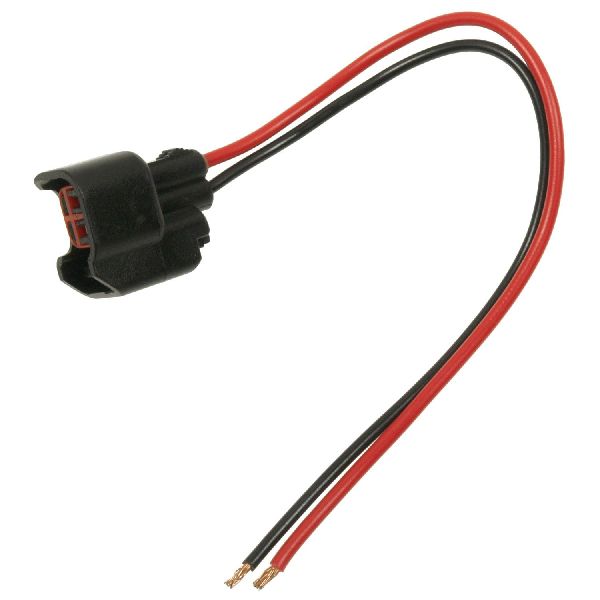
We Have This Part in Stock


The information in this article is provided for general reference and educational purposes only. Vehicle specifications, procedures, and part compatibility can vary by production date, trim level, and region. Always consult your vehicle's factory service manual and verify part numbers before purchasing or performing repairs. Safety-critical components such as airbags, seat belts, and braking systems should be installed by a qualified professional.
- Dodge RAM 3500:
- 🧭 Diagnostic Flowchart
- 🎬 Helpful Videos
- 🛍️ Shop This Part
- What's Unique About the 1998-2005 Dodge RAM 3500
- Symptoms You May Notice
- Most Likely Causes
- Rare But Worth Checking
- Diagnosis Steps
- Parts You'll Likely Need
- Related Codes That Often Appear With This One
- Technical Service Bulletins (TSBs) & Recalls
- Platform-Specific Known Issues
- Mechanic-Grade Diagnostic Values
- Scan Tool Commands That Help
- Wiring & Ground Locations
- Real Owner Repair Stories
- Model Year Variations Within This Range
- 🎟️ Get 5% Off