

P0202 on 2010-2014 GMC Terrain: Injector Circuit Malfunction Causes and Fixes
P0202 on a 2010-2014 GMC Terrain indicates an electrical fault with the cylinder 2 fuel injector circuit. The most common causes are a failed fuel injector or a wiring issue. TSB PIP4924D specifically notes that the injector wiring harness can rub through or have internal opens. Replacing the injector is a common fix, costing around $50-$120 for the part.
- P0202 specifically points to an electrical problem in the cylinder 2 fuel injector circuit, not a spark or compression issue.
- The most likely cause is a failed fuel injector itself.
- A simple 'noid light' test or swapping the injector with one from another cylinder are the most effective diagnostic steps.
- Do not overlook the wiring harness; GM TSB PIP4924D explicitly mentions harness rub-through as a known cause for this code.
What's Unique About the 2010-2014 Gmc TERRAIN
For the first-generation GMC Terrain and its platform-mate, the Chevrolet Equinox, both the 2.4L four-cylinder and the V6 engines (3.0L and 3.6L) use a direct injection fuel system. This system operates under very high pressure and can be sensitive. While P0202 is a general electrical code, the provided TSB (PIP4924D) covers a wide range of injector codes and specifically instructs technicians to inspect the fuel injector wiring harness for rubbing through or internal wire opens. This indicates GM has recognized a pattern of wiring harness failures, not just injector failures, across various models from this era, including the Terrain.
Diagnostic Flowchart
Tap your situation to follow the diagnostic path that matches what you're seeing on this vehicle.
Generation note: The 2010-2014 model years are all part of the first-generation GMC Terrain. However, the V6 engine option changed from a 3.0L (LFW) in 2010-2012 to a 3.6L (LFX) in 2013-2014. The 2.4L 4-cylinder engine was available throughout this period. The fundamental cause of a P0202 code remains the same across these engines, but part numbers for injectors will differ. On the 2.4L 4-cylinder engine, cylinder 2 is the second cylinder from the front of the engine (the side with the belts).
Symptoms You May Notice
- Check Engine Light is on (may be flashing in severe cases)
- Rough or shaking idle
- Engine misfire, which may feel like a stumble or hesitation
- Poor acceleration and loss of power
- Reduced fuel economy
- Engine running rich or smelling of unburnt fuel
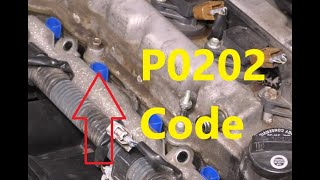
- Replacing the spark plug or ignition coil for cylinder 2. While these parts can cause a misfire (P0302), they will not cause an injector circuit code like P0202, which is specifically an electrical fault. 🎬 Watch: A breakdown of P0202 causes and common fixes.
- Replacing the fuel injector without thoroughly inspecting the wiring. Given that TSB PIP4924D points to harness issues, the problem may return if a chafed or broken wire is the root cause.
Most Likely Causes
- Failed Cylinder 2 Fuel Injector 🔴 High Probability → Shop Fuel Injector Direct injectors operate under high stress. Over time, the internal electronic coil can fail, creating an open or short circuit that the PCM detects. This is the most common component to fail in this circuit.
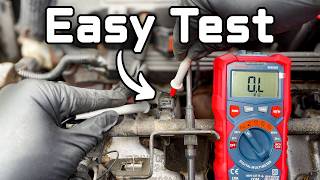
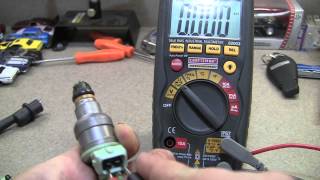
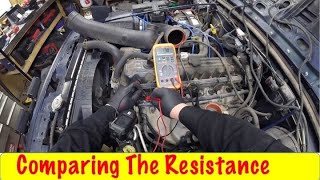
How to confirm: The most definitive test is to swap the cylinder 2 injector with an injector from another cylinder (e.g., cylinder 1 or 3). Clear the codes and drive the vehicle. If the code changes to P0201 or P0203, the injector is faulty. If P0202 returns, the issue is with the wiring or PCM. You can also test the resistance of the injector with a multimeter; a typical reading for a good injector is between 11-14 ohms. 🎬 See how to test injector resistance with a multimeter. An infinite reading means an open circuit and a bad injector.
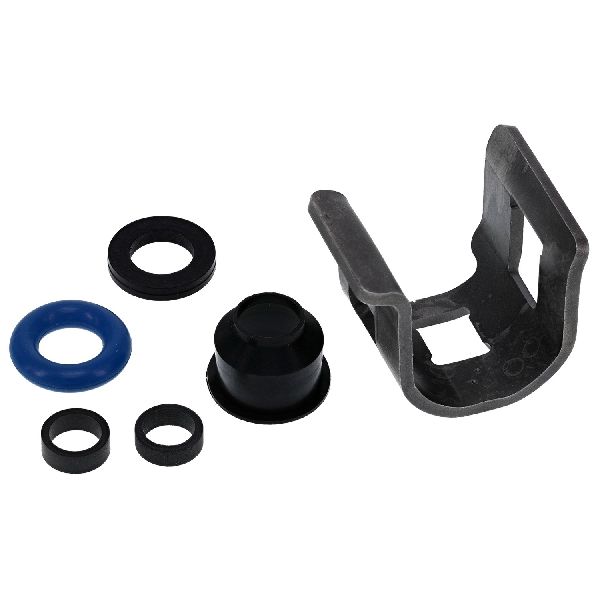
Typical fix: Replace the faulty fuel injector. It's also recommended to replace the injector's Teflon seal and O-rings at the same time. The new seal will require a special tool for installation on GDI injectors.
Est. part cost: $50-$120 - Wiring Harness or Connector Issue 🟡 Medium Probability The engine wiring harness is exposed to constant heat and vibration. TSB PIP4924D specifically calls out that the injector harness can rub through on engine components or develop internal opens. This can cause a short to ground, a short to power, or an open circuit in the wiring to the cylinder 2 injector.
How to confirm: Visually inspect the wiring going to the cylinder 2 injector for any signs of damage, melting, or chafing against brackets or other components. Unplug the connector and check for bent, corroded, or loose pins. Use a multimeter to check for continuity between the PCM connector and the injector connector to find any open wires.
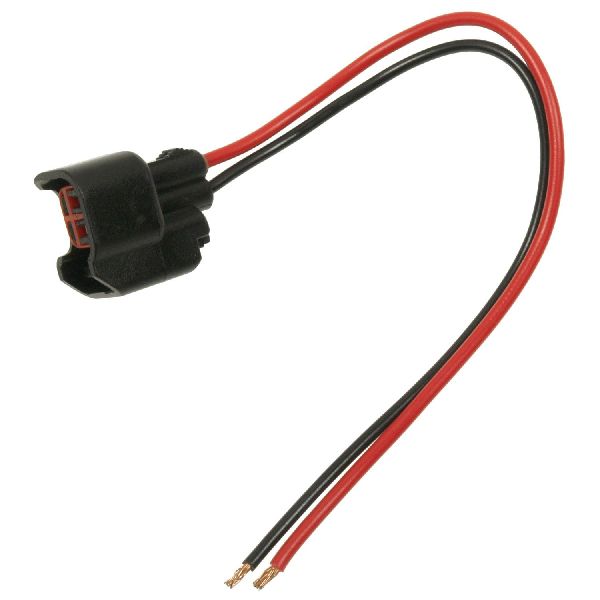
Typical fix: If the connector is damaged, it can be replaced with a new pigtail connector. If a wire is broken or chafed, it will need to be repaired and protected with loom or re-routed to prevent future damage. In some cases, a section of the harness may need to be replaced.
Est. part cost: $15-$40 for a connector pigtail - Faulty Powertrain Control Module (PCM) ⚪ Low Probability → Shop Engine Control Module (ECM) While uncommon, the internal driver circuit in the PCM that grounds the injector to fire it can fail. This is usually a last resort after other possibilities are exhausted.
How to confirm: This should only be considered after the injector and wiring have been thoroughly tested and ruled out. A real-world example from a forum shows a dealer replaced an injector and ECM, but the P0202 code returned immediately, indicating the actual problem was a missed wiring issue. A technician would need to verify with a scope that the driver signal is missing or incorrect directly at the PCM pin.
Typical fix: The PCM must be replaced and programmed to the vehicle's VIN.
Est. part cost: $200-$600+
Rare But Worth Checking
- Bad Fuel:
Diagnosis Steps
- Read the trouble codes with an OBD-II scanner. Note any other codes that are present, especially P0302.
- Visually inspect the wiring harness and connector for the cylinder 2 fuel injector. Look for any obvious signs of damage, melting, chafing, or loose connections. Wiggle the harness with the engine running to see if it affects the idle.
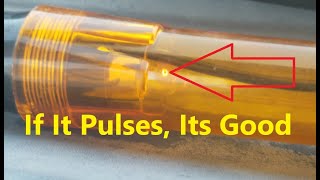
- Use a noid light to test the injector signal. Unplug the injector, plug in the noid light, and crank or start the engine. The light should flash steadily, indicating the PCM is sending a signal. If it doesn't flash, the problem is in the wiring or PCM. If it does flash, the injector itself is the primary suspect.
- Check the resistance of the fuel injector using a multimeter. Disconnect the injector and measure the resistance across its two pins. Compare the reading to the manufacturer's specification (typically 11-14 ohms). A reading that is very high, infinite (OL), or very low indicates a bad injector.
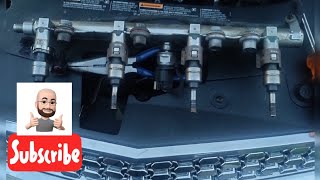
- Perform an injector swap test. Move the cylinder 2 injector to another cylinder (e.g., cylinder 1). Clear the codes, run the engine, and see if the fault code follows the injector (e.g., P0202 becomes P0201). If it does, the injector is confirmed to be faulty. If P0202 returns, the wiring is the problem.
- If the injector swap test points to wiring, perform a continuity check. Disconnect the battery, the injector connector, and the corresponding PCM connector. Use a multimeter to check for continuity on both wires between the injector connector and the PCM connector. There should be less than 1 ohm of resistance. Also check each wire for a short to ground.
- If all other tests pass, the PCM may be at fault. This requires advanced diagnostics and should be the last consideration.
Parts You'll Likely Need
- Direct Fuel Injector (2.4L I4)
(OEM #12633784)— This is the most common failure point for a P0202 code. The internal coil fails, causing an electrical fault.
Trusted brands: ACDelco, Standard Motor Products, Hitachi
OEM price range: $80-$120
Aftermarket price range: $50-$90 - Direct Fuel Injector (3.0L V6, 2010-2012)
(OEM #12629927)— The most likely part to fail for this code on the 3.0L V6 engine.
Trusted brands: ACDelco, Standard Motor Products
OEM price range: $90-$130
Aftermarket price range: $60-$100 - Direct Fuel Injector (3.6L V6, 2013-2014)
(OEM #12638530)— The most likely part to fail for this code on the 3.6L V6 engine.
Trusted brands: ACDelco, Standard Motor Products
OEM price range: $90-$150
Aftermarket price range: $60-$110
Related Codes That Often Appear With This One
- P0302 — This code means "Cylinder 2 Misfire Detected." Since P0202 indicates a problem with the fuel supply to cylinder 2, a misfire is a direct and expected consequence.
- P0201, P0203, P0204 — If multiple injector circuit codes are present, it strongly points towards a systemic issue like a damaged wiring harness affecting several connectors, a bad ground, or a problem with the main power supply for the injectors.
Technical Service Bulletins (TSBs) & Recalls
- PIP4924D: A General Motors Technical Service Bulletin from 2014 that acknowledges a range of injector circuit codes (P0201-P0206, etc.) and misfires on various models. It specifically instructs technicians to "inspect the fuel injector wiring harness for rub through or internal wire opens." This confirms that wiring harness damage is a known issue for this platform and not just random chance.
Mechanic-Grade Diagnostic Values
- Fuel Injector Coil Resistance (3.0L/3.6L V6 Direct Injection) — expected: Approximately 1.5 to 1.7 ohms.. Failure: A reading of 0 ohms (short), infinity/OL (open), or a value significantly different from the other injectors.
- Fuel Injector Coil Resistance (2.4L I4) — expected: Approximately 11.0 to 14.6 ohms.. Failure: A reading outside this range, or one that differs by more than 1.0 ohm from the other injectors.
- Injector Circuit Continuity (ECM to Injector) — expected: Less than 0.2 ohms.. Failure: Resistance greater than 0.2 Ω indicates a high-resistance path in the wiring, likely due to corrosion or a damaged wire.
- Injector Circuit Voltage (at injector connector) — expected: Should be around 12V with key on, engine off.. Failure: Values outside the 10V-14V range could indicate a wiring or driver fault.
Scan Tool Commands That Help
- GDS2 (GM Factory Scan Tool): Injector Test / Fuel Injector Balance — This function allows a technician to individually disable injectors to identify a misfiring cylinder. More advanced tests can measure the pressure drop from each injector pulse to determine if an injector is flowing correctly. This is the preferred method for diagnosing GDI injectors over simple resistance tests.
Wiring & Ground Locations
- G107 — On the left side (driver's side) of the cylinder head.. This is a primary ground point for the Engine Control Module (ECM) and multiple engine sensors. A loose or corroded connection at G107 can cause erratic behavior and false codes, including injector circuit faults.
- ECM Connector X1 (Cylinder 2) — At the Engine Control Module (ECM).. The wires for the cylinder 2 injector terminate here. For the 2.4L engine, the injector control wire is often at Pin 53 and the power feed is at Pin 54. For V6 engines, these may be at Pins 48 and 54. Verifying signal and continuity at these specific pins is the final step in diagnosing a wiring issue before condemning the ECM. Pinouts can vary, so a vehicle-specific diagram is essential.
Real Owner Repair Stories
- YouTube channel 'Auto Repair guys' (Vehicle not specified, but demonstrates a common GM injector connector issue.) — Check Engine Light with code P0204 (Injector Circuit Open - Cylinder 4).
❌ Tried (didn't work) Initial thought was a bad fuel injector.
✅ What actually fixed it The wiring connector for the fuel injector had come loose. The metal retaining clip was missing or not installed correctly, allowing the connector to back off. Re-securing the connector and installing a new clip resolved the open circuit code.
OEM Part Supersession History
12638530→12669384— Standard part update/revision by the manufacturer.
Heads up: Part 12669384 is the direct replacement for 12638530 for the 3.6L V6 engine.217-3433→12633784— Standard part update/revision by the manufacturer.
Heads up: Part 12633784 is the direct replacement for the older part number on the 2.4L I4 engine.
Model Year Variations Within This Range
- 2010-2012: V6 models used the 3.0L LFW V6 engine.
- 2013-2014: V6 models were upgraded to the 3.6L LFX V6 engine, which uses different fuel injectors (PN 12638530, later 12669384) and has a revised cylinder head design compared to the 3.0L.
Helpful Videos
We Have This Part in Stock


The information in this article is provided for general reference and educational purposes only. Vehicle specifications, procedures, and part compatibility can vary by production date, trim level, and region. Always consult your vehicle's factory service manual and verify part numbers before purchasing or performing repairs. Safety-critical components such as airbags, seat belts, and braking systems should be installed by a qualified professional.
- Gmc TERRAIN:
- 🧭 Diagnostic Flowchart
- 🎬 Helpful Videos
- 🛍️ Shop This Part
- What's Unique About the 2010-2014 Gmc TERRAIN
- Symptoms You May Notice
- Most Likely Causes
- Rare But Worth Checking
- Diagnosis Steps
- Parts You'll Likely Need
- Related Codes That Often Appear With This One
- Technical Service Bulletins (TSBs) & Recalls
- Mechanic-Grade Diagnostic Values
- Scan Tool Commands That Help
- Wiring & Ground Locations
- Real Owner Repair Stories
- OEM Part Supersession History
- Model Year Variations Within This Range
- 🎟️ Get 5% Off