

P0202 on 2009-2010 Saturn VUE: Injector Circuit Malfunction Causes and Fixes
P0202 on a 2009-2010 Saturn VUE indicates an electrical fault with the cylinder 2 fuel injector. The most common causes are a faulty fuel injector or a damaged wiring harness. A GM Technical Service Bulletin (#PIP4924D) specifically points to wire chafing on V6 models, making a thorough harness inspection essential before replacing parts.
- P0202 means there is an electrical problem with the cylinder 2 fuel injector circuit, not necessarily the injector itself.
- For the V6 Saturn VUE, a damaged wiring harness is a very common cause for this code, per GM TSB #PIP4924D. Inspect the harness for chafing before buying parts.
- A simple way to test the injector is to swap it with another cylinder and see if the code moves with it.
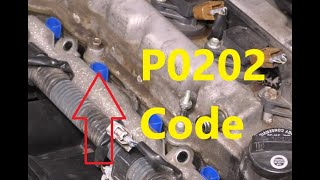
- Cylinder #2 is located in the front bank of cylinders (closest to the radiator) on V6 models, making it one of the easier injectors to access.
- Do not drive if the Check Engine Light is flashing, as this can cause rapid and expensive damage to your catalytic converter.
What's Unique About the 2009-2010 Saturn VUE
For the 2009-2010 VUE (a GM Theta platform vehicle), especially those with the 3.6L V6 engine, this code is often linked to a known wiring harness issue. General Motors issued Technical Service Bulletin (TSB) #PIP4924D that specifically calls out these vehicles for potential wiring harness chafing. The harness can rub against the intake plenum, valve cover bolts, or fuel lines, causing an open or short in the injector circuit. This makes a wiring inspection more critical on this vehicle than on others where the injector itself might be the primary suspect. This issue is also common on its platform mates, the Chevrolet Equinox and GMC Terrain.
Diagnostic Flowchart
Tap your situation to follow the diagnostic path that matches what you're seeing on this vehicle.
Symptoms You May Notice
- Check Engine Light is on
- Rough or unstable idle
- Engine misfire (may feel like a shake or stumble)
- Hesitation or lack of power during acceleration
- Reduced fuel economy
- Engine may be hard to start
- Engine may stall intermittently
- Replacing the spark plug or ignition coil for cylinder 2. While these can cause a misfire (P0302), they will not cause an injector circuit code (P0202). The P0202 code is specifically for an electrical fault in the injector circuit, not a combustion problem. 🎬 See this quick breakdown of P0202 causes and fixes.
Most Likely Causes
- Damaged Fuel Injector Wiring Harness 🔴 High Probability → Shop Engine Wiring Harness TSB #PIP4924D specifically identifies a pattern of wire chafing on 2009-2010 VUEs with V6 engines. The harness is routed in a way that it can rub against engine components like the intake plenum, valve cover bolts, or metal brackets, leading to shorts or open circuits.
How to confirm: Visually inspect the entire length of the wiring harness leading to the fuel injectors, paying close attention to the areas mentioned in the TSB. Look for rubbed-through insulation, exposed wires, or sharp bends. Test for continuity between the ECM connector and the injector connector with a multimeter. A common failure point is where the harness wraps around the cylinder head.
Typical fix: Repair the damaged section of wire using a quality butt connector with heat shrink. If the damage is near the connector, replace the pigtail. In severe cases, the entire injector harness may need replacement. After repair, secure the harness away from the sharp edge with zip ties or protective conduit.
Est. part cost: $10-$30 for a pigtail, $100-$250 for a new harness - Faulty Fuel Injector 🔴 High Probability → Shop Fuel Injector
How to confirm: Check the injector's internal resistance with a multimeter set to Ohms. A good injector should read between 11 and 14 ohms. Compare the reading for cylinder 2 with a known-good cylinder; they should be nearly identical. A reading of infinity (open) or zero (short) indicates a failed injector. The most definitive test is to swap the cylinder 2 injector with another (e.g., cylinder 4) and see if the trouble code follows (e.g., changes to P0204).
Typical fix: Replace the faulty fuel injector. It is often recommended to replace all injectors on a high-mileage engine, or at least the full bank. 🎬 Watch: Step-by-step guide to replacing injectors on a GM 3.6L.
Est. part cost: $50-$150 per injector - Bad Injector Connector 🟡 Medium Probability The plastic connector can become brittle from heat cycles and crack, or the terminals can corrode, leading to a poor connection.
How to confirm: Visually inspect the connector for corrosion, bent/broken pins, or a loose fit. Wiggle the connector while the engine is idling to see if it causes the misfire to change.
Typical fix: Clean the connector terminals or replace the connector pigtail if it's damaged. A common replacement is Dorman part #645-164 or ACDelco #PT2183.
Est. part cost: $10-$30
Rare But Worth Checking
- Faulty Engine Control Module (ECM): → Shop Engine Control Module (ECM) This is the least likely cause. The internal driver circuit for the injector can fail, but you should exhaust all other possibilities before condemning the ECM. A professional diagnosis using a scope is recommended to confirm an ECM failure.
Diagnosis Steps
- Verify the Check Engine Light is on and scan for codes. Confirm P0202 is present, and note any other codes like P0302.
- Identify the location of cylinder #2. On the 2.4L I4, it's the second cylinder from the front (passenger side). On the 3.5L and 3.6L V6 engines, the cylinders closer to the radiator are the even-numbered bank (2-4-6), with #2 being the front-most cylinder.
- Perform a thorough visual inspection of the fuel injector wiring harness. Pay close attention to the chafe points identified in TSB #PIP4924D: where the harness might rub against the intake, valve covers, or fuel lines.
- Disconnect the connector at the #2 fuel injector. Check for a signal using a noid light while cranking the engine. The light should flash, indicating the ECM is sending a signal. If it doesn't flash, the problem is likely in the wiring or the ECM.
- With the connector still off, use a multimeter to measure the resistance of the fuel injector. It should be between 11-14 ohms. Compare the reading to another injector. If the resistance is out of spec or shows an open/short, the injector is bad.
- If the injector and signal seem okay, the next step is to swap the #2 injector with one from another cylinder (e.g., #4). Clear the codes and run the engine. If the code changes to P0204, you have confirmed the injector is faulty. If the P0202 code returns, the problem is in the wiring or ECM.
- If the code does not follow the injector, test the wiring. Check for continuity on both wires from the injector connector back to the ECM connector. Also, check for shorts to ground or voltage on the signal wire.
- If the injector and wiring are confirmed to be good, the fault likely lies within the ECM itself.
Parts You'll Likely Need
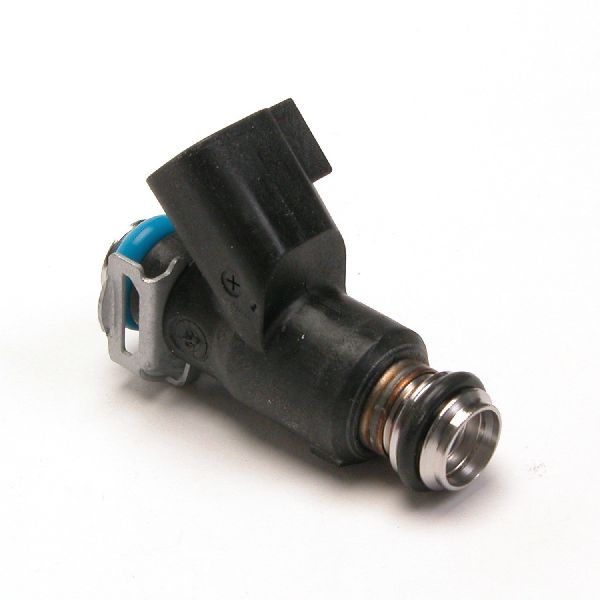
- Fuel Injector
(OEM #ACDelco #217-3021 (for 3.6L V6), ACDelco #217-3158 (for 2.4L I4), ACDelco #217-2907 (for 3.5L V6))— This is one of the most common failure points for a P0202 code after wiring issues have been ruled out.
Trusted brands: ACDelco, Bosch, Delphi, GB Remanufacturing
OEM price range: $90-$180
Aftermarket price range: $50-$120 - Fuel Injector Connector Pigtail
(OEM #ACDelco #PT2183, GM #88988963)— The connector itself can become brittle or corroded, or the wires can break right at the connector, necessitating a replacement pigtail. This is especially true if the harness has been chafing.
Trusted brands: ACDelco, Dorman (e.g., #645-164)
OEM price range: $25-$40
Aftermarket price range: $10-$25
Related Codes That Often Appear With This One
- P0302 — P0302 means "Cylinder 2 Misfire Detected." Since a P0202 fault prevents the injector from delivering fuel, it will almost always cause a misfire in that cylinder.
- P0200 — P0200 is a general "Injector Circuit Malfunction" code. It can sometimes appear alongside a specific cylinder code like P0202.
- P0201, P0203, P0204, P0205, P0206 — If multiple injector codes are present, it strongly points to the wiring harness issue described in TSB #PIP4924D, where a common section of the harness affecting several injectors is damaged. 🎬 Watch: How to diagnose multiple injector codes on GM engines.
Technical Service Bulletins (TSBs) & Recalls
- PIP4924D: SES Light And Misfire With Injector Codes. Recommends inspecting the fuel injector wiring harness for rub-through or open wires. This TSB covers a wide range of injector and misfire codes, including P0202.
Platform-Specific Known Issues
- TSB #PIP4924D: Wiring Harness Chafing: This GM bulletin directly applies to the 2009-2010 VUE with V6 engines and warns of a Service Engine Soon light and misfires caused by the fuel injector wiring harness rubbing through. Common chafe locations include against the intake plenum, valve cover bolts, and fuel lines. This is the most critical vehicle-specific issue to check first.
- Real-World Repair Story: An owner of a related GM 3.6L vehicle experienced multiple injector codes (P0202, P0204, P0206) simultaneously. The cause was found to be the injector harness rubbing on a sharp edge of the cylinder head near the front of the engine. The fix involved repairing the broken wires and wrapping that section of the harness in protective plastic conduit before securing it away from the edge.
Mechanic-Grade Diagnostic Values
- Fuel Injector Resistance (3.6L LLT V6) — expected: 11 - 14 Ohms. Failure: A reading of 0 ohms (short), infinity/OL (open), or a significant deviation from other injectors.
- Injector Pulse Width (at warm idle) — expected: 2.0 - 4.0 milliseconds (ms). Failure: A value of 0 ms on cylinder 2 while others are pulsing indicates the ECM is not commanding the injector, pointing to a circuit fault or bad ECM driver.
- Injector Pulse Width (during cold start) — expected: 4.0 - 8.0 ms (or nearly double the warm idle pulse width). Failure: This is a normal characteristic of GM's dual-pulse cold start strategy and should not be mistaken for a fault.
- Injector Circuit Voltage (Key On, Engine Off) — expected: 11.5V - 12.5V (Battery Voltage). Failure: Low or no voltage on the power supply side of the injector connector points to a problem with the fuse or power feed wiring.
Hidden / Shadow Codes Worth Checking
- Mode 6, TID/CID for Misfire Counts: Advanced scan tools can access Mode 6 data, which includes non-continuous monitor test results. This allows a technician to see raw misfire counts per cylinder, even if the count isn't high enough to set a P0302 code. This is extremely useful for confirming an intermittent misfire on cylinder 2 that corresponds with the P0202 circuit fault. (see via An advanced OBD-II scanner or dealer-level tool (like a GM Tech 2 or GDS2) that can display Mode 6 test results.)
Scan Tool Commands That Help
- GM Tech 2 / GDS2 or equivalent high-end scanner: Fuel Injector Balance Test — This is a definitive test to check if an injector is mechanically sound, but it's also useful for circuit diagnosis. The tool commands each injector to fire for a precise duration while monitoring the drop in fuel rail pressure. If all other injectors show a consistent pressure drop but cylinder 2 shows none, it confirms the injector is not firing due to the P0202 electrical fault.
- GM Tech 2 / GDS2 or equivalent high-end scanner: Cylinder Power Balance — This function deactivates one cylinder at a time (by cutting fuel or spark). When a healthy cylinder is deactivated, engine RPM will drop noticeably. If deactivating cylinder 2 causes little or no change in RPM, it confirms that cylinder was not contributing power, which is the expected result of a P0202 fault.
Wiring & Ground Locations
- Cylinder 2 Injector Control Wire — This is a Light Green/Black wire that runs from the #2 fuel injector connector to pin 48 on the X1 connector of the Engine Control Module (ECM).. This is the specific wire the ECM uses to ground-pulse the injector. Testing for continuity and shorts on this wire is a key diagnostic step.
- G106 (3.6L) — On the engine, at the left front top corner.. This is a primary ground point for the ECM. A loose or corroded connection here can cause erratic behavior and phantom electrical codes, including injector circuit faults.
- G105 / G107 — G105 is at the left rear of the engine; G107 is at the rear of the engine (for 2006 models, likely similar for 2009-2010).. These are major engine block grounds. While not directly for the ECM, a poor engine ground can force other circuits to seek ground through unintended paths, causing voltage irregularities that could trigger a circuit code.
Real Owner Repair Stories
- Acadia Forum user (mechanically similar GM 3.6L vehicle) (2011 GMC Acadia 3.6L LLT, ~100,000 miles) — Check engine light with P0274 (Cylinder 5 Injector Circuit High) and P0305 (Cylinder 5 Misfire). Rough idle and engine stumbling.
❌ Tried (didn't work) Replaced spark plug and ignition coil on the affected cylinder., Swapped fuel injectors between two cylinders; the code did not move.
✅ What actually fixed it The problem was a broken wire in the fuel injector wiring harness. The wire was broken *inside* the insulation near the connector for the affected cylinder, so there was no visible external chafing. The internal break was only found by wiggling the wire while testing continuity. - Traverse Forum user (mechanically similar GM 3.6L vehicle) (2011 Chevrolet Traverse 3.6L LLT) — Engine running rough, especially at idle. Check Engine Light with codes for injector circuit and misfire.
❌ Tried (didn't work) Replacing the spark plug and ignition coil., Replacing the fuel injector itself.
✅ What actually fixed it After replacing parts didn't work, a close inspection of the wiring harness revealed a wire had chafed through its insulation where it was zip-tied to a metal bracket near the intake manifold. The wire would short to ground intermittently with engine vibration. Repairing the wire and protecting the harness resolved the code.
"I Checked Everything" — The Actual Cause
- A smoke test would not find the cause of a P0202 code, as it is an electrical fault, not a vacuum leak. However, even standard electrical tests can miss the true cause. In one documented case on a similar GM V6, all initial tests passed. The actual cause was a wire that was broken *inside* its insulation near the injector connector. There was no visible chafing, and the break would only become apparent when the harness was wiggled, simulating engine vibration. This highlights the need for dynamic testing (wiggling wires) during continuity checks.
OEM Part Supersession History
GM #88988963→ACDelco #PT2183— Standard part branding and distribution update.
Heads up: This connector pigtail is also cross-referenced to aftermarket parts like Dorman #645-164 and Standard Ignition #S1024.
Model Year Variations Within This Range
- 2009-2010: The 3.6L V6 in the 2009-2010 VUE is the LLT engine, which uses high-impedance Port Fuel Injection (PFI) injectors with a resistance of ~11-14 Ohms. Later GM 3.6L engines (like the LFX, starting in 2012 for many models) use low-impedance Direct Injection (DI) injectors with a resistance of only ~1.2-1.8 Ohms. The parts are not interchangeable and using the wrong diagnostic values will lead to misdiagnosis.
Helpful Videos
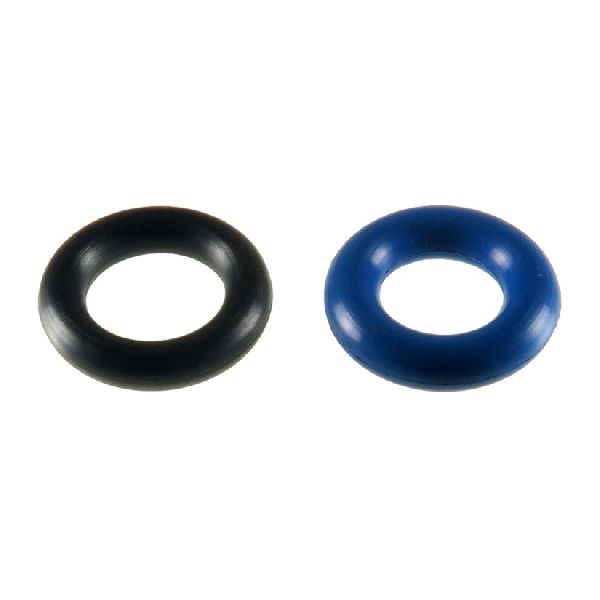
We Have This Part in Stock



The information in this article is provided for general reference and educational purposes only. Vehicle specifications, procedures, and part compatibility can vary by production date, trim level, and region. Always consult your vehicle's factory service manual and verify part numbers before purchasing or performing repairs. Safety-critical components such as airbags, seat belts, and braking systems should be installed by a qualified professional.
- Saturn VUE:
- 🧭 Diagnostic Flowchart
- 🎬 Helpful Videos
- 🛍️ Shop This Part
- What's Unique About the 2009-2010 Saturn VUE
- Symptoms You May Notice
- Most Likely Causes
- Rare But Worth Checking
- Diagnosis Steps
- Parts You'll Likely Need
- Related Codes That Often Appear With This One
- Technical Service Bulletins (TSBs) & Recalls
- Platform-Specific Known Issues
- Mechanic-Grade Diagnostic Values
- Hidden / Shadow Codes Worth Checking
- Scan Tool Commands That Help
- Wiring & Ground Locations
- Real Owner Repair Stories
- "I Checked Everything" — The Actual Cause
- OEM Part Supersession History
- Model Year Variations Within This Range
- 🎟️ Get 5% Off