

P0202 on 2006-2013 Toyota Corolla: Injector Circuit Malfunction Causes and Fixes
On a 2006-2013 Toyota Corolla, code P0202 almost always points to a faulty fuel injector in cylinder #2 or its wiring. The most effective diagnostic step is to swap the suspect injector with one from another cylinder to see if the code follows. This confirms if the injector is the component that has failed.
- P0202 on a 2006-2013 Corolla points to an electrical issue with the cylinder 2 fuel injector circuit.
- The most common cause is a failed fuel injector, followed by a wiring or connector problem.
- A simple and effective diagnostic test is to swap the cylinder 2 injector with one from another cylinder to see if the fault code moves.
- Driving with this code is not recommended long-term as it can cause poor performance and potential damage to other exhaust components.
- Be sure to buy the correct injector for your specific model year and engine (1.8L 1ZZ-FE, 1.8L 2ZR-FE, or 2.4L 2AZ-FE).
What's Unique About the 2006-2013 Toyota Corolla
For the 2006-2013 Corolla, which spans two generations (9th and 10th), the P0202 code is a straightforward electrical fault that is not typically tied to a systemic design flaw. The underlying engines (like the 1.8L 1ZZ-FE and 2ZR-FE) are known for reliability, so this code usually indicates a standard part failure due to age or a wiring issue rather than a complex, model-specific problem. Diagnosis is generally direct and does not require special Toyota-specific knowledge beyond standard troubleshooting.
Generation note: The 2006-2013 year range covers two Corolla generations in the US: the 9th generation (2006-2008) and the 10th generation (2009-2013). The 9th gen primarily used the 1.8L 1ZZ-FE engine, while the 10th gen used the 1.8L 2ZR-FE and an optional 2.4L 2AZ-FE. While the P0202 code has the same meaning for both, the specific part numbers for the fuel injectors will differ between these engines.
Symptoms You May Notice
- Check Engine Light is on
- Rough or unstable idle
- Engine misfiring, stumbling, or hesitating on acceleration
- Reduced engine power and poor performance
- Decreased fuel economy
- Hard starting or stalling
- Replacing the spark plug or ignition coil for cylinder 2. While these can cause a misfire (P0302), they will not cause an injector circuit code like P0202. The P0202 code specifically points to an electrical fault in the injector circuit, not a combustion or ignition problem.
Most Likely Causes
- Faulty Fuel Injector (Cylinder 2) 🔴 High Probability → Shop Fuel Injector Injectors are electromechanical components that can fail electrically (internal coil burnout) or become clogged over time. This is a common failure point for many vehicles, not just the Corolla.
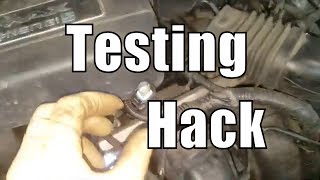
How to confirm: Swap the fuel injector from cylinder 2 with an injector from another cylinder (e.g., cylinder 1). Clear the codes and run the engine. If the code changes to P0201, the injector is bad. You can also test the injector's internal resistance with a multimeter; an open circuit (no reading) confirms a failed coil. 🎬 Watch: This clever hack makes testing fuel injectors easy. Compare the reading to the manufacturer's specification or to a known-good injector.
Typical fix: Replace the faulty fuel injector.
Est. part cost: $70-$185 - Wiring Harness or Connector Issue 🟡 Medium Probability Engine vibration, heat, and age can cause wires to break or insulation to fray. The plastic connector clips can also become brittle and fail to make a secure connection. Rodent damage to wiring is also a possibility.
How to confirm: Visually inspect the wiring and connector for cylinder 2's injector. Look for any signs of damage, corrosion, or loose pins. Use a noid light to confirm the PCM is sending a pulse signal to the injector connector. If the noid light flashes, the wiring and PCM are likely good, pointing towards the injector itself. If it does not flash, there is an issue in the wiring or PCM.
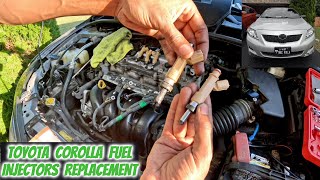
Typical fix: Repair the damaged section of wire or replace the injector pigtail connector. 🎬 See this quick guide on fixing P0202 circuit codes.
Est. part cost: $15-$40
Rare But Worth Checking
- Faulty Powertrain Control Module (PCM): → Shop Engine Control Module (ECM) This is the least likely cause. The PCM's internal driver for the injector circuit can fail, but all other possibilities should be exhausted before condemning the PCM. This is a 'replace last' component.
Diagnosis Steps
- Read the trouble codes with an OBD-II scanner to confirm P0202 is present. Note any other codes, especially P0302.
- Visually inspect the wiring harness and connector for the fuel injector on cylinder 2 (the second cylinder from the timing belt/chain side). Check for any obvious damage, corrosion, broken clips, or loose connections.
- Disconnect the injector and test its internal resistance using a multimeter set to Ohms. A reading of 'OL' (Open Line) or infinite resistance means the injector's internal coil is broken and the injector must be replaced. Compare the reading to another injector if the specification is unknown.
- If the resistance is within spec, test the circuit. Use a noid light plugged into the injector connector. Start the engine. A flashing light indicates the PCM is sending the correct signal, and the problem is likely the injector itself. No flashing light points to a wiring or PCM issue.
- If a noid light isn't available, perform an injector swap. Label and swap the fuel injector from cylinder 2 with the one from cylinder 1.
- Clear the codes, start the engine, and let it run for a few minutes.
- Re-scan for codes. If the code has moved to P0201 ('Injector Circuit/Open - Cylinder 1'), this confirms the fuel injector itself is faulty and needs replacement.
- If the P0202 code returns after the swap, the problem lies in the wiring to cylinder 2 or the PCM, not the injector.
- If the injector and wiring are confirmed to be good, the final and least likely possibility is a failed injector driver in the PCM.
Parts You'll Likely Need
- Fuel Injector
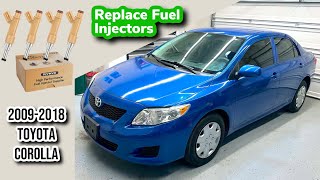
(OEM #Varies by engine. 1ZZ-FE (2006-2008): 23209-0D050. 2ZR-FE (2009-2013): 23209-39145 / 23250-0T020. 🎬 Watch: A step-by-step walkthrough for replacing your Corolla's injectors. 2AZ-FE (2.4L option): 23209-0H060.)— This is the most common failure point for a P0202 code. The internal coil winding fails, creating an open circuit.
Trusted brands: Denso (OEM), Standard Motor Products, Bosch
OEM price range: $150-$185
Aftermarket price range: $70-$120 - Fuel Injector Connector Pigtail — The plastic locking tab on the connector can become brittle and break, or the terminals can corrode, leading to a poor connection that triggers the code.
Trusted brands: Dorman, Standard Motor Products, ACDelco
OEM price range: $25-$40
Aftermarket price range: $15-$30
Related Codes That Often Appear With This One
- P0302 — P0302 means 'Cylinder 2 Misfire Detected'. Since the P0202 code indicates a problem with fuel delivery to cylinder 2, that cylinder cannot fire properly, which directly causes a misfire.
- P0300 — If the injector issue is intermittent or causing a lean condition across other cylinders, a random misfire code might appear alongside the specific cylinder code.
Platform-Specific Known Issues
- Owner Experience: Intermittent P0202 and P0302: A user on the FT86Club forum (relevant due to shared diagnostic principles) reported intermittent P0202 codes along with other sensor codes. The issue would appear, be cleared, and then return days later. This highlights that the fault can be intermittent, caused by a wiring short or a failing injector that hasn't completely died yet.
- DIY Repair on Tacoma World: A Toyota Tacoma owner experienced P0202 and P0302 with rough running and lack of power. This demonstrates the common pairing of these codes across different Toyota models with similar engine management systems. The diagnostic process of checking the injector and wiring is identical.
Mechanic-Grade Diagnostic Values
- Fuel Injector Internal Resistance (1ZZ-FE & 2ZR-FE) — expected: 11.6 to 12.4 Ω at 68°F (20°C) for high-impedance injectors typical in these engines. A common real-world reading is around 13 Ohms.. Failure: A reading of infinity or 'OL' indicates an open coil. A reading significantly lower than spec indicates a short. A reading that is different by more than 1-2 Ohms from the other injectors is also suspect.
- Voltage at Injector Connector (Key On, Engine Off) — expected: One of the two pins should show battery voltage (approx. 12V) when probed against a known good ground. This is the power supply wire.. Failure: No voltage indicates a problem with the power supply circuit, potentially a fuse or relay.
- Injector Pulse Signal (using Noid Light or Oscilloscope) — expected: A noid light should flash steadily while the engine is cranking or running. An oscilloscope will show a square wave pattern as the ECM grounds and un-grounds the circuit.. Failure: No flashing light (or no square wave) indicates a lack of signal from the ECM, pointing to a wiring or ECM driver issue.
Scan Tool Commands That Help
- Toyota Techstream: Active Test: Control the Fuel Injector — This bidirectional command allows a technician to manually command a specific injector to fire. While listening with a mechanic's stethoscope (or long screwdriver), you can confirm if the injector 'clicks' when commanded. If it clicks, the wiring and ECM driver are functional, pointing to a clogged injector. If it doesn't click, it confirms an electrical failure in the injector coil or the wiring/ECM.
- Toyota Techstream: Data List: Injector Injection Time — While monitoring the live data, you can view the pulse width (in milliseconds) for each injector. For a P0202, you would expect to see the value for Injector #2 at 0 ms, while the others show normal values. This confirms the ECM is not attempting to fire the injector because it has detected an open or short in the circuit.
Wiring & Ground Locations
- Injector #2 ECM Pin — For the 2.4L 2AZ-FE engine, the control wire for injector #2 is Pin 28 on the ECM connector. For the 1.8L engines, while a specific public pinout is hard to find, the wire can be identified by its color at the injector and traced back to the ECM for continuity testing.. If a noid light test fails, checking for continuity between this ECM pin and the injector connector pin will determine if the wire is broken somewhere in the harness.
- Engine Harness Ground — A critical engine harness ground point is located on the side of the cylinder head, often near the intake manifold or under the throttle body.. A loose or corroded main engine ground can cause a host of electrical issues, including erratic sensor readings and intermittent circuit faults. While less likely to isolate the issue to a single injector, ensuring this ground is clean and tight is a crucial step in diagnosing any electrical problem.
- Junction Connector — Wiring diagrams show junction connectors (like A46 on 2009+ models) located behind the left side of the dash, which route power and signal wires.. Though rare, corrosion or a loose pin within one of these intermediate connectors could cause an open in the injector circuit. This would be a last-resort check after verifying the wiring at the engine and ECM.
OEM Part Supersession History
23209-39145→23209-09140— Standard part number update by Toyota. The parts are functionally identical.
Heads up: Part number 23250-0T020 is also listed as a compatible equivalent for the 1.8L 2ZR-FE engine and is widely cross-referenced.
Model Year Variations Within This Range
- 2006-2008 vs 2009-2013: The primary difference is the engine and corresponding fuel injectors. The 2006-2008 models use the 1.8L 1ZZ-FE engine, while the 2009-2013 models primarily use the 1.8L 2ZR-FE. The fuel injectors are not interchangeable between these two engines. The 2.4L 2AZ-FE was also an option in the later generation with its own specific injector.
Diagnostic Flowchart
Other Known Issues on This Vehicle
Issues unrelated to this code that are worth knowing about as an owner of this generation:
- Excessive Oil Consumption (2.4L 2AZ-FE Engine) 🔴 High — Common on 2006-2011 models with the 2AZ-FE engine, often appearing before 100,000 miles. Caused by faulty piston ring design. (Ref: Toyota issued TSB T-SB-0094-11 and later T-SB-0030-15, and a warranty enhancement program (ZE7) to address this issue by replacing pistons and rings.)
- Failing Water Pump (2009-2010 1.8L 2ZR-FE) 🟠 Medium — A very common failure point on early 10th-gen Corollas, often failing between 50,000 and 70,000 miles. Symptoms include coolant leaks from the passenger side and whining noises. (Ref: Toyota released TSB T-SB-0125-11 providing updated replacement parts and procedures.)
- Faulty Power Window Master Switch 🟡 Low — Widespread across many Toyota models from 2005-2010. The switch can feel sticky or fail, and in rare cases, overheat due to lack of proper lubrication from the factory. (Ref: Subject to a major global recall where dealers would inspect and either lubricate or replace the switch circuit board.)
- Cracked Engine Control Module (ECM) Circuit Board 🔴 High → Shop Engine Control Module (ECM) — Affected some 9th generation (2005-2008) models, leading to harsh shifting, stalling, or no-start conditions. (Ref: Toyota issued a safety recall in late 2010 to replace the ECM free of charge.)
- Cold Start Camshaft Timing Gear Rattle (2ZR Engine) 🟠 Medium — A brief rattling or knocking noise from the engine for a few seconds on a cold start. Affects 2009+ models with the 2ZR-FE engine. (Ref: T-SB-0087-09 was issued to address this by replacing the VVT-i gear assembly.)
Used vs. New Parts: Buying Guide for This Vehicle
When a used part is the smart pick: A used OEM (Denso) fuel injector from a reputable salvage yard is a reasonable choice for this repair, especially if on a tight budget. The failure mode is typically a sudden electrical open circuit, not gradual wear, so a working used injector often has significant life left.
Donor-vehicle mileage cap: roughly under 120000 miles for the part to have meaningful remaining life.
What to inspect on the donor part:
- Check for physical damage to the plastic body and connector.
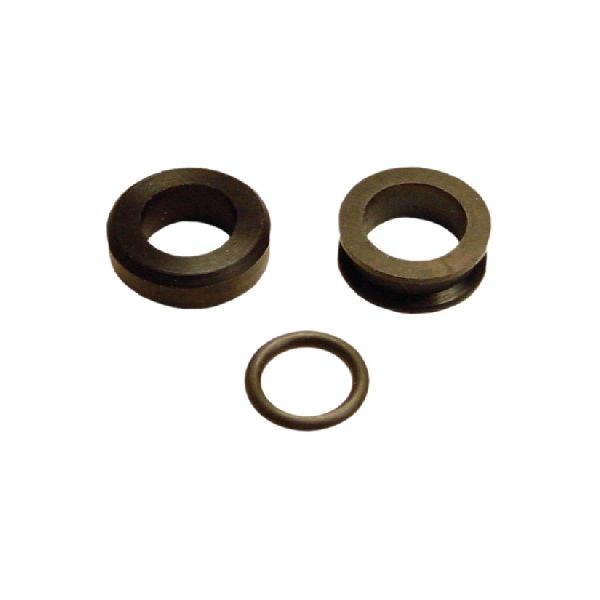
- Ensure the pintle cap and o-rings are present, though they should be replaced anyway.
- If possible, test the resistance with a multimeter before purchase to ensure it's within the 11-13 Ohm range.
- Ask for the donor vehicle's mileage and check for signs of major engine failure (e.g., sludge in the oil cap) which could suggest poor maintenance.
Aftermarket brands forum-validated for this vehicle:
- Denso (Original Equipment Manufacturer)
- Bosch
- Standard Motor Products (SMP)
- Hitachi
- GB Remanufacturing (often recommended on forums for their cleaning and flow-testing process)
Brands owners have reported issues with on this vehicle:
- Unnamed, no-brand injectors from online marketplaces should be avoided. These often have inconsistent flow rates and high failure rates, even if they are inexpensive.
Real Owner Stories
Aggregated from forums and TSBs cited above. Mileages and costs reflect what owners reported in those sources.
Toyota Tacoma (Shared Engine Management)
Symptoms: Rough running, lack of power, and the Check Engine and Trac Off lights were illuminated.
What fixed it: Diagnostic process of checking the injector and wiring (identical to Corolla procedure).
Source hint: tacomaworld.com: OBDII Engine Code P0202 and P0302 Check Engine and Trac off light
Toyota Corolla (9th Generation)
Symptoms: The car was shaking and the engine light was on.
What fixed it: Identified issues related to codes P0202 and P0302.
Source hint: 2carpros.com: Codes P0701, P0202 and P0302, Car Is Shaking
Toyota (FT86 Platform)
Symptoms: Intermittent P0202 codes along with other sensor codes; the issue would appear, be cleared, and then return days later.
What fixed it: Investigation into a wiring short or a failing injector that had not completely died yet.
Source hint: ft86club.com: P0202 engine code and others. What should I do?
Related OBD-II Codes
Frequently Asked Questions
Is there a recall for the Engine Control Module (ECM) on my 2005-2008 Corolla that could cause P0202 symptoms?
My 2009 Corolla has a rattling noise on cold starts along with the check engine light; is this related?
Can I use a used fuel injector to fix the P0202 code on my Toyota?
Does the oil consumption issue on the 2.4L engine affect the fuel injectors?
How can I tell if the P0202 code is a wiring issue or a bad injector on my Corolla?
Helpful Videos

We Have This Part in Stock


The information in this article is provided for general reference and educational purposes only. Vehicle specifications, procedures, and part compatibility can vary by production date, trim level, and region. Always consult your vehicle's factory service manual and verify part numbers before purchasing or performing repairs. Safety-critical components such as airbags, seat belts, and braking systems should be installed by a qualified professional.
- Toyota Corolla:
- 🧭 Diagnostic Flowchart
- 🎬 Helpful Videos
- 🛍️ Shop This Part
- What's Unique About the 2006-2013 Toyota Corolla
- Symptoms You May Notice
- Most Likely Causes
- Rare But Worth Checking
- Diagnosis Steps
- Parts You'll Likely Need
- Related Codes That Often Appear With This One
- Platform-Specific Known Issues
- Mechanic-Grade Diagnostic Values
- Scan Tool Commands That Help
- Wiring & Ground Locations
- OEM Part Supersession History
- Model Year Variations Within This Range
- Other Known Issues on This Vehicle
- Used vs. New Parts: Buying Guide for This Vehicle
- Real Owner Stories
- Toyota Tacoma (Shared Engine Management)
- Toyota Corolla (9th Generation)
- Toyota (FT86 Platform)
- Related OBD-II Codes
- Frequently Asked Questions
- 🎟️ Get 5% Off