

OBD-II Code P0203: Injector Circuit Malfunction - Cylinder 3
What P0203 means, why it triggers, and how to fix it
- P0203 strictly indicates an electrical failure in the cylinder 3 fuel injector circuit, not a mechanical fuel mixture issue.
- A failed fuel injector coil or a damaged wiring harness account for over 90% of P0203 triggers.
- Stop driving immediately if the Check Engine Light flashes to prevent raw fuel from destroying your catalytic converter, a $2,500 repair.
- Test the circuit with a $15 noid light before buying parts to confirm whether the PCM is sending the injection signal.
- Inspect the wiring harness for chafing or heat damage first on 2020+ GM trucks and older Chrysler V8s, as harness failures frequently mimic bad injectors.
What Does P0203 Mean?
P0203 means the Powertrain Control Module (PCM) detects an electrical open or short in the fuel injector circuit for cylinder 3. The injector is not receiving or responding to the electrical command to spray fuel.
Technical definition: The SAE/OBD-II definition is "Injector Circuit/Open – Cylinder 3." The PCM grounds the injector circuit to open the valve. It expects a specific voltage drop and a 35-70V inductive 'kick' when the magnetic field collapses. If this electrical signature is missing, the PCM sets P0203.
Can I Drive With P0203?
Yes, But With Caution. You can drive for short, essential trips under 10 miles, but prolonged driving destroys the catalytic converter, an $800 to $2,500 repair. If the Check Engine Light flashes, pull over and shut off the engine immediately to prevent catastrophic damage.
Common Causes
- Faulty Cylinder 3 Fuel Injector (Very Common) — The internal electronic coil fails, creating an open or short circuit that prevents the injector from operating.
- Damaged Wiring Harness or Connector (Common) — Wires fray, melt, or suffer rodent damage, while connectors loosen or corrode, disrupting the electrical signal to the injector.
- Powertrain Control Module (PCM) Failure (Rare) — The internal transistor (driver) controlling cylinder 3 fails. Suspect this only after definitively ruling out the injector and wiring.
- Blown Fuse or Faulty Relay (Rare) — A blown fuse cuts power to the entire injector bank, usually triggering multiple injector codes alongside P0203.
Symptoms
- Check Engine Light is On or Flashing — A solid light is guaranteed. A flashing light indicates a severe, catalyst-damaging misfire requiring immediate shutdown.
- Rough Idle, Misfire, and Power Loss — The engine shakes, jerks, and hesitates during acceleration because cylinder 3 is dead.
- Poor Fuel Economy — Gas mileage drops noticeably as the PCM inefficiently compensates for the dead cylinder.
- Fuel Smell from Exhaust — Raw, unburned fuel from cylinder 3 dumps directly into the exhaust system.
- Failsafe / Limp Mode Activated — The PCM restricts engine power and speed to protect the drivetrain from further damage.
Diagnostic Flowchart
Tap your situation to follow the diagnostic path that matches what you're seeing on this code.
Common Fixes & Costs
- Replace Cylinder 3 Fuel Injector — Parts: $60-$350, Labor: $120-$300, ~1.5 hr book time (Intermediate)
- Replace Injector Connector Pigtail — Parts: $15-$50, Labor: $100-$200, ~1 hr book time (DIY)
- Repair Wiring Harness — Parts: $20-$100, Labor: $150-$600, ~2.5 hr book time (Advanced)
- Replace Powertrain Control Module (PCM) — Parts: $600-$1200, Labor: $150-$300, ~1.5 hr book time (Professional)
DIY vs Professional
- Replace Fuel Injector — Beginner: No. Recommended for intermediate DIYers.
Tools: Socket set, wrenches, torque wrench, fuel line disconnect tool, safety glasses. - Replace Injector Connector Pigtail — Beginner: Yes, with caution.
Tools: Wire stripper, crimper, heat-shrink butt connectors, heat gun. - Repair Wiring Harness — Beginner: No. Recommended for advanced DIYers.
Tools: Multimeter, wiring diagrams, wire strippers, soldering iron, heat shrink tubing. - Replace PCM — Beginner: No. Professional installation required.
Tools: Basic hand tools, specialized diagnostic programming tools.
Used vs. New Parts: Buying Guide
When a used part is worth it: Buy quality remanufactured injectors instead of used salvage parts. Remanufactured units are cleaned, flow-tested, and rebuilt with new seals, whereas used injectors carry unknown histories.
Donor-vehicle mileage cap: roughly under 75000 miles for the part to have meaningful remaining life.
Donor quality checklist:
- Choose suppliers who use OEM cores (Bosch, Denso) and provide detailed flow-testing reports.
- Avoid 'refurbished' injectors that are only cleaned externally.
- Verify the exact part number to prevent incompatible flow rates.
Decision logic:
- If A new OEM injector costs under $100. → Buy new. The minimal savings on a remanufactured part aren't worth the risk.
- If The vehicle has over 100,000 miles and budget is tight. → Buy a premium remanufactured injector with a multi-year warranty.
- If The engine uses direct injection (GDI) or piezoelectric injectors. → Buy new OEM parts. Performance engines are highly sensitive to flow matching.
Warranty tradeoff: Salvage parts offer 30-90 day warranties. Remanufactured injectors offer 1-year to lifetime warranties. New OEM parts carry a 1-year warranty.
Worst-case if a used part fails: 500-1000. A cheap, faulty injector causes persistent misfires, requiring repeat labor and a second replacement part.
What Happens If You Wait — Timeline
- 0-1 week: P0203 sets with a solid Check Engine Light. A consistent misfire causes rough idle and hesitation. (MPG impact: 5-10%% · Added cost: $0-20 in wasted fuel)
- 1 week - 2 months: The Check Engine Light flashes during acceleration. Unburned fuel coats oxygen sensors and the catalytic converter, emitting a raw fuel smell. (MPG impact: 10-20%% · Added cost: $50-100 in wasted fuel. Risk of O2 sensor damage ($150-300).)
- 2-4 months: The catalytic converter substrate melts from raw fuel saturation. The car enters limp mode. (MPG impact: 20-30%% · Added cost: $800-$2,500 for catalytic converter replacement.)
- 4+ months: The clogged catalytic converter causes severe exhaust backpressure. Unburned fuel dilutes engine oil, scoring cylinder walls and piston rings. (MPG impact: >30%% · Added cost: $2,500-$8,000+ for catalytic converter and engine rebuild.)
Cost of Not Fixing It
- Immediate: Failed emissions test, rough idle, poor acceleration, and a 5-15% drop in fuel economy. (Added cost: 0)
- 1-3 months: Unburned fuel overheats and destroys the catalytic converter, especially if the check engine light flashes. (Added cost: 1000-3000)
- 6+ months: Unburned fuel washes lubricating oil off cylinder walls, causing irreversible wear to piston rings and cylinder bores. (Added cost: 2500-8000)
Diagnosis Steps
- Scan Codes and Review Freeze Frame Data
Confirm P0203 is active. Look for companion codes like P0303 (Cylinder 3 Misfire). Review freeze frame data to identify the exact RPM, load, and temperature when the fault triggered.
Tools: OBD-II Scanner (Beginner) - Visually Inspect and 'Wiggle Test' Wiring
Locate the cylinder 3 injector. Inspect the harness for melting, chafing, or rodent damage. With the engine idling, wiggle the connector and harness; if the idle changes, you have found a loose connection or broken wire.
Tools: Flashlight (Beginner) - Check Injector Pulse with a Noid Light
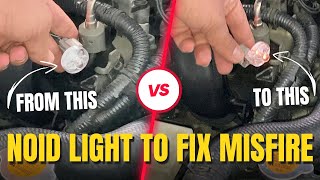
Disconnect the injector harness and plug in a noid light. Crank the engine. A steady flashing light confirms the PCM and wiring are good, pointing to a bad injector. No light means a wiring or PCM fault.
Tools: Noid Light Set (Intermediate) - Test Injector Resistance
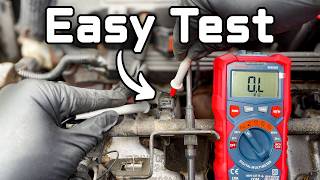
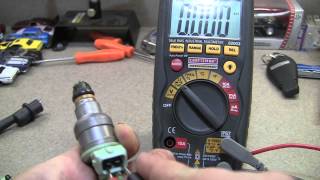
Measure resistance across the injector terminals. Standard port injectors read 11-16 Ohms; low-impedance read 2-5 Ohms; VW TDI piezo injectors read ~200 kOhms. Infinity (OL) or zero confirms a dead injector coil.
Tools: Multimeter (Intermediate) - Swap the Injector
Swap the cylinder 3 injector with an adjacent one. Clear codes and run the engine. If the code follows the injector (e.g., changes to P0202), the injector is bad. If P0203 returns, the wiring or PCM is at fault.
Tools: Basic hand tools (Advanced) - Perform a Voltage Drop Test
Test the power side (B+ wire to battery positive) with the key on; it should read under 0.2V. Test the control side (ground wire to battery negative) while cranking; it should read under 0.5V. Higher readings indicate excessive circuit resistance.
Tools: Multimeter with back-probe pins (Advanced) - Analyze the Injector Waveform
Connect an oscilloscope to the ground-side control wire. A healthy waveform drops sharply from battery voltage to near zero, followed by a 35-70V inductive spike. A missing spike confirms a circuit or PCM driver failure.
Tools: Automotive Oscilloscope (Professional)
When This Code Triggers (Freeze-Frame Conditions)
- Engine Coolant Temp: 170-210°F (Fully warmed up, closed-loop operation.)
- RPM: 1500-3000 (Light acceleration or steady-state cruise.)
- Engine Load: 20-50% (Detected under moderate load rather than at idle or full throttle.)
- Vehicle Speed: 30-60 mph (Occurs during city or highway driving, rarely at a standstill.)
Related Codes
- P0303 — Cylinder 3 Misfire Detected is the direct result of P0203. The circuit failure prevents fuel delivery, causing the misfire. P0303 without P0203 indicates an ignition or mechanical issue.
- P0200 — Injector Circuit/Open indicates a general fault. Seeing P0200 with P0203 suggests a failing fuse, relay, or PCM issue affecting the entire injector driver system.
- P0300 — Random/Multiple Cylinder Misfire appears if the wiring issue is intermittent or a damaged harness affects multiple injector circuits.
- P0171 / P0174 — System Too Lean codes trigger when the non-firing cylinder pumps unburned air into the exhaust. These are symptoms of P0203, not the cause.
Climate & Environmental Factors
- High Humidity / Road Salt: Moisture and salt accelerate corrosion on connector pins, increasing electrical resistance and triggering P0203.
- Extreme Heat Cycles: High engine bay temperatures make wiring insulation brittle, leading to cracks, shorts, and broken connector tabs.
- Rodent Infestation: Rodents chew through soy-based wiring insulation, causing open or short circuits that directly trigger P0203.
How to Talk to a Mechanic About This Code
Say this: "I have a P0203 code for the cylinder 3 injector circuit. Please test the circuit with a noid light and inspect the wiring harness before recommending a fuel injector replacement."
This proves you understand the code points to an electrical circuit issue, not just a bad part. It forces the technician to isolate the fault (injector, wiring, or PCM) instead of blindly replacing the injector.
Avoid saying:
- 'Just fix whatever's wrong.'
- 'My check engine light is on, can you look at it?'
- 'My friend said it's probably the fuel injector, just change it.'
Questions to ask before authorizing the repair:
- What were the results of the noid light test on the cylinder 3 connector?
- What was the resistance measurement (in Ohms) of the fuel injector?
- Did you inspect the wiring harness for damage, especially at known chafe points?
- Is the recommended replacement injector OEM or aftermarket, and what is the warranty?
Where to Take It: Dealer vs Independent vs Chain
- Dealer:
Best for: Vehicles under powertrain or emissions warranty., Vehicles with known manufacturer-specific issues covered by a TSB., Complex German brands requiring injector coding after replacement.
Downsides: Highest labor rate, often double an independent shop., Strict policies often mandate replacing related parts unnecessarily. (Typical cost: +50% vs. baseline) - Independent Shop:
Best fit for most situations. A competent independent shop easily diagnoses and repairs bad injectors or wiring without the dealer price tag.
Best for: Most out-of-warranty vehicles., Straightforward diagnosis and repair of common codes like P0203., Cost-conscious owners with a trusted local mechanic.
Downsides: Diagnostic skill varies. Vet the shop for ASE certifications., May lack specialized programming tools for brand-new models. (Typical cost: +0% vs. baseline) - Chain Shop:
Avoid for initial diagnosis. They routinely replace the injector without proper circuit testing, wasting your money if the fault is in the wiring.
Best for: Simple part replacements where the diagnosis is already 100% certain.
Downsides: Technician skill varies dramatically., Lack advanced diagnostic tools to trace complex electrical faults., High pressure to upsell useless services like fuel system cleanings. (Typical cost: -10% vs. baseline)
When to Walk Away From the Repair
If the estimated repair cost for P0203 exceeds 40-50% of your car's private-party value, seriously consider selling the car as-is.
- Car worth $4000, fix is $600: Fix it. The repair cost is well below the threshold and restores drivability.
- Car worth $3000, fix is $1500: Walk away. The repair cost is 50% of the car's value.
- Car worth $15000, fix is $1800: Borderline, likely fix. This only happens during rare PCM failures. Get a second opinion before authorizing.
What Scan Tool You Need for This Code
Minimum: A code reader that displays live data, specifically cylinder-specific misfire counts.
A $20 reader only provides the P0203 code. Live misfire data confirms the fault's severity and verifies the fix. Advanced tools test the circuit directly.
Budget: BlueDriver Pro Scan Tool (~$100) — Connects to your smartphone to read codes, view freeze-frame data, and graph live misfire counts to confirm P0203 is causing a performance issue.
Mid-range: Foxwell NT809 / Autel MaxiCheck MX808S (~$300-450) — Offers bidirectional control to command the injector to 'buzz' on-demand, testing its mechanical function without removing it from the engine.
Professional: Autel MaxiCOM MK906BT / Launch X431 Series (~$600-1200) — Provides full bidirectional control and performs critical 'injector coding' required after installing new injectors on brands like BMW.
Rent vs buy: Auto parts stores scan codes for free, but their tools lack live data. Buying a budget or midrange scanner is a mandatory investment for DIY diagnosis.
How to Clear the Code After You Fix It
- Use an OBD-II scan tool to clear the P0203 code.
- Start the engine and verify the Check Engine Light remains off.
- Perform a complete OBD-II drive cycle to set all readiness monitors.
Drive cycle (~30 minutes): A standard drive cycle requires a cold start (engine off for 8+ hours), 3 minutes of idling, 15 minutes of mixed city driving, and a 5-minute steady cruise at 55-60 mph to reach normal operating temperature.
Readiness monitors affected: Catalyst Monitor, Oxygen (O2) Sensor Monitor, Misfire Monitor
Before emissions retest: drive at least 50 miles to fully set monitors.
Watch out for:
- Disconnecting the battery clears the code but resets all readiness monitors, causing an automatic emissions test failure.
- The code returns immediately if the underlying electrical fault was not repaired.
- Generic drive cycles fail to set monitors on vehicles with strict, manufacturer-specific cycle requirements.
Will This Fail Emissions / State Inspection?
Yes — this code typically fails an OBD-II emissions inspection.
- California: An active P0203 triggers an automatic smog check failure. You must complete a full OBD-II drive cycle after repair before retesting.
- New York: The NYS inspection includes an OBD-II scan. P0203 causes an immediate failure.
- Texas: In emissions-testing counties, an illuminated Check Engine Light for P0203 guarantees failure. Monitors must read 'Ready' to pass.
Most Commonly Affected Vehicles
- Chevrolet/GMC Silverado, Sierra, Tahoe, Suburban (2020-2024) — GM TSBs #22-NA-087 and #21-NA-149 identify wiring harnesses chafing against ECM brackets or shock towers. Repairs require replacing both the injector and pigtail connector.
- Dodge/Ram/Jeep Ram 1500, Grand Cherokee, Durango (4.7L, 5.7L V8) (1999-2013) — The wiring harness running across the intake manifold becomes brittle from heat and fails. Often misdiagnosed as a bad injector.
- Jeep Wrangler (JK), Grand Cherokee (3.6L V6) (2007-2018) — Moisture intrusion corrodes wiring harness connectors, or engine vibration breaks exposed wires.
- Ford F-150 (Multiple Engines) (2011-Present) — Wiring harness abrasion against engine components is a known cause. EcoBoost engines add complexity, but the root cause remains electrical.
- Volkswagen/Audi Golf, Jetta, A3, A4 (1.6L TDI) (2009-2015) — Piezoelectric injectors frequently develop internal open circuits. Good injectors read ~200 kOhms; faulty ones read significantly lower or open.
- Kia/Hyundai Sorento, Optima, Sonata, Elantra (2011-2020) — Caused by bad injectors, loose connectors, or rodents chewing soy-based wiring insulation.
- Honda Civic, CR-V, Accord (2006-2021) — Usually points directly to a failing injector, though corroded connectors from failed weather seals must be checked first.
- BMW 3-Series, 5-Series (2006-2017) — Failed piezoelectric injectors are common. New injectors must be coded to the DME (PCM) with specific flow rate values to run correctly.
Manufacturer-Specific Notes
- Chrysler/Dodge/Jeep: V8 and V6 injector wiring harnesses route through extreme heat zones, causing wires to break internally near connectors. Wiring faults are more likely than injector faults.
- General Motors (GM): 2020-2024 trucks have multiple TSBs for harness chafing or broken connector pins. Official repairs mandate replacing both the injector and its harness pigtail.
- Volkswagen/Audi: 1.6L TDI piezoelectric injectors develop internal open circuits. Diagnosis requires measuring resistance; a healthy injector reads ~200 kOhms.
- BMW: Direct-injection engines require new piezoelectric injectors to be programmed into the DME (PCM) with unique flow-rate calibration values using a diagnostic tool.
Real Owner Stories
2020 Chevrolet Silverado 1500 with Intermittent Misfire
Owner experienced a rough idle and flashing check engine light at highway speeds. Codes P0203 and P0303 were present.
What they tried:
- Swapped the cylinder 3 injector with cylinder 1 to see if the code followed the part.
Outcome: The code remained P0203. Guided by GM TSB 22-NA-087, the owner found a chafed wire near the driver-side shock tower. Repairing the wire and adding protective loom fixed the issue permanently.
Lesson: On late-model GM trucks, thoroughly inspect the wiring harness for chafing at known points before replacing an injector.
2014 Jeep Cherokee 3.2L with Sudden Misfire on a Road Trip
The check engine light illuminated and the engine misfired violently at highway speeds, throwing code P0203.
What they tried:
- Replaced all six spark plugs in a hotel parking lot, which failed to solve the problem.
Outcome: The owner realized an 'open circuit' code required electrical diagnosis. A shop confirmed the cylinder 3 injector had a dead internal coil. Replacing the injector resolved the misfire.
Lesson: Do not replace ignition parts for an injector circuit code. A simple noid light test quickly isolates the failure point.
2011 Ford Fusion Sport 3.5L with Random, Severe Misfire
The car ran perfectly, then suddenly misfired violently with codes P0203 and P0303. The problem disappeared randomly overnight.
What they tried:
- Planned to swap injectors to track the fault.
Outcome: The intermittent behavior pointed to wiring. Wiggling the cylinder 3 injector connector caused the misfire to start and stop. Replacing the connector pigtail provided a permanent solution.
Lesson: The 'wiggle test' is a powerful diagnostic tool for intermittent electrical faults. If manipulating a connector triggers the symptom, you have found the problem.
2010 VW Jetta 1.6L TDI with Limp Mode
The car entered limp mode with P0203 after revving over 3500 RPM.
What they tried:
- Checked wiring voltage at the injector connector, which appeared normal.
Outcome: A VCDS scan showed massive fuel quantity deviation for cylinder 3. The fault was an internal failure of the piezoelectric injector. Replacing the injector fixed the problem.
Lesson: On VW TDI engines, P0203 is usually a failed injector. Voltage checks are insufficient; you must measure resistance (~200 kOhms) or observe deviation with a scan tool.
How to Prevent This Code From Triggering
- Use TOP TIER™ Detergent Gasoline (Every fill-up) — High detergent concentrations prevent nozzle deposits. While P0203 is electrical, severe mechanical sticking is sometimes misinterpreted by the PCM as a circuit fault.
- Protect Wiring Harnesses in High-Heat Areas (During related maintenance) — Engine heat makes wiring insulation brittle. Use high-temperature wire loom or reflective sleeving to protect vulnerable injector harnesses.
- Apply Dielectric Grease to Connectors (When replacing an injector or connector) — Dielectric grease seals out moisture and prevents corrosion on electrical pins, eliminating high resistance and intermittent faults.
- Change the Fuel Filter (Per manufacturer schedule (e.g., every 30,000 miles)) — Clean filters prevent microscopic debris from reaching injectors. Severe contamination causes injectors to stick, potentially triggering circuit codes.
Frequently Asked Questions
Can I fix P0203 myself?
Intermediate DIYers can replace an accessible fuel injector or splice a connector pigtail. Tracing intermittent wiring faults or replacing a PCM requires professional tools. Stop DIYing and tow to a shop if you lack a multimeter or noid light.
Will a fuel injector cleaner fix a P0203 code?
No. P0203 is an electrical circuit fault, not a mechanical clog. Cleaners remove carbon deposits but cannot repair a broken internal coil, severed wire, or corroded connector.
What is the most common misdiagnosis for P0203?
The most common mistake is replacing the fuel injector without testing the circuit. If a broken wire prevents the signal from reaching the injector, a new part will not fix the problem. Always use a noid light to verify the signal first.
Will P0203 fail an emissions or smog test?
Yes. An active P0203 triggers the Check Engine Light, resulting in an automatic OBD-II emissions failure. The resulting misfire also causes high hydrocarbon emissions that fail tailpipe sniff tests.
How do I find which cylinder is number 3?
Cylinder 1 is typically closest to the front of the engine (the belt side). On inline engines, cylinder 3 is the third one back. On V6/V8 engines, bank layouts vary wildly, so you must consult a vehicle-specific repair manual.
My check engine light is flashing with a P0203, what does that mean?
A flashing light indicates a severe misfire dumping raw, unburned fuel directly into the exhaust. This superheats and destroys the catalytic converter in minutes. Pull over immediately and tow the vehicle to prevent a $2,500 repair.
Can a bad battery or alternator cause P0203?
Yes, but it is rare. A failing alternator causes erratic system voltage. Because the PCM relies on precise voltage readings, extreme fluctuations sometimes trick it into falsely flagging an injector circuit fault.
Will this code clear itself?
No. P0203 indicates a hard electrical fault that requires physical repair. Once fixed, clear the code with a scan tool or wait for the PCM to clear it automatically after several successful drive cycles.
Key Takeaways
- P0203 strictly indicates an electrical failure in the cylinder 3 fuel injector circuit, not a mechanical fuel mixture issue.
- A failed fuel injector coil or a damaged wiring harness account for over 90% of P0203 triggers.
- Stop driving immediately if the Check Engine Light flashes to prevent raw fuel from destroying your catalytic converter, a $2,500 repair.
- Test the circuit with a $15 noid light before buying parts to confirm whether the PCM is sending the injection signal.
- Inspect the wiring harness for chafing or heat damage first on 2020+ GM trucks and older Chrysler V8s, as harness failures frequently mimic bad injectors.
Helpful Videos
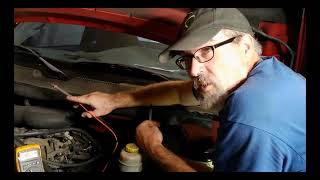
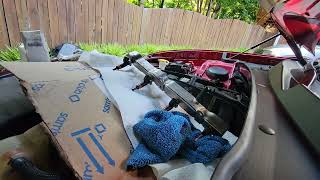
Shop the Parts Behind P0203
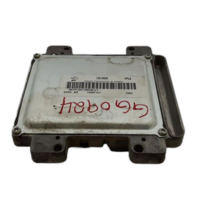
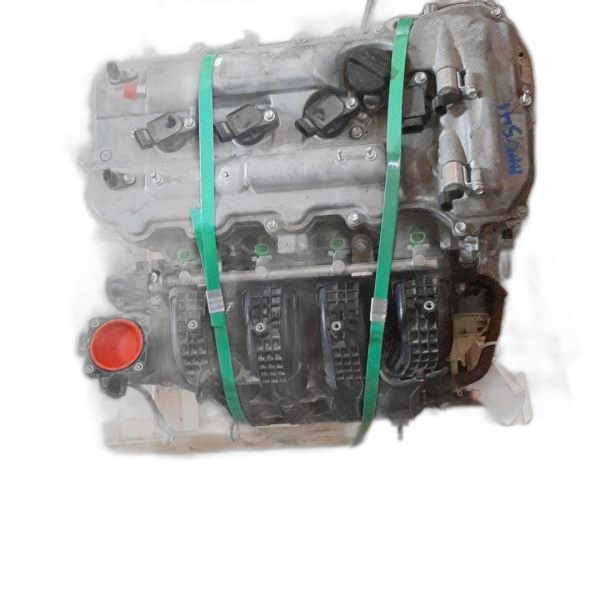
Below are the parts most often responsible for code P0203, ranked by how frequently each one is the actual culprit (per the diagnosis above). Tap any to see what we have for your vehicle.






The information in this article is provided for general reference and educational purposes only. Vehicle specifications, procedures, and part compatibility can vary by production date, trim level, and region. Always consult your vehicle's factory service manual and verify part numbers before purchasing or performing repairs. Safety-critical components such as airbags, seat belts, and braking systems should be installed by a qualified professional.
- 🧭 Diagnostic Flowchart
- 🎬 Helpful Videos
- 🛍️ Shop This Part
- What Does P0203 Mean?
- Can I Drive With P0203?
- Common Causes
- Symptoms
- Common Fixes & Costs
- DIY vs Professional
- Used vs. New Parts: Buying Guide
- What Happens If You Wait — Timeline
- Cost of Not Fixing It
- Diagnosis Steps
- When This Code Triggers (Freeze-Frame Conditions)
- Related Codes
- Climate & Environmental Factors
- How to Talk to a Mechanic About This Code
- Where to Take It: Dealer vs Independent vs Chain
- When to Walk Away From the Repair
- What Scan Tool You Need for This Code
- How to Clear the Code After You Fix It
- Will This Fail Emissions / State Inspection?
- Most Commonly Affected Vehicles
- Manufacturer-Specific Notes
- Real Owner Stories
- 2020 Chevrolet Silverado 1500 with Intermittent Misfire
- 2014 Jeep Cherokee 3.2L with Sudden Misfire on a Road Trip
- 2011 Ford Fusion Sport 3.5L with Random, Severe Misfire
- 2010 VW Jetta 1.6L TDI with Limp Mode
- How to Prevent This Code From Triggering
- Frequently Asked Questions
- Can I fix P0203 myself?
- Will a fuel injector cleaner fix a P0203 code?
- What is the most common misdiagnosis for P0203?
- Will P0203 fail an emissions or smog test?
- How do I find which cylinder is number 3?
- My check engine light is flashing with a P0203, what does that mean?
- Can a bad battery or alternator cause P0203?
- Will this code clear itself?
- Key Takeaways
- 🎟️ Get 5% Off