

P0203 on 2011-2014 Chevrolet Camaro: Injector Circuit Malfunction Causes and Fixes
On a 2011-2014 Camaro, code P0203 most often points to a faulty fuel injector on cylinder 3 or a damaged wiring harness. A critical GM Technical Service Bulletin (TSB #PIP4924D) highlights that the injector wiring can chafe against the intake plenum, valve cover bolts, or fuel lines. Before replacing parts, inspect the wiring harness thoroughly. Expect to pay $70-$190 for an OEM ACDelco injector, noting that V6 and V8 engines use different types with different resistance values.
- Before buying parts, thoroughly inspect the cylinder 3 injector wiring harness for damage, as this is a known issue on Camaros per GM TSB #PIP4924D.
- Confirm your engine (V6 or V8) to correctly locate cylinder 3. It's on the passenger side for the V6 and the driver's side for the V8.
- A simple 'noid light' test can quickly tell you if the injector is receiving a signal from the computer, helping you differentiate between a wiring/ECM problem and a bad injector.
- If you replace the injector, swapping it with one from another cylinder first is a free and effective way to confirm it's the faulty part.
- Do not mistake this electrical circuit code (P0203) for a spark or compression issue. Replacing spark plugs will not fix this code.
What's Unique About the 2011-2014 Chevrolet CAMARO
For this generation of Camaro, General Motors issued Technical Service Bulletin #PIP4924D, which specifically addresses a list of injector circuit codes, including P0203. The bulletin points to the fuel injector wiring harness rubbing through or developing internal opens as a common problem. Specific chafe points to inspect are where the harness may contact the intake plenum, valve cover bolts, fuel lines, and the side of the cylinder head under the plenum. This makes a wiring inspection a critical first step, as the issue may not be the injector itself but the harness.
Diagnostic Flowchart
Tap your situation to follow the diagnostic path that matches what you're seeing on this vehicle.
Symptoms You May Notice
- Check Engine Light is on
- Service Stabilitrak warning light may appear
- Engine running rough or vibrating
- Noticeable engine misfire, felt as a shake or stumble
- Reduced engine power and poor acceleration
- Decreased fuel economy
- Engine may stall at idle
- Hesitation during acceleration
- Replacing the spark plug or ignition coil for cylinder 3. While these parts can cause a misfire code (P0303), they will not cause an injector circuit code like P0203, which is specifically an electrical fault.
Most Likely Causes
- Damaged Fuel Injector Wiring Harness 🔴 High Probability → Shop Engine Wiring Harness GM TSB #PIP4924D specifically calls out that the injector wiring harness is prone to rubbing against the intake plenum, valve cover bolts, fuel lines, or the side of the cylinder head, causing shorts or open circuits. This issue is widespread across many GM vehicles that use the same family of engines.
How to confirm: Visually inspect the entire length of the wiring going to the cylinder 3 injector. Pay close attention to the chafe points mentioned in the TSB. Use a multimeter to check for continuity and shorts to ground on both wires at the injector connector. Wiggle the harness while the engine is running (if possible) to see if it induces the misfire.
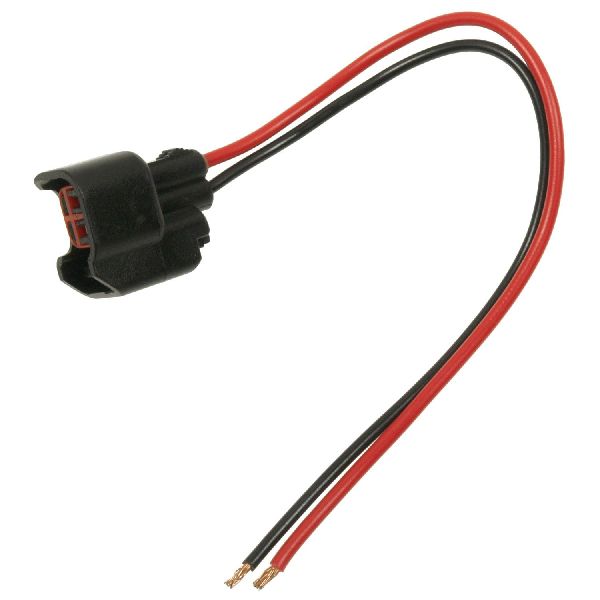
Typical fix: Repair the damaged section of wire using solder and heat-shrink tubing. If the damage is severe or near the connector, replace the injector connector pigtail. Secure the harness away from sharp edges or hot components with zip ties to prevent future chafing. 🎬 See this quick tip for repairing and protecting chafed wires.
Est. part cost: $10-$35 for a new pigtail connector. - Faulty Cylinder 3 Fuel Injector 🟡 Medium Probability → Shop Fuel Injector
How to confirm: First, check the injector's internal resistance with a multimeter. For V8 (LS3/L99) engines, it should be around 12 ohms (high impedance). For V6 (LFX) engines, it should be between 1.2 and 1.8 ohms (low impedance/direct injection). An 'OL' (open) or 0 reading indicates failure. As a final confirmation, swap the cylinder 3 fuel injector with an injector from another cylinder (e.g., cylinder 1). Clear the codes and run the engine. If the code changes to P0201 (for cylinder 1), the injector is faulty.
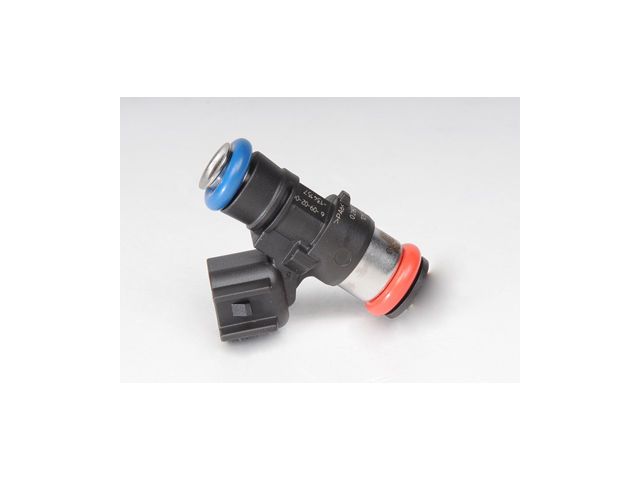
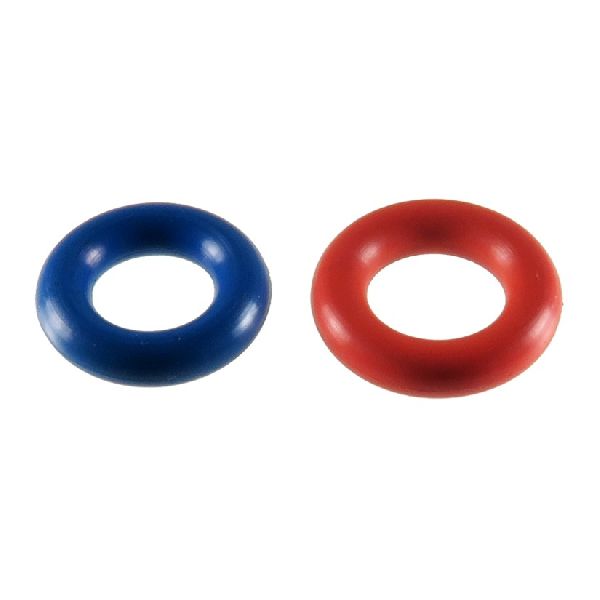
Typical fix: Replace the faulty fuel injector. It is often recommended to replace the O-rings and seals at the same time. Some owners choose to replace all injectors on one bank if they are high mileage.
Est. part cost: $70-$190 for one OEM injector, depending on the engine. 🎬 Watch: How to rebuild a 3.6L Camaro fuel injector.
- Poor Connection at Injector ⚪ Low Probability
How to confirm: Inspect the electrical connector at the fuel injector for corrosion, bent pins, or a loose fit. Disconnect and reconnect it several times to ensure a solid connection. On some intermittent faults, simply clearing the code may cause the car to run smoothly for a short time before the fault returns, pointing towards a connection or wiring issue.
Typical fix: Clean the connector terminals with electrical contact cleaner. If pins are damaged, the connector pigtail should be replaced. Apply a small amount of dielectric grease to the connector to prevent moisture intrusion.
Est. part cost: $0-$35
Rare But Worth Checking
- Faulty Engine Control Module (ECM): → Shop Engine Control Module (ECM) This is the least likely cause. The internal driver circuit in the ECM that controls the injector can fail. This should only be considered after all other possibilities (injector, wiring, connectors) have been thoroughly ruled out. A shop had to investigate the ECM for one owner after the injector and wiring were checked and found to be okay.
Diagnosis Steps
- Confirm Cylinder 3 Location: Identify the correct cylinder. For V8 models (SS), cylinder 3 is the second cylinder from the front on the driver's side (Bank 1 is 1-3-5-7, Bank 2 is 2-4-6-8). For V6 models (LFX), cylinder 3 is the middle cylinder on the passenger side (Bank 1/Right Bank is 1-3-5, Bank 2/Left Bank is 2-4-6).
- Check for TSB Evidence: Visually inspect the fuel injector wiring harness for chafing or damage, especially in the areas noted by TSB #PIP4924D: against the intake plenum, at valve cover bolts, against fuel lines, and on the side of the head.
- Inspect Connector: Check the electrical connector on the cylinder 3 injector for corrosion, damage, or loose pins. Ensure it is fully seated.
- Test the Circuit Signal: Use a noid light to test the injector connector. The light should flash steadily when the engine is cranking or running, indicating the ECM is sending a signal. If it doesn't flash, the problem is in the wiring or the ECM.
- Test the Injector Resistance: Disconnect the injector and set a multimeter to Ohms (Ω). For V8 (LS3/L99), a good injector reads ~12 Ω. For V6 (LFX), a good injector reads between 1.2-1.8 Ω. A reading of 'OL' (open circuit) or near zero means the injector is bad.
- Swap Injectors: As a final confirmation, swap the cylinder 3 injector with one from another cylinder (e.g., cylinder 1). Clear the codes. If the trouble code follows the injector to its new location (e.g., P0203 moves to P0201), the injector is confirmed to be faulty.
- Diagnose ECM: If the wiring is perfect, the connector is good, and a known-good injector still doesn't fire on cylinder 3 (noid light test fails on that connector), the ECM's injector driver may be at fault. This requires professional diagnosis.
Parts You'll Likely Need
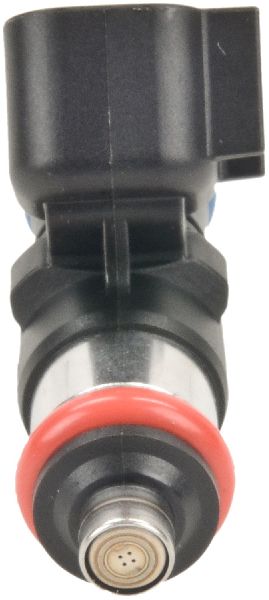
- Fuel Injector (V8 - 6.2L LS3/L99)
(OEM #12576341)— This is the most likely part to have failed if the wiring harness is intact. This is a high-impedance injector.
Trusted brands: ACDelco, Bosch
OEM price range: $70-$95
Aftermarket price range: $35-$60 - Fuel Injector (V6 - 3.6L LLT/LFX)
(OEM #12669384)— This is the most likely part to have failed if the wiring harness is intact. This is a low-impedance direct injector. Note: This part number supersedes 12638530, 12632255, and 12611545.
Trusted brands: ACDelco, Standard Motor Products
OEM price range: $110-$190
Aftermarket price range: $80-$120 - Fuel Injector Connector Pigtail
(OEM #ACDelco PT2160)— Needed if the wiring is damaged at the connector, a common issue identified in a GM TSB.
Trusted brands: ACDelco, Dorman, Standard Motor Products
OEM price range: $25-$40
Aftermarket price range: $10-$25
Related Codes That Often Appear With This One
- P0303 — P0303 means "Cylinder 3 Misfire Detected." Since P0203 indicates a fault that prevents the cylinder 3 injector from delivering fuel, a misfire in that cylinder is a direct consequence and is almost always present with the injector circuit code.
Technical Service Bulletins (TSBs) & Recalls
- PIP4924D: Addresses misfires and injector codes (P0201-P0208, etc.) caused by the fuel injector wiring harness rubbing through or having internal opens. It instructs technicians to inspect the harness carefully in several common chafe locations: 'against the intake plenum, at valve cover bolts, against the fuel line and on the side of the head under the plenum.'
Platform-Specific Known Issues
- Wiring Harness Chafing: TSB #PIP4924D confirms that the fuel injector wiring harness is susceptible to rubbing through its insulation against various engine components, leading to an open or short circuit that triggers injector codes like P0203. The most common chafe points are against the intake plenum, valve cover bolts, fuel lines, and the side of the cylinder head.
Mechanic-Grade Diagnostic Values
- Fuel Pressure (V8 LS3/L99) — expected: 58 psi at the rail, though stock programming may allow it to drop to ~48-51 psi under high RPM load.. Failure: Significantly lower pressure can indicate a weak fuel pump, but will not directly cause a P0203 circuit code.
- Low-Side Fuel Pressure (V6 LFX) — expected: 35-75 psi from the in-tank pump.. Failure: Low pressure from the in-tank pump will starve the high-pressure pump and cause performance issues, but not a P0203 circuit code.
- High-Side Fuel Pressure (V6 LFX) — expected: 500 psi at idle, rising to over 2,500 psi under load.. Failure: Incorrect high-side pressure points to an issue with the high-pressure fuel pump, not typically the injector circuit.
- Injector Pulse Width (at idle) — expected: Typically 1-8 milliseconds (ms).. Failure: A scan tool showing zero pulse width for cylinder 3 confirms the ECM has shut down the circuit.
- Injector Connector Voltage (Control Wire) — expected: A flashing 12V to 0V square wave signal when tested with an oscilloscope or a flashing noid light while the engine is cranking/running.. Failure: No flash, or a constant light, indicates a problem with the wiring or the ECM driver.
- Injector Connector Voltage (Power Wire) — expected: Constant battery voltage (~12V) with the ignition on.. Failure: No voltage indicates a break in the power supply wire or a blown fuse/relay.
Scan Tool Commands That Help
- GDS2 (GM Dealer Software): Fuel Injector Balance Test — This is a critical bidirectional test to isolate the fault. For V8s, it can disable injectors one by one to monitor RPM drop. For V6s (GDI), it performs a pressure drop test on each injector. If cylinder 3 fails to respond or shows no pressure drop while others do, it confirms a fault in that specific circuit (injector, wiring, or ECM driver).
Wiring & Ground Locations
- G107 / G108 — G107 is on the right rear of the engine and G108 is on the left rear of the engine (for V8 models). Forum members also report critical grounds on the back of both cylinder heads.. A poor engine ground can cause a host of electrical issues, including erratic sensor readings and intermittent circuit faults. While not a direct cause of a single injector code, verifying major grounds are clean and tight is a crucial step in any electrical diagnosis.
- Cylinder 3 Injector Wires — At the injector connector and running back to the ECM. On similar GM V8s, the power wire is typically Pink/Gray and the control (ground pulse) wire is Brown/Tan.. These are the two wires that make up the circuit. One must have constant power, and the other must receive a pulse from the ECM. A break or short in either wire will set P0203.
- Passenger Side Block-to-Frame Ground — A ground strap located underneath the passenger exhaust manifold, near the starter. It is known to be difficult to access.. This specific ground is mentioned by owners as being potentially loose from the factory, causing various hard-to-diagnose electrical problems. Checking its integrity can resolve intermittent issues that other tests might miss.
Real Owner Repair Stories
- Reddit user on r/camaro (2011 Camaro SS (LS3)) — P0203 code, engine shaking.
❌ Tried (didn't work) Replacing the fuel injector, Cleaning the fuel injector
✅ What actually fixed it The user noted that after clearing the code, the car would run perfectly smooth for a period of driving before the code and symptoms returned. This intermittent behavior strongly suggests the root cause was not a completely failed injector, but rather a wiring issue, such as a chafed wire making intermittent contact or a loose pin in a connector. - Camaro5 Forums user (2011 Camaro SS, 66,000 miles) — P0203, hesitation in 1st/2nd gear, Service Stabilitrak light.
❌ Tried (didn't work) Replacing the cylinder 3 injector with a new AC Delco part, Replacing spark plugs and wires, Cleaning the MAF sensor
✅ What actually fixed it The owner confirmed with a noid light that the injector circuit was receiving a pulse. After multiple failed part swaps, they took it to a repair shop. The shop re-checked the new injector and wiring harness and found no faults, leading them to begin testing the Engine Control Module (ECM) as the final possible culprit. The thread does not contain the final confirmed fix, but illustrates a case where the common causes were ruled out, pointing towards a rare ECM failure.
OEM Part Supersession History
12611545, 12632255, 12638530→12669384— Standard part evolution for improved performance, reliability, or manufacturing efficiency.
Heads up: These part numbers apply to the V6 (LFX/LLT) direct injection engine. Using an incorrect part number can lead to running issues. Always verify the part number for your specific engine and VIN.
Model Year Variations Within This Range
- 2011-2014: The most significant variation is the engine type. V6 models (LFX) use a high-pressure direct injection fuel system with low-impedance injectors. V8 models (LS3/L99) use a lower-pressure port injection system with high-impedance injectors. Diagnostic values like resistance and fuel pressure are completely different between the two and are not interchangeable.
Helpful Videos


We Have This Part in Stock


The information in this article is provided for general reference and educational purposes only. Vehicle specifications, procedures, and part compatibility can vary by production date, trim level, and region. Always consult your vehicle's factory service manual and verify part numbers before purchasing or performing repairs. Safety-critical components such as airbags, seat belts, and braking systems should be installed by a qualified professional.
- Chevrolet CAMARO:
- 🧭 Diagnostic Flowchart
- 🎬 Helpful Videos
- 🛍️ Shop This Part
- What's Unique About the 2011-2014 Chevrolet CAMARO
- Symptoms You May Notice
- Most Likely Causes
- Rare But Worth Checking
- Diagnosis Steps
- Parts You'll Likely Need
- Related Codes That Often Appear With This One
- Technical Service Bulletins (TSBs) & Recalls
- Platform-Specific Known Issues
- Mechanic-Grade Diagnostic Values
- Scan Tool Commands That Help
- Wiring & Ground Locations
- Real Owner Repair Stories
- OEM Part Supersession History
- Model Year Variations Within This Range
- 🎟️ Get 5% Off