

P0203 on 2012-2014 Chevrolet Impala: Injector Circuit Malfunction Causes and Fixes
On a 2012-2014 Impala with the 3.6L LFX engine, code P0203 most often points to a wiring issue or a faulty #3 fuel injector. Per GM TSB #PIP4924D, the injector wiring harness is known to chafe against the intake plenum or cylinder head. A thorough visual inspection of the harness is critical before replacing the injector. Cylinder #3 is on the rear bank (firewall side), making access more difficult. An OEM injector costs around $85-$110.
- P0203 on a 2012-2014 Impala indicates an electrical problem with the cylinder 3 fuel injector circuit.
- Before replacing the injector, thoroughly inspect the wiring harness for damage, as this is a known issue noted in GM TSB #PIP4924D.
- The most common fix is replacing the cylinder 3 fuel injector, but confirming with a noid light or by swapping injectors can prevent misdiagnosis.
- Always replace fuel injector O-rings and seals when replacing an injector to prevent fuel leaks.
- Do not drive for extended periods with this code, as the resulting misfire can destroy your catalytic converter.
What's Unique About the 2012-2014 Chevrolet IMPALA
For this generation of Impala with the 3.6L V6, General Motors issued Technical Service Bulletin #PIP4924D, which specifically addresses a range of injector circuit codes, including P0203. The bulletin advises technicians to carefully inspect the fuel injector wiring harness for damage where it might rub against the intake plenum, valve cover bolts, fuel lines, or the side of the cylinder head under the plenum. This known vulnerability makes wiring issues a more common cause on this platform than on a typical vehicle, making a thorough visual inspection a critical first step before replacing parts. The issue is common to many GM vehicles using the 3.6L LFX engine.
Diagnostic Flowchart
Tap your situation to follow the diagnostic path that matches what you're seeing on this vehicle.
Generation note: This range covers two Impala generations. The 2012 and 2013 models belong to the ninth generation (W-body). In 2014, the tenth generation (Epsilon II platform) was introduced, but the ninth generation continued to be sold as the 'Impala Limited' primarily to fleet customers. Both generations in this timeframe used the 3.6L LFX V6 engine, so the primary causes are similar. However, accessing cylinder #3 on this transverse-mounted engine requires removing the upper intake manifold 🎬 Watch this detailed guide on removing the intake and injectors., as it is located on the rear bank, closer to the firewall.
Symptoms You May Notice
- Check Engine Light is on
- Rough or shaking idle
- Engine misfire, felt as a hesitation or stumble during acceleration
- Reduced engine power and sluggish performance
- Poor fuel economy
- Strong fuel smell from the exhaust
- Replacing the spark plug or ignition coil for cylinder 3. While these parts can cause a misfire (code P0303), they will not cause an injector circuit code like P0203, which is specifically an electrical fault detected by the ECM.
Most Likely Causes
- Damaged Fuel Injector Wiring or Connector 🔴 High Probability → Shop Fuel Injector GM TSB #PIP4924D specifically calls out the potential for the injector wiring harness to chafe against engine components like the intake plenum, valve cover bolts, fuel lines, and the side of the cylinder head. This is a well-documented issue across many GM models with the 3.6L V6.
How to confirm: Visually inspect the wiring harness leading to the cylinder 3 injector for any signs of rubbing, melting, or corrosion, especially where it routes under the intake manifold. Check for a solid connection at the injector plug. Use a noid light to confirm the ECM is sending a pulse signal 🎬 See how to diagnose injector circuit malfunctions step-by-step. to the connector; a flashing light suggests the wiring and ECM are good.
Typical fix: Repair the damaged section of the wire using solder and heat-shrink tubing. If the connector is damaged, replace the connector pigtail (a common part is ACDelco PT2183). Secure the repaired harness with zip ties or new loom to prevent future chafing.
Est. part cost: $15-$50 - Faulty Cylinder 3 Fuel Injector 🟡 Medium Probability → Shop Fuel Injector Direct injection injectors operate under high pressure and can fail internally over time. An internal coil winding can break, creating an open circuit.
How to confirm: Test the injector's internal resistance with a multimeter. For the LFX engine, direct injectors typically have a low resistance, around 1.2-1.8 Ohms; a reading of infinity (OL) indicates an open/failed injector. Compare the reading to an adjacent injector. The most definitive test is to swap the #3 injector with one from another cylinder (e.g., cylinder #1). If the code changes to P0201, the injector is faulty.
Typical fix: Replace the faulty fuel injector and its O-ring seals. Accessing the rear bank requires removing the upper intake manifold.
Est. part cost: $60-$110 - Powertrain Control Module (PCM/ECM) Failure ⚪ Low Probability → Shop Engine Control Module (ECM)
How to confirm: This should only be considered after the injector and wiring have been definitively ruled out. A professional scan tool can monitor the injector driver output from the ECM. An absence of a signal, when wiring and the injector are known to be good, points to an internal module failure.
Typical fix: Replace and reprogram the Engine Control Module.
Est. part cost: $600-$900
Diagnosis Steps
- Scan for P0203 and any other codes. Note if other injector codes (P020X) or misfire codes (P030X) are present.
- Locate Cylinder #3. On the transverse 3.6L LFX engine, the cylinders are numbered 1-3-5 on the rear bank (firewall side) and 2-4-6 on the front bank (radiator side), from passenger to driver side. Cylinder #3 is the middle cylinder on the rear bank.
- With the engine running, use a mechanic's stethoscope to listen to the #3 fuel injector. It should have a steady, rhythmic clicking. Compare its sound to an adjacent injector (like #1 or #5). No click suggests an electrical or mechanical failure.
- Disconnect the injector and use a noid light to test for an electrical pulse from the ECM while the engine is cranked. A consistent flashing light indicates the ECM and wiring up to the connector are likely okay, pointing to a bad injector. No flash or a steady light points to a wiring or ECM issue.
- If the noid light test fails, inspect the wiring harness. This requires removing the upper intake manifold to access the rear injector harness. Carefully inspect for chafing, breaks, or shorts, paying close attention to the areas mentioned in TSB #PIP4924D: against the intake plenum, valve cover bolts, fuel lines, and the side of the cylinder head.
- If wiring appears good, test the injector. Disconnect the #3 injector and measure its resistance with a multimeter. It should be low, typically between 1.2 and 1.8 Ohms for this direct injection engine. A reading of OL (Open Loop) or infinite resistance means the injector has failed.
- As a final confirmation, swap the #3 injector with one from another cylinder on the same bank (e.g., cylinder #1). Clear the codes and run the engine. If the code moves to P0201, the injector is confirmed to be the fault. If P0203 returns, the issue is in the wiring or ECM.
- If all other steps fail to find a fault in the wiring or injector, the ECM's injector driver circuit may be faulty. This requires professional diagnosis and likely replacement of the ECM.
Parts You'll Likely Need
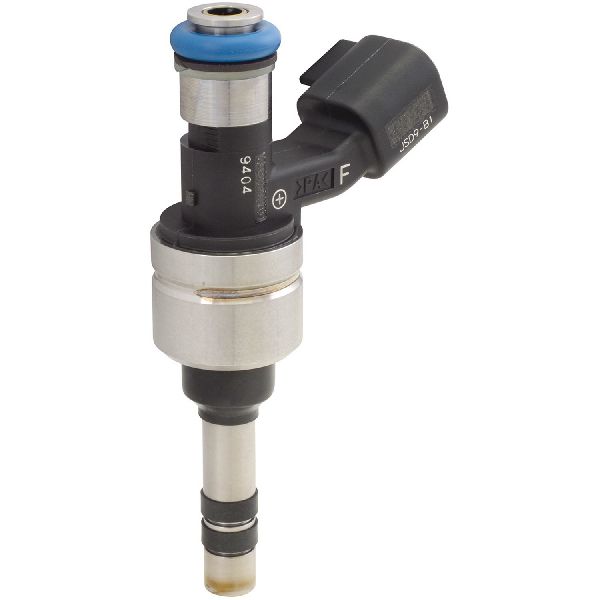
- Fuel Injector
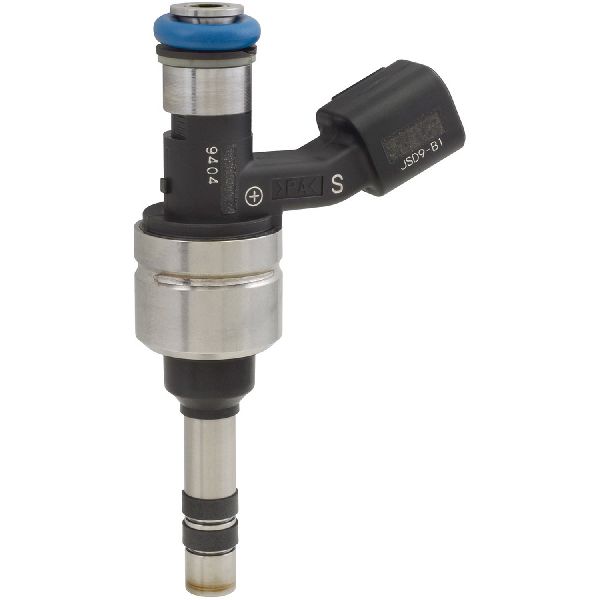
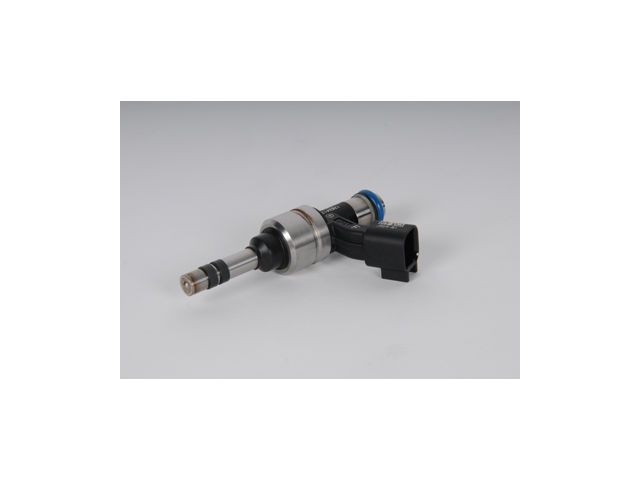
(OEM #12634123)— This is a common failure point for a P0203 code after wiring has been checked. The internal coil of the direct injector can fail 🎬 Watch a mechanic replace the fuel injectors on this engine., creating an open circuit.
Trusted brands: ACDelco, Standard Motor Products, Hitachi, Bosch
OEM price range: $85-$110
Aftermarket price range: $55-$90 - Fuel Injector Connector Pigtail
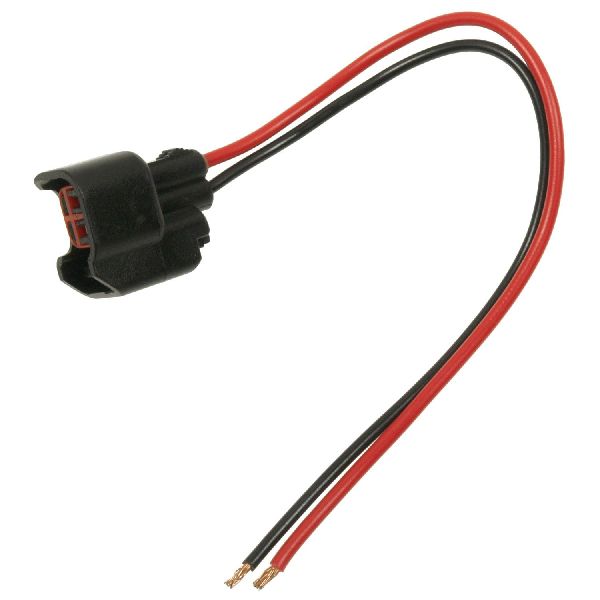
(OEM #ACDelco PT2183)— If the wiring harness is damaged at the connector, or the connector lock is broken, splicing in a new pigtail is the standard repair. This is common due to the chafing issue described in TSB #PIP4924D.
Trusted brands: ACDelco, Dorman
OEM price range: $25-$40
Aftermarket price range: $15-$25 - Fuel Injector Seal Kit
(OEM #12644827)— It is best practice to replace the Teflon seal and O-rings whenever a direct fuel injector is removed and reinstalled to prevent high-pressure fuel leaks.
Trusted brands: ACDelco, GB Remanufacturing
OEM price range: $10-$20
Aftermarket price range: $5-$15
Related Codes That Often Appear With This One
- P0303 — P0303 means 'Cylinder 3 Misfire Detected.' Since P0203 indicates the injector circuit is failing, cylinder 3 is not receiving the proper amount of fuel, which directly causes a misfire.
- P0201, P0202, P0204, etc. — If multiple injector circuit codes appear at once, it strongly suggests a widespread wiring harness problem (like a chafe point affecting multiple wires) or a failing ECM, as noted in TSB #PIP4924D.
Technical Service Bulletins (TSBs) & Recalls
- PIP4924D: SES Light And Misfire With Injector Codes. This bulletin points to the fuel injector wiring harness rubbing through against engine parts as a potential cause for a range of injector circuit DTCs, including P0203. It lists specific chafe points to inspect.
Platform-Specific Known Issues
- A known issue documented in GM Technical Service Bulletin #PIP4924D involves the fuel injector wiring harness chafing against various engine components. Specific chafe points to inspect are where the harness contacts the intake plenum, valve cover bolts, fuel lines, and the side of the cylinder head under the plenum. This can cause an intermittent open or short circuit, triggering P0203 and other related injector codes. A thorough inspection of the harness is required before replacing the injector itself.
Mechanic-Grade Diagnostic Values
- Fuel Injector Resistance (3.6L LFX V6) — expected: 1.2 - 1.8 Ohms. Failure: A reading of OL (infinity/open), near 0 (short), or significantly outside the specified range.
- Injector Circuit Continuity — expected: < 0.5 Ohms. Failure: A reading of OL (Open Line) indicates a break in the wire between the ECM and the injector connector.
- Injector Pulse Width at Idle — expected: 1-8 ms. Failure: No pulse or a pulse width that is dramatically different from other cylinders.
- Injector Connector Voltage (Key On, Engine Off) — expected: ~12V (Battery Voltage). Failure: Significantly lower voltage or no voltage indicates a problem in the power supply wire to the injector.
Scan Tool Commands That Help
- GM GDS2 / Professional Scan Tool: Cylinder Power Balance / Injector Kill — This function deactivates one cylinder at a time. When cylinder #3 is deactivated, if there is no change in engine RPM or sound, it confirms that cylinder was not contributing in the first place, reinforcing the P0203 diagnosis.
- GM GDS2 / Professional Scan Tool: Fuel Injector Balance Test — This test commands the ECM to fire a single injector and measures the corresponding fuel pressure drop. While P0203 is an electrical code, if the circuit tests good but a misfire persists, this test can help identify a mechanically clogged or faulty injector, distinguishing it from the electrical fault.
Wiring & Ground Locations
- ECM Connector X1 — The Engine Control Module (ECM) is located inside the air cleaner assembly on the 2012-2013 Impala. Connector X1 is one of the main multi-pin connectors at the ECM.. The control circuit for the cylinder 3 injector ('Fuel inj 3 ctrl') originates from a specific pin on this connector. Testing for continuity from this pin to the injector connector is the definitive way to confirm wiring integrity.
- Cylinder 3 Injector Control Wires — At the injector connector for cylinder 3, located under the upper intake manifold on the rear bank.. On the LFX engine, the injector wires are a twisted pair. The solid color wire is the low-side control from the ECM, and the wire with a white stripe is the high-side driver feed. Knowing which wire is which is essential for accurate testing.
- G111 / G112 — Wiring diagrams show engine grounds G111 and G112 located near the battery and on the engine block near the starter. Other common LFX ground points are on the cylinder heads.. The ECM and injector driver circuits require a stable ground reference. A loose or corroded engine ground can cause erratic voltage and current fluctuations, potentially leading the ECM to incorrectly flag a circuit fault like P0203.
Real Owner Repair Stories
- YouTube channel 'Certified Shadetree' (2012 Chevrolet Impala with 3.6L LFX engine) — Severe engine misfire and a P0276 code (Injector Circuit Low for Cylinder 6) that would only appear during snowy weather.
❌ Tried (didn't work) Initially suspected the fuel injector itself.
✅ What actually fixed it The problem was a fault in the injector wiring harness for the affected cylinder. This real-world example on the same engine platform aligns directly with the advice in TSB #PIP4924D, confirming that wiring is a primary suspect for any injector circuit code. - equinoxforum.net user report (2010 Chevrolet Equinox 3.0L V6 (sister vehicle with similar engine architecture)) — Check engine light with codes P0203 and P0303 (Cylinder 3 Misfire).
❌ Tried (didn't work) Swapping ignition coils, Swapping spark plugs
✅ What actually fixed it A repair shop diagnosed and fixed a broken wire located right at the electrical connector for the cylinder 3 fuel injector.
OEM Part Supersession History
12642125→12634123— Standard part revision or manufacturer change.
Heads up: Part number 12634123 is the correct service replacement for the LFX engine in this vehicle.
Model Year Variations Within This Range
- 2012-2013 vs 2014: The 2012-2013 Impala is the 9th generation (W-body). The 2014 model year introduced the 10th generation Impala on the Epsilon II platform, but the 9th generation model continued to be sold as the 'Impala Limited'. Both used the same 3.6L LFX V6 engine, making the causes of P0203 identical. However, body and chassis-related wiring and ground locations may differ between a 2014 Impala and a 2014 Impala Limited.
Helpful Videos
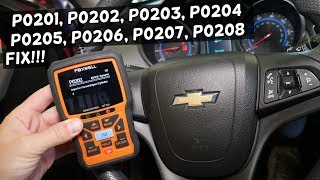
We Have This Part in Stock


The information in this article is provided for general reference and educational purposes only. Vehicle specifications, procedures, and part compatibility can vary by production date, trim level, and region. Always consult your vehicle's factory service manual and verify part numbers before purchasing or performing repairs. Safety-critical components such as airbags, seat belts, and braking systems should be installed by a qualified professional.
- Chevrolet IMPALA:
- 🧭 Diagnostic Flowchart
- 🎬 Helpful Videos
- 🛍️ Shop This Part
- What's Unique About the 2012-2014 Chevrolet IMPALA
- Symptoms You May Notice
- Most Likely Causes
- Diagnosis Steps
- Parts You'll Likely Need
- Related Codes That Often Appear With This One
- Technical Service Bulletins (TSBs) & Recalls
- Platform-Specific Known Issues
- Mechanic-Grade Diagnostic Values
- Scan Tool Commands That Help
- Wiring & Ground Locations
- Real Owner Repair Stories
- OEM Part Supersession History
- Model Year Variations Within This Range
- 🎟️ Get 5% Off