

P0203 on 2014-2020 Chevrolet Impala 3.6L: Injector Circuit Malfunction Fixes
On a 2014-2020 Impala with the 3.6L V6, code P0203 usually means the cylinder 3 fuel injector has failed or its wiring is damaged. A very common issue, documented in GM TSB #PIP4924D, is the injector wiring harness chafing against the intake manifold, cylinder head, or fuel lines. Before replacing parts, a thorough inspection of the harness is critical. Expect to pay $70-$200 for a new injector, plus significant labor as the intake manifold must be removed for access.
- P0203 on your Impala is an electrical fault for the cylinder 3 injector, not a fuel pressure or general misfire problem.
- Before buying a new injector, ALWAYS inspect the wiring harness for damage, as this is a very common problem on the 3.6L LFX engine per a GM service bulletin.
- The repair is difficult for a DIYer because cylinder 3 is on the rear bank, and the intake manifold must be removed for access.
- Do not drive for an extended period with this code. The resulting misfire can send raw fuel to the catalytic converter, causing expensive damage.
What's Unique About the 2014-2020 Chevrolet Impala
For the 3.6L LFX V6 engine used in the tenth-generation Impala and its platform mates, the most critical thing to know about a P0203 code is the high likelihood of a wiring issue. A GM Technical Service Bulletin (TSB #PIP4924D) highlights that the fuel injector wiring harness is prone to chafing against the intake plenum, valve cover bolts, fuel lines, or the side of the cylinder head. This causes a short or open circuit, making a wiring fault as likely, if not more so, than a failed injector. Accessing cylinder 3, which is the middle cylinder on the rear bank against the firewall, is difficult 🎬 See how to remove the upper intake manifold for access. and requires removing the upper intake manifold.
Symptoms You May Notice
- Check Engine Light is on (may be flashing)
- Engine misfire (rough idle, shaking, or juddering feeling)
- Poor acceleration and reduced engine power
- Decreased fuel economy
- Difficulty starting the engine
- Engine may stall
- Noticeable fuel smell from the exhaust
- Replacing the fuel injector without first inspecting the wiring harness. The chafed harness is a very common issue, and replacing the injector will not fix the problem.
- Replacing the spark plug or ignition coil. P0203 is a specific electrical fault in the fuel injector circuit; it is not related to the ignition system, although it will cause a misfire code (P0303).
Most Likely Causes
- Damaged Fuel Injector Wiring Harness or Connector 🔴 High Probability → Shop Engine Wiring Harness A known issue documented in GM TSB #PIP4924D shows the injector wiring harness can chafe against the intake plenum, valve cover bolts, fuel lines, or the side of the cylinder head, leading to an open or short circuit. Another TSB for a similar platform, #PI1067, notes a specific chafe point where the ECM harness rubs on the metal ECM bracket.
How to confirm: After removing the intake manifold, visually and physically inspect the entire wiring harness leading to the cylinder 3 injector. Pay close attention to areas where it routes near or under the intake manifold and around engine brackets. Check the connector for corrosion, damage, or loose pins. A continuity test from the injector connector pin back to the ECM pin can definitively identify a broken wire.
Typical fix: Repair the damaged section of wire, typically by splicing in a new piece of wire with solder and heat-shrink connectors. Protect the repair with abrasion-resistant tape or split loom tubing. If the connector is damaged, replace the connector pigtail.
Est. part cost: $15-$40 - Faulty Cylinder 3 Fuel Injector 🟡 Medium Probability → Shop Fuel Injector The direct injectors on the LFX engine operate under high pressure and can fail internally, causing an electrical fault (open or shorted coil).
How to confirm: After ruling out wiring issues, swap the cylinder 3 injector with one from another cylinder (e.g., cylinder 1). Clear the codes and run the engine. If the code changes to P0201, the injector is faulty. You can also test the injector's resistance with a multimeter; it should be between 1.2 and 1.8 ohms for the LFX engine. A reading of OL (infinity) or near 0 indicates a failed injector.
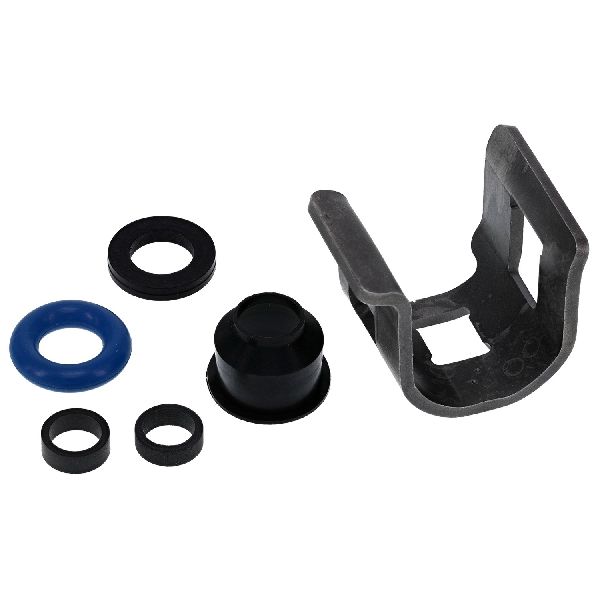
Typical fix: Replace the faulty fuel injector. It is critical to also replace the Teflon seal and O-rings using proper installation tools to prevent leaks. Many technicians recommend replacing all injectors on the same bank (or all six) due to the high labor cost of access.
Est. part cost: $70-$200
Rare But Worth Checking
- Faulty Engine Control Module (ECM): → Shop Engine Control Module (ECM) This is the least likely cause. The ECM's internal driver for the injector circuit can fail, but all other possibilities, especially wiring and the injector itself, must be exhaustively ruled out first.
Diagnosis Steps
- Confirm the code P0203 is present using an OBD-II scanner. Check for any other codes, especially P0303.
- Locate cylinder 3. On the transverse 3.6L LFX V6, the rear bank (closest to the firewall) is Bank 1, and cylinders are numbered 1-3-5 from passenger to driver side. Cylinder 3 is the middle cylinder on the rear bank.
- Use a noid light to test the signal at the injector connector. Disconnect the harness from the injector, plug in the noid light, and crank the engine. The light should flash, indicating the ECM is sending a signal. No light or a steady light points to a wiring or ECM issue.
- If the noid light test passes, test the injector itself. Measure the resistance of the injector with a multimeter. For the LFX engine, it should be between 1.2 and 1.8 ohms. A reading outside this range indicates a bad injector.
- As the most definitive test, swap the cylinder 3 injector with an injector from another cylinder (e.g., cylinder 1 on the same bank).
- Clear the codes, reassemble everything (intake manifold required), and run the engine. If the code returns as P0201 ('Injector Circuit Malfunction - Cylinder 1'), the injector is confirmed to be faulty and must be replaced.
- If the code remains P0203 after the swap, the problem is definitively in the wiring harness or, very rarely, the ECM.
- If the noid light test fails or the code remains after a swap, perform a thorough visual and physical inspection of the fuel injector wiring harness. Per TSB #PIP4924D, look for any signs of chafing, melting, or breaks, particularly where the harness routes near the intake plenum, valve cover bolts, and cylinder head.
Parts You'll Likely Need
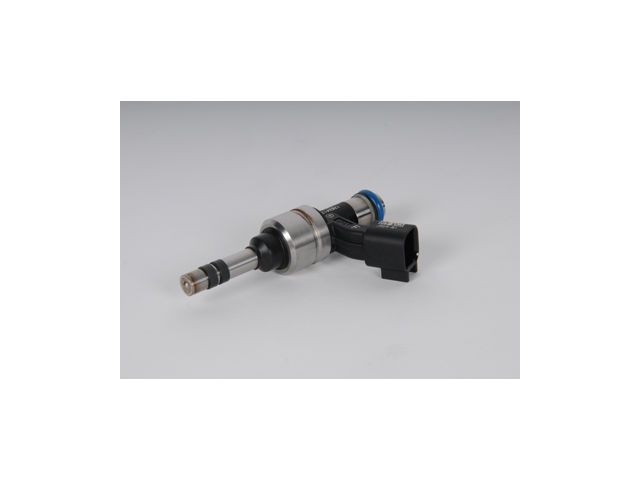
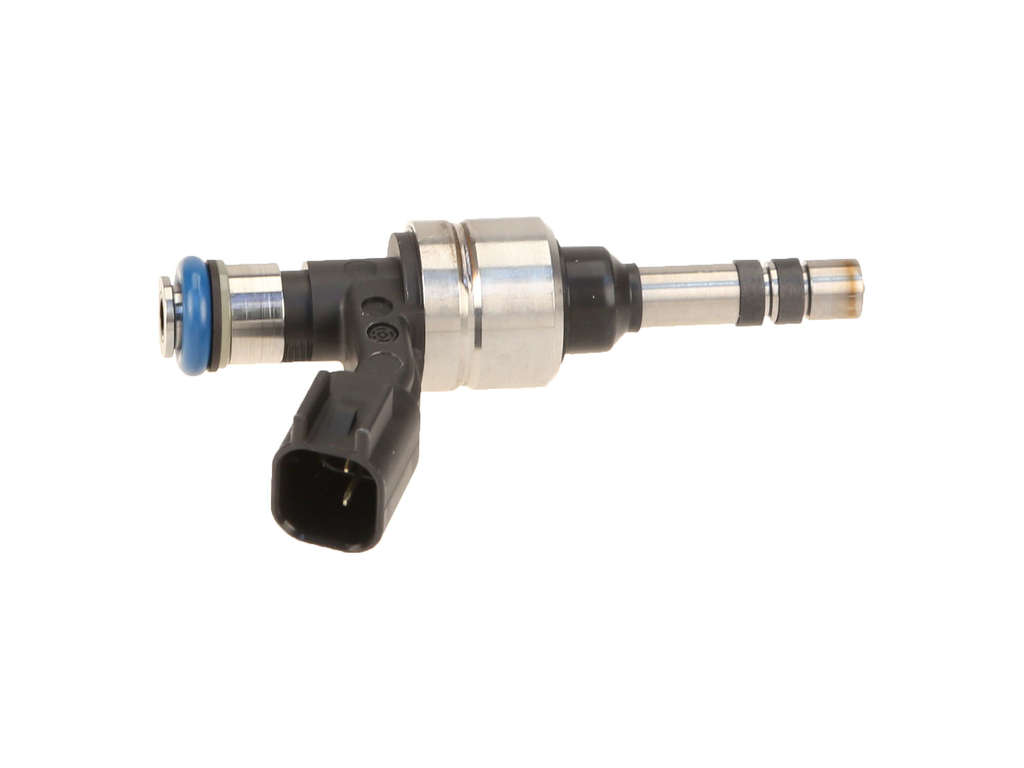
- Fuel Injector
(OEM #12669384 (supersedes 12638530, 12634126))— This is the most common part to fail internally, causing the electrical circuit fault.
Trusted brands: ACDelco, Bosch, Hitachi
OEM price range: $110-$150
Aftermarket price range: $70-$120 - Fuel Injector Connector Pigtail — Needed if the wiring harness is damaged at the connector end due to heat, chafing, or breakage during removal.
Trusted brands: ACDelco, Dorman
OEM price range: $25-$40
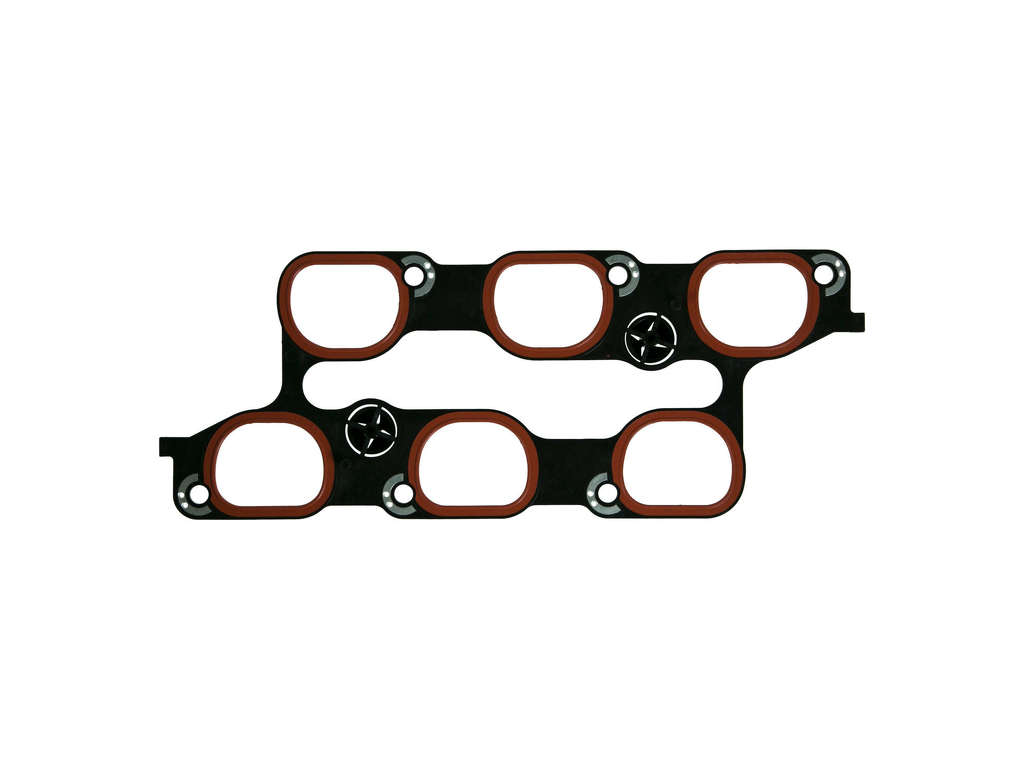
Aftermarket price range: $15-$30 - Upper Intake Manifold Gasket Set
(OEM #12679529)— The intake manifold must be removed to access the fuel injectors, and the gaskets must be replaced as part of the job to prevent vacuum leaks. 🎬 Watch: Step-by-step guide to reinstalling the intake manifold correctly.
Trusted brands: ACDelco, Fel-Pro
OEM price range: $30-$50
Aftermarket price range: $20-$40
Related Codes That Often Appear With This One
- P0303 — P0303 means 'Cylinder 3 Misfire Detected'. An electrical fault in the injector circuit (P0203) prevents fuel from being delivered, directly causing a misfire in that cylinder.
- P2146 — This code means 'Fuel Injector Group 'A' Supply Voltage Circuit/Open'. Bank 1 on the LFX is the rear bank (cylinders 1, 3, 5). If a wiring harness chafe is severe enough to affect the power feed to the entire bank, this code may appear alongside P0203.
- P0201, P0205 — If the wiring harness chafing is severe, it can damage the circuits for other injectors on the same bank, causing multiple injector circuit codes to appear simultaneously.
Technical Service Bulletins (TSBs) & Recalls
- PIP4924D: Diagnostic Tip For P0171 P0174 And/Or Misfire With Or Without Injector Or Evap Codes - This TSB notes that wiring harness chafing is a potential cause for various injector-related fault codes (P0201-P0206, etc.) on a wide range of GM vehicles with the 3.0L and 3.6L engines. According to TSB Bulletin #PIP4924D, technicians may find DTCs P0201 through P0206 or group voltage codes like P2146 when the Malfunction Indicator Lamp is on due to a misfire.
Platform-Specific Known Issues
- GM Technical Service Bulletin (TSB) #PIP4924D specifically calls out the potential for the fuel injector wiring harness to chafe against various engine components on the 3.6L V6, causing codes like P0203. Specific chafe points are against the intake plenum, at valve cover bolts, against the fuel line, and on the side of the head under the plenum.
Mechanic-Grade Diagnostic Values
- Fuel Injector Coil Resistance — expected: 1.2 - 1.8 Ohms. Failure: A reading of OL (open circuit), near 0 Ohms (short circuit), or any value outside the specified range.
- Injector Pulse Width (Scan Tool, Warm Idle) — expected: 2.0 - 4.0 milliseconds (ms). Failure: A value of 0 ms on cylinder 3 while other cylinders are pulsing indicates the ECM has disabled the injector due to a detected circuit fault.
- Injector Circuit Voltage (KOEO) — expected: ~12 Volts (Battery Voltage). Failure: No voltage at the injector connector's power supply pin indicates an open in the power feed circuit from the fuse block.
- Injector Driver Boost Voltage (SIDI Engines) — expected: A boosted pulse up to 65 Volts. Failure: This is a characteristic of the ECM driver operation, not a simple pass/fail measurement. Its absence would be diagnosed with a noid light or oscilloscope.
Scan Tool Commands That Help
- GDS2 (GM Dealer Tool): Active Fuel Injector Test (AFIT) / Injector Balance Test — This is the primary bidirectional test to confirm a fault. It can individually command each injector and measure the resulting fuel pressure drop, quickly identifying an electrical fault or a flow problem (leaking/clogged).
- GDS2 (GM Dealer Tool): Fuel Trim Reset — After replacing a fuel injector or repairing a wiring issue, this function should be used to clear the ECM's long-term learned fuel adjustments and force it to create a new fuel map with the corrected components.
Wiring & Ground Locations
- Injector 3 Control Wire — On some 3.6L LFX models, this is a Dark Blue/White wire at Pin 49 of the X1 connector at the Engine Control Module (ECM).. This is the specific wire the ECM uses to ground-pulse the #3 injector. Testing for continuity from this pin to the injector connector is the definitive way to rule out a broken wire.
- G103 / G104 — Primary engine grounds typically located on the cylinder heads or engine block. For the LFX, G104 is often found at the front of the engine.. A loose or corroded main engine ground can cause a wide range of bizarre electrical issues and erratic sensor readings. Verifying these are clean and tight is a crucial step in any electrical diagnosis.
- ECM (Engine Control Module) — On the 2014 Impala, the ECM is located inside the air cleaner assembly.. Knowing the physical location is necessary for inspecting the main connectors and performing continuity tests on the injector harness.
Real Owner Repair Stories
- Traverse Forum user (2009 Chevrolet Traverse LT (with 3.6L engine, a direct platform relative)) — Rough idle, Check Engine Light with codes P0203 and P0303.
❌ Tried (didn't work) Replaced spark plug for cylinder 3, Swapped ignition coils between cylinders
✅ What actually fixed it The owner removed the intake manifold and found the injector wiring harness had chafed against a sharp edge on the back of the engine block. The insulation on the wire for injector #3 was worn completely through. Repairing the wire with solder and heat shrink, and protecting it with new loom, resolved the codes. - cadillacforums.com user 'ewill3rd' (2010 Cadillac CTS 3.6L DI (LLT Engine, predecessor to LFX)) — Check Engine Light with codes for the entire rear bank (P0201, P0203, P0205) plus a group fault code (P2146).
❌ Tried (didn't work) Initial diagnosis suggested multiple failed injectors or a bad ECM.
✅ What actually fixed it The user found the entire Bank 1 injector harness had chafed and shorted out. Repairing the damaged harness resolved all codes simultaneously, demonstrating how a single wiring fault can trigger multiple codes.
OEM Part Supersession History
12638530, 12632255, 12611545, 12634126→12669384— Standard part evolution for improved reliability, material changes, or manufacturing process updates by GM/ACDelco.
Heads up: While all these part numbers are for the 3.6L LFX engine, it is best practice to use the latest superseded part number (12669384). Some aftermarket fitment guides incorrectly stop listing this part for models after 2012, but it is the correct service part for the LFX engine in the 2014-2020 Impala.
Model Year Variations Within This Range
- All years, but relevant for cross-platform diagnosis: The LFX engine in the 2014-2020 Impala uses low-impedance injectors (~1.2-1.8 Ohms). Older or different GM V6 engines (like the 3.0L LF1 or 3.6L LLT) use high-impedance injectors (~11-14 Ohms). Using the wrong diagnostic spec or the wrong part from a different GM V6 will lead to misdiagnosis or immediate failure.
Diagnostic Flowchart
Other Known Issues on This Vehicle
Issues unrelated to this code that are worth knowing about as an owner of this generation:
- Premature Timing Chain Stretch 🔴 High — Common after 80,000-120,000 miles. Can be accelerated by extended oil change intervals. Triggers codes like P0008, P0009, P0016, P0017. (Ref: TSB #12-06-01-009F)
- Clogged PCV Orifice in Valve Cover 🟠 Medium → Shop Engine Valve Cover — Can occur at higher mileage, leading to increased oil consumption and lean codes (P0171/P0174) as crankcase pressure forces oil vapor past seals.
- Carbon Buildup on Intake Valves 🟠 Medium — A common side effect of all Gasoline Direct Injection (GDI) engines, including the LFX. Can cause misfires, especially on cold starts, as mileage exceeds 80,000-100,000 miles.
- Cracked Front Catalytic Converter Pipe 🟠 Medium — Some 2014-2017 models may develop cracks in the exhaust pipe near the catalytic converter flange, causing an exhaust leak and code P0420 or P0430. (Ref: TSB #17-NA-321)
- MyLink Infotainment System Failure 🟡 Low — Owners report screens freezing, going black, or becoming unresponsive. Sometimes requires HMI module replacement.
Used vs. New Parts: Buying Guide for This Vehicle
When a used part is the smart pick: For this repair, a used part is generally not recommended for the fuel injectors themselves due to their direct-injection design, which makes them prone to carbon buildup and internal wear. A used wiring harness connector pigtail from a junkyard is a perfectly acceptable and cost-effective choice if the original is damaged.
Donor-vehicle mileage cap: roughly under 80000 miles for the part to have meaningful remaining life.
What to inspect on the donor part:
- For a connector pigtail, ensure the plastic is not brittle or cracked.
- Check that the locking tab is intact and functional.
- Ensure at least 4-6 inches of wire is attached for easier splicing.
OEM-only on this vehicle (don't cheap out):
- Fuel Injector
Aftermarket brands forum-validated for this vehicle:
- ACDelco (OEM)
- Bosch (often the original manufacturer for ACDelco)
Brands owners have reported issues with on this vehicle:
- Unbranded, low-cost injectors from online marketplaces like Amazon or eBay. Forum users report these can solve the circuit code but immediately cause new fuel trim codes (e.g., P0172 Rich) due to poor flow matching and quality control.
Real Owner Stories
Aggregated from forums and TSBs cited above. Mileages and costs reflect what owners reported in those sources.
2011 Cadillac CTS 3.6L LLT
Symptoms: The vehicle was throwing codes P0203 and P0303.
What fixed it: Found the injector wiring harness rubbing against the back of the cylinder head, causing a short. Repaired the wire and secured the harness.
Source hint: CadillacForums.com
2012 Chevrolet Impala 3.6L LFX
Symptoms: Injector circuit malfunction requiring injector replacement.
What fixed it: Replacing the injectors, which required removing the intake manifold (approximately 3 hours of labor).
Source hint: Reddit r/MechanicAdvice
Related OBD-II Codes
Frequently Asked Questions
Does GM TSB #PIP4924D apply to my 3.6L LFX Impala?
Where is the cylinder 3 injector located on the 2014-2020 Impala 3.6L?
What should the resistance be for a new cylinder 3 injector on the LFX engine?
Is there a specific spot where the wiring harness usually fails on this model?
Do I need to remove the intake manifold to fix P0203 on my Impala?
Can I just swap injectors to see if the code moves?
Helpful Videos
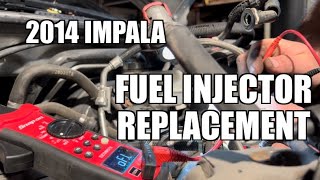
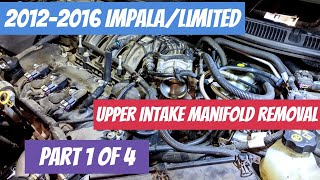
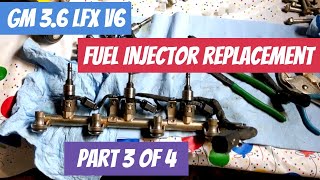
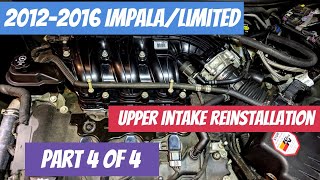
We Have This Part in Stock


The information in this article is provided for general reference and educational purposes only. Vehicle specifications, procedures, and part compatibility can vary by production date, trim level, and region. Always consult your vehicle's factory service manual and verify part numbers before purchasing or performing repairs. Safety-critical components such as airbags, seat belts, and braking systems should be installed by a qualified professional.
- Chevrolet Impala:
- 🧭 Diagnostic Flowchart
- 🎬 Helpful Videos
- 🛍️ Shop This Part
- What's Unique About the 2014-2020 Chevrolet Impala
- Symptoms You May Notice
- Most Likely Causes
- Rare But Worth Checking
- Diagnosis Steps
- Parts You'll Likely Need
- Related Codes That Often Appear With This One
- Technical Service Bulletins (TSBs) & Recalls
- Platform-Specific Known Issues
- Mechanic-Grade Diagnostic Values
- Scan Tool Commands That Help
- Wiring & Ground Locations
- Real Owner Repair Stories
- OEM Part Supersession History
- Model Year Variations Within This Range
- Other Known Issues on This Vehicle
- Used vs. New Parts: Buying Guide for This Vehicle
- Real Owner Stories
- 2011 Cadillac CTS 3.6L LLT
- 2012 Chevrolet Impala 3.6L LFX
- Related OBD-II Codes
- Frequently Asked Questions
- 🎟️ Get 5% Off