

P0203 on 2011-2014 Chrysler 200 3.6L: Injector Circuit Malfunction Causes and Fixes
On a 2011-2014 Chrysler 200 with the 3.6L V6, code P0203 almost always means the fuel injector for cylinder 3 has failed. The fix is to replace the injector, which is on the rear cylinder bank and requires removing the upper intake manifold. Expect to pay $45-$160 for a new Mopar or OEM-equivalent injector like Bosch.
- P0203 on this vehicle almost always points to a bad fuel injector for cylinder 3.
- Cylinder 3 is on the rear bank against the firewall, requiring removal of the upper intake manifold for access.
- While you're replacing the injector, it's critical to also replace the upper and lower intake manifold gaskets to prevent vacuum leaks.
- Consider replacing all three rear injectors at once to save on future labor costs, as it's a common failure item.
What's Unique About the 2011-2014 Chrysler 200
The 3.6L Pentastar V6 is a workhorse engine used across many Chrysler, Dodge, and Jeep vehicles. For the transversely mounted engine in the Chrysler 200, cylinder 3 is located on the rear bank, closer to the firewall. This makes access more difficult than for the front injectors, as the upper intake manifold must be removed for the repair. While wiring issues can occur, a failed fuel injector is a very common failure point on this engine family due to internal coil winding failures.
Symptoms You May Notice
- Check Engine Light is on
- Rough or shaking idle
- Engine misfire, especially under load
- Poor acceleration and loss of power
- Reduced fuel economy
- Engine may stall or have difficulty starting
- Replacing the spark plug or ignition coil for cylinder 3. While these parts can cause a misfire (P0303), they will not cause an injector circuit code like P0203. The P0203 code specifically points to an electrical fault in the fuel injector's control circuit, not a combustion or ignition issue.
Most Likely Causes
- Failed Cylinder 3 Fuel Injector 🔴 High Probability → Shop Fuel Injector Fuel injectors on the 3.6L Pentastar are a known common failure item due to internal coil windings failing from heat cycles and vibration over many miles. This is the most frequent cause for a P020x code on this engine family.
How to confirm: The most reliable method is to swap the cylinder 3 injector with another one (e.g., cylinder 1). Clear the codes and drive. If the code changes to P0201, the injector is bad. Alternatively, test the injector's resistance with a multimeter; a healthy one should read around 12-14 Ohms. A reading of infinity (Open Loop) or near zero indicates a failed injector.
Typical fix: Replace the failed fuel injector. Since accessing the rear bank is labor-intensive, many mechanics and forum users recommend replacing all three rear injectors (or all six) at the same time to avoid repeat labor costs.
Est. part cost: $45-$160 - Wiring Harness or Connector Issue 🟡 Medium Probability The engine wiring harness is exposed to high heat and vibration, which can cause wires to become brittle, chafe, or break over time. The connector itself can also be damaged or have poor pin contact. This is less common than outright injector failure but is a crucial diagnostic step.
How to confirm: Visually inspect the wiring harness leading to the cylinder 3 injector for any signs of melting, chafing, or breaks. Check the connector for corrosion, damage, or loose pins. Use a noid light to confirm if the PCM is sending a pulse signal to the injector connector; a flashing light indicates the PCM and wiring up to the connector are likely good.
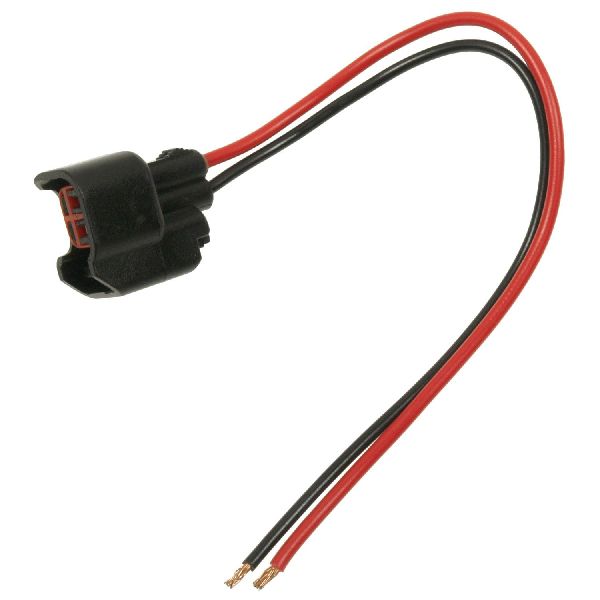
Typical fix: Repair the damaged section of the wire or replace the injector pigtail connector.
Est. part cost: $15-$50
Rare But Worth Checking
- Powertrain Control Module (PCM) Failure: → Shop Engine Control Module (ECM) This is very rare. The PCM's internal driver for the injector circuit can fail, but this should only be considered after definitively ruling out the injector and wiring as the cause.
Diagnosis Steps
- Scan for Codes: Use an OBD-II scanner to confirm P0203 is present and check for any other codes, like P0303.
- Identify Cylinder 3: On the transverse 3.6L Pentastar, the rear bank (against the firewall) is Bank 1. From passenger to driver side, the cylinders are 1, 3, 5. Cylinder 3 is the middle cylinder on the rear bank.
- Check the Wiring: Visually inspect the wiring harness and connector for the cylinder 3 injector. Look for any obvious signs of damage, melting, or corrosion.
- Use a Noid Light: Disconnect the injector and plug in a noid light. Start the engine. A flashing light indicates the PCM and wiring are sending a signal. No light suggests a wiring or PCM problem. A light that stays on solid points towards a PCM driver failure.
- Swap Injectors (Definitive Test): If you have mechanical access, swap the cylinder 3 fuel injector with an injector from an easily accessible cylinder (like cylinder 2 on the front bank). Clear the codes and run the engine. If the code changes to P0202, the injector is confirmed to be faulty.
- Test Injector Resistance: If you cannot swap injectors easily, disconnect the injector and use a multimeter to measure the resistance across its two pins. A good injector should read approximately 12-14 ohms. A reading of infinity (Open Loop) or near zero indicates a failed injector.
- Check for Power and Ground: If the noid light doesn't flash, use a multimeter to check for 12V power on one pin of the connector (with key on) and check the control wire for continuity back to the PCM.
- Final Diagnosis: If the injector and wiring check out, the issue may be a rare failure of the PCM driver circuit.
Parts You'll Likely Need
- Fuel Injector
(OEM #5184085AD)— This is the most common cause of a P0203 code on the 3.6L Pentastar engine due to internal electrical failure. The part number 5184085AD supersedes the earlier 5184085AC.
Trusted brands: Mopar, Bosch (OEM supplier, P/N: 0280158233), Standard Motor Products
OEM price range: $150-$160
Aftermarket price range: $45-$100 - Upper and Lower Intake Manifold Gaskets
(OEM #5184562AC (Upper), 5184331AC (Lower))— These must be replaced when the intake manifold is removed to access the fuel injectors on the rear bank to prevent vacuum leaks. It is critical to replace these seals.
Trusted brands: Mopar, Fel-Pro, Mahle
OEM price range: $20-$30
Aftermarket price range: $10-$20
Related Codes That Often Appear With This One
- P0303 — P0303 means 'Cylinder 3 Misfire Detected'. Since P0203 indicates a fault in the fuel delivery circuit for cylinder 3, the cylinder cannot fire correctly, which logs the P0303 misfire code as a direct symptom. It is extremely common to see both codes together.
Technical Service Bulletins (TSBs) & Recalls
- While no TSBs directly address P0203, TSB 09-002-14 Rev. B is notable for the Pentastar engine. It addresses misfire codes (P0300, P0302, P0304, P0306) on the left cylinder bank of 2011-2013 models due to a cylinder head issue and extended the warranty. This is a separate issue from P0203 but is important context for anyone experiencing misfires on this engine.
Mechanic-Grade Diagnostic Values
- Fuel Injector Coil Resistance — expected: ~12.0 - 14.0 Ohms. The OEM Bosch injector is specified at 12.5 Ohms.. Failure: A reading of infinity / O.L. (Open Loop) or near zero Ohms (dead short).
- Injector Circuit Voltage (Key On, Engine Off) — expected: Approximately 12V (battery voltage) on the power wire at the injector connector.. Failure: Significantly less than 12V or no voltage indicates a problem with the power supply from the TIPM/fuse.
- Injector Circuit Inductive Kick (on lab scope) — expected: A sharp voltage spike of approximately 50-60V on the control wire immediately after the PCM stops grounding the circuit.. Failure: Absence of this spike can indicate a short in the injector windings or a problem with the PCM driver, though it's an advanced diagnostic.
- Injector Pulse Width (at idle) — expected: Typically 1-5 milliseconds for a port-injected engine at idle.. Failure: A scan tool showing zero pulse width for cylinder 3 confirms the PCM has shut down the injector due to the detected fault.
Hidden / Shadow Codes Worth Checking
- P0201, P0202, P0203 (simultaneously): According to some Chrysler diagnostic theory, if the PCM detects a short to ground or voltage on any single injector circuit on a bank, it may set a fault code for all three injectors on that bank (Bank 1: Cylinders 1, 3, 5). (see via Standard OBD-II scanner. Seeing all three codes together points towards a wiring issue common to the bank rather than a single failed injector.)
Scan Tool Commands That Help
- Professional Scan Tool (e.g., WiTECH, Autel, Snap-on): Injector Kill / Power Balance Test — This function allows the technician to disable injectors one by one. While not useful for a P0203 (the PCM has already disabled it), it's critical for diagnosing a general misfire (P030x) to see if it's fuel-related. For P0203, the most valuable scan tool function is monitoring live data for injector pulse width on the affected cylinder, which should be zero.
Wiring & Ground Locations
- ECM Ground Strap — A ground strap (Mopar P/N 68070029AA) is listed for 'Engine Controller To Bracket' or 'ECM Ground'. While its exact location requires a service manual diagram, checking grounds between the engine/transmission and chassis is critical. A common weak point on similar Chrysler platforms is the main ground from the battery to the transmission case.. A poor PCM ground can cause floating voltages and erratic behavior, potentially leading the PCM to misinterpret sensor and actuator circuit readings, including the injector driver feedback.
- Injector Connector Pins — The two-wire connector at the cylinder 3 fuel injector.. One pin is the power supply (common to other injectors, typically a Dark Green/Gray wire on Chrysler products). The other is the control wire (ground pulse from the PCM, unique to cylinder 3). Testing for 12V power on the supply pin and continuity to the PCM on the control pin are key diagnostic steps.
Real Owner Repair Stories
- YouTube channel 'ProMasters Only' (General 3.6L Pentastar, applicable to the Chrysler 200) — Check engine light with P0204 (Cylinder 4 Injector Circuit) and a misfire code.
❌ Tried (didn't work) Initial diagnosis
✅ What actually fixed it The injector was confirmed bad using a multimeter. A good injector measured ~12 Ohms. The faulty injector measured infinite resistance (open circuit). Replacing the single faulty injector resolved the code. - YouTube channel 'Gibson Garage Speed Shop' (Chrysler with a P0203 code.) — Check engine light, rough idle, and misfire.
❌ Tried (didn't work) The owner tested the injectors by listening for clicks, which was inconclusive., Cleaning the injectors and re-installing with new O-rings did not fix the issue.
✅ What actually fixed it The final diagnosis pointed to a failed PCM. A noid light plugged into the cylinder 1 connector (which also had a fault) stayed on solid instead of flashing, while a good cylinder's connector flashed the noid light correctly. This indicated the PCM's driver was stuck, constantly providing ground. The narrator concluded the PCM needed replacement. - NHTSA ODI #11539650 — An owner of a similar Chrysler vehicle reported that the car was shaking and the check engine light came on. A scan revealed three codes: P0420, P0303, and P0203.
OEM Part Supersession History
5184085AC, RL184085AC→5184085AD— Standard part revision, likely for improved reliability or manufacturing process changes.
Heads up: The parts are interchangeable; 5184085AD is the correct service replacement for the earlier numbers.
Model Year Variations Within This Range
- 2011-2013: Early Pentastar engines in this range were subject to a left-bank cylinder head issue that could cause misfires (P030x codes) and ticking noises. While this is a separate issue from the P0203 electrical circuit code, a technician should be aware of this context when diagnosing any drivability issue on these specific model years.
Diagnostic Flowchart
Other Known Issues on This Vehicle
Issues unrelated to this code that are worth knowing about as an owner of this generation:
- Cracked Oil Filter Housing / Cooler Assembly 🔴 High — Very common, especially after 60,000 miles. The plastic housing can warp or crack from heat cycles, causing significant oil and/or coolant leaks into the engine valley. (Ref: No recall, but a widely known issue. Chrysler's official stance for 2014+ models was that O-rings were the cause, not the housing itself, though many owners found replacing the entire unit was necessary. Aftermarket aluminum housings are a popular permanent fix.)
- Left Cylinder Head Failure (Early Models) 🔴 High → Shop Engine Cylinder Head — Primarily affects 2011-2013 models. Caused excessive wear on valve guides and seats, leading to misfires (P0302, P0304, P0306) and ticking noises. (Ref: TSB 09-002-14 Rev. B was issued, and Chrysler extended the warranty on the left cylinder head to 10 years or 150,000 miles for affected vehicles.)
- Rocker Arm / Cam Follower Failure 🟠 Medium — Common across all years, often presenting as an audible 'Pentastar tick' at idle. The needle bearings in the rocker arm fail, causing play and noise, and can eventually lead to misfires or camshaft damage. (Ref: No specific recall, but a well-documented failure pattern. Repair involves replacing the affected rocker arms and sometimes the camshafts if they are scored.)
- 62TE Automatic Transmission Issues 🟠 Medium — Owners report issues like hard shifts, delayed engagement, and shuddering. These problems can appear at various mileages. (Ref: Multiple TSBs exist for software updates (e.g., TSB 18-028-14) to address shift quality, but mechanical failures can still occur.)
- Totally Integrated Power Module (TIPM) Failure 🔴 High — Can occur at any mileage. A faulty TIPM, which is the vehicle's main electrical hub, can cause a wide range of bizarre electrical issues, including the engine stalling, fuel pump not running, or starter not engaging. (Ref: Subject of a class-action lawsuit. While recalls existed for some fuel pump relay issues within the TIPM, widespread problems persist across many Chrysler/Dodge/Jeep models of this era.)
Used vs. New Parts: Buying Guide for This Vehicle
When a used part is the smart pick: A used fuel injector is a gamble but can be a cost-effective option, especially if sourced from a low-mileage donor vehicle. A better strategy is to purchase a complete lower intake manifold assembly with all three injectors and the fuel rail from a reputable salvage yard. This can sometimes be cheaper than one new OEM injector and provides spare parts.
Donor-vehicle mileage cap: roughly under 80000 miles for the part to have meaningful remaining life.
What to inspect on the donor part:
- Verify the donor vehicle's mileage if possible.
- Inspect the injector's electrical connector for any corrosion, cracks, or damage.
- Check the plastic body of the injector for any signs of cracking or heat damage.
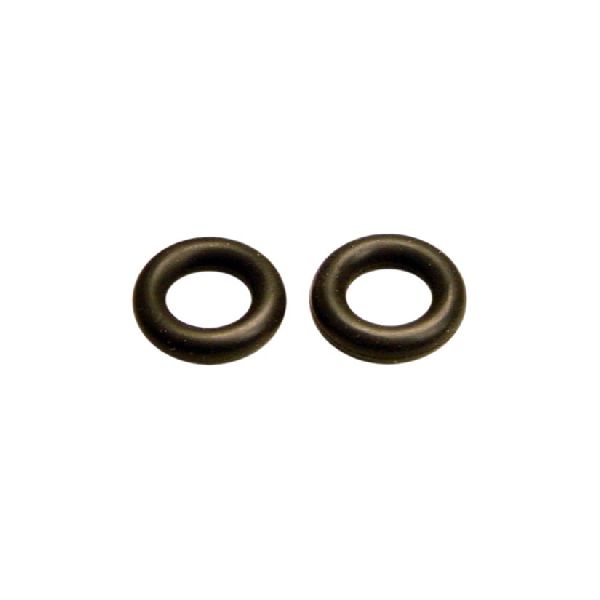
- Ensure the O-rings are present, though they should always be replaced before installation.
OEM-only on this vehicle (don't cheap out):
- While not strictly 'OEM-only', fuel injectors are a critical component where quality matters. Using Mopar or the OEM supplier (Bosch) is highly recommended. Cheap, unbranded injectors from online marketplaces are known to have inconsistent flow rates and high failure rates, leading to persistent performance issues.
Aftermarket brands forum-validated for this vehicle:
- Bosch (OEM supplier, P/N 0280158233)
- Standard Motor Products (SMP)
- NTK
Brands owners have reported issues with on this vehicle:
- Unbranded, generic injector sets sold on Amazon or eBay. While tempting due to low cost, they are a frequent source of unresolved issues in forum discussions.
Real Owner Stories
Aggregated from forums and TSBs cited above. Mileages and costs reflect what owners reported in those sources.
2011-2014 Chrysler 200 3.6L Pentastar V6
Symptoms: Check Engine Light with P0203 and P0303 appearing together; engine experiencing a rough idle and misfiring.
What fixed it: Diagnosis of the injector, wiring, and PCM confirmed a failed injector.
Source hint: Chrysler Forum
2011-2014 Chrysler 200 3.6L Pentastar V6
Symptoms: P020x codes indicating injector circuit malfunctions.
What fixed it: Replacing all injectors on the affected bank at once due to the labor involved in removing the intake manifold.
Source hint: allpar.com forums
2011-2014 Chrysler 200 3.6L Pentastar V6
Symptoms: Vehicle shaking with a check engine light and codes P0420, P0303, and P0203.
What fixed it: An owner reported these symptoms in NHTSA ODI #11539650, noting that others with the same vehicle had experienced similar issues.
Source hint: NHTSA ODI #11539650
Related OBD-II Codes
Frequently Asked Questions
Does TSB 09-002-14 Rev. B cover my P0203 injector code on my 2012 Chrysler 200?
Where is Cylinder 3 located on the 3.6L Pentastar V6 in my Chrysler 200?
I have a P0203 code; should I replace just the one injector or all of them?
What should the resistance be for a healthy fuel injector on the 3.6L engine?
Can a faulty TIPM cause injector-related issues on the Chrysler 200?
Helpful Videos



We Have This Part in Stock


The information in this article is provided for general reference and educational purposes only. Vehicle specifications, procedures, and part compatibility can vary by production date, trim level, and region. Always consult your vehicle's factory service manual and verify part numbers before purchasing or performing repairs. Safety-critical components such as airbags, seat belts, and braking systems should be installed by a qualified professional.
- Chrysler 200:
- 🧭 Diagnostic Flowchart
- 🎬 Helpful Videos
- 🛍️ Shop This Part
- What's Unique About the 2011-2014 Chrysler 200
- Symptoms You May Notice
- Most Likely Causes
- Rare But Worth Checking
- Diagnosis Steps
- Parts You'll Likely Need
- Related Codes That Often Appear With This One
- Technical Service Bulletins (TSBs) & Recalls
- Mechanic-Grade Diagnostic Values
- Hidden / Shadow Codes Worth Checking
- Scan Tool Commands That Help
- Wiring & Ground Locations
- Real Owner Repair Stories
- OEM Part Supersession History
- Model Year Variations Within This Range
- Other Known Issues on This Vehicle
- Used vs. New Parts: Buying Guide for This Vehicle
- Real Owner Stories
- 2011-2014 Chrysler 200 3.6L Pentastar V6
- 2011-2014 Chrysler 200 3.6L Pentastar V6
- 2011-2014 Chrysler 200 3.6L Pentastar V6
- Related OBD-II Codes
- Frequently Asked Questions
- 🎟️ Get 5% Off