

P0203 on 1998-2003 Dodge RAM 1500: Injector Circuit Fixes & Causes
On a 1998-2003 Dodge RAM 1500, code P0203 is most often caused by a faulty fuel injector wiring harness, especially the section that passes through the valve cover gasket. Before replacing the #3 fuel injector, always inspect the wiring for damage, as this is a common failure point noted in manufacturer bulletins. The harness becomes brittle and oil-soaked, leading to an open or short in the circuit for cylinder 3.
- P0203 means there's an electrical problem with the fuel injector circuit for cylinder #3.
- For 1998-2003 RAMs, the most likely cause is a bad wiring harness under the valve cover, not the injector itself.
- Always test the circuit with a noid light before buying parts. If the light flashes, the problem is likely the injector. If it doesn't, the problem is in the wiring or PCM.
- Swapping the #3 injector with another one is a cheap and effective way to confirm if the injector is the faulty component.
- Ignoring this code will cause a persistent misfire, poor fuel economy, and can lead to more expensive catalytic converter damage.
What's Unique About the 1998-2003 Dodge RAM 1500
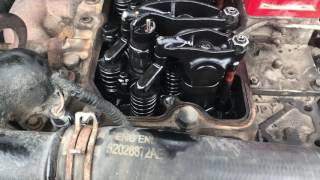
For this generation of Dodge RAM, particularly the 1998-2001 models with Magnum engines (5.2L and 5.9L V8), the wiring for the fuel injectors is a notorious weak point. A Technical Service Bulletin (TSB) specifically highlights that the wiring loom and connector integrated into the valve cover gasket can fail, causing injector circuit codes like P0203. 🎬 Watch: Understanding P0203 codes and common causes for this failure. Owners often mistakenly replace the fuel injector when the real problem is this harness, which becomes brittle and oil-soaked over time, leading to broken wires or corroded connections right at the valve cover pass-through connector.
Diagnostic Flowchart
Tap your situation to follow the diagnostic path that matches what you're seeing on this vehicle.
Generation note: This range covers the end of the 2nd generation (1998-2001) and the beginning of the 3rd generation (2002-2003) Ram 1500. The 2nd gen trucks primarily used the 3.9L V6, 5.2L V8, and 5.9L V8 Magnum engines. The 3rd gen introduced the 4.7L PowerTech V8. The known wiring issue under the valve cover is especially well-documented for the 5.2L and 5.9L Magnum engines in the 2nd generation trucks and their platform mates.
Symptoms You May Notice
- Check Engine Light is on
- Rough idle and engine shaking
- Engine misfire, which can feel like a popping or jerking sensation
- Reduced engine power and poor acceleration
- Increased fuel consumption
- Engine may stall
- Raw fuel smell from the exhaust due to the non-firing cylinder
- Replacing the fuel injector without first testing the wiring harness. The TSB for this vehicle explicitly warns against this, as the harness is a very common point of failure. Many owners replace the injector, only for the P0203 code to return shortly after.
Most Likely Causes
- Faulty Injector Wiring Harness / Valve Cover Gasket 🔴 High Probability → Shop Engine Wiring Harness As cited in TSB #9002688 and Chrysler TSB 18-024-03, the wiring loom that passes through the valve cover gasket is a known failure point. It's exposed to constant engine heat and oil, causing the wire insulation to become brittle and crack, creating an open or short in the circuit to the #3 injector.
How to confirm: Visually inspect the wiring harness where it connects to the injector and especially at the round pass-through connector on the valve cover. Perform a continuity test on both wires for cylinder #3 from the injector connector back to the main engine harness. A 'wiggle test' on the harness at the valve cover with the engine running will often cause the misfire to appear or disappear, confirming a wiring fault.
Typical fix: Replace the faulty section of the injector wiring harness. On the Magnum engines, this harness is integrated with the passenger side valve cover gasket and they are replaced as a single unit. The Mopar part number is often cited as 56027067AC.
Est. part cost: $70-$160 - Failed Fuel Injector 🟡 Medium Probability → Shop Fuel Injector
How to confirm: After confirming the wiring is good with a noid light, test the injector's internal resistance with a multimeter. For 1998-2000 5.2L/5.9L engines, the spec is typically 10.8-13.2 ohms. A reading of infinite ohms means it's open, and near zero means it's shorted. A more definitive test is to swap the #3 injector with one from another cylinder (e.g., cylinder #1). Clear the codes. If the code changes to P0201, the injector is bad.
Typical fix: Replace the cylinder 3 fuel injector. A common OEM part number is 0280155784.
Est. part cost: $40-$120 - Corroded or Loose Connector ⚪ Low Probability Oil leaks from the valve cover can saturate the injector connector, causing a poor connection over time.
How to confirm: Visually inspect the electrical connector at the fuel injector and the main harness connector. Look for bent pins, green or white corrosion, or signs of heavy oil contamination that could interfere with the connection.
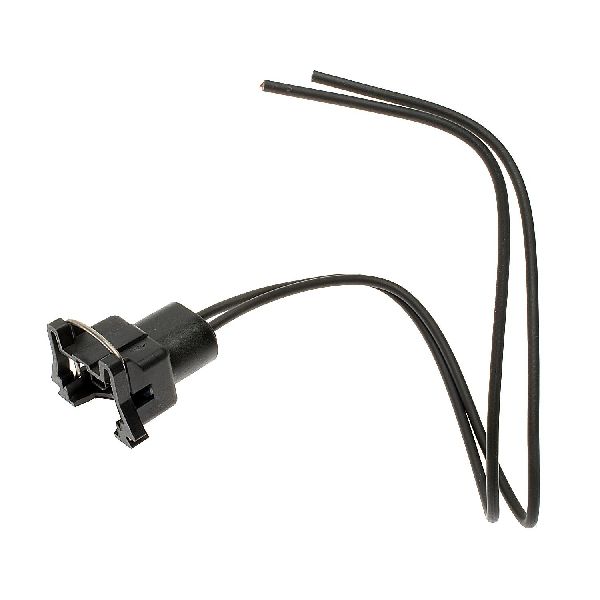
Typical fix: Clean the connector terminals with electrical contact cleaner and apply dielectric grease. If the connector or its locking tab is broken, it may need to be replaced with a pigtail connector.
Est. part cost: $10-$30
Rare But Worth Checking
- Faulty Powertrain Control Module (PCM): → Shop Engine Control Module (ECM) This is the least likely cause. The PCM's internal driver for the injector circuit can fail, but all other possibilities, especially wiring and the injector itself, should be exhaustively ruled out first. A professional diagnosis with an oscilloscope to check the injector control pattern at the PCM is the best way to confirm a bad driver. The PCM looks for the voltage spike after the injector fires to confirm operation; a bad driver may not produce this.
Diagnosis Steps
- Scan for Codes: Use an OBD-II scanner to confirm P0203 is the active code. Note any other codes, like P0303, which is expected.
- Visual Inspection: Inspect the wiring harness for cylinder #3. Look for any obvious signs of damage, melting, or corrosion. Pay extremely close attention to the wiring where it enters the pass-through connector on the passenger-side valve cover.
- Perform a Wiggle Test: With the engine idling, carefully wiggle the injector wiring harness near the valve cover connector. If the engine stumble changes or the misfire is induced, the harness is faulty.
- Check for Signal with a Noid Light: Disconnect the wiring harness from the #3 fuel injector and plug in a noid light. Start the engine. The light should flash steadily. If it doesn't flash, there is no signal from the PCM, pointing to a wiring or PCM issue. If it flashes, the signal is good, and the problem is likely the injector itself.
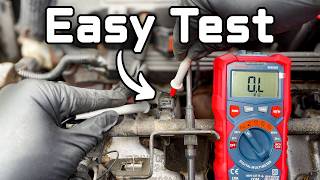
- Test the Injector Resistance: If the noid light flashes, the injector is the next suspect. Turn off the engine. Set a multimeter to Ohms (Ω). For a 1998-2000 5.9L, expect a reading between 10.8 and 13.2 Ohms. If it's outside this range or shows OL (Open Loop), the injector is bad.
- Test the Wiring: If the noid light test fails, turn the ignition off. Use a multimeter to check for continuity on both wires for the #3 injector between the injector connector and the PCM connector. Check for a short to ground by testing continuity between each wire and a good chassis ground. There should be no continuity.
- Swap the Injector: As a final confirmation, swap the #3 injector with an injector from another cylinder (e.g., cylinder #1). Clear the codes and run the engine. If the trouble code moves to the new cylinder (e.g., P0201 if you swapped with cylinder 1), the injector is faulty and needs to be replaced.
- Check the PCM: If all wiring and the injector test good, the final possibility is a failed injector driver in the PCM. This is rare and typically requires professional diagnosis with an oscilloscope to observe the injector's voltage pattern.
Parts You'll Likely Need
- Fuel Injector Wiring Harness / Valve Cover Gasket Assembly
(OEM #56027067AC)— This is the most probable cause of P0203 on this specific truck, as documented by a manufacturer TSB. The harness becomes brittle from heat and oil saturation, causing wires to break at the valve cover connector.
Trusted brands: Mopar, Standard Motor Products, Dorman
OEM price range: $100-$180
Aftermarket price range: $70-$130 - Fuel Injector
(OEM #0280155784)— If the wiring is confirmed to be good, the fuel injector itself is the next most likely component to have failed internally.
Trusted brands: Bosch, Delphi, Mopar
OEM price range: $80-$150
Aftermarket price range: $40-$90
Related Codes That Often Appear With This One
- P0303 — P0303 indicates a misfire on cylinder 3. Since P0203 means the injector circuit for cylinder 3 is failing, that cylinder isn't getting fuel, which directly causes a misfire. These codes almost always appear together.
Technical Service Bulletins (TSBs) & Recalls
- 9002688: Advises checking the wiring loom/connector in the valve cover gasket before replacing injectors for P020x codes.
- Chrysler TSB 18-024-03: A more formal TSB number that also addresses diagnosing injector circuit faults related to the through-connector on the valve cover.
Platform-Specific Known Issues
- A known issue, documented in TSB #9002688 (also referenced as Chrysler TSB 18-024-03), points to the wiring loom and/or connector in the valve cover gasket as a primary cause for injector circuit codes (P0201-P0208). Technicians are advised to check this wiring before replacing any fuel injectors.
Mechanic-Grade Diagnostic Values
- Fuel Pressure (All Engines) — expected: 49.2 psi ± 2 psi. Failure: Pressure significantly higher or lower indicates a faulty fuel pump or pressure regulator.
- Injector Connector Voltage (Key On, Engine Off) — expected: ~12 Volts (Battery Voltage) on the power supply wire.. Failure: Low or no voltage points to an issue with the ASD (Auto Shutdown) relay or the power feed wiring.
- Injector Pulse Width (at warm idle, via scan tool) — expected: 2.0 - 3.5 milliseconds (ms). Failure: A value of 0 ms or an erratic reading for cylinder 3 while other cylinders are normal suggests a PCM driver or control circuit wiring fault.
- Injector Inductive Kick (via oscilloscope) — expected: A sharp voltage spike of 60-80 Volts immediately after the PCM commands the injector off.. Failure: A missing or weak voltage spike is what the PCM detects to set the P0203 code, confirming an open or high-resistance fault in the circuit or injector coil.
- Injector Coil Resistance (5.2L/5.9L Magnum) — expected: 12.6 - 12.8 Ohms (when slightly warm). Failure: Infinite resistance (Open Loop) or near-zero resistance (short).
Scan Tool Commands That Help
- DRB III (or DRB III Emulator): Injector Actuation Test / All Injectors Test — This is a bidirectional command that allows the technician to manually fire each injector one by one. After confirming power and ground with a noid light, you can use this test to command the #3 injector to fire. If it doesn't 'click' but other injectors do, it strongly points to a failed injector. This is the dealer-level method to confirm a bad injector without swapping its position.
Wiring & Ground Locations
- Cylinder #3 Injector — On the 5.2L and 5.9L V8 Magnum engines, cylinder #3 is the second cylinder from the front on the passenger side.. This is the specific cylinder and injector circuit referenced by the P0203 code.
- PCM (Powertrain Control Module) — Located on the passenger side firewall in the engine compartment.. The injector driver circuit originates here. The wiring harness must be tested for continuity from the injector connector back to the PCM connector.
- Cylinder 3 Injector Control Wire — This is the ground-side wire that the PCM pulses to activate the injector. On a 1999 5.9L, this is typically a Tan wire with a White tracer (TN/WT) at the injector connector.. This specific wire must be tested for continuity to the PCM and for shorts to ground or voltage.
- G102 — A primary engine ground located on the front left of the engine.. A poor engine ground can cause a host of electrical issues, including erratic sensor and actuator behavior. While not a direct cause of a single injector code, it should be checked for cleanliness and tightness during diagnosis.
Real Owner Repair Stories
- DodgeForum.com user 'Old Dodge 1' (Unknown Year, 2nd Gen Ram) — Intermittent stumbling and P0203 code. The truck would run fine for a couple of days after clearing the code, then the issue would return.
❌ Tried (didn't work) Checked all wiring back to the PCM for shorts, found none., Checked all fuses., Verified battery was new and grounds were clean and secure.
✅ What actually fixed it The user suspected the fuel injector itself, which had been rebuilt a year prior. The final resolution was not posted in the thread, but the evidence pointed towards an intermittent failure of the rebuilt injector. - YouTube channel 'Rainman Ray's Repairs' (Dodge Ram with a new ECM) — Pronounced misfire and a P0203 injector control circuit code.
❌ Tried (didn't work) The owner had already replaced the PCM., Technician performed a voltage drop test on the control (ground) side of the circuit from the injector to the PCM, which passed., Technician load-tested the power side of the circuit by actuating the ASD relay, which also passed.
✅ What actually fixed it Despite the wiring harness testing good, the technician measured the resistance of the suspect injector and found it was an open circuit (OL on the meter), while a known-good injector measured around 12.7 ohms. The final fix was replacing the failed #3 fuel injector.
OEM Part Supersession History
56027067AB→56027067AC— Revision for improved durability or material change to address the known issue of wire insulation breakdown.
Model Year Variations Within This Range
- 1998-2001 (5.2L/5.9L Magnum Engines): These models are most susceptible to the valve cover pass-through wiring harness failure described in the TSB. The fuel pressure specification is typically 49.2 ± 5 psi.
- 2002-2003 (4.7L PowerTech V8): The 4.7L engine is a different architecture (SOHC vs OHV) and does not have the same documented issue with a wiring harness passing through the valve cover gasket. While wiring can still fail, it is not the notorious pattern seen on the earlier Magnum engines. The fuel pressure spec is a tighter 49.2 ± 2 psi. The injectors are a high-impedance type.
Helpful Videos
We Have This Part in Stock


The information in this article is provided for general reference and educational purposes only. Vehicle specifications, procedures, and part compatibility can vary by production date, trim level, and region. Always consult your vehicle's factory service manual and verify part numbers before purchasing or performing repairs. Safety-critical components such as airbags, seat belts, and braking systems should be installed by a qualified professional.
- Dodge RAM 1500:
- 🧭 Diagnostic Flowchart
- 🎬 Helpful Videos
- 🛍️ Shop This Part
- What's Unique About the 1998-2003 Dodge RAM 1500
- Symptoms You May Notice
- Most Likely Causes
- Rare But Worth Checking
- Diagnosis Steps
- Parts You'll Likely Need
- Related Codes That Often Appear With This One
- Technical Service Bulletins (TSBs) & Recalls
- Platform-Specific Known Issues
- Mechanic-Grade Diagnostic Values
- Scan Tool Commands That Help
- Wiring & Ground Locations
- Real Owner Repair Stories
- OEM Part Supersession History
- Model Year Variations Within This Range
- 🎟️ Get 5% Off