

P0203 on 2007-2010 Dodge RAM 1500: Injector Circuit Fixes & Wiring Issues
On 2007-2008 models with the 4.7L V8, this code is frequently caused by a faulty wiring harness integrated into the valve cover gasket, not a bad injector. Before replacing the #3 injector, inspect the wiring pass-through at the valve cover as noted in a manufacturer TSB. This is a common misdiagnosis. For 5.7L HEMI models, the issue is more likely a faulty injector or a break in the main engine harness.
- P0203 on a 2007-2010 Ram 1500 indicates an electrical fault in the cylinder 3 fuel injector circuit.
- For 2007-2008 models with the 4.7L V8, DO NOT immediately replace the fuel injector. A known issue is a faulty wiring harness integrated into the valve cover gasket, which should be inspected first.
- For 5.7L HEMI models, the cause is more likely a bad injector or a chafed wire in the main engine harness.
- A proper diagnosis involves testing the injector resistance, swapping the injector to another cylinder, and thoroughly inspecting all related wiring for damage before condemning the PCM.
What's Unique About the 2007-2010 Dodge RAM 1500
For this generation of RAM, especially the 2007 model with the 4.7L V8, P0203 is often misdiagnosed as a faulty fuel injector. A Dodge Technical Service Bulletin (TSB) advises technicians to check the wiring loom and connector that pass through the valve cover gasket before replacing any injectors. This design exposes the wires to significant engine heat, causing them to become brittle and break internally, leading to an open or short circuit that triggers the code.
Diagnostic Flowchart
Tap your situation to follow the diagnostic path that matches what you're seeing on this vehicle.
Generation note: This year range covers two RAM 1500 generations: the 3rd Gen (2007-2008) and the 4th Gen (2009-2010). The TSB specifically referencing the valve cover gasket wiring applies to the 3rd Gen 4.7L V8, particularly the 2007 model year before the engine was updated. While wiring issues are also common on 4th Gen trucks with the 5.7L HEMI, the failure point is more often in the main engine harness due to chafing or a faulty injector itself, rather than the valve cover pass-through design.
Symptoms You May Notice
- Check Engine Light is on
- Rough or shaking idle
- Engine misfire (may be felt as a stumble or hesitation)
- Reduced engine power and poor acceleration
- Decreased fuel economy
- Engine may stall in some cases
- Noticeable smell of unburned fuel from the exhaust
- Replacing the fuel injector for cylinder #3 on a 4.7L V8 without first inspecting the wiring harness at the valve cover gasket, as recommended by the manufacturer communication.
Most Likely Causes
- Faulty wiring/connector at the valve cover gasket (4.7L V8) 🔴 High Probability → Shop Engine Valve Cover A known issue documented in an internal manufacturer communication (NHTSA ID #10139009) for 3rd Gen models. The wiring harness passes through the valve cover, exposing it to intense heat and vibration which degrades the wire insulation and causes internal breaks.
How to confirm: Visually inspect the wiring harness where it connects to and passes through the valve cover for cylinder #3. Check for brittle insulation, corrosion, or loose pins. Perform a continuity test on the injector control wire from the main harness connector to the injector connector. Wiggling the harness with the engine running may induce the misfire.
Typical fix: Replace the valve cover gasket assembly which includes the integrated wiring harness. Some owners opt to repair the broken wire directly.
Est. part cost: $100-$200 - Faulty Fuel Injector #3 🟡 Medium Probability → Shop Fuel Injector Injectors can fail electrically (internal coil opens) or become clogged over time. This is a common failure point on both the 4.7L and 5.7L engines.
How to confirm: With the engine off, use a multimeter to check the resistance of the injector. It should be within the manufacturer's specified range (typically 12-14 ohms). You can also swap the #3 injector with another cylinder (e.g., #1) and see if the code changes to P0201.
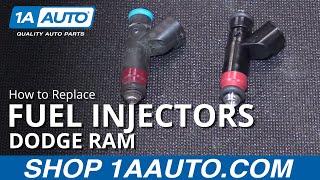
Typical fix: Replace the faulty fuel injector. 🎬 Watch this step-by-step guide to replacing Dodge Ram injectors It is often recommended to replace all injectors as a set on high-mileage vehicles.
Est. part cost: $80-$150 - Damaged wiring harness (external) ⚪ Low Probability The main engine harness can rub against brackets or other components, causing wires to chafe and short out. This is more commonly reported on 4th Gen (2009+) models.
How to confirm: Visually inspect the entire length of the injector wiring harness from the PCM to the valve cover for any signs of chafing, melting, or breaks. Perform a 'wiggle test' on the harness with the engine running to see if it causes the misfire to change.
Typical fix: Repair the damaged section of the wire or replace the injector connector pigtail (e.g., Standard Motor Products S-824).
Est. part cost: $15-$800 - Faulty Powertrain Control Module (PCM) ⚪ Low Probability → Shop Engine Control Module (ECM)
How to confirm: This should be the last resort after all other possibilities (wiring and injector) have been definitively ruled out. Requires specialized tools like an oscilloscope to test the injector driver circuit within the PCM by checking for a clean control signal and flyback voltage spike. A simple noid light may flash even with a bad driver, giving a false negative.
Typical fix: Replace and reprogram the PCM. Be cautious with remanufactured units, as they can sometimes be faulty out of the box.
Est. part cost: $300-$700
Rare But Worth Checking
- Rodent Damage:
Diagnosis Steps
- Verify the code with an OBD-II scanner. Note any other codes present, especially P0303 or P0300.
- Perform a visual inspection of the cylinder #3 fuel injector connector and its wiring. On a 4.7L, pay close attention to the wiring where it enters the valve cover. On a 5.7L, trace the harness back from the injector looking for chafing.
- Use a 'noid light' to test the injector connector. The light should flash steadily when the engine is cranked or running. Note: A flashing light confirms a signal is being sent, but doesn't guarantee the signal is correct. A weak or faulty PCM driver can still flash a noid light but fail to operate the injector properly.
- If the noid light test fails or is weak, inspect the wiring. For 4.7L engines, this is the point to closely inspect the harness at the valve cover gasket pass-through for brittle or broken wires. Test continuity from the PCM connector to the injector connector.
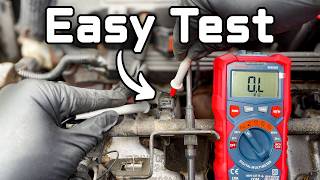
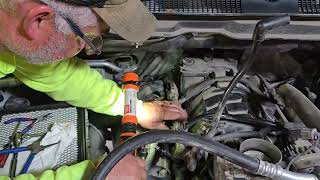
- If the noid light flashes correctly, test the injector itself. Turn the engine off, disconnect the injector, and measure its resistance with a multimeter. 🎬 See how to test fuel injectors with a multimeter It should be around 12-14 ohms. Compare the reading to an adjacent injector.
- As a final confirmation, swap the #3 fuel injector with an adjacent one (like #1 or #5). Clear the codes and run the engine. If the code changes to P0201 or P0205, the injector is faulty. If the P0203 code returns, the problem is in the wiring or PCM.
- If wiring and the injector are confirmed good, the PCM is the likely culprit. Advanced diagnosis involves using an oscilloscope on the injector control wire to verify the square wave pattern and the presence of a sharp voltage spike (flyback) when the injector closes. A missing or weak spike indicates a bad PCM driver.
Parts You'll Likely Need
- Valve Cover Gasket with Integrated Wiring (4.7L V8)
(OEM #68086182AA (This is one of several part numbers listed in the TSB communication))— This is the most likely cause for 2007-2008 4.7L models, per the manufacturer communication. The wiring harness fails from heat and vibration where it passes through the gasket.
Trusted brands: Mopar, Fel-Pro, DNJ
OEM price range: $150-$250
Aftermarket price range: $100-$180 - Fuel Injector
(OEM #53032704AB (For 4.7L V8), 04861667AA (For 5.7L V8))— If the wiring is confirmed to be good, the injector itself may have an internal failure (open coil).
Trusted brands: Bosch, Mopar, Standard Motor Products
OEM price range: $120-$180
Aftermarket price range: $80-$130 - Fuel Injector Connector Pigtail — If the external harness is damaged near the injector, replacing the connector pigtail is an effective repair without replacing the whole harness.
Trusted brands: Standard Motor Products (p/n S-824), Wells (p/n 1P1344)
OEM price range: N/A
Aftermarket price range: $12-$30
Related Codes That Often Appear With This One
- P0303 — P0303 means 'Cylinder 3 Misfire Detected'. Since the P0203 code indicates a problem with the fuel injector circuit for cylinder 3, that cylinder isn't getting the right amount of fuel, leading to a misfire.
- P0300 — This code means 'Random/Multiple Cylinder Misfire Detected'. Sometimes, a severe misfire in one cylinder can be misinterpreted by the computer, or the underlying electrical issue may intermittently affect other cylinders.
Technical Service Bulletins (TSBs) & Recalls
- NHTSA ID #10139009 (Internal Communication, Feb 13, 2013): Advises checking the wiring loom and/or connector in the valve cover gasket before replacing injectors for codes P0201 through P0206 on applicable models.
Platform-Specific Known Issues
- A manufacturer communication (NHTSA ID #10139009, sometimes referenced as TSB #9002688) exists for the 2007 model year 4.7L V8 highlighting that the wiring loom inside the valve cover gasket is a likely cause for injector circuit codes (P0201-P0206) and should be checked before replacing injectors.
Mechanic-Grade Diagnostic Values
- Fuel Injector Coil Resistance — expected: 12.0 - 14.0 ohms (check a known-good injector on the same engine for a baseline). Failure: A reading of infinity (Open Loop) or significantly different (>1 ohm) from other injectors on the engine.
- Injector Circuit Flyback Voltage (Oscilloscope) — expected: A sharp voltage spike of approximately 50-70 volts immediately after the PCM commands the injector to close.. Failure: A missing, weak, or rounded-off voltage spike, which indicates a faulty PCM injector driver or wiring issue.
- Injector Driver Circuit to Ground (Continuity) — expected: No continuity (Open Line / O.L.).. Failure: Resistance below 10k Ohms indicates a short to ground in the harness.
- Injector Harness Continuity (End-to-End) — expected: 0 - 1 Ohm.. Failure: High resistance or an open circuit (O.L.) indicates a break in the wire.
Hidden / Shadow Codes Worth Checking
- P0201, P0202, P0203 (as a group): On some Dodge systems, a short to power or ground on any single injector circuit can cause the PCM to set fault codes for all three injectors on that entire bank (Bank 1: Cylinders 1, 2, 3). (see via Standard OBD-II scanner. This is not a hidden code but a diagnostic pattern indicating a likely wiring short affecting the whole bank, rather than three simultaneous injector failures.)
Scan Tool Commands That Help
- High-end scanner (e.g., WiTech, Autel, Snap-on): Injector Kill / Cylinder Cutout Test — To confirm which cylinder is misfiring. The command allows you to disable injectors one by one with the engine running. If disabling cylinder #3 causes no change in engine idle, you've confirmed that cylinder was not contributing, which supports the P0203 diagnosis.
- High-end scanner (e.g., WiTech, Autel, Snap-on): ASD Relay Actuation — To test the power supply side of the injector circuit. Activating the Auto Shutdown (ASD) relay should send battery voltage to the common power wire on all injectors. This allows you to check for voltage at the injector connector without the engine running.
Wiring & Ground Locations
- Cylinder 3 Injector Wiring (5.7L HEMI) — The injector is on the driver's side, second from the front. The common power wire for the bank is typically Green with an Orange or Pink tracer. The control wire will be a unique color.. Knowing the wire colors is essential for testing the correct circuit for continuity and voltage at the injector and PCM connectors.
- Cylinder 3 Injector Wiring (4.7L V8) — The injector is on the driver's side, second from the front. A wiring diagram shows the two wires are often Brown/Violet and Pink/White.. Correctly identifying the control wire vs. the power wire is critical for diagnosis. The Brown/Violet wire is the control circuit from the PCM.
- PCM/Engine Block Ground — A primary ground point for the PCM and its sensors is typically a stud on the engine block, often located above or behind the starter motor.. A poor engine ground can cause erratic sensor readings and intermittent circuit faults, including injector codes. This should be checked for corrosion and tightness.
- Chassis/Battery Ground — A main chassis ground is located under or near the driver's side battery tray, connecting the negative battery terminal to the body.. While less likely to cause a single injector code, a corroded main chassis ground can cause widespread electrical issues, including PCM communication errors that can accompany other codes.
Real Owner Repair Stories
- YouTube channel 'Dan the Fix it Man' (2005 Dodge Ram 2500 5.9L Cummins (similar injector harness design)) — Sputtering, running rough, stalling, P0203 code.
❌ Tried (didn't work) Owner replaced the fuel filter.
✅ What actually fixed it The main injector harness connector was found to be completely saturated with engine oil, causing a poor connection. The connector was disconnected and thoroughly cleaned with electronic parts cleaner. After drying and reconnecting, the engine ran smoothly and the code was resolved. - Common forum reports based on TSB #9002688 (2007 Dodge Ram 1500 4.7L V8) — Rough idle, misfire, Check Engine Light with P0203 and P0303.
❌ Tried (didn't work) Replacing the #3 fuel injector., Swapping coils and spark plugs., In some cases, replacing the PCM.
✅ What actually fixed it The problem was finally traced to a broken wire inside the integrated harness that passes through the valve cover gasket. The heat and vibration caused the wire for the #3 injector to fail. Replacing the entire valve cover gasket assembly, which included the new integrated wiring, permanently fixed the issue.
"I Checked Everything" — The Actual Cause
- A common diagnostic trap for P0203 is when a noid light flashes correctly at the injector connector, suggesting the wiring and PCM are good. However, the code persists. The actual cause, discoverable only with an oscilloscope, was a faulty injector driver in the PCM that was still sending a weak signal (enough to flash the light) but was not producing the sharp ground-to-open transition and subsequent voltage spike needed to properly fire the injector and satisfy the PCM's monitoring circuit.
OEM Part Supersession History
04861667AA→04861667AB, 4861667AC— Minor revisions and updates to the injector design.
Heads up: All versions are generally interchangeable for the 5.7L HEMI within this year range, but it is best practice to use the latest revision.
Model Year Variations Within This Range
- 2007 vs 2008-2010 (4.7L V8): The 4.7L V8 was significantly updated for the 2008 model year with redesigned cylinder heads, dual spark plugs per cylinder, and a higher compression ratio. The well-known issue of the injector wiring failing inside the valve cover gasket (per TSB #9002688) primarily affects the earlier, pre-update 2007 engine design. While still possible on later models, it is far more common on the 2007 trucks.
Helpful Videos


We Have This Part in Stock


The information in this article is provided for general reference and educational purposes only. Vehicle specifications, procedures, and part compatibility can vary by production date, trim level, and region. Always consult your vehicle's factory service manual and verify part numbers before purchasing or performing repairs. Safety-critical components such as airbags, seat belts, and braking systems should be installed by a qualified professional.
- Dodge RAM 1500:
- 🧭 Diagnostic Flowchart
- 🎬 Helpful Videos
- 🛍️ Shop This Part
- What's Unique About the 2007-2010 Dodge RAM 1500
- Symptoms You May Notice
- Most Likely Causes
- Rare But Worth Checking
- Diagnosis Steps
- Parts You'll Likely Need
- Related Codes That Often Appear With This One
- Technical Service Bulletins (TSBs) & Recalls
- Platform-Specific Known Issues
- Mechanic-Grade Diagnostic Values
- Hidden / Shadow Codes Worth Checking
- Scan Tool Commands That Help
- Wiring & Ground Locations
- Real Owner Repair Stories
- "I Checked Everything" — The Actual Cause
- OEM Part Supersession History
- Model Year Variations Within This Range
- 🎟️ Get 5% Off