

P0203 on 1995-1999 Dodge RAM WAGON: Injector Circuit Malfunction Causes and Fixes
For a 1995-1999 Dodge Ram Wagon with a Magnum V6 or V8, code P0203 is most often caused by a faulty injector wiring harness that passes through the valve cover gasket, a known issue cited in a manufacturer TSB. Before replacing the injector, inspect this harness, particularly on the driver's side for cylinders 1, 3, 5, and 7. Replacing the gasket/harness assembly is the common fix and costs around $50-$100 for the part.
- For a 1995-1999 Dodge Ram Wagon, suspect the injector wiring harness inside the valve cover gasket before you suspect the injector itself.
- A simple 'noid light' test can quickly tell you if the injector is receiving a signal from the computer.
- Swapping the cylinder 3 injector with another one is a low-cost way to confirm if the injector is the faulty component.
- Driving with this code can cause a persistent misfire, leading to poor performance and potential damage to your catalytic converter.
What's Unique About the 1995-1999 Dodge RAM WAGON
On Dodge trucks from this era with Magnum engines (3.9L, 5.2L, 5.9L), a very common and well-documented failure point is the injector wiring harness itself. The harness is integrated into the valve cover gasket, and over time, engine heat and vibration cause the wiring to become brittle and fail where it passes through the gasket. This is so common that Dodge issued a Technical Service Bulletin (TSB #9002688, also related to TSB 18-24-98) advising technicians to check this harness before replacing any fuel injectors for P020x codes. Cylinder 3 is located on the driver's side of the engine, second from the front.
Diagnostic Flowchart
Tap your situation to follow the diagnostic path that matches what you're seeing on this vehicle.
Symptoms You May Notice
- Check Engine Light is on
- Rough idle or engine stumbling
- Engine misfire, which can feel like a jerking or popping sensation
- Reduced engine power and poor acceleration
- Decreased fuel economy
- Smell of raw fuel from the exhaust due to the unburned fuel from the dead cylinder.
- Replacing the fuel injector without first checking the valve cover pass-through harness. The TSB specifically warns against this, as the wiring is the more frequent point of failure on this platform.
- Replacing the PCM before exhaustively testing the wiring harness and the injector itself. A bad PCM is rare.
- Relying solely on a noid light. A noid light may flash, indicating the circuit is being commanded, but it cannot show if the PCM's driver is releasing the ground cleanly, which is required for the PCM to see the injector's 'flyback' voltage and confirm proper operation.
Most Likely Causes
- Faulty Valve Cover Gasket Wiring Harness 🔴 High Probability → Shop Engine Valve Cover As per TSB #9002688, the injector wiring loom passes through the valve cover gasket, where it is exposed to constant heat and vibration, leading to shorts or open circuits. This is the most common failure point for P020x codes on Magnum engines.
How to confirm: Disconnect the main harness connector at the valve cover. Inspect the pins for damage or corrosion. Use a multimeter to check for continuity between the main connector and the individual injector connectors. A reading of OL (Open Line) indicates a break in the wire. Also check for shorts to ground.
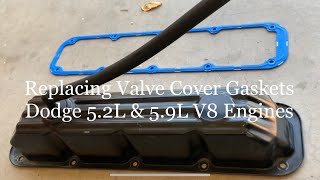
Typical fix: Replace the entire valve cover gasket, which includes the new integrated wiring harness. The gasket for the driver's side (Bank 1) covers cylinders 1, 3, 5, and 7. 🎬 See this step-by-step valve cover and harness replacement
Est. part cost: $50-$100 - Failed Fuel Injector 🟡 Medium Probability → Shop Fuel Injector
How to confirm: After confirming the wiring is good, test the injector's resistance with a multimeter (should be around 12-14 ohms when cool). A more definitive test is to swap the cylinder 3 injector with one from another cylinder (e.g., cylinder 1). Clear the codes and run the engine. If the code changes to P0201, the injector is faulty.
Typical fix: Replace the fuel injector for cylinder 3.
Est. part cost: $40-$90 - Damaged Wiring or Connector ⚪ Low Probability Rodents can chew wires, or previous repairs can lead to damaged connectors. Wires can also chafe and short to ground near the exhaust manifold.
How to confirm: Visually inspect the wiring harness leading to the valve cover and the pigtail connector at the injector for any signs of physical damage, melting, corrosion, or loose pins. Perform a wiggle test on the connector while the engine is running to see if it affects the idle.
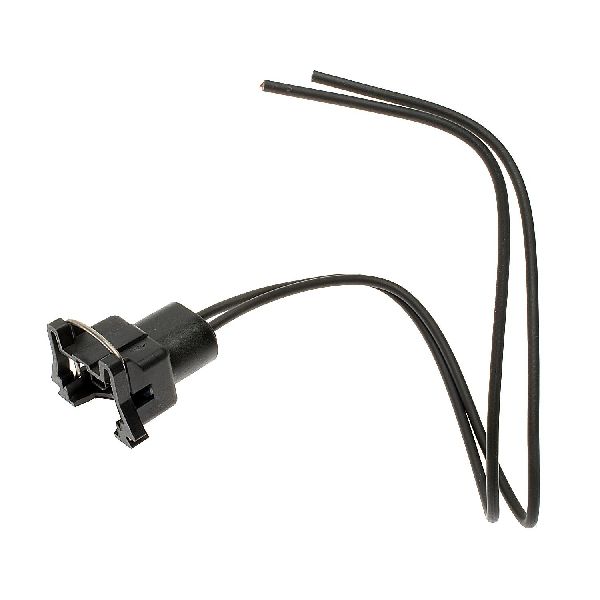
Typical fix: Repair the damaged section of wire or replace the pigtail connector for the injector.
Est. part cost: $10-$25
Rare But Worth Checking
- Faulty Powertrain Control Module (PCM): → Shop Engine Control Module (ECM) This is the least likely cause. The PCM's internal driver for the injector can fail, but all other possibilities (wiring, injector) must be exhaustively ruled out first. A remanufactured PCM can sometimes arrive with a bad driver, complicating diagnosis, as seen in some forum repair stories. 🎬 Watch: Real-world diagnosis of a P0203 circuit fault
Diagnosis Steps
- Read the code with an OBD-II scanner to confirm P0203 is present and note any other codes like P0303.
- Crucial Step for this vehicle: Locate and inspect the injector wiring harness where it passes through the driver's side valve cover gasket, as recommended by TSB #9002688. Check the main connector for damage, corrosion, or pushed-out pins.
- Disconnect the cylinder 3 fuel injector connector. Use a noid light to check for a pulse signal from the PCM while cranking or running the engine. A steady, flashing light indicates the PCM and wiring to the connector are likely good, but is not a definitive test.
- If the noid light does not flash, check for constant 12V+ power on one pin of the connector with the key on (engine off). This is typically a dark green wire with a colored tracer, supplied by the ASD (Auto Shutdown) relay. If power is missing, check the ASD relay and associated fuses.
- If power is present but there's no pulse, the issue is likely in the ground-side control wire from the PCM or the PCM itself. Test this wire for continuity back to the PCM connector. A break in this wire is common inside the valve cover gasket harness.
- If the noid light flashes (indicating the circuit is trying to work), turn the engine off and suspect the injector itself or a faulty PCM driver.
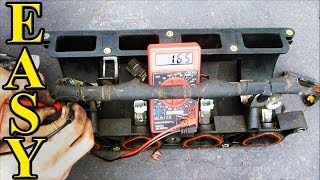
- Use a multimeter to measure the resistance of the fuel injector. A typical reading is between 12 and 14 ohms. A reading of 0 ohms indicates a short, and infinite resistance (OL) indicates an open circuit. Ensure all injectors are within 0.5 ohms of each other.
- For a definitive test, swap the cylinder 3 injector with an adjacent one (like cylinder 1). Clear the codes and run the engine. If the code returns as P0201, the injector is confirmed to be faulty. If P0203 returns, the problem is confirmed to be in the wiring or PCM.
- If all wiring and the injector test good, the final possibility is a failed injector driver in the PCM. This is best diagnosed with an oscilloscope by comparing the voltage waveform of injector #3 to a known good injector. The key indicator is a missing or weak 'flyback' voltage spike (e.g., >50V) after the PCM commands the injector off.
Parts You'll Likely Need
- Cylinder Head Cover Gasket with Injector Harness
(OEM #56027067AC)— This is the most common failure point for P020x codes on this vehicle, as documented in a manufacturer TSB. The wiring inside the gasket fails from heat and vibration. This part number is for the driver's side (Bank 1).
Trusted brands: Mopar, Fel-Pro, Dorman
OEM price range: $80-$120
Aftermarket price range: $50-$90 - Fuel Injector — If the wiring is confirmed to be good, the injector itself may have failed electrically (open or shorted coil) or become clogged.
Trusted brands: Bosch, Standard Motor Products (SMP), Delphi
OEM price range: $70-$110
Aftermarket price range: $40-$80
Related Codes That Often Appear With This One
- P0303 — P0303 indicates a misfire on cylinder 3. Since P0203 means the injector circuit for cylinder 3 is malfunctioning, that cylinder isn't getting the proper amount of fuel, directly causing a misfire.
- P0300 — P0300 indicates random or multiple cylinder misfires. If the wiring issue is intermittent or causing voltage fluctuations, it might trigger a general misfire code along with the specific injector code.
Technical Service Bulletins (TSBs) & Recalls
- 9002688: Advises checking the valve cover gasket wiring loom before replacing injectors for P0201-P0206 codes.
- 18-24-98: Details a PCM software update available to dealers to adjust timing and mitigate light spark knock on various Magnum engines from 1996-1998, including the 3.9L, 5.2L, and 5.9L.
Platform-Specific Known Issues
- A Technical Service Bulletin (TSB #9002688) was issued for 1995 models regarding injector codes P0201-P0206. It explicitly states to check the wiring loom and/or connector in the valve cover gasket before replacing the fuel injectors, as this is a known root cause.
- A related TSB, 18-24-98, discusses PCM software updates for 1996-1997 models with Magnum engines to address issues like light spark knock, indicating a history of PCM-related calibration adjustments for this powertrain family.
Mechanic-Grade Diagnostic Values
- Fuel Injector Pulse Width at Idle — expected: ~2.0 - 4.0 milliseconds (ms). Failure: Significantly higher or lower values, or inconsistent readings compared to other cylinders.
- Fuel Injector 'Flyback' Voltage Spike — expected: A sharp spike of >50V immediately after the injector ground is released.. Failure: A missing, low (e.g., only back to battery voltage), or rounded-off spike. This indicates a faulty PCM driver or a short in the control circuit and will set the P0203 code even if the injector is pulsing.
- Fuel Injector Coil Resistance — expected: ~12 - 14 Ohms when cool.. Failure: A reading of 0 ohms (shorted), OL/infinite ohms (open), or a deviation of more than 0.5 ohms from the other injectors on the engine.
- Injector Power Feed Voltage (Key On, Engine Off) — expected: 12V+ (Battery Voltage) on the Dark Green/Tracer wire at the injector connector.. Failure: Low or no voltage indicates a problem with the ASD (Auto Shutdown) relay, fuse, or the power feed wiring.
Scan Tool Commands That Help
- DRB III or equivalent professional scanner: Actuator Test: Fuel Injector Buzz/Kill — To individually command each injector to operate (buzz) or shut off (kill) while the engine is running. If killing injector #3 causes no change in engine RPM, it confirms that cylinder was not contributing.
- DRB III or equivalent professional scanner: Actuator Test: Auto Shutdown (ASD) Control State — To manually energize the ASD relay without the engine running. This allows for testing the 12V+ power supply circuit to the injectors without the 2-second timeout that normally occurs with just the key on.
Wiring & Ground Locations
- Injector #3 PCM Control Wire — Runs from the cylinder #3 fuel injector connector, through the valve cover gasket pass-through connector, to a specific pin on the Powertrain Control Module (PCM).. This is the dedicated ground-pulse wire for injector #3. An open or short on this wire is a direct cause of P0203. It is the most common point of failure within the valve cover gasket harness.
- G100 / G101 / G102 — Main engine and battery grounds located on the left front of the engine or engine compartment, near the battery.. A poor engine ground can create electrical noise and voltage offsets, potentially confusing the PCM's sensitive driver circuits and causing erroneous codes or poor performance of actuators like fuel injectors.
- ASD Relay Output — This circuit runs from the ASD (Auto Shutdown) relay, typically in the under-hood Power Distribution Center (PDC), and splits to provide power to all fuel injectors.. While a failure here would typically affect all injectors, a high-resistance point in the harness after the main splice could selectively affect one injector, causing a voltage drop under load that might trigger a P0203.
Real Owner Repair Stories
- YouTube Channel 'Pine Hollow Auto Diagnostics' (Dodge Ram with Magnum V8 (similar powertrain)) — Pronounced engine misfire with a P0203 code.
❌ Tried (didn't work) The owner had already replaced the PCM with a remanufactured unit., Testing injector resistance (was good at ~12.6 ohms)., Load testing the power (ASD) and control wires between the PCM and injector (both tested good)., A standard noid light test would have shown a flashing light, incorrectly suggesting the circuit was fine.
✅ What actually fixed it The technician used a lab scope and found the injector's flyback voltage spike was absent on cylinder 3. The remanufactured PCM's injector driver was faulty and not releasing the ground cleanly. Replacing the faulty remanufactured PCM with another one resolved the code.
"I Checked Everything" — The Actual Cause
- The electrical equivalent of a 'smoke test clean' scenario for P0203 is when all wiring passes continuity and voltage checks with a multimeter, and a noid light flashes as expected, yet the code persists. This often points to a failure that can only be seen dynamically with an oscilloscope. The most common cause in this situation is a faulty PCM injector driver that is still pulsing but not creating the necessary inductive kick (flyback voltage) that the PCM monitors for self-diagnosis.
Model Year Variations Within This Range
- 1995: 1995 was a transition year to OBD-II. The Diagnostic Link Connector (DLC) may not be in the standardized location under the driver's side dashboard. Service manuals indicate the connector for 1991-1995 models is on the firewall, near the PCM.
- 1998-1999: A significant body and interior refresh occurred in 1998. While the Magnum powertrains were carried over, there may be differences in harness connectors and routing compared to the 1995-1997 models.
Helpful Videos
We Have This Part in Stock


The information in this article is provided for general reference and educational purposes only. Vehicle specifications, procedures, and part compatibility can vary by production date, trim level, and region. Always consult your vehicle's factory service manual and verify part numbers before purchasing or performing repairs. Safety-critical components such as airbags, seat belts, and braking systems should be installed by a qualified professional.
- Dodge RAM WAGON:
- 🧭 Diagnostic Flowchart
- 🎬 Helpful Videos
- 🛍️ Shop This Part
- What's Unique About the 1995-1999 Dodge RAM WAGON
- Symptoms You May Notice
- Most Likely Causes
- Rare But Worth Checking
- Diagnosis Steps
- Parts You'll Likely Need
- Related Codes That Often Appear With This One
- Technical Service Bulletins (TSBs) & Recalls
- Platform-Specific Known Issues
- Mechanic-Grade Diagnostic Values
- Scan Tool Commands That Help
- Wiring & Ground Locations
- Real Owner Repair Stories
- "I Checked Everything" — The Actual Cause
- Model Year Variations Within This Range
- 🎟️ Get 5% Off