

P0203 on 2000-2003 Dodge RAM WAGON: Injector Circuit Malfunction Fixes
On a 2000-2003 Dodge Ram Wagon, code P0203 is often caused by a faulty wiring harness within the valve cover gasket, not a bad fuel injector. Before replacing the injector, inspect the wiring loom and connector as advised by Dodge TSB #9002688. The wiring becomes brittle from engine heat, causing an open or short in the cylinder 3 injector circuit.
- For a P0203 on a 2000-2003 Dodge Ram Wagon, suspect the wiring harness under the valve cover before you suspect the fuel injector.
- A formal Dodge TSB (#9002688) exists for this exact issue, making it a well-documented problem.
- Diagnosis should start with checking the wiring and connectors for continuity and damage, which can save you from buying an unnecessary fuel injector.
- Symptoms include a rough idle, engine misfires, and a lit Check Engine Light.
- The repair may involve replacing the valve cover gasket assembly that contains the updated injector wiring.
What's Unique About the 2000-2003 Dodge RAM WAGON
For this generation of Dodge Ram Wagon and its platform mates with Magnum engines, a significant number of P0203 codes are not caused by a failed injector. Dodge issued Technical Service Bulletin (TSB) #9002688 highlighting that the wiring loom and its connector, which are routed under the valve cover, are a common point of failure. Constant, intense heat cycles cause the wire insulation to become brittle, crack, and flake off, leading to shorts or open circuits. This makes checking this specific wiring section a critical first step before condemning the injector.
Diagnostic Flowchart
Tap your situation to follow the diagnostic path that matches what you're seeing on this vehicle.
Symptoms You May Notice
- Check Engine Light is on
- Rough or shaky idle
- Engine misfiring, which may feel like a vibration or jerking
- Poor engine performance and hesitation during acceleration
- Increased fuel consumption
- Difficulty starting the engine, or engine stalls after starting
- Smell of raw fuel from the exhaust
- Replacing the fuel injector without first removing the valve cover to inspect the wiring harness inside. The TSB #9002688 specifically warns against this, as the wiring is the most common failure point on these vehicles.
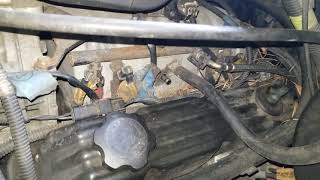
- Mistaking an oil leak from the famous Magnum V8 intake manifold plenum gasket for a valve cover gasket leak. Before performing major work, it's wise to look down the throttle body for pooled oil in the intake manifold, which is a sign of a blown plenum gasket. 🎬 Watch: How to check your intake manifold for plenum gasket leaks.
Most Likely Causes
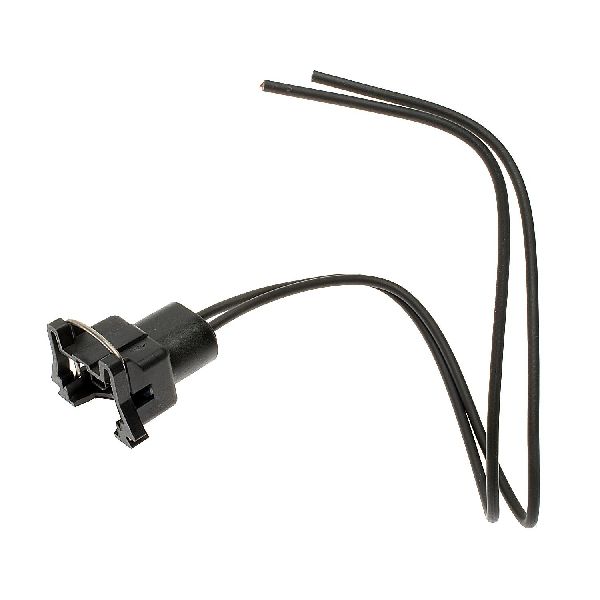
- Faulty Injector Wiring Harness/Connector in Valve Cover Gasket 🔴 High Probability → Shop Engine Wiring Harness Connector As per TSB #9002688, the wiring loom and connector located under the valve cover are a known weak point. Constant heat cycles cause the wiring insulation to become brittle, crack, or develop shorts against the cylinder head or other wires. This is the most common cause for P020x codes on this platform.
How to confirm: Remove the valve cover on the driver's side. Visually inspect the wiring harness that connects to the injectors. Look for cracked, flaking, or bare wires. Pay close attention to the connector for cylinder 3. You can also unplug the main harness connector at the valve cover and use a multimeter to check for continuity and resistance on the pins corresponding to cylinder 3. Wiggle the harness while testing to see if the readings fluctuate.
Typical fix: Repair the damaged section of wire with new, oil-resistant wire and heat-shrink tubing. If the damage is extensive, replace the injector pigtail connector or the entire under-cover harness section. While doing this, it is best practice to replace the valve cover gasket itself to prevent oil leaks. A common aftermarket part number for the valve cover gasket set is Fel-Pro VS50419R.
Est. part cost: $20-$100 (for gaskets and wiring repair supplies) - Failed Fuel Injector #3 🟡 Medium Probability → Shop Fuel Injector
How to confirm: After confirming the wiring is good, test the injector itself. Use a multimeter set to ohms to measure the resistance across the injector's two terminals. A good injector should read approximately 12-14 ohms. An infinite reading means an open circuit, and a zero reading indicates a short. A highly effective test is to swap the #3 injector with an adjacent one (like #1 or #5). Clear the codes and drive the vehicle. If the code changes to P0201 or P0205, the injector is faulty. If the P0203 code returns, the problem is in the wiring or PCM.
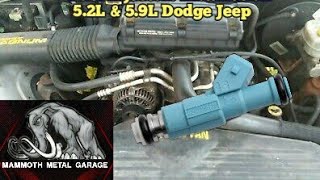
Typical fix: Replace the fuel injector for cylinder 3. A common aftermarket part is Standard Motor Products FJ588 or equivalent. 🎬 See this walkthrough for installing new fuel injectors on Magnum engines.
Est. part cost: $40-$100 - Wiring Issues (External to Valve Cover) ⚪ Low Probability Harnesses can be damaged by heat from the exhaust manifold, chafing against engine components, or rodent damage.
How to confirm: Visually inspect the wiring harness leading from the PCM to the valve cover connector. Look for any frayed, broken, melted, or shorted wires. Perform a continuity test from the PCM connector to the valve cover connector pin for cylinder 3.
Typical fix: Repair or replace the damaged section of the wiring harness.
Est. part cost: $10-$50
Rare But Worth Checking
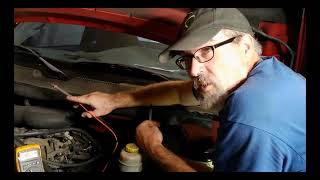
- Faulty Powertrain Control Module (PCM): → Shop Engine Control Module (ECM) This is the least likely cause. The PCM's internal driver for the injector can fail, but all other possibilities, especially wiring, should be exhausted before considering PCM replacement. 🎬 Watch: Real-world diagnosis of a P0203 code and PCM troubleshooting. A professional diagnosis with a lab scope can confirm a bad driver by observing the voltage pattern on the control wire.
Diagnosis Steps
- Verify the presence of code P0203 with an OBD-II scanner.
- Locate cylinder #3. On Dodge V6 and V8 engines of this era, the cylinders are numbered with odd numbers on the driver's side (Bank 1) and even numbers on the passenger's side (Bank 2), from front to back. Cylinder 3 is the second cylinder from the front on the driver's side.
- Follow the advice of TSB #9002688: Remove the driver's side valve cover and visually inspect the injector wiring harness for cracked, brittle, or bare wires.
- If visual inspection is inconclusive, test the wiring. Disconnect the main electrical connector at the valve cover. Check for corrosion or damage to the pins.
- Use a multimeter to test the continuity and for shorts on the wires for cylinder 3 between the main connector and the injector connector.
- If the under-cover harness tests good, check the external harness between the PCM and the valve cover for damage.
- If all wiring is confirmed to be good, test the fuel injector. Check its resistance with a multimeter. It should be around 12-14 ohms.
- Perform an 'Injector Swap Test': Exchange the cylinder 3 injector with another cylinder's injector (e.g., cylinder 1). Clear the codes and run the engine. If the code returns as P0201, the injector is bad. If P0203 returns, the problem is in the wiring or PCM.
- Use a 'noid light' plugged into the injector connector to verify that the PCM is sending a pulse signal. If the light flashes, the PCM and wiring are likely good, pointing to a clogged or mechanically failed injector.
- If there is no pulse signal and the wiring is confirmed good, the issue may be with the PCM's injector driver, which is rare and best confirmed by a professional.
Parts You'll Likely Need
- Valve Cover Gasket Set — The valve cover must be removed to access the injector harness, and the old gasket should always be replaced to prevent oil leaks. The wiring itself often needs to be repaired rather than replaced as a single assembly.
Trusted brands: Fel-Pro (e.g., VS50419R), Dorman, Victor Reinz
OEM price range: $40-$80
Aftermarket price range: $20-$50 - Fuel Injector
(OEM #53030778)— If the wiring is confirmed to be good, the injector itself may have failed electrically (open or shorted coil) or become clogged.
Trusted brands: Standard Motor Products (e.g., FJ588), Bosch, Mopar
OEM price range: $80-$150
Aftermarket price range: $40-$100
Related Codes That Often Appear With This One
- P0303 — P0303 indicates a misfire on cylinder 3. Since P0203 means the injector circuit for cylinder 3 is malfunctioning, that cylinder isn't getting the right amount of fuel, which directly causes a misfire.
- P0201, P0202, P0204, etc. — If multiple injector codes are present, it strongly points to a common failure point, such as the main power feed to the injectors, the main harness connector, or a faulty ground, rather than multiple individual injectors failing at once.
Technical Service Bulletins (TSBs) & Recalls
- 9002688: Advises checking the wiring loom/connector in the valve cover gasket before replacing injectors for codes P0201 through P0206 due to failures from heat degradation.
Platform-Specific Known Issues
- Under Valve Cover Injector Harness Failure: → Shop Engine Valve Cover Per TSB #9002688, the injector wiring loom routed under the valve cover is a primary suspect for P020x codes. Engine heat degrades the wire insulation, causing it to crack and short out. This should be inspected before replacing any fuel injectors.
- Magnum Intake Manifold Plenum Gasket Leak: → Shop Engine Intake Manifold A notorious issue on these Magnum engines is the failure of the intake manifold plenum gasket, located on the bottom of the intake manifold. This causes the engine to suck oil from the crankcase, leading to high oil consumption and fouled spark plugs. While not directly related to P0203, it's a common problem on these engines that owners should be aware of to avoid misdiagnosis of oil leaks or general performance issues.
Mechanic-Grade Diagnostic Values
- Fuel Injector Coil Resistance — expected: 12.5 - 12.8 Ohms (engine warm). Failure: Infinite resistance (open) or near-zero resistance (short).
- Fuel Pressure at Rail (Key On, Engine Off) — expected: ~41 PSI. Failure: Significantly lower pressure indicates a weak pump or leak; higher could be a regulator issue.
- Injector Connector Voltage (Key On, Engine Off) — expected: 12.2 - 12.9 Volts on the power feed wire (Dark Green/Orange) for ~1.5 seconds after key-on, then drops.. Failure: No voltage suggests an issue with the ASD relay or its circuit; constant voltage could indicate a short.
- Injector Balance Test (Scan Tool) — expected: The pressure drop difference between the highest and lowest reading injectors should be less than 2.9 PSI (20 kPa).. Failure: A difference greater than 2.9 PSI indicates one or more injectors are flowing differently (clogged or failing).
Scan Tool Commands That Help
- DRB III or equivalent professional scanner (e.g., Autel): Injector Balance Test — To functionally test for a clogged or mechanically failing injector after confirming the electrical circuit is intact. The tool pulses each injector and measures the fuel pressure drop, allowing comparison between cylinders.
- Professional scanner with bidirectional controls: ASD (Auto Shutdown) Relay Actuation — To test the power supply side of the injector circuit under a controlled load. A technician can command the relay on to check for voltage and perform a voltage drop test on the power feed wire without starting the engine.
- Professional scanner with bidirectional controls: Power Balance Test — To identify a misfiring cylinder by individually disabling fuel to each cylinder and observing the drop in engine RPM. If disabling cylinder 3 causes little or no change in RPM, it confirms that cylinder was not contributing power.
Wiring & Ground Locations
- Cylinder 3 Injector Control Wire — Yellow/White wire at Pin 5 of the PCM connector.. This is the specific ground-side switched wire from the PCM that controls the cylinder 3 injector. Testing for a pulsed ground signal on this wire at the PCM can isolate the fault to the PCM itself or the wiring harness.
- Injector Power Feed Wire — Dark Green/Orange wire, shared among the injectors on that bank.. This wire supplies battery voltage to the injectors via the ASD relay. A fault in this wire would typically affect multiple injectors, but a localized issue near the cylinder 3 connector could cause a single code.
- Engine Ground — Near the LH (driver's side) rocker cover and on the LH side of the firewall.. Poor engine or chassis grounds can cause a host of electrical issues, including erratic sensor and actuator behavior. While not a direct cause of a single injector code, verifying main grounds are clean and tight is a crucial step in any electrical diagnosis.
- G202 (Reference) — On a similar vintage Dodge van ('98), G202 is located on the left side of the dash structure.. Interior grounds can affect the PCM and its reference voltages. A fault here is less likely but possible if other strange electrical symptoms are present.
Real Owner Repair Stories
- ScannerDanner Forum user 'cheryl hartkorn' (2000 Dodge Ram 1500 5.9L Magnum) — P0203 code and a bad misfire.
❌ Tried (didn't work) Replacing the injector pigtail connector (which was visibly damaged by a rat)., Replacing all fuel injectors.
✅ What actually fixed it The final diagnosis pointed to a remaining open in the wiring harness that was not fixed by the pigtail replacement. The user was guided to test the specific wires: the Dark Green/Orange power feed for voltage and the Yellow/White control wire at PCM pin 5 for a pulsed ground, indicating the fault lay in the harness between the PCM and the injector.
OEM Part Supersession History
53030778→53030778AB, RL030778AB— Part revision by manufacturer.Stock 1-hole injector→Bosch Gen III 4-hole upgrade (e.g., p/n 0280155972)— Aftermarket performance and efficiency upgrade. Provides better fuel atomization for a smoother idle and improved throttle response.
Heads up: This is a popular, direct-fit upgrade for the 5.2L and 5.9L Magnum engines and does not require ECU tuning.
Model Year Variations Within This Range
- 2000-2003: The Dodge Ram Wagon (B-series van) platform was largely unchanged in its final years of production (1998-2003). While minor variations in body or accessory wiring may exist, the core engine management system, injector design, and the problematic under-valve-cover harness design remained consistent for the Magnum engines in this range. Diagnosis for P0203 is identical across these years.
Helpful Videos

We Have This Part in Stock


The information in this article is provided for general reference and educational purposes only. Vehicle specifications, procedures, and part compatibility can vary by production date, trim level, and region. Always consult your vehicle's factory service manual and verify part numbers before purchasing or performing repairs. Safety-critical components such as airbags, seat belts, and braking systems should be installed by a qualified professional.
- Dodge RAM WAGON:
- 🧭 Diagnostic Flowchart
- 🎬 Helpful Videos
- 🛍️ Shop This Part
- What's Unique About the 2000-2003 Dodge RAM WAGON
- Symptoms You May Notice
- Most Likely Causes
- Rare But Worth Checking
- Diagnosis Steps
- Parts You'll Likely Need
- Related Codes That Often Appear With This One
- Technical Service Bulletins (TSBs) & Recalls
- Platform-Specific Known Issues
- Mechanic-Grade Diagnostic Values
- Scan Tool Commands That Help
- Wiring & Ground Locations
- Real Owner Repair Stories
- OEM Part Supersession History
- Model Year Variations Within This Range
- 🎟️ Get 5% Off