

P0203 on 2015-2019 Ford Transit 3.5L EcoBoost: Injector Circuit Malfunction Causes and Fixes
This code means there's an electrical problem with the fuel injector for cylinder #3. The most common fix is replacing the #3 fuel injector itself, which can fail internally. The second most likely cause is a damaged wire or connector leading to the injector. Before replacing parts, inspect the wiring harness for chafing, a known issue on Ford platforms with this engine.
- P0203 on your Transit indicates an electrical problem with the cylinder 3 fuel injector, not a spark plug or coil issue.
- The most likely culprit is a failed fuel injector. A definitive way to diagnose this is to swap the injector with one from another cylinder and see if the code follows.
- Before buying parts, carefully inspect the wiring and connector going to the cylinder 3 injector (rearmost on passenger side) for any signs of damage or corrosion.
- Limit driving with this code. A continuous misfire can send unburned fuel to the catalytic converter, causing expensive damage.
What's Unique About the 2015-2019 Ford Transit
On the 3.5L EcoBoost engine, which uses high-pressure gasoline direct injection (GDI), the injectors and their wiring live in a high-temperature, high-vibration environment. This can make wiring and connectors brittle over time. While the injector itself is a common failure point, it's critical to note that other Ford trucks with this same engine family have known issues with wiring harnesses chafing on nearby components. Specifically, TSB 22-2223 for the F-150 points to the harness rubbing on an A/C hose mounting stud on the passenger side, which is a prime inspection area for Transit owners as well. For the Transit, cylinder #3 is the rearmost cylinder on the passenger side of the engine (Bank 1).
Symptoms You May Notice
- Check Engine Light is on
- Rough idle and engine shaking
- Engine misfire, which may feel like a shudder or hesitation
- Reduced engine power and poor acceleration
- Decreased fuel economy
- Engine may not restart after being shut off
- Replacing the spark plug or ignition coil for cylinder 3. While these parts can cause a misfire code (P0303), they will not cause an injector circuit code like P0203, which is specifically an electrical fault.
Most Likely Causes
- Faulty Cylinder 3 Fuel Injector 🔴 High Probability → Shop Fuel Injector The internal coil windings of the GDI injector can fail due to heat cycles and vibration, creating an open or short circuit that the PCM detects. These injectors operate under high pressure and temperature, contributing to wear over time.
How to confirm: Measure the resistance of the injector with a multimeter; an out-of-spec or infinite (OL) reading indicates failure. 🎬 See this quick guide on testing fuel injectors with a multimeter. The most definitive test is to swap the cylinder 3 injector with an adjacent one (e.g., cylinder 2). Clear the codes and run the engine. If the trouble code changes to P0202, the injector is confirmed to be faulty.
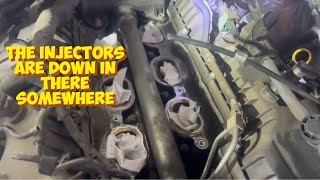
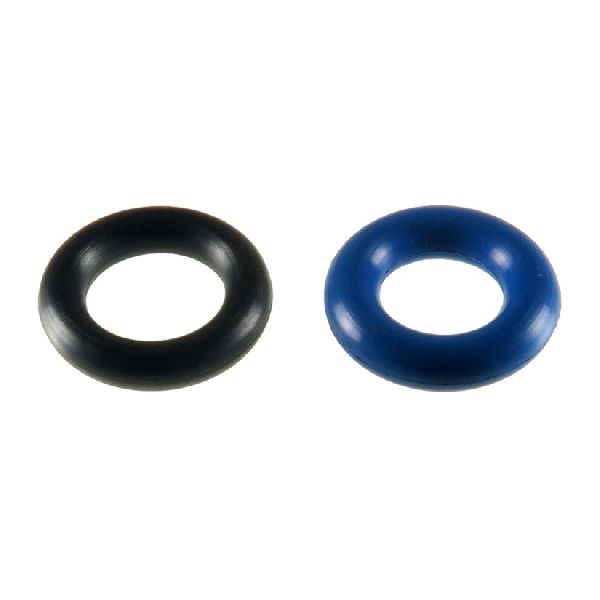
Typical fix: Replace the faulty fuel injector. Since this is a GDI engine, the high-pressure fuel system must be depressurized before service. It is also recommended to replace the Teflon seal on the injector. 🎬 Watch: Step-by-step fuel injector replacement on a 3.5L EcoBoost engine.
Est. part cost: $50-$150 - Wiring Harness or Connector Issue 🟡 Medium Probability Engine bay heat can make wires and plastic connectors brittle. The wiring harness can also rub against other engine components, causing wires to break or short out. A TSB for the F-150 with the same engine (TSB 22-2223) notes a potential chafe point on an A/C hose mounting stud on the passenger side of the engine bay, which is a highly recommended inspection point.
How to confirm: Visually inspect the wiring going to the cylinder 3 injector for any signs of damage, melting, chafing, or corrosion. Unplug the connector and check for bent or corroded pins. Use a multimeter to check for continuity on the control wire between the injector and the PCM, and verify the power wire has voltage with the key on.
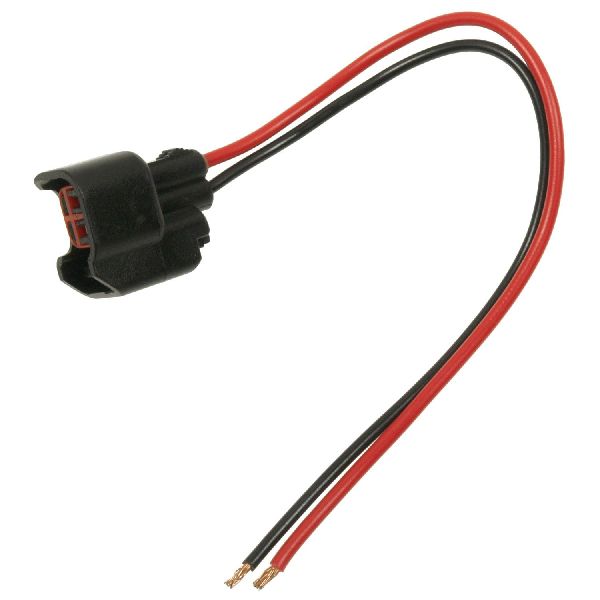
Typical fix: If the connector is damaged, replace it with a new pigtail connector. If a wire is broken, repair the wire with a solder joint and heat shrink tubing. If chafing is found, repair the wires and re-route or protect the harness to prevent future damage.
Est. part cost: $15-$40
Rare But Worth Checking
- Powertrain Control Module (PCM) Failure: → Shop Engine Control Module (ECM) This is very rare. Before suspecting the PCM, all other possibilities (injector, wiring) must be exhaustively ruled out. A failed injector driver inside the PCM can cause this code, but it's the least likely culprit. One forum user on a similar Ford vehicle replaced two injectors and checked wiring before concluding the PCM was the issue.
Diagnosis Steps
- Verify the code with an OBD-II scanner. Note any other codes present, especially P0303.
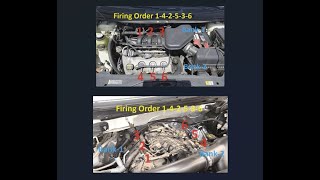
- Locate cylinder 3. On the RWD Transit with the 3.5L EcoBoost, this is the rearmost cylinder on the passenger side (Bank 1). 🎬 Watch: How to identify Ford 3.5L cylinder locations and banks.
- Inspect the wiring and connector for the cylinder 3 fuel injector. Look for any obvious signs of damage, melting, or loose connections. Pay close attention to the area near the A/C line mounting stud on the passenger side for potential harness chafing.
- Test the injector circuit signal. Use a 'noid light' plugged into the injector connector. Start the engine; a flashing light indicates the PCM is sending a signal. If there's no light, the problem is likely in the wiring or the PCM.
- Test the injector's internal resistance. Disconnect the injector and use a multimeter set to Ohms to measure the resistance between its two pins. Compare this reading to the manufacturer's specification or to a known-good injector on another cylinder. An infinite reading (OL) means an open circuit, while a very low reading indicates a short.
- Perform an injector swap test. If the injector's resistance seems okay but you still suspect it, swap the cylinder 3 injector with the one from cylinder 2. Clear the codes and run the engine. If the code returns as P0202, you have confirmed the injector is faulty. If P0203 returns, the problem is in the wiring or PCM.
- If the injector and signal are good, perform a continuity test on the wiring harness between the injector connector and the PCM connector to find any breaks in the wire. This involves checking the specific pin at the PCM for the cylinder 3 injector control wire.
Parts You'll Likely Need
- GDI Fuel Injector
(OEM #BL3Z-9F593-B)— This is the most common cause of P0203. The internal electronics of the injector fail, causing an open or shorted circuit. This part number supersedes BL3Z-9F593-A.
Trusted brands: Motorcraft, Bosch
OEM price range: $90-$180
Aftermarket price range: $40-$130 - Fuel Injector Connector Pigtail
(OEM #BU5Z-14A411-DC)— If the wiring inspection reveals a damaged, corroded, or melted connector at the injector, replacing the pigtail is the correct repair. Aftermarket options like Dorman 85850 or Carquest PT2318 are also available.
Trusted brands: Motorcraft, Dorman, Carquest
OEM price range: $25-$40
Aftermarket price range: $15-$25
Related Codes That Often Appear With This One
- P0303 — P0303 means 'Cylinder 3 Misfire Detected'. Since the P0203 code indicates the cylinder 3 injector isn't firing correctly, that cylinder will misfire, almost always triggering P0303 at the same time.
- P0300 — This code for 'Random/Multiple Cylinder Misfire' might appear alongside P0203 if the underlying electrical issue is causing instability that affects other cylinders, though P0303 is more common.
- P0201, P0202, P0204, etc. — If multiple injector circuit codes appear at once, it strongly suggests a problem with a shared component, like a blown fuse, a faulty relay, or a damaged section of the main wiring harness that serves multiple injectors.
Technical Service Bulletins (TSBs) & Recalls
- TSB 22-2223 (F-150): While for the F-150, it's relevant as it concerns the same 3.5L EcoBoost engine. It notes that the engine harness may chafe against an A/C hose mounting stud, causing injector circuit faults. This is a good potential location to inspect for wiring damage. Note: This TSB number has been superseded or used for other issues on different models, but the chafing problem it describes remains a valid and documented concern for this engine family.
- SSM 49759: A manufacturer service bulletin for related Ford models notes that an illuminated MIL with codes P0201 through P0206 may occur, and technicians should follow specific pinpoint tests in the PC/ED manual to resolve these injector circuit faults.
Platform-Specific Known Issues
- Wiring Harness Chafing: While not a Transit-specific TSB, the F-150 with the same 3.5L EcoBoost has a known issue (TSB 22-2223) where the engine wiring harness rubs against an A/C line mounting stud on the passenger side. This can cause shorts or opens in the injector circuits and is a critical place to inspect on a Transit with a P020x code.
Mechanic-Grade Diagnostic Values
- GDI Fuel Injector Internal Resistance — expected: 1.0 - 2.0 Ohms. Failure: A reading of infinity (Open Loop) or a value significantly outside the expected range indicates a failed internal injector coil.
- GDI Fuel Injector Activation Voltage — expected: ~65 Volts (Peak). Failure: This is not a value to be tested with a standard multimeter. It is the peak voltage required from the PCM to open the high-pressure injector. Attempting to measure this without an oscilloscope or applying 12V directly can damage the component or tool.
- PCM Injector Driver Signal — expected: Clean 12V square wave on an oscilloscope. Failure: Absence of a signal, or a distorted/erratic waveform, when back-probing the control wire at the injector connector while the engine is running, points to a wiring or PCM driver issue.
Scan Tool Commands That Help
- Ford IDS (or equivalent professional scanner): Injector Buzz Test / KOEO Injector Test — This is an active command performed with the Key On, Engine Off. The PCM will cycle each injector, which should produce an audible 'click'. If cylinder 3's injector does not click while others do, it confirms a fault in the injector or its circuit, helping to isolate the problem without starting the engine.
Wiring & Ground Locations
- Cylinder 3 Injector Control Wire — This wire runs from the fuel injector connector for cylinder 3 to Pin 33 at the Powertrain Control Module (PCM) connector. The wire color is typically White with a Brown stripe.. This is the specific wire that carries the ground signal from the PCM to fire the injector. A continuity test from the injector connector to this pin can definitively rule out a broken wire.
- Main Engine/Chassis Ground — There are several key ground points. One major strap typically runs from the engine block or transmission housing to the chassis/frame rail in the engine bay. Another is from the battery negative terminal to the chassis.. While not specific to one injector, a corroded or loose main ground can cause a host of floating voltages and erratic electrical behavior, including injector circuit faults. Verifying main grounds are clean and tight is a crucial step in any electrical diagnosis.
"I Checked Everything" — The Actual Cause
- The electrical equivalent of a 'smoke test clean' scenario for P0203 is when a noid light flashes correctly (indicating a signal) and the injector's resistance measures within spec at room temperature, yet the code persists or returns when driving. This often points to a weak injector driver inside the PCM. The driver's internal transistor can fail dynamically under heat or electrical load, even though it passes static, low-load tests in the garage.
OEM Part Supersession History
BL3Z-9F593-A→BL3Z-9F593-B (also sold as Motorcraft CM-5255)— Part revision for improved reliability or manufacturing process change.
Heads up: These parts are for the Gen 1 3.5L EcoBoost. Do not use injectors intended for the Gen 2 engine (2017+ F-150, 2020+ Transit) as the fuel systems are different.
Model Year Variations Within This Range
- 2015-2019: The Ford Transit within this year range exclusively uses the first-generation 3.5L EcoBoost engine, which is Gasoline Direct Injection (GDI) only. This is a critical distinction because the Ford F-150 received the second-generation 3.5L EcoBoost (with both GDI and Port Fuel Injection) in 2017. Therefore, parts and some diagnostic information for a 2017-2019 F-150 do not apply to a 2017-2019 Transit.
Diagnostic Flowchart
Other Known Issues on This Vehicle
Issues unrelated to this code that are worth knowing about as an owner of this generation:
- Driveshaft Flexible Coupling (Giubo) Failure 🔴 High — Common enough to trigger a major recall (19S38) for 2015-2017 models. The coupling cracks with mileage, typically over 30,000-40,000 miles. (Ref: Recall 19S38 (supersedes 17S15). The fix involves replacing the flexible coupling with a permanent mechanical U-joint.)
- Intake Valve Carbon Buildup 🟠 Medium — A common issue for all first-generation (direct injection only) 3.5L EcoBoost engines, including those in the 2015-2019 Transit. Symptoms like rough idle and power loss appear over 60,000-100,000 miles.
- Timing Chain Stretch 🔴 High — Primarily affects earlier first-gen 3.5L EcoBoost engines. Can cause rattling noises on startup and, if ignored, lead to catastrophic engine failure. Ford revised the parts in later years. (Ref: TSB 18-2305 (for F-150, but recommends updated parts applicable to the family))
- Turbocharger Coolant and Oil Line Leaks 🟠 Medium → Shop Turbocharger — Fittings and lines for the turbos can leak over time due to heat cycles. This is a common area to check for leaks during routine maintenance.
- Cam Phaser Rattle on Cold Start (Gen 2) 🟠 Medium — More prominent on the second-generation 3.5L EcoBoost (2017+ in other models), but early signs can appear on late first-gen engines. Causes a brief rattle for 2-5 seconds after a cold start. (Ref: TSB 22-2200 (for F-150/Expedition, but describes the common issue))
Used vs. New Parts: Buying Guide for This Vehicle
When a used part is the smart pick: A used wiring harness pigtail or a section of the engine harness from a low-mileage, collision-damaged vehicle can be a cost-effective repair for physical wire damage. A complete used engine harness is also a viable option if a large section is damaged by heat or chafing.
Donor-vehicle mileage cap: roughly under 60000 miles for the part to have meaningful remaining life.
What to inspect on the donor part:
- For wiring, inspect for any signs of prior repair, melted conduit, brittle insulation, or corrosion on the pins.
- Ensure connector locking tabs are intact and not broken.
- Avoid parts from vehicles with flood or fire damage.
OEM-only on this vehicle (don't cheap out):
- Powertrain Control Module (PCM) - Must be new or a professionally remanufactured OEM unit, as it requires specific programming (VIN and security parameters) to the vehicle.
- GDI Fuel Injector - Strongly recommended to use OEM (Motorcraft) or the original equipment manufacturer (Bosch). Aftermarket GDI injectors can have issues with spray patterns and flow rates that cause performance problems, even if they don't set a circuit code.
Aftermarket brands forum-validated for this vehicle:
- Bosch (Often the OEM supplier)
- Standard Motor Products (SMP)
Brands owners have reported issues with on this vehicle:
- Avoid unbranded, 'no-name' injectors from online marketplaces, as quality control for high-pressure GDI components is critical and often lacking in cheap alternatives.
Real Owner Stories
Aggregated from forums and TSBs cited above. Mileages and costs reflect what owners reported in those sources.
2011 Ford Transit
Symptoms: Multiple injector codes (P0201, P0202, P0203, and P0204) appearing simultaneously.
What fixed it: The issue was identified as a wiring or circuit malfunction common to all affected injectors rather than multiple individual injector failures.
Source hint: Ford Transit Forum thread titled 'Fault code help P0201 P0202 P0203 P0204'
2015 Ford Transit 3.5L EcoBoost
Symptoms: Intermittent misfire.
What fixed it:
Source hint: r/MechanicAdvice
Documented NHTSA Reports
Ford Owner Report
Symptoms: An owner reported a misfire on cylinder 3 with code P0203 at 75,000 miles. Additionally, an overheat warning light would intermittently illuminate while driving (NHTSA ODI #11351494).
Ford Owner Report
Symptoms: A driver experienced a sudden loss of power on the highway. Diagnostic codes pulled were P0010, P0201, P0202, P0203, and P0204. The dealer inspected and reassembled electrical connections, but the issue recurred (NHTSA ODI #10405277).
Related OBD-II Codes
Frequently Asked Questions
Does TSB 22-2223 for the F-150 apply to my 2015-2019 Ford Transit 3.5L EcoBoost?
Where is the cylinder 3 fuel injector located on my Ford Transit 3.5L?
Can I just swap the injector to see if the code moves on this engine?
Is there a recall for the 2015-2017 Ford Transit that might be related to engine shaking?
What is the specific part number for the replacement fuel injector?
Why is my Transit experiencing a rough idle at 80,000 miles along with this injector code?
Helpful Videos

We Have This Part in Stock


The information in this article is provided for general reference and educational purposes only. Vehicle specifications, procedures, and part compatibility can vary by production date, trim level, and region. Always consult your vehicle's factory service manual and verify part numbers before purchasing or performing repairs. Safety-critical components such as airbags, seat belts, and braking systems should be installed by a qualified professional.
- Ford Transit:
- 🧭 Diagnostic Flowchart
- 🎬 Helpful Videos
- 🛍️ Shop This Part
- What's Unique About the 2015-2019 Ford Transit
- Symptoms You May Notice
- Most Likely Causes
- Rare But Worth Checking
- Diagnosis Steps
- Parts You'll Likely Need
- Related Codes That Often Appear With This One
- Technical Service Bulletins (TSBs) & Recalls
- Platform-Specific Known Issues
- Mechanic-Grade Diagnostic Values
- Scan Tool Commands That Help
- Wiring & Ground Locations
- "I Checked Everything" — The Actual Cause
- OEM Part Supersession History
- Model Year Variations Within This Range
- Other Known Issues on This Vehicle
- Used vs. New Parts: Buying Guide for This Vehicle
- Real Owner Stories
- 2011 Ford Transit
- 2015 Ford Transit 3.5L EcoBoost
- Documented NHTSA Reports
- Ford Owner Report
- Ford Owner Report
- Related OBD-II Codes
- Frequently Asked Questions
- 🎟️ Get 5% Off