

P0203 on 2017-2022 Honda CR-V: Injector Circuit Malfunction Causes and Fixes
On a 2017-2022 Honda CR-V, especially with the 1.5L Turbo engine, code P0203 is most often caused by a failed fuel injector. Due to a high failure rate on this platform, it is strongly recommended to replace all four injectors as a set using the OEM kit (part #06160-5PA-305), which can cost between $1,500 and $2,300 at a shop. Some owners have received 'Goodwill Assistance' from Honda to reduce this cost.
- P0203 on a 2017-2022 CR-V almost always points to a problem with the cylinder 3 fuel injector or its wiring.
- The 1.5L Turbo engine in these vehicles has a known issue with premature fuel injector failure.
- The most reliable fix is to replace all four fuel injectors with the OEM kit (part #06160-5PA-305).
- This is a difficult and expensive repair, typically costing $1,500-$2,300. It is not recommended as a DIY job for beginners.
- Check your oil dipstick for a strong gasoline smell, as this indicates a leaking injector and fuel dilution, a related serious issue.
What's Unique About the 2017-2022 Honda CR-V
The fifth-generation Honda CR-V, particularly models with the 1.5L Turbo engine, is known for premature fuel injector failures. While P0203 is an electrical circuit code, it often appears as part of a larger problem where the injectors begin to leak or fail internally. This can lead to misfires (P0303), rich running conditions (P0172), and fuel contaminating the engine oil. Owners and technicians widely report that when one injector fails, the others are often not far behind, making a full set replacement the most reliable, albeit expensive, repair.
Symptoms You May Notice
- Check Engine Light is on
- Rough or shaking idle
- Engine hesitation or stumbling during acceleration
- Noticeable loss of engine power
- Reduced fuel economy
- Multiple warning lights on the dashboard (e.g., emissions system, brake system, power steering) may appear simultaneously.
- Engine may stall or be difficult to start
- Replacing only the spark plugs or ignition coils. While a misfire can be caused by these parts, a P0203 code specifically points to an issue in the fuel injector circuit, not the ignition system. Technicians often swap coils and plugs first as an easy diagnostic step, but on this platform, the root cause is frequently the injector.
Most Likely Causes
- Failed Cylinder 3 Fuel Injector 🔴 High Probability → Shop Fuel Injector The direct injectors used on the 1.5L Turbo engine have a widely documented history of premature failure. They can fail electrically (short or open circuit) or mechanically (leaking/clogging), often at mileages under 100,000.
How to confirm: Swap the fuel injector from cylinder 3 with another cylinder (e.g., cylinder 2). Clear the codes and run the engine. If the trouble code changes to P0202, the injector is confirmed to be faulty. A technician can also measure the injector's internal resistance; it should be between 10-13 ohms. A shorted injector will read much lower, potentially damaging the PCM. 🎬 Watch: Diagnosing the P0203 injector circuit malfunction on a CR-V
Typical fix: Replace all four fuel injectors as a matched set. The OEM part is a kit that includes all four injectors and a new high-pressure fuel pipe, which is the recommended procedure.
Est. part cost: $550-$850 for an OEM injector kit (06160-5PA-305). - Damaged Wiring or Loose Connector 🟡 Medium Probability Engine vibration and heat can cause wiring insulation to become brittle and crack, or the electrical connector at the injector can become loose or corroded. The wiring harness can also be damaged by rodents.
How to confirm: Visually inspect the wiring harness leading to the cylinder 3 injector for any signs of damage, chafing, or melting. Check that the connector is securely clipped on and inspect the pins for corrosion. Use a multimeter to check for continuity on the two wires between the PCM and the injector connector.
Typical fix: Repair the damaged section of wire or replace the injector pigtail connector. Clean any corrosion from the connector pins with electrical contact cleaner and apply dielectric grease.
Est. part cost: $10-$50 - Faulty Powertrain Control Module (PCM) ⚪ Low Probability → Shop Engine Control Module (ECM) A short-circuited fuel injector can overload and damage the injector driver circuit inside the PCM, requiring PCM replacement. This is a key reason why checking injector resistance is critical before replacing a PCM.
How to confirm: This is diagnosed by exclusion. If the fuel injector and wiring have both been tested and confirmed to be good (using a noid light and multimeter), the PCM's internal injector driver is the likely culprit. This requires advanced diagnostics.
Typical fix: The PCM must be repaired by a specialist or replaced and programmed by a dealership or qualified shop.
Est. part cost: $500-$1000+
Diagnosis Steps
- Read the trouble codes with an OBD-II scanner and note any other codes present, such as P0303 or P0172.
- Visually inspect the wiring harness and electrical connector for the cylinder 3 fuel injector (it's the third from the left when facing the engine). Look for any obvious damage, corrosion, or loose connections.
- With the engine running, use a mechanic's stethoscope or a long screwdriver to listen to the cylinder 3 injector. It should make a consistent, rapid clicking sound. Compare its sound to the other injectors.
- Perform a 'noid light' test. Disconnect the injector and plug the noid light into the connector. Crank the engine; the light should flash, indicating the PCM is sending a signal. If it doesn't flash, the problem is in the wiring or PCM.
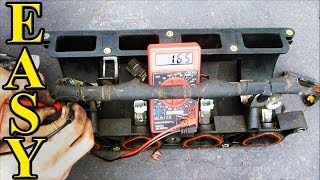
- If the signal is present, check the injector's resistance. Disconnect the injector and use a multimeter to measure resistance between its two pins. A good injector should read between 10-13 ohms. A significantly lower reading indicates a shorted injector. 🎬 See how to test fuel injector resistance with a multimeter
- If resistance is good, perform an injector swap test. Swap the cylinder 3 injector with the cylinder 2 injector. Clear the codes and run the engine. If the code changes to P0202, the injector is faulty. If P0203 returns, the issue is in the wiring or PCM.
- If the injector and signal are good, perform a continuity test on the two wires running from the PCM connector to the injector connector to check for opens or shorts.
- If all other tests pass, the PCM is the most likely cause of the fault.
Parts You'll Likely Need
- Fuel Injector Kit
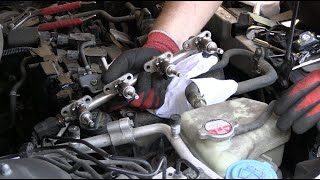
(OEM #06160-5PA-305)— This is the most common failure point for this code on the 1.5L Turbo engine. The original injector part number (16010-5PA-305) was superseded by this kit, which includes four revised injectors and a new fuel pipe. This is the recommended procedure due to the high failure rate of all injectors and potential for backorder on individual parts. 🎬 Watch: Step-by-step guide to replacing your CR-V fuel injectors
Trusted brands: Honda (Genuine)
OEM price range: $550-$850
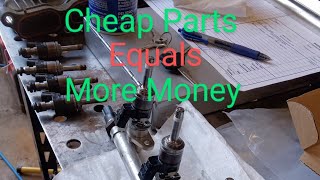
Aftermarket price range: $200-$600
Related Codes That Often Appear With This One
- P0303 — This code means "Cylinder 3 Misfire Detected." It is often triggered alongside P0203 because the injector circuit malfunction prevents proper fueling, causing the cylinder to misfire.
- P0172 — This code means "System Too Rich (Bank 1)." On this CR-V, a common failure mode for the injectors is leaking or getting stuck open, which dumps excess fuel and triggers a P0172 code, often before the electrical P0203 code appears.
- P0300, P0301, P0302, P0304 — Misfire codes on other cylinders. Because the injectors often fail around the same time, it's common to see multiple misfire codes, reinforcing the recommendation to replace them as a set.
Technical Service Bulletins (TSBs) & Recalls
- While no TSB is a direct match for P0203 on the CR-V, related bulletins highlight the systemic nature of injector issues on Honda's direct-injected engines. For example, TSB 20-100 for the Pilot/Odyssey/Ridgeline mentions debris causing injector clogging and failure, leading to misfires.
- TSB 22-002 for the 2015-16 Honda Fit extends the fuel injector warranty to 10 years/150,000 miles due to incorrect installation leading to wear and misfires, showing a precedent for Honda acknowledging injector problems.
Platform-Specific Known Issues
- The 1.5L Turbo engine used in this generation of CR-V is widely known for premature fuel injector failure. This can lead to fuel dilution of the engine oil, where gasoline seeps past the piston rings and into the crankcase. When checking the oil, a strong smell of gasoline on the dipstick is a key indicator of this problem.
- Honda has issued warranty extensions for fuel injectors on some models and years related to this issue, but it is not a universal recall. For example, TSB 22-002 extended the warranty for injectors on 2015-16 Fit models for a similar issue. Check with a Honda dealer using your VIN to see if your vehicle is covered under any warranty extension or 'Goodwill Assistance' program, which some owners have successfully used to reduce repair costs.
Mechanic-Grade Diagnostic Values
- Fuel Injector Internal Resistance — expected: 10 - 13 Ohms at 68°F (20°C). Failure: A reading significantly outside this range, especially a much lower reading, indicates a shorted injector. An infinite reading indicates an open circuit.
- High-Pressure Fuel Pump (Live Data at Idle) — expected: ~500-600 PSI. Failure: Pressure that is significantly lower or fails to meet the PCM's desired pressure reading can indicate a problem with the high or low-pressure pumps, but can also be a symptom of a leaking injector.
- High-Pressure Fuel Pump (Live Data Under Load) — expected: 2,000 - 3,000+ PSI. Failure: If the actual pressure cannot keep up with the desired pressure under acceleration, it points to a fuel delivery issue.
- Injector Connector Voltage (Key On, Engine Off) — expected: Battery Voltage (~12V) on the power supply wire.. Failure: No voltage suggests an open wire or a problem with the PGM-FI main relay.
Scan Tool Commands That Help
- Honda Diagnostic System (HDS): INJECTOR TEST — This is a guided test within the HDS that actively checks the injector circuit and can help confirm if a DTC P0201-P0204 is an active or intermittent fault.
- Honda Diagnostic System (HDS): PCM Idle Learn Procedure — This procedure is mandatory after replacing fuel injectors. It forces the PCM to relearn engine idle characteristics with the new components, ensuring proper fuel trims and operation.
- Honda Diagnostic System (HDS): Reset PCM — After replacing components, a PCM reset clears learned values, including old fuel trim data, forcing the system to adapt to the new parts immediately.
Wiring & Ground Locations
- G101 — Typically located on the left rear of the engine compartment.. This is a primary engine ground. A poor connection here can cause a host of electrical issues, including erratic sensor readings and intermittent faults in systems like the fuel injectors.
- Transmission Ground — A ground wire is typically located on the transmission housing, often visible after removing the air box.. Owners have reported this ground point becoming corroded, leading to various electrical gremlins. While not directly tied to the injector circuit in diagrams, ensuring all engine/trans grounds are clean and secure is a critical step in diagnosing any electrical fault.
Real Owner Repair Stories
- GoTech on YouTube (Honda Fit (with similar 1.5L engine architecture)) — Dead cylinder misfire with codes P0303 and P0203.
❌ Tried (didn't work) The vehicle was brought to the shop with a box of new parts the owner had tried, implying previous replacement attempts of common items like spark plugs or coils did not work.
✅ What actually fixed it The shorted fuel injector had damaged the injector driver circuit inside the PCM. The final fix required replacing both the faulty fuel injector and the Powertrain Control Module (PCM).
OEM Part Supersession History
16010-5PA-305→06160-5PA-305— The original injectors were prone to premature failure (both electrical and mechanical leaking). The new part number is a kit containing four revised injectors and a mandatory replacement high-pressure fuel pipe.
Heads up: It is strongly advised not to replace just one injector with an old stock part. The entire set should be replaced with the new kit to ensure reliability and matched flow rates.Multiple revisions (e.g., 16790-5PA-A01, 16790-5PC-H01)→06161-5PC-315 (as a kit)— Revisions to the high-pressure fuel pump (HPFP) assembly. Part numbers can vary by specific model year and VIN.
Heads up: High-pressure fuel pump part numbers are very specific. Always verify the correct part number with the vehicle's VIN before ordering.
Model Year Variations Within This Range
- 2017-2019: The 1.5T engine in the CR-V for these years has a 10.3:1 compression ratio and uses a 9-blade turbine impeller in the turbocharger, with a max boost pressure of 18.5 psi.
- 2020-2022: The 1.5T engine became standard on all non-hybrid trims. While core architecture is the same, software updates and minor running changes to address issues like oil dilution were implemented over the production run. For example, some later models gained VTEC on the exhaust camshaft.
Diagnostic Flowchart
Real Owner Stories
Aggregated from forums and TSBs cited above. Mileages and costs reflect what owners reported in those sources.
2017 Honda CR-V 1.5L Turbo — 90000 miles
Symptoms: Hit by the defective injector problem.
What fixed it: All fuel injectors replaced.
Cost: $2300
Source hint: Reddit r/crv thread titled 'Just got hit by the defective injector problem $2,300 bill.' from Feb 2024
2017 Honda CR-V 1.5L Turbo — 55000 miles
Symptoms: Needed injectors replaced at 55k miles.
What fixed it: Replaced injectors using Honda's 'Goodwill Assistance'.
Cost: Received $800 towards repair
Source hint: Reddit r/crv (comment in Feb 2024 thread)
2017 Honda CR-V 1.5L Turbo
Symptoms: Dash lit up like a Christmas tree with multiple warnings.
What fixed it: Dealer quoted new injectors.
Cost: $2230 CAD
Source hint: Reddit r/AskMechanics
5th Generation Honda CR-V
Symptoms: Dashboard warning light clusters appeared.
What fixed it: Fuel injector replacement.
Cost: Over $2000
Source hint: crvownersclub.com multiple threads
Related OBD-II Codes
Frequently Asked Questions
Is there a recall or warranty extension for the fuel injectors on my 2017-2022 CR-V?
Why did my dashboard light up with emissions, brake, and power steering warnings all at once?
Can I just replace the single cylinder 3 fuel injector instead of all four?
Why does my CR-V smell like gas when I check the oil dipstick?
How can I test if the cylinder 3 injector is bad before buying the $550-$850 OEM kit?
Helpful Videos
We Have This Part in Stock




The information in this article is provided for general reference and educational purposes only. Vehicle specifications, procedures, and part compatibility can vary by production date, trim level, and region. Always consult your vehicle's factory service manual and verify part numbers before purchasing or performing repairs. Safety-critical components such as airbags, seat belts, and braking systems should be installed by a qualified professional.
- Honda CR-V:
- 🧭 Diagnostic Flowchart
- 🎬 Helpful Videos
- 🛍️ Shop This Part
- What's Unique About the 2017-2022 Honda CR-V
- Symptoms You May Notice
- Most Likely Causes
- Diagnosis Steps
- Parts You'll Likely Need
- Related Codes That Often Appear With This One
- Technical Service Bulletins (TSBs) & Recalls
- Platform-Specific Known Issues
- Mechanic-Grade Diagnostic Values
- Scan Tool Commands That Help
- Wiring & Ground Locations
- Real Owner Repair Stories
- OEM Part Supersession History
- Model Year Variations Within This Range
- Real Owner Stories
- 2017 Honda CR-V 1.5L Turbo — 90000 miles
- 2017 Honda CR-V 1.5L Turbo — 55000 miles
- 2017 Honda CR-V 1.5L Turbo
- 5th Generation Honda CR-V
- Related OBD-II Codes
- Frequently Asked Questions
- 🎟️ Get 5% Off