

P0203 on 2007-2011 Jeep Wrangler 3.8L: Injector Circuit Malfunction Causes and Fixes
For a 2007-2011 Wrangler with the 3.8L V6, code P0203 almost always points to a failed fuel injector for cylinder #3. A common secondary cause is corrosion in the main fuel injection wiring harness connector. An injector costs $40-$90, and it's a moderately difficult DIY job.
- P0203 on a 2007-2011 Wrangler almost always points to a problem with the cylinder 3 fuel injector or its wiring.
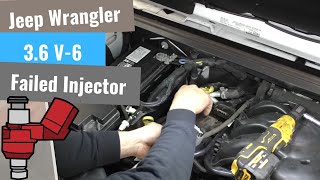
- The most likely cause is a faulty fuel injector that fails when hot. The best way to confirm this is by swapping it with an injector from another cylinder to see if the code follows.
- A frequently missed, but common, secondary cause is corrosion in the large main fuel injection harness connector on the driver's side of the engine bay.
- When replacing the injector, the upper intake manifold must be removed, and its gaskets must be replaced to prevent vacuum leaks.
- This is a moderately difficult DIY job that can be completed in an afternoon with basic tools.
What's Unique About the 2007-2011 Jeep Wrangler
The 3.8L EGH V6 in the 'JK' generation Wrangler is known for a specific type of fuel injector failure. The injectors often become sensitive to engine heat, causing an internal open circuit only after the engine has fully warmed up. This 'heat soak' failure can make diagnosis tricky, as the misfire and code may disappear when the engine cools. Additionally, as a vehicle often exposed to water and mud, the JK Wrangler is prone to corrosion in its main wiring harness connectors (sometimes referred to as C101 on other Chrysler products), which can mimic the symptoms of a failed injector.
Symptoms You May Notice
- Check Engine Light is on
- Engine running rough or shaking, especially at idle
- Noticeable engine misfire
- Poor acceleration and loss of power
- Decreased fuel economy
- Difficulty starting the engine or long crank times
- Flashing Check Engine Light (indicates a severe misfire capable of damaging the catalytic converter)
- Replacing the spark plug or ignition coil for cylinder 3. While these parts can cause a misfire code (P0303), they will not cause an injector circuit code (P0203). The P0203 code specifically points to an electrical fault in the fuel injector circuit, not a general combustion failure.
Most Likely Causes
- Faulty Cylinder 3 Fuel Injector 🔴 High Probability → Shop Fuel Injector Injectors on the 3.8L V6 are known to fail electrically when they get hot. The internal coil winding can develop an open circuit after 20-30 minutes of engine operation, a condition known as 'heat soak'.
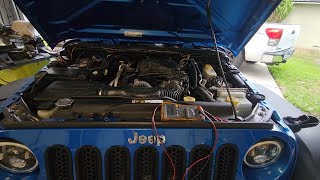
How to confirm: The most definitive test is to swap the cylinder 3 injector with one from another cylinder (e.g., cylinder 1). Clear the codes and drive. If the code changes to P0201, the injector is bad. Alternatively, when the engine is hot and misfiring, test the injector's resistance with a multimeter. A good injector should read a stable 11.5-14 Ohms. A faulty one will often show a much higher or infinite resistance (OL).
Typical fix: Replace the faulty fuel injector. It is recommended to replace the upper intake manifold gaskets at the same time, as the manifold must be removed for access.
Est. part cost: $40-$90 - Wiring Harness or Connector Issue 🟡 Medium Probability Wranglers are often exposed to water and vibration. The main fuel injection harness connector, located on the driver's side of the engine near the firewall, is a known weak point for water intrusion and corrosion. The smaller pigtail connector at the injector can also become brittle or damaged from heat and vibration.
How to confirm: Visually inspect the injector pigtail connector for damage or corrosion. Crucially, disconnect and inspect the large, multi-pin main fuel injection harness connector for green or white corrosion or broken/burnt pins. A noid light test at the injector connector showing no flashing light confirms a wiring or PCM issue upstream of the injector.
Typical fix: Clean the corroded terminals in the connector with electrical contact cleaner. If pins are broken or corrosion is severe, the connector pigtail or a section of the harness may need to be replaced. In a well-documented case on JK-Forum.com, an owner bypassed the corroded pins in the main connector by cutting and soldering the affected wires externally.
Est. part cost: $15-$50 - Faulty Powertrain Control Module (PCM) ⚪ Low Probability → Shop Engine Control Module (ECM)
How to confirm: This should be the last resort after definitively ruling out the injector and all wiring. If a noid light shows no pulse at the injector connector and the wiring shows perfect continuity with no shorts to ground or power, the PCM's injector driver may have failed.
Typical fix: Replace and program the Powertrain Control Module.
Est. part cost: $300-$700
Diagnosis Steps
- Read the trouble codes with an OBD-II scanner to confirm P0203 and any other related codes like P0303.
- Locate cylinder 3, which is the middle cylinder on the passenger side (right bank).
- Inspect the wiring and pigtail connector going to the fuel injector on cylinder 3. Look for any obvious signs of damage, chafing, or corrosion.
- Perform a 'noid light' test. Disconnect the wire from injector #3 and plug in a noid light. Start the engine. A rhythmic flashing light indicates the PCM and wiring are sending a signal. No light points to a wiring or PCM problem.
- If the noid light flashes, the injector is the primary suspect. To confirm, swap the fuel injector from cylinder 3 with the injector from cylinder 1. Clear the codes, drive the vehicle until the check engine light returns.
- If the code changes to P0201 ('Injector Circuit Malfunction - Cylinder 1'), the fuel injector is confirmed to be faulty and must be replaced.
- If the code remains P0203 after the swap, the problem is in the wiring harness.
- Inspect the large main fuel injection harness connector on the driver's side firewall for corrosion, a known issue on JKs. Check for green/white powder or burnt pins.
- If no wiring issues are found, test the continuity of the injector control wire (typically Dark Blue/Light Green on some models) from the PCM connector to the injector connector to rule out a break in the wire.
Parts You'll Likely Need
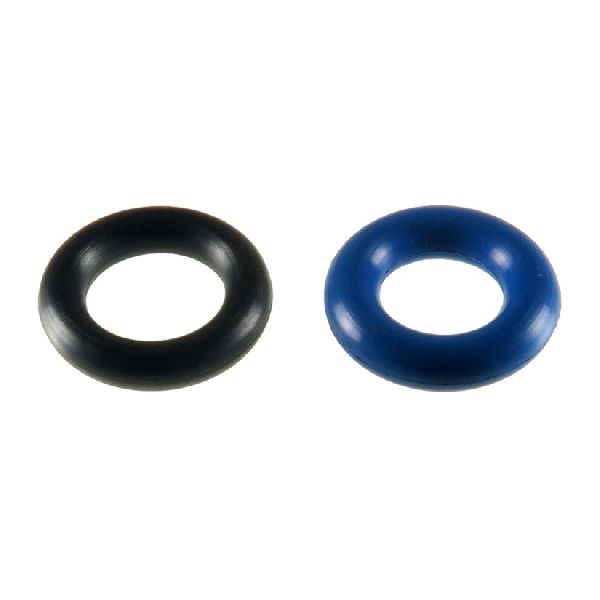
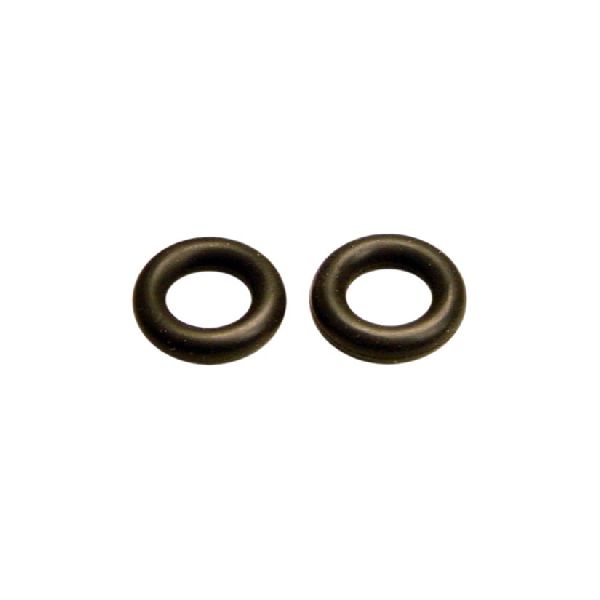
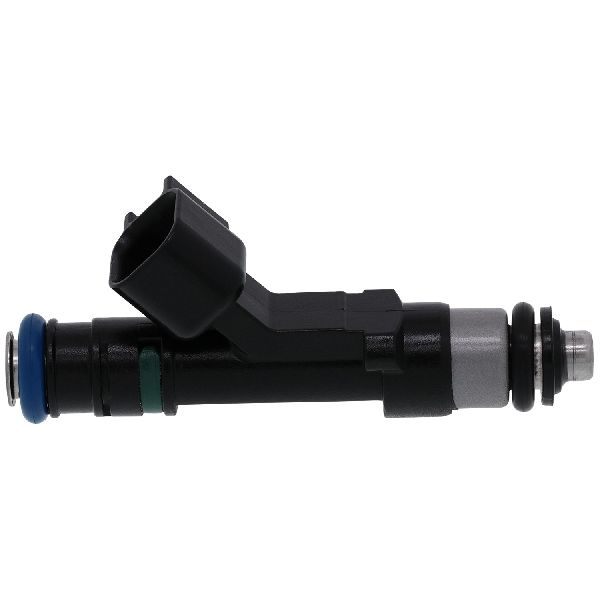
- Fuel Injector
(OEM #4861667AA)— This is the most common cause of P0203 on the 3.8L V6, often failing due to heat sensitivity.
Trusted brands: Mopar, Bosch (OEM supplier, P/N 0280158119), Standard Motor Products
OEM price range: $130-$200
Aftermarket price range: $40-$90 - Upper Intake Manifold Gasket Set
(OEM #4781034AB)— The upper intake manifold must be removed to access the fuel injectors. The gaskets are single-use and must be replaced to prevent vacuum leaks.
Trusted brands: Fel-Pro (P/N MS 96582), Mahle, Mopar
OEM price range: $30-$50
Aftermarket price range: $15-$30 - Fuel Injector Connector Pigtail — Needed if the plastic locking tab on the original connector is broken or if the terminals are corroded or damaged. This is an EV6 style connector.
Trusted brands: Dorman, Mopar
OEM price range: $20-$40
Aftermarket price range: $10-$25
Related Codes That Often Appear With This One
- P0303 — P0303 means 'Cylinder 3 Misfire Detected'. Since P0203 indicates an electrical problem is preventing the #3 injector from delivering fuel, a misfire in that cylinder is the direct result. These two codes almost always appear together.
Platform-Specific Known Issues
- Heat Soak Injector Failure: The original equipment injectors are known to fail when the engine is hot, causing an intermittent misfire that can be difficult to diagnose because it may disappear when the engine cools.
- Main Harness Connector Corrosion: The large connector that joins the fuel injector sub-harness to the main engine harness is prone to water intrusion and corrosion, which can cause an open circuit and trigger a P0203 code.
Mechanic-Grade Diagnostic Values
- Fuel Injector Coil Resistance — expected: 12.0 - 12.4 Ohms at room temperature.. Failure: A reading of OL (Open Loop/infinite resistance), or a resistance that fluctuates wildly or climbs significantly when hot (e.g., over 60 Ohms), indicates a failed injector.
- Injector Circuit Continuity (PCM to Injector) — expected: Below 5.0 Ohms.. Failure: A resistance reading above 5.0 Ohms indicates excessive resistance or an open in the (K13) Injector 3 Control circuit or the (F342) ASD Relay Output circuit.
- Fuel Rail Bolts Torque — expected: 106 in-lbs (12 N·m).. Failure: Improper torque can lead to fuel leaks or damaged components.
- Upper Intake Manifold Bolts Torque — expected: 105 in-lbs (12 N·m).. Failure: Improper torque can cause vacuum leaks or damage the manifold.
- Injector Pulse Width (at hot idle) — expected: 2.5 - 4.0 milliseconds (ms).. Failure: A scan tool showing zero or an erratic pulse width for cylinder #3 while other cylinders are normal points to a control circuit or PCM driver issue.
Wiring & Ground Locations
- Injector 3 Control Wire — Runs from the PCM C2 connector to the fuel injector #3 connector.. This is the specific wire that the PCM uses to ground-pulse the injector. An open or short on this wire (Chrysler circuit designation K13) will directly cause a P0203.
- Main Fuel Injection Harness Connector — Large, multi-pin rectangular connector located on the driver's side of the engine, near the firewall. It connects the injector sub-harness to the main engine harness.. This connector is a notorious point of failure due to water intrusion and corrosion. Several pins, including the main power feed and ground for the injectors, can corrode and break, causing an open circuit that triggers P0203.
- G101 — Engine block ground. A strap often runs from the passenger side engine block to the firewall or body.. A poor engine ground can cause a host of electrical issues, including erratic sensor readings and control problems. While not a direct cause of a single injector code, verifying main grounds are clean and tight is a crucial step in diagnosing any electrical issue on a JK.
- G201 / G203 — Located under the kick panel in the passenger footwell.. These are primary interior ground points. While less likely to cause a specific engine code, they are part of the overall vehicle grounding scheme that can contribute to electrical gremlins if compromised.
Real Owner Repair Stories
- JK-Forum.com user (Jeep Wrangler JK (year not specified, but 3.8L engine)) — Intermittent rough running, multiple codes including P0203 and P0303, red lightning bolt light.
❌ Tried (didn't work) Replaced coolant temp sensor, Replaced ignition coil, Compression test (all cylinders were good)
✅ What actually fixed it The root cause was severe corrosion in the main fuel injection harness connector. Three large wires had corroded and broken. The owner cut the three affected wires (specifically noting a BR/WH for ground, a BR/BLU, and a BR/YL) on both sides of the connector and spliced them together externally, bypassing the failed pins in the connector. This permanently solved the issue.
OEM Part Supersession History
RL861667AA→4861667AA— Standard part number update and consolidation. RL prefix often denotes a remanufactured part in the Mopar system.
Heads up: A YouTube creator specifically warned against using Bosch P/N 0280158119, stating their codes did not resolve until they installed genuine Mopar 4861667AA injectors. However, multiple parts suppliers list the Bosch part as the direct OEM equivalent. This suggests a potential quality control difference between batches or a sensitivity in the JK's PCM.
Diagnostic Flowchart
Other Known Issues on This Vehicle
Issues unrelated to this code that are worth knowing about as an owner of this generation:
- Excessive Oil Consumption 🔴 High — Very common, especially on engines over 75,000 miles. Consumption of 1 quart per 1,500 miles is a sign of concern.
- Cracked Exhaust Manifolds 🟠 Medium — Common failure as the vehicle ages.
- 'Death Wobble' 🔴 High — A notorious, though not universal, issue for solid-axle Jeeps. Can occur on stock or modified vehicles.
- TIPM (Totally Integrated Power Module) Failure 🟠 Medium — Most prevalent in 2007-2008 models, but can affect later years. (Ref: Subject of NHTSA investigation but no formal recall.)
- Water Leaks (Hardtop/Doors) 🟡 Low — A very frequent complaint from owners, particularly with early JK models.
Used vs. New Parts: Buying Guide for This Vehicle
When a used part is the smart pick: For this repair, a used wiring harness (either the injector sub-harness or the main engine harness) from a reputable salvage yard can be a cost-effective choice, especially if the issue is a physically damaged connector that is not available separately. A used fuel rail is also generally safe. Buying used fuel injectors is NOT recommended.
Donor-vehicle mileage cap: roughly under 80000 miles for the part to have meaningful remaining life.
What to inspect on the donor part:
- For wiring harnesses, inspect all connectors for green/white corrosion, broken locking tabs, or visible damage to pins.
- Ensure the harness comes from a vehicle in a dry climate to minimize the risk of corrosion.
- Verify the part numbers on the harness tags match your original if possible.
- Avoid any parts from vehicles that show signs of flood or fire damage.
OEM-only on this vehicle (don't cheap out):
- Fuel Injector - While Bosch is the OEM supplier, some owners report issues with aftermarket-boxed Bosch parts and only found success with Mopar-branded injectors. Given the labor involved, using a genuine Mopar injector (4861667AA) is the safest bet to avoid repeat work.
Aftermarket brands forum-validated for this vehicle:
- Fel-Pro (for intake manifold gaskets)
- Mahle (for intake manifold gaskets)
Brands owners have reported issues with on this vehicle:
- Unbranded/No-Name Injectors - Many forum users and mechanics warn against cheap, no-name injector sets from online marketplaces, as they often have inconsistent flow rates and high failure rates.
Real Owner Stories
Aggregated from forums and TSBs cited above. Mileages and costs reflect what owners reported in those sources.
2007-2011 Jeep Wrangler 3.8L V6
Symptoms: Misfires and rough idle with DTC codes P0303 and P0203. The owner replaced multiple parts before finding the root cause.
What fixed it: Discovered severe corrosion in the main fuel injection harness connector; the owner cut and hardwired the damaged wires to bypass the connector entirely.
Source hint: JK-Forum.com: JK Wrangler Misfires Rough Idle DTC Codes p0303 P0203 code-- SOLVED
2007-2011 Jeep Wrangler 3.8L V6
Symptoms: Intermittent connection triggering an injector circuit code and misfire.
What fixed it: Identified burnt and corroded pins in the large main harness connector on the driver's side firewall.
Source hint: YouTube: Jeep JK Wrangler P0203 P0303 MISFIRE CODE FIX by 'The Metzker's'
Related OBD-II Codes
Frequently Asked Questions
Where is the cylinder 3 fuel injector located on my 3.8L Wrangler engine?
Why does my P0203 code only appear after driving for 20-30 minutes?
I've replaced the injector but the P0203 code persists. What else is common on the JK Wrangler?
Is it necessary to replace the intake gaskets when fixing a P0203 code?
Can I test the injector resistance myself to confirm it's bad?
Could my flashing Check Engine Light be related to the P0203 code?
Helpful Videos
We Have This Part in Stock


The information in this article is provided for general reference and educational purposes only. Vehicle specifications, procedures, and part compatibility can vary by production date, trim level, and region. Always consult your vehicle's factory service manual and verify part numbers before purchasing or performing repairs. Safety-critical components such as airbags, seat belts, and braking systems should be installed by a qualified professional.
- Jeep Wrangler:
- 🧭 Diagnostic Flowchart
- 🎬 Helpful Videos
- 🛍️ Shop This Part
- What's Unique About the 2007-2011 Jeep Wrangler
- Symptoms You May Notice
- Most Likely Causes
- Diagnosis Steps
- Parts You'll Likely Need
- Related Codes That Often Appear With This One
- Platform-Specific Known Issues
- Mechanic-Grade Diagnostic Values
- Wiring & Ground Locations
- Real Owner Repair Stories
- OEM Part Supersession History
- Other Known Issues on This Vehicle
- Used vs. New Parts: Buying Guide for This Vehicle
- Real Owner Stories
- 2007-2011 Jeep Wrangler 3.8L V6
- 2007-2011 Jeep Wrangler 3.8L V6
- Related OBD-II Codes
- Frequently Asked Questions
- 🎟️ Get 5% Off