

P0203 on 2014-2016 Mazda 3: Injector Circuit Malfunction Causes and Fixes
On a 2014-2016 Mazda 3, P0203 usually means the cylinder 3 fuel injector is faulty or there's a wiring issue. A bad injector is the most common cause. However, a known Mazda issue documented in a TSB points to PCM failure on some Japan-built models, which is a much more expensive repair. If P0203 appears with P0202, the PCM is the most likely culprit.
- P0203 means there is an electrical problem with the fuel injector circuit for cylinder 3.
- The most common fix is replacing the cylinder 3 fuel injector.
- Before replacing parts, inspect the injector's wiring and connector for damage.
- A simple way to test the injector is to swap it with another cylinder and see if the code follows.
- Be aware of a known Mazda issue where a faulty PCM can cause this code, especially if P0202 is also present. Check TSB #01-017/16 for details.
What's Unique About the 2014-2016 Mazda 3
For this generation of Mazda 3 (and its platform mates, the CX-5 and Mazda 6), the P0203 code has a specific known issue documented by Mazda. A Technical Service Bulletin (TSB #01-017/16 and its successor #01-004/17) identifies an internal failure within the PCM as a probable cause, particularly on Japan-built models made before May 23, 2016. This is critical because while a bad injector is still a possible cause, the problem could be the much more expensive computer, a unique consideration for this vehicle. The TSB explicitly states that if P0203 is present with P0202, the DENSO-produced PCM is the likely cause.
Symptoms You May Notice
- Check Engine Light is on
- Rough or shaking idle
- Engine misfires, which may feel like a shudder, popping, or vibration
- Poor acceleration and loss of power
- Increased fuel consumption
- Engine may stall or be hard to start
- Strong gasoline odor from the exhaust
- Replacing the spark plug or ignition coil for cylinder 3. While these parts can cause a misfire (P0303), the P0203 code specifically points to an electrical issue in the fuel injector circuit, not the ignition system.
- Replacing only the fuel injector when both P0202 and P0203 are present. The TSB strongly indicates this pattern is a PCM failure, and replacing the injector will not solve the problem.
Most Likely Causes
- Faulty Cylinder 3 Fuel Injector 🔴 High Probability → Shop Fuel Injector Fuel injectors are wear-and-tear components that operate under high pressure and can fail electrically (internal coil short/open) or become clogged over time from fuel contaminants.
How to confirm: Swap the cylinder 3 fuel injector with one from another cylinder (e.g., cylinder 2). Clear the codes and drive the vehicle. If the code changes to P0202, the injector is faulty. You can also test the injector's internal resistance with a multimeter; it should be within the manufacturer's specified range. While some sources state 12-17 ohms as typical, Mazda's spec for Skyactiv-G injectors can be much lower, around 1.6-2.52 ohms, so comparing to a known-good injector is key.
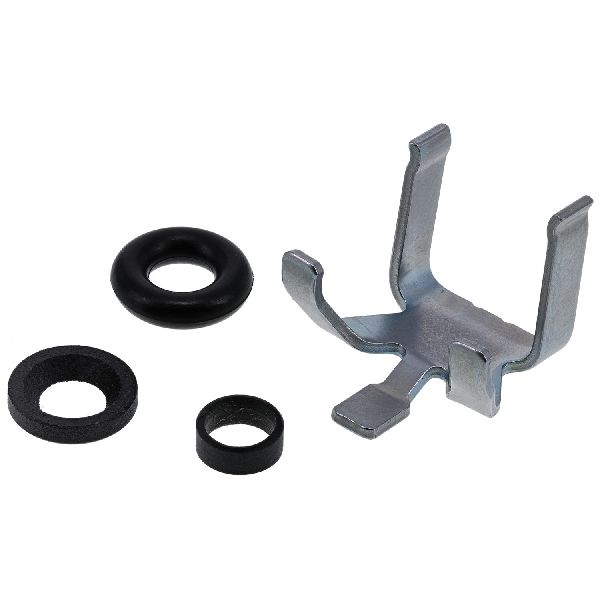
Typical fix: Replace the faulty fuel injector and its associated seals.
Est. part cost: $70-$215 - Wiring or Connector Issue 🟡 Medium Probability Engine bay heat and vibrations can cause wiring insulation to become brittle and crack, or connector pins to become loose, corroded, or backed out.
How to confirm: Visually inspect the wiring harness and electrical connector at the #3 fuel injector for any signs of damage, melting, or corrosion. Use a 'noid light' to plug into the injector connector; it should flash when the engine is cranked, indicating the PCM is sending a signal. Also, inspect the main PCM connectors for corrosion or backed-out pins.
Typical fix: Repair the damaged section of the wiring harness or replace the injector connector pigtail.
Est. part cost: $15-$50
Rare But Worth Checking
- Powertrain Control Module (PCM) Failure: → Shop Engine Control Module (ECM) Mazda issued TSB #01-017/16 (superseded by #01-004/17) for an internal PCM failure causing this code. This is elevated from a 'rare' to a 'highly probable' cause if code P0202 appears alongside P0203. The TSB states this concern is caused by an internal failure of the injector driver circuit inside DENSO-produced PCMs. It specifically affects Japan-built models with a VIN lower than JM1BM**352403 (produced before May 23, 2016). This should be the primary suspect if codes are paired and the vehicle meets the TSB criteria.
Diagnosis Steps
- Read the trouble codes with an OBD-II scanner. Crucially, note if P0202 is also present.
- Visually inspect the wiring harness and connector for fuel injector #3. Look for any signs of melting, corrosion, or loose pins.
- Disconnect the injector and test for a pulse signal from the PCM using a noid light. The light should flash while cranking the engine. If it doesn't, the problem is in the wiring or PCM.
- If a noid light isn't available, use a multimeter to check for 12V power at one pin of the connector with the key on.
- To definitively test the injector, swap it with an adjacent one (e.g., from cylinder 2). Clear the codes, run the engine, and see if the fault code 'follows' the injector (e.g., P0202 now appears). If it does, the injector is bad.
- If the P0203 code returns after the swap (and P0202 is not present), the problem is in the wiring. Perform a continuity test on the injector circuit wiring between the injector connector and the PCM connector.
- If P0202 and P0203 are present together, consult TSB #01-017/16. Check if your vehicle falls under the TSB criteria (Japan-built, VIN lower than JM1BM**352403). If so, inspect the PCM label to confirm it is a 'DENSO' unit. If all conditions match, a PCM replacement is the prescribed fix.
Parts You'll Likely Need
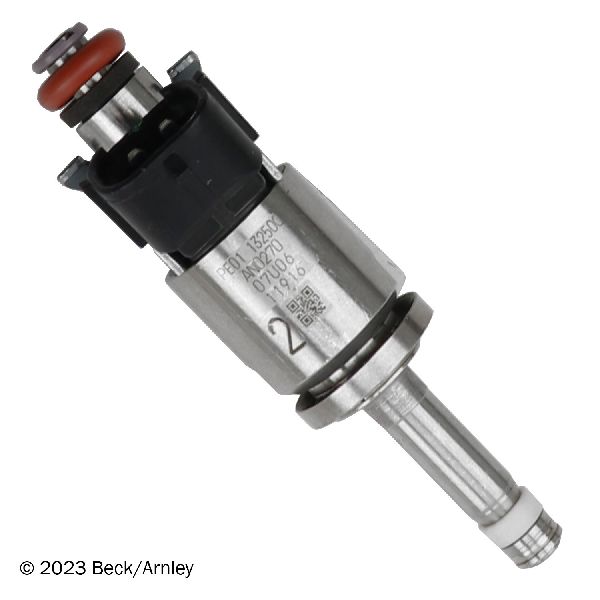
- Cylinder 3 Fuel Injector
(OEM #PE01-13-250D)— This is the most common component to fail when P0203 appears alone. It can fail electrically or become clogged, directly causing the circuit code. This part number supersedes PE01-13-250C and PE01-13-250B.
Trusted brands: Mazda OE, Bosch, Standard Motor Products (FJ1193)
OEM price range: $180-$265
Aftermarket price range: $70-$150 - Fuel Injector Connector Pigtail — The plastic connector and its locking tab can become brittle from heat and break during diagnosis or repair, or the wiring can fail right at the connector.
Trusted brands: Dorman, Standard Motor Products
OEM price range: $25-$50
Aftermarket price range: $15-$30 - Powertrain Control Module (PCM)
(OEM #****-18-881*)— Required if diagnosis per TSB 01-017/16 confirms an internal PCM failure, which is highly likely when P0202 and P0203 codes are present together on affected models. The exact part number is VIN-dependent.
Trusted brands: Mazda OE (DENSO)
OEM price range: $900-$1400
Aftermarket price range: N/A
Related Codes That Often Appear With This One
- P0303 — This code means 'Cylinder 3 Misfire Detected'. A fault in the injector circuit (P0203) prevents proper fueling, which directly causes a misfire in that cylinder. The TSB confirms misfire codes are usually stored at the same time.
- P0202 — According to Mazda TSBs #01-017/16 and #01-004/17, if the PCM is failing, it often causes injector circuit codes for cylinders 2 and 3 to appear together. Seeing both P0202 and P0203 strongly points towards the known PCM failure issue.
Technical Service Bulletins (TSBs) & Recalls
- 01-017/16: 'MULTI-MODEL - ENGINE RUNS ROUGH AND CHECK ENGINE LIGHT ON WITH DTCS P0201 AND P0204 OR P0202 AND P0203' - Details the potential for PCM failure on certain 2014-2016 Mazda 3, Mazda 6, and CX-5 models. Provides specific VIN cutoffs and instructs technicians to check for a DENSO-produced PCM.
- 01-004/17: Supersedes the previous TSB, adding more models like the CX-3 and Mexico-built Mazda 3s to the list of potentially affected vehicles, confirming the same repair procedure.
Platform-Specific Known Issues
- A Mazda Technical Service Bulletin (TSB #01-017/16, superseded by #01-004/17) highlights a known issue where an internal PCM failure can cause code P0203, almost always along with P0202. This applies to specific Japan-built 2014-2016 models with DENSO PCMs and VINs lower than JM1BM**352403. The TSB explicitly states this is due to an 'internal failure of the PCM (DENSO produced only)'.
Mechanic-Grade Diagnostic Values
- Fuel Injector Internal Resistance — expected: 1.74–2.04 Ohms at 20°C (68°F) for Skyactiv-G direct injectors.. Failure: A reading of 0 ohms (short), OL/infinite (open), or a value significantly outside the specified range indicates a failed injector coil.
- Voltage at Injector Connector (Control Wire) — expected: A flashing signal when tested with a noid light or oscilloscope while the engine is cranking/running. Using a multimeter, you should see voltage pulsing rapidly.. Failure: A steady light/voltage or no light/voltage indicates a problem in the wiring or the PCM driver, not the injector itself.
- Voltage at Injector Connector (Power Wire) — expected: Approximately 12 Volts (battery voltage) with the key in the 'ON' position. This wire provides constant power from the fuel injection fuse.. Failure: Low or no voltage indicates a problem with the power supply circuit, likely a blown fuse ('INJ' 15A fuse) or a break in the power wire.
Scan Tool Commands That Help
- Mazda IDS (Integrated Diagnostic System) or equivalent professional scan tool: Active Injector Test / Injector Buzz Test — This bidirectional command allows a technician to individually activate each fuel injector with the engine off. A distinct 'click' or 'buzz' from the injector confirms the PCM driver, wiring, and injector solenoid are all functioning correctly. If injector #3 does not click but others do, it isolates the fault to that specific circuit or component.
Wiring & Ground Locations
- PCM Connector Pin 2U — At the main PCM connector, located in the engine compartment.. This is the specific pin for the cylinder 3 fuel injector control circuit. A technician can perform a continuity test from this pin to the injector connector to definitively rule out a broken wire in the harness.
- Fuel Injector Connector — On the cylinder 3 fuel injector, accessible after removing the engine cover.. This is the primary point of failure for wiring issues. The connector itself can break, or the pins can corrode or back out due to engine heat and vibration. The control wire from PCM pin 2U and the 12V power feed wire meet here.
- Engine Ground Point (G03/G04 on some diagrams) — Typically found on the left side of the cylinder head cover or on a motor mount stud on the passenger side.. While a bad ground here would likely cause multiple, more widespread issues, a loose or corroded main engine ground can introduce electrical noise and voltage drops that could potentially affect injector driver performance, though it's an unlikely root cause for a single injector code.
Real Owner Repair Stories
- mazda3revolution.com forum user (2014 Mazda 3 s Grand Touring (Japan-built)) — Rough idle, Check Engine Light on with codes P0202 and P0203.
❌ Tried (didn't work) Swapping fuel injectors between cylinders (the codes did not follow the injector).
✅ What actually fixed it The owner took the car to a Mazda dealership. The dealer confirmed the vehicle's VIN was within the range specified by TSB #01-017/16. They diagnosed a failed PCM and replaced it under the emissions warranty, which resolved both codes.
OEM Part Supersession History
PE01-13-250B, PE01-13-250C, PEAR-13-250→PE01-13-250D— Revisions by the manufacturer to improve reliability or address known issues.
Heads up: While older part numbers may physically fit, it is always recommended to use the latest revision (PE01-13-250D) for any replacement to ensure compatibility and longevity.
Model Year Variations Within This Range
- 2014-2016 (pre-May 23, 2016 production): Japan-built models with a VIN lower than JM1BM**352403 are susceptible to the PCM failure described in TSB #01-017/16. Vehicles built after this date or in Mexico have a lower probability of this specific failure mode.
Diagnostic Flowchart
Used vs. New Parts: Buying Guide for This Vehicle
When a used part is the smart pick: A used fuel injector connector pigtail from a junkyard is a perfectly acceptable and cost-effective repair if only the connector is broken. An entire engine wiring harness could also be sourced used if a large section is damaged, but inspect it carefully for cuts or rodent damage.
Donor-vehicle mileage cap: roughly under 80000 miles for the part to have meaningful remaining life.
What to inspect on the donor part:
- For a connector pigtail, ensure the plastic isn't brittle and the locking tab is intact.
- Check for any signs of corrosion (green or white powder) on the metal pins.
- Ensure at least 6-8 inches of wire is attached to the pigtail for easier splicing.
OEM-only on this vehicle (don't cheap out):
- Powertrain Control Module (PCM): Strongly recommend OEM new or a professionally remanufactured unit. A used PCM is tied to the donor car's VIN and immobilizer system. It requires specialized tools and knowledge to 'virginize' and reprogram, which most independent shops and DIYers cannot do. An incorrect or improperly programmed PCM can result in a no-start condition.
Aftermarket brands forum-validated for this vehicle:
- Injectors: Bosch (often the OE supplier), Standard Motor Products (SMP).
- Connectors: Dorman, Standard Motor Products (S2544).
Brands owners have reported issues with on this vehicle:
- Unbranded, 'no-name' fuel injectors from online marketplaces. These often have inconsistent flow rates and poor spray patterns that can lead to performance issues, poor fuel economy, or even engine damage, even if they don't immediately set a code.
Real Owner Stories
Aggregated from forums and TSBs cited above. Mileages and costs reflect what owners reported in those sources.
2014-2016 Mazda 3
Symptoms: A frustrating experience chasing P0202 and P0203 codes that persisted even after replacing injectors and harnesses. The code even switched between cylinders after work was done.
What fixed it: The final diagnosis pointed to an ECU (PCM) failure, which aligns with the official Mazda TSB for this issue.
Source hint: Reddit r/mazdaspeed3 - 'P0202/P0203 HELP PLEASE'
2014-2016 Mazda 3
Symptoms: The vehicle was setting a P0203 trouble code.
What fixed it: The problem was resolved by cleaning a dirty electrical connection at the main PCM connector.
Source hint: Mazdaspeeds.org - PCM Connector Cleaning
Related OBD-II Codes
Frequently Asked Questions
I have both P0203 and P0202 codes on my 2015 Mazda 3. What's the most likely cause?
I swapped the fuel injector from cylinder 3 to cylinder 2 and cleared the codes. Now my scanner shows P0202. What does that mean?
Is it safe to use a used PCM from a junkyard to fix the P0202/P0203 issue?
What is the correct electrical resistance for a fuel injector on my Skyactiv Mazda 3?
My mechanic only found code P0203. Does the Mazda TSB for PCM failure still apply?
Can I use a cheap, unbranded fuel injector from an online marketplace?
We Have This Part in Stock



The information in this article is provided for general reference and educational purposes only. Vehicle specifications, procedures, and part compatibility can vary by production date, trim level, and region. Always consult your vehicle's factory service manual and verify part numbers before purchasing or performing repairs. Safety-critical components such as airbags, seat belts, and braking systems should be installed by a qualified professional.
- Mazda 3:
- 🧭 Diagnostic Flowchart
- 🛍️ Shop This Part
- What's Unique About the 2014-2016 Mazda 3
- Symptoms You May Notice
- Most Likely Causes
- Rare But Worth Checking
- Diagnosis Steps
- Parts You'll Likely Need
- Related Codes That Often Appear With This One
- Technical Service Bulletins (TSBs) & Recalls
- Platform-Specific Known Issues
- Mechanic-Grade Diagnostic Values
- Scan Tool Commands That Help
- Wiring & Ground Locations
- Real Owner Repair Stories
- OEM Part Supersession History
- Model Year Variations Within This Range
- Used vs. New Parts: Buying Guide for This Vehicle
- Real Owner Stories
- 2014-2016 Mazda 3
- 2014-2016 Mazda 3
- Related OBD-II Codes
- Frequently Asked Questions
- 🎟️ Get 5% Off