

P0203 on 2014-2016 Mazda 6: Injector Circuit Malfunction Causes and Fixes
On a 2014-2016 Mazda 6, code P0203 is often caused by a faulty Powertrain Control Module (PCM), especially if code P0202 is also present. This is a known issue covered by a TSB. A faulty injector or wiring is less likely but possible. A PCM replacement can cost over $1,000.
- For a 2014-2016 Mazda 6, P0203 has a high probability of being caused by a faulty PCM, not the injector.
- Always check for a companion P0202 code. If both are present, the PCM is the likely culprit according to Mazda's own TSB.
- Before replacing any parts, verify if your vehicle falls within the VIN range specified in TSB #01-004-17-3317a (lower than JM1GJ******484154).
- If P0203 appears alone, follow standard diagnostic procedures like checking wiring, swapping the injector, and testing resistance before condemning the PCM.
What's Unique About the 2014-2016 Mazda 6
For the 2014-2016 Mazda 6, a P0203 code is not just a simple injector issue. Mazda issued a Technical Service Bulletin (TSB 01-004-17-3317a) for Japan-built models made before May 23, 2016, indicating that an internal failure of the DENSO-made PCM is a common cause for this code. This failure often manifests by triggering codes for adjacent injector pairs, most commonly P0202 and P0203 together, but the TSB also notes it can cause P0201 and P0204 simultaneously. This makes it critical to check for companion codes and verify PCM details before assuming the injector is the problem, as a costly PCM replacement is the actual specified fix. Manufacturer TSB Bulletin #01-004-17 further confirms that this condition results in the engine running rough with the check engine light on specifically when these DTC pairs are present.
Symptoms You May Notice
- Check Engine Light is on (may be flashing if misfire is severe)
- Rough idle and engine shaking
- Engine misfires, felt as a jerking or popping sensation
- Poor acceleration and reduced engine power
- Decreased fuel economy
- Engine may stall intermittently
- Replacing the fuel injector when the actual cause is the PCM. This is a common mistake if the diagnostic process stops after finding P0203 without checking for the companion P0202 code, which strongly points to the TSB-documented PCM failure.
Most Likely Causes
- Internal Powertrain Control Module (PCM) Failure 🔴 High Probability → Shop Engine Control Module (ECM) A known issue documented in Mazda TSB #01-004-17-3317a affects Japan-built models with VINs lower than JM1GJ**484154 (produced before May 23, 2016) equipped with a DENSO PCM. The internal driver circuits for the injectors fail.
How to confirm: The strongest indicator is the simultaneous presence of codes P0202 and P0203 (or P0201 and P0204). Visually inspect the PCM to confirm it is a 'DENSO' unit as specified in the TSB. If these conditions are met after ruling out wiring, the PCM is the confirmed cause.
Typical fix: Replace the Powertrain Control Module. This repair requires programming the new module to the vehicle's VIN and keys, which is typically done at a dealership or by a specialized automotive locksmith using the Mazda Modular Diagnostic System (MDS). Some owners have successfully used a pre-owned PCM from a salvage yard and had the dealer program it to reduce costs.
Est. part cost: $760-$1200 - Faulty Cylinder 3 Fuel Injector 🟡 Medium Probability → Shop Fuel Injector Fuel injectors can become clogged from fuel contaminants or fail electrically from heat cycles and wear.
How to confirm: Swap the cylinder 3 fuel injector with one from another cylinder (e.g., cylinder 2). Clear the codes and drive the vehicle. If the code changes to P0202, the injector is faulty. You can also test the injector's resistance with a multimeter; for the direct injector, it should be between 1.74–2.04 ohms at 68°F (20°C). A similar platform guide suggests a range of 1.6-2.52 ohms is also acceptable. An out-of-spec reading indicates a bad injector.
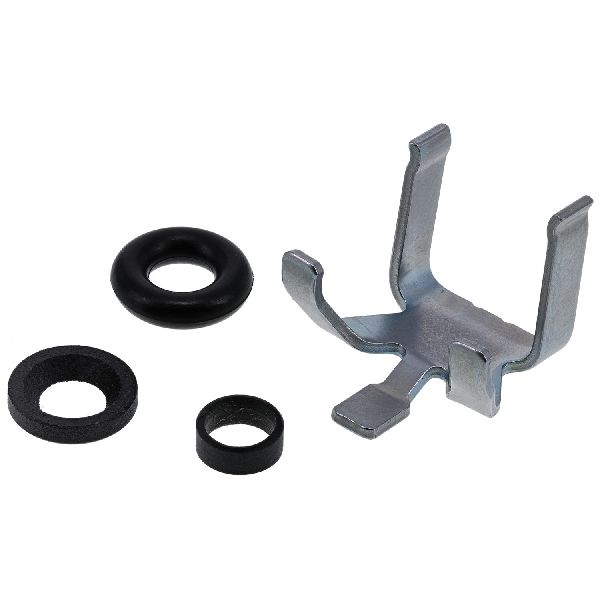
Typical fix: Replace the faulty fuel injector and its seals. It's recommended to replace the intake manifold gasket at the same time since it must be removed for access.
Est. part cost: $70-$210 - Wiring Harness or Connector Issue ⚪ Low Probability The wiring harness in the engine bay is exposed to heat and vibration, which can cause wires to fray, break, or connectors to become loose or corroded over time. The small red clips on the injector connectors can become brittle and break.
How to confirm: Visually inspect the wiring and connector for the cylinder 3 injector for any damage. Use a noid light to check for a pulse signal from the PCM at the injector connector; if it doesn't flash while cranking the engine, there's a wiring or PCM issue. Perform a continuity test on both wires between the injector connector and the corresponding pins at the PCM connector to rule out a break in the wire. For the cylinder 3 injector, test continuity between the injector connector terminals and PCM terminals 1EA and 1EB.
Typical fix: Repair the damaged wire or replace the pigtail connector. Clean any corrosion from connector terminals.
Est. part cost: $15-$50
Rare But Worth Checking
- Frozen Water in Exhaust:
Diagnosis Steps
- Scan the vehicle for all OBD-II codes. Note if P0203 appears alone or with other codes, especially P0202 and P0303.
- If P0202 and P0203 are present together, check your vehicle's VIN. If it is a Japan-built model with a VIN lower than JM1GJ**484154, the cause is very likely the PCM per TSB #01-004-17-3317a. Visually confirm the PCM is a DENSO unit before ordering a replacement.
- If P0203 is present alone (or with P0303), begin by visually inspecting the wiring harness and connector for the cylinder 3 fuel injector. Look for any melting, corrosion, or loose pins. Pay attention to the brittle connector clips.
- Disconnect the injector and test its electrical resistance with a multimeter. For the direct injection engine, the reading should be approximately 1.74–2.04 ohms. An out-of-spec reading or an open circuit indicates a bad injector.
- Use a 'noid light' to test the injector connector. Plug the light into the harness connector and crank the engine. A flashing light indicates the PCM and wiring are sending a signal. No light points to a wiring or PCM driver issue.
- If the noid light flashes and the injector resistance is good, consider swapping the cylinder 3 injector with another cylinder's injector (e.g., cylinder 2). Clear the codes, run the engine, and see if the fault code follows the injector (e.g., P0202 appears). If it does, the injector is faulty.
- If the code remains P0203 after swapping the injector, the problem is in the wiring between the injector and the PCM, or the PCM itself. Perform a continuity test on the two wires from the injector plug to the PCM plug to definitively rule out a wiring break. For the cylinder 3 injector, test continuity between the injector connector terminals and PCM terminals 1EA and 1EB.
Parts You'll Likely Need
- Powertrain Control Module (PCM)
(OEM #****-18-881* (VIN-specific, order latest version))— This is the most probable cause if P0203 is accompanied by P0202, due to a known internal failure documented in a Mazda TSB for this vehicle range.
Trusted brands: Mazda (OEM)
OEM price range: $760-$1200
Aftermarket price range: $250-$500 (Used/Remanufactured, requires programming) - Fuel Injector
(OEM #PY01-13-250)— If the PCM is ruled out, the injector itself may have failed electrically or become clogged. This is the next most likely component to fail.
Trusted brands: Mazda (OEM), Bosch, Standard Motor Products
OEM price range: $150-$210
Aftermarket price range: $70-$120
Related Codes That Often Appear With This One
- P0303 — This is a misfire code for cylinder 3. Since P0203 indicates a fuel delivery circuit problem for that cylinder, a misfire is a direct and expected consequence.
- P0202 — According to Mazda TSB #01-004-17-3317a, a faulty PCM often causes injector circuit codes for cylinders 2 and 3 to appear together. This is the strongest indicator of the known PCM failure.
- P0300 — This indicates a random or multiple cylinder misfire. If the PCM fault is affecting multiple injectors intermittently, it may trigger a general P0300 code along with the specific injector codes.
Technical Service Bulletins (TSBs) & Recalls
- 01-004-17-3317a / 01-017/16: Multi-Model - Engine runs rough and check engine light on with DTCs P0201 and P0204 or P0202 and P0203.
- 01-004-17: Multi-Model - engine runs rough and check engine light on with DTCS P0201 and P0204 or P0202 and P0203.
- 01-002/17: Rough idle and/or MIL on with DTC P0300, P0301, P0302, P0303, or P0304 in cold temperature.
Platform-Specific Known Issues
- Mazda Technical Service Bulletin #01-004-17-3317a (supersedes 01-017/16) identifies an issue on Japan-built 2014-2016 Mazda6 models (VINs lower than JM1GJ**484154) where an internal failure of the DENSO-made PCM can cause DTCs P0202 and P0203 to be stored, along with misfire codes. This bulletin notes that engine misfire related DTCs (P0301, P0302, P0303, P0304) are usually stored at the same time as the injector circuit codes.
Mechanic-Grade Diagnostic Values
- Fuel Injector Coil Resistance — expected: 1.74–2.04 ohms at 68°F (20°C). A similar platform guide notes 1.6–2.52 Ω at 32–176 °F is also acceptable.. Failure: A reading of 0 Ω (short) or infinite/OL (open) indicates a faulty injector.
- Injector Pulse Width (Live Scan Data) — expected: ~1–8 ms at idle, increasing with engine load.. Failure: No pulse or an erratic pulse width on cylinder 3 compared to other cylinders.
- Injector Connector Voltage (Key On, Engine Off) — expected: Approximately 12V (battery voltage) on the power supply pin.. Failure: Low or no voltage indicates a problem with the power supply circuit, fuse, or relay.
- MAF Sensor Reading at Hot Idle — expected: Approximately 2-3 g/s.. Failure: While not a direct cause of P0203, an incorrect MAF reading can affect overall fuel calculations and may be investigated if fuel trims are abnormal.
Hidden / Shadow Codes Worth Checking
- Mode 6 Misfire Data: This is not a formal code but a diagnostic function to view raw misfire counts per cylinder before they are high enough to trigger a P030x code. It can help confirm if the cylinder 3 circuit issue is causing misfires. (see via A scan tool with Mode 6 capability, such as the Mazda IDS, FORScan, or other professional scanners.)
Scan Tool Commands That Help
- Mazda M-MDS (or equivalent): Active Test / Actuator Test — This function allows a technician to command individual fuel injectors on and off. If disabling injector #3 causes no change in engine RPM, it confirms that cylinder was not contributing, verifying a fault in that circuit.
- FORScan: Injector Test / Fuel System Analysis — FORScan can be used to monitor live data like injector pulse width and fuel trims. While it may not have a direct 'buzz test' for all models, observing live data is crucial for diagnosis. It is also required for PATS (Passive Anti-Theft System) key programming after a PCM replacement.
- Mazda M-MDS / IDS: PCM Replacement & Programming — When replacing the PCM, the official Mazda software is required to perform the 'parameter reset' and program the vehicle's keys to the new module, which is essential for the car to start.
Wiring & Ground Locations
- PCM Pins 1EA and 1EB — At the main Powertrain Control Module connector in the engine compartment.. These are the specific terminals for the cylinder 3 fuel injector circuit. A continuity test should be performed between these pins and the corresponding pins at the injector connector to rule out a broken wire.
- Ground Point G07 — Located at the left rear of the engine.. This is a primary ground point for engine components. A poor or corroded connection here can cause a variety of electrical issues, including erratic behavior of sensors and actuators like fuel injectors.
- Ground Point G01 — Located under the left headlight assembly.. This is a major chassis ground point for the forward engine bay harness. A bad connection can affect multiple systems, including power to the PCM and injector circuits.
Real Owner Repair Stories
- Mazdaspeeds.org forum user 'Rogi' (2007 Mazdaspeed 6 (similar engine architecture principles)) — No voltage to any fuel injectors, car would not start.
❌ Tried (didn't work) Checking multiple known ground points in the engine bay.
✅ What actually fixed it The user discovered the PCM was not sending the required ground signal to the injector relay. Running a temporary ground wire to the relay allowed the car to start, confirming the PCM was the point of failure and needed replacement. - Mazdaspeeds.org user report (Mazda (model not specified)) — P0203 code present.
❌ Tried (didn't work) Standard diagnosis of injector and wiring.
✅ What actually fixed it The user reported that simply cleaning a dirty connection at the main PCM connector resolved the P0203 code.
OEM Part Supersession History
PE07-18-881E, G, H, J, K, L→PE07-18-881M— Internal revisions and updates by the manufacturer to improve reliability or address known issues. The TSB notes the PCM internal failure was eliminated in later production.
Heads up: While the TSB applies to 2014-2016 models, this part number series is primarily listed for 2012 Mazda 3 but demonstrates the typical supersession path. Always order the PCM based on the vehicle's specific VIN to ensure compatibility.PY01-13-250→PY01-13-250 (current)— This part number appears to be stable for the specified vehicle range.
Heads up: This injector is used across multiple Mazda models including the Mazda 3, 6, and CX-5 with the 2.5L engine from roughly 2014-2018.
Model Year Variations Within This Range
- 2014 - May 23, 2016: Japan-built models with VINs lower than JM1GJ**484154 are equipped with a DENSO-made PCM that is prone to an internal failure causing P0202 and P0203 codes. Vehicles produced after this date have an updated PCM where the issue was corrected.
Diagnostic Flowchart
Used vs. New Parts: Buying Guide for This Vehicle
When a used part is the smart pick: For the Powertrain Control Module (PCM), a used part from a reputable salvage yard is a very smart choice to significantly reduce costs, as the OEM part is expensive. The key is that it MUST be reprogrammed.
Donor-vehicle mileage cap: roughly under 120000 miles for the part to have meaningful remaining life.
What to inspect on the donor part:
- For a used PCM, ensure the donor vehicle was not in a flood or fire.
- Verify the part number on the used PCM matches your original, or is a known compatible replacement.
- When buying used injectors, ask if they have been cleaned and flow-tested. Avoid injectors from engines with known sludge or fuel contamination issues.
OEM-only on this vehicle (don't cheap out):
- While aftermarket PCMs exist, a used OEM Mazda (DENSO) unit that is post-TSB is often a more reliable choice than a remanufactured unit from an unknown brand.
Aftermarket brands forum-validated for this vehicle:
- FORScan (Software): While not a part, this software is widely trusted in the community for diagnostics and key programming on Mazda vehicles, often avoiding expensive dealer-only procedures.
Brands owners have reported issues with on this vehicle:
- Be cautious of no-name, unbranded fuel injectors from online marketplaces. Sellers may advise against mixing them with OEM injectors due to differences in flow and atomization, suggesting poor quality control.
Real Owner Stories
Aggregated from forums and TSBs cited above. Mileages and costs reflect what owners reported in those sources.
2014 Mazda 6
Symptoms: The vehicle was in a no-start condition and the dealer diagnosed a faulty PCM.
What fixed it: The owner sourced a used PCM from a scrapyard and had the dealership reprogram it to the vehicle, which successfully fixed the problem.
Source hint: Mazda6Forums - 'Mazda6 2014 died - Dealer says faulty PCM caused by faulty Injectors!?'
Related OBD-II Codes
Frequently Asked Questions
My 2015 Mazda 6 has codes P0202 and P0203. Does the known PCM TSB apply to my car?
Can I use a used PCM from a junkyard to fix this issue and save money?
What is the correct electrical resistance for the cylinder 3 fuel injector on this Mazda 6?
My car only has code P0203. Is the PCM still the likely cause?
Does this same PCM failure issue affect other Mazda models?
How can I confirm the PCM is the problem before replacing it?
We Have This Part in Stock


The information in this article is provided for general reference and educational purposes only. Vehicle specifications, procedures, and part compatibility can vary by production date, trim level, and region. Always consult your vehicle's factory service manual and verify part numbers before purchasing or performing repairs. Safety-critical components such as airbags, seat belts, and braking systems should be installed by a qualified professional.
- Mazda 6:
- 🧭 Diagnostic Flowchart
- 🛍️ Shop This Part
- What's Unique About the 2014-2016 Mazda 6
- Symptoms You May Notice
- Most Likely Causes
- Rare But Worth Checking
- Diagnosis Steps
- Parts You'll Likely Need
- Related Codes That Often Appear With This One
- Technical Service Bulletins (TSBs) & Recalls
- Platform-Specific Known Issues
- Mechanic-Grade Diagnostic Values
- Hidden / Shadow Codes Worth Checking
- Scan Tool Commands That Help
- Wiring & Ground Locations
- Real Owner Repair Stories
- OEM Part Supersession History
- Model Year Variations Within This Range
- Used vs. New Parts: Buying Guide for This Vehicle
- Real Owner Stories
- 2014 Mazda 6
- Related OBD-II Codes
- Frequently Asked Questions
- 🎟️ Get 5% Off