

P0203 on 2014-2016 Mazda CX-5: Injector Circuit Malfunction Causes and Fixes
P0203 on a 2014-2016 Mazda CX-5 indicates a fault in the cylinder 3 fuel injector circuit. While a faulty injector or wiring is possible, a known issue documented in a Technical Service Bulletin (TSB) points to an internal failure of the Powertrain Control Module (PCM) as a significant possibility, especially on Japan-built models produced before May 23, 2016.
- P0203 on a 2014-2016 CX-5 is not just a standard injector code; a known TSB points to a high probability of PCM failure, especially if code P0202 is also present.
- Diagnosis should not stop at the injector. Verifying the PCM manufacturer (DENSO) and checking against the affected VIN range is a critical step before replacing parts.
- A faulty injector is still a possible cause and can be diagnosed by checking its resistance (target ~12.8 ohms) or swapping it with another cylinder's injector.
- Repair can range from a simple connector cleaning to an expensive PCM replacement, which requires dealer-level programming.
What's Unique About the 2014-2016 Mazda CX-5
For the 2014-2016 Mazda CX-5, particularly Japan-built models with VINs lower than JM3KE**820183, a P0203 code has a specific, documented history that goes beyond a simple bad injector. Mazda issued Technical Service Bulletins (TSBs) indicating that P0203, especially when paired with P0202, can be caused by an internal failure of the PCM itself, specifically on models equipped with a DENSO-produced PCM. This makes it crucial to not automatically assume the injector is the problem without proper diagnosis, as a PCM replacement could be the actual required fix.
Diagnostic Flowchart
Tap your situation to follow the diagnostic path that matches what you're seeing on this vehicle.
Symptoms You May Notice
- Engine runs rough or has a noticeable vibration, especially at idle.
- Check Engine Light is on (may be flashing if misfire is severe).
- Engine misfire, which may feel like a stumble, hesitation, or jerking during acceleration.
- Loss of engine power and sluggish performance.
- Reduced fuel economy.
- Vehicle may enter 'limp mode', limiting RPM and speed.
- Fuel odor.
- Replacing the fuel injector when the actual problem is the PCM. Given the specific TSBs for this vehicle, it's a common mistake to assume the injector is bad without considering the known PCM issue, especially if P0202 is also present.
- Using incorrect resistance specifications for the fuel injector. Many online sources and forum posts cite a resistance of 10-16 Ohms, which is for older port-style injectors. The direct injectors on the SKYACTIV-G engine have a much lower specified resistance of 1.6–2.52 Ohms, and using the wrong spec will lead to a misdiagnosis.
Most Likely Causes
- Internal PCM Failure 🔴 High Probability Mazda TSBs #01-004-17 and #01-017/16 specifically identify an internal failure of DENSO-produced PCMs as a cause for this code, often appearing with P0202. This affects 2013-16 CX-5s built in Japan with VINs lower than JM3KE**820183 (produced before May 23, 2016).
How to confirm: Check the label on the PCM to see if it is a DENSO unit. If it is, and other causes are ruled out (especially if P0202 is also present), this becomes the most likely culprit per the TSB. A dealership can confirm the diagnosis and must program the new module. MASH authorization may be required for warranty claims.
Typical fix: Replace and program the Powertrain Control Module (PCM).
Est. part cost: $700-$1400 - Faulty Cylinder 3 Fuel Injector 🟡 Medium Probability → Shop Fuel Injector
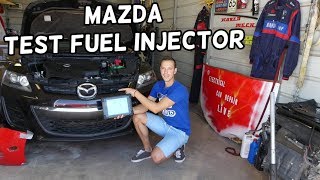
How to confirm: Test the injector's internal resistance with a multimeter. Per official Mazda documentation for SKYACTIV-G engines, the resistance should be between 1.6–2.52 Ohms. 🎬 See this walkthrough for testing Skyactiv fuel injector resistance You can also swap the cylinder 3 injector with another cylinder (e.g., cylinder 1) and see if the fault code follows to the new cylinder (e.g., P0201).
Typical fix: Replace the cylinder 3 fuel injector and its seals.
Est. part cost: $90-$250 - Wiring or Connector Issue ⚪ Low Probability
How to confirm: Visually inspect the wiring harness and connector at the cylinder 3 injector for damage, corrosion, or loose pins. Use a noid light to verify that the PCM is sending a pulse signal to the connector. 🎬 Watch: How to test if your Mazda fuel injector is working Also check the main PCM connector, as a user on Mazdaspeeds.org reported fixing a P0203 by cleaning a dirty connection at the PCM. Check for continuity between the injector connector and the PCM at pins 1EA and 1EB.
Typical fix: Repair the damaged section of the wiring harness or replace the injector connector pigtail. Clean and secure the PCM connector.
Est. part cost: $15-$50
Diagnosis Steps
- Read the fault codes with an OBD-II scanner and note any other codes present, especially P0303 or P0202. Record the FREEZE FRAME DATA (Mode 2)/Snapshot data for analysis.
- Inspect the wiring harness and electrical connector at the cylinder 3 fuel injector for any visible signs of damage, corrosion, or loose connections.
- Disconnect the injector and test its resistance with a multimeter. A healthy SKYACTIV-G injector should read between 1.6–2.52 Ohms. An open circuit (infinite resistance) or a reading far from spec indicates a bad injector.
- Use a noid light plugged into the injector connector to check if the PCM is sending a signal pulse while the engine is cranked or running. If the light flashes, the PCM driver and wiring are likely okay.
- If the noid light does not flash, check for continuity and shorts in the wiring harness between the PCM and the injector connector. For the cylinder 3 injector, test continuity between injector connector terminals A and B and PCM terminals 1EA and 1EB, respectively. Also inspect the main PCM connectors and engine ground points (e.g., G07 at the left rear of the engine) for corrosion or loose pins.
- If the injector, wiring, and connector are all good, and especially if code P0202 is also present, investigate the PCM. Check the PCM manufacturer label; if it is a DENSO unit on a vehicle within the affected VIN range (lower than JM3KE**820183), the PCM is the most likely cause per TSB #01-017/16.
Parts You'll Likely Need
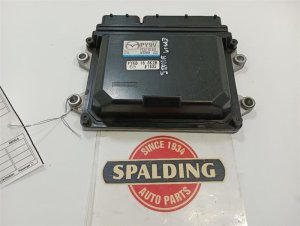
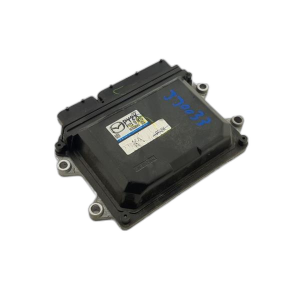
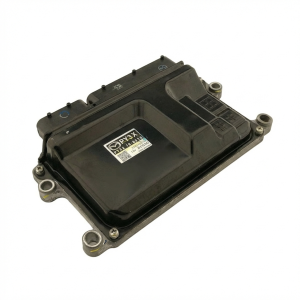
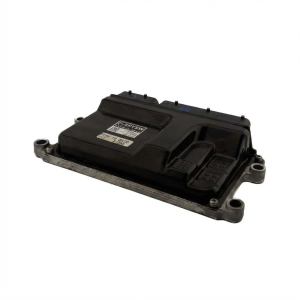
- Powertrain Control Module (PCM)
(OEM #****-18-881* (e.g., PE08-18-881M))— A known issue documented by Mazda in TSBs points to internal failure of the PCM as a primary cause for this code on this vehicle. The TSB notes the part number format is '****-18-881*'. The TSB also notes that the part numbers were not changed when the manufacturing defect was corrected, so ordering by part number alone does not guarantee a 'fixed' unit.
Trusted brands: Mazda (OEM - DENSO)
OEM price range: $800-$1400
Aftermarket price range: $250-$500 (Remanufactured, requires programming) - Fuel Injector
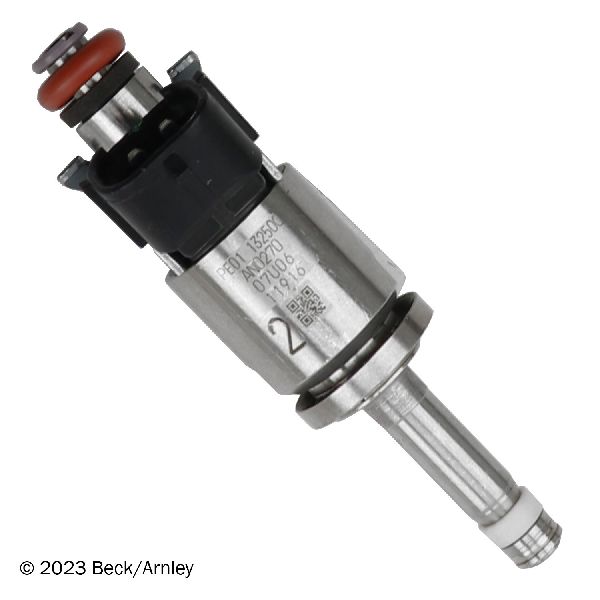
(OEM #PY01-13-250)— If the PCM is not the cause, the fuel injector itself may have an internal electrical fault.
Trusted brands: Bosch, Denso, Standard Motor Products
OEM price range: $250
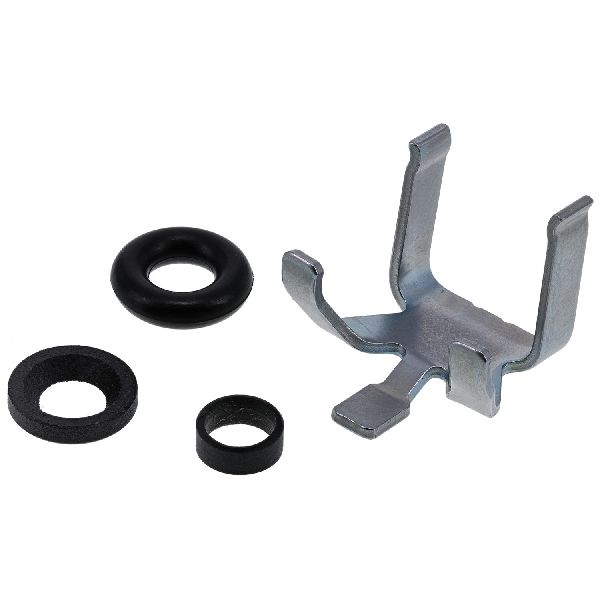
Aftermarket price range: $90-$160 - Fuel Injector Seal Kit — When replacing a fuel injector, the O-rings and seals must also be replaced to prevent fuel leaks.
Trusted brands: Beck/Arnley, Mahle
OEM price range: $15-$30
Aftermarket price range: $10-$20
Related Codes That Often Appear With This One
- P0303 — This code means 'Cylinder 3 Misfire Detected.' Since P0203 indicates a problem with the fuel injector circuit for cylinder 3, a misfire is a direct consequence of that cylinder not getting the proper amount of fuel. The TSBs confirm these often appear together.
- P0202 — The Mazda TSB specifically mentions that P0202 ('Injector Circuit / Open - Cylinder 2') and P0203 often appear together, pointing towards the common PCM failure issue affecting both injector circuits.
Technical Service Bulletins (TSBs) & Recalls
- 01-017/16: Multi-Model - engine runs rough and check engine light on with DTCS P0201 and P0204 or P0202 and P0203. Points to internal PCM failure on specific VIN ranges of DENSO-equipped vehicles.
- 01-004-17: Superseded bulletin with the same information regarding rough running and injector circuit codes caused by PCM failure.
Platform-Specific Known Issues
- Mazda issued TSB #01-017/16 (which supersedes #01-004-17) for 2013-2016 CX-5 models (among others) that may experience a rough running engine with DTCs P0202 and P0203 stored together. The cause is cited as a potential internal failure of the DENSO-produced Powertrain Control Module (PCM). This TSB applies specifically to Japan-built vehicles with VINs lower than JM3KE**820183, produced before May 23, 2016.
Mechanic-Grade Diagnostic Values
- Fuel Injector Coil Resistance — expected: 1.6–2.52 Ω (at 0—80 °C / 32—176 °F). Failure: A reading of 0 Ω (short) or infinite/OL (open) indicates a faulty injector.
- Injector Pulse Width (Live Scan Data) — expected: ~1–8 ms at idle, increasing with engine load.. Failure: No pulse or an erratic pulse width on cylinder 3 compared to other cylinders.
- Injector Connector Voltage (Key On, Engine Off) — expected: Approximately 12V (battery voltage) on the power supply pin.. Failure: Low or no voltage indicates a problem with the power supply circuit or relay.
Hidden / Shadow Codes Worth Checking
- Mode 2 / Freeze Frame Data: This is not a hidden code, but a snapshot of the vehicle's operating conditions (RPM, engine temp, speed, etc.) at the exact moment the P0203 code was triggered. It is critical for diagnosing intermittent faults. (see via Accessible with most OBD-II scan tools. Mazda service literature specifically calls for its use in the diagnostic procedure.)
Scan Tool Commands That Help
- Mazda M-MDS (or equivalent professional scanner): Active Test / Actuator Test — This function allows a technician to command individual fuel injectors to turn on and off while the engine is idling. If turning off injector #3 causes no change in engine RPM or smoothness, it confirms that cylinder was not contributing, pointing to a fault in that circuit.
Wiring & Ground Locations
- PCM Pins (Cylinder 3) — At the main Powertrain Control Module connector.. For continuity testing, the wires for the cylinder 3 injector connect to terminals 1EA and 1EB on the PCM.
- Ground Point G07 — Located at the left rear of the engine.. A poor engine ground can cause a variety of electrical issues, including erratic sensor and actuator behavior. This is a primary ground point for engine components.
- Ground Point G01 — Located under the left headlight assembly.. This is a major chassis ground point for the forward engine bay harness. A poor connection here can affect multiple systems, including the PCM and injector power circuits.
Real Owner Repair Stories
- Reddit user on r/CX5 (2014 Mazda CX-5 2.5L, 103k miles) — Misfire on cylinder 3, rough running.
❌ Tried (didn't work) Replaced spark plugs., Swapped ignition coils between cylinders 2 and 3.
✅ What actually fixed it The story is unresolved but provides critical diagnostic insight: the user confirmed spark was good and was moving on to test the injector circuit. They noted the extreme difficulty of accessing the injector wiring harness for testing due to its location under the intake manifold, a key piece of information for anyone planning the job. A former Mazda tech in the thread confirmed this difficulty and the need for special tools like wire-piercing probes to test without full disassembly.
OEM Part Supersession History
****-18-881*→****-18-881*— Internal production change to fix injector driver failure.
Heads up: According to TSB 01-017/16, the part numbers for the PCM were NOT changed when the internal fix was implemented. This means one cannot determine if a PCM is from the corrected production run by its part number alone; the vehicle's VIN and production date are the only reliable indicators.
Helpful Videos

Used OEM Parts in Stock
New Aftermarket Parts Available



The information in this article is provided for general reference and educational purposes only. Vehicle specifications, procedures, and part compatibility can vary by production date, trim level, and region. Always consult your vehicle's factory service manual and verify part numbers before purchasing or performing repairs. Safety-critical components such as airbags, seat belts, and braking systems should be installed by a qualified professional.
- Mazda CX-5:
- 🧭 Diagnostic Flowchart
- 🎬 Helpful Videos
- 🛍️ Shop This Part
- What's Unique About the 2014-2016 Mazda CX-5
- Symptoms You May Notice
- Most Likely Causes
- Diagnosis Steps
- Parts You'll Likely Need
- Related Codes That Often Appear With This One
- Technical Service Bulletins (TSBs) & Recalls
- Platform-Specific Known Issues
- Mechanic-Grade Diagnostic Values
- Hidden / Shadow Codes Worth Checking
- Scan Tool Commands That Help
- Wiring & Ground Locations
- Real Owner Repair Stories
- OEM Part Supersession History
- 🎟️ Get 5% Off