

P0203 on 2007-2015 Mazda CX-9: Injector Circuit Malfunction Causes and Fixes
On a 2007-2015 Mazda CX-9, P0203 is almost always caused by a failed #3 fuel injector. Because this injector is on the rear bank under the intake manifold, the repair is labor-intensive. Expect a shop to charge $500-$900, with most of the cost being labor. It is highly recommended to replace all three rear injectors at once.
- P0203 on a CX-9 means a problem with the cylinder #3 injector circuit.
- The most likely cause is a bad fuel injector.
- Cylinder #3 is on the rear bank, requiring intake manifold removal for access.
- Due to high labor, it's wise to replace all three rear injectors and gaskets at once.
- A P0303 misfire code is a direct and expected symptom of the P0203 fault.
What's Unique About the 2007-2015 Mazda CX-9
The key issue for the Mazda CX-9 is the location of cylinder #3. On the transverse-mounted 3.5L and 3.7L V6 engines (Ford Cyclone family), the cylinders are numbered 1-2-3 on the rear bank (against the firewall) and 4-5-6 on the front bank. This means cylinder #3 is located under the upper intake manifold. This placement turns a potentially simple injector or wiring repair into a much more complex and labor-intensive job, as the entire manifold must be removed for access. This significantly increases repair costs and difficulty compared to the same code on an engine with easier injector access.
Symptoms You May Notice
- Check Engine Light is on (may be flashing if misfire is severe)
- Rough idle and engine shaking, sometimes felt in the steering wheel
- Noticeable loss of power and poor acceleration
- Engine misfiring, which can feel like a popping or jerking sensation
- Reduced fuel economy
- Engine may be harder to start
- Replacing the spark plug or ignition coil for cylinder 3. While these parts can cause a misfire (P0303), the P0203 code specifically points to an electrical fault in the fuel injector circuit, not the ignition system. If you only have P0303, suspect ignition parts; if you have P0203 (with or without P0303), the fault is in the fuel delivery circuit.
Most Likely Causes
- Failed Cylinder 3 Fuel Injector 🔴 High Probability → Shop Fuel Injector Injectors are electro-mechanical parts that wear out over time. The internal coil winding can develop an open circuit (infinite resistance) or a short circuit (zero resistance), both of which will trigger a P020x code. This is the most common failure for this code on the CX-9.
How to confirm: After removing the intake manifold, check the resistance of the injector with a multimeter; it should be within 11.3-12.7 ohms. A definitive real-world test is to swap the #3 injector with one from the front bank (e.g., #4). Reassemble the vehicle enough to run it. If the code changes to P0204, the injector is faulty. One owner on Mazdas247 confirmed this method by finding his bad injector had 0 ohms resistance while the others were in spec.
Typical fix: Replace the fuel injector. It is highly recommended to replace all three rear-bank injectors (1, 2, and 3) at the same time due to the high labor cost to access them. It is also wise to replace the spark plugs on the rear bank at the same time. Always replace the intake manifold gaskets.
Est. part cost: $40-$150 per injector - Wiring or Connector Issue 🟡 Medium Probability The wiring harness sits in a high-heat engine bay, and the connector itself can become brittle or corroded. Wires can chafe against the engine or other components, causing an open or short in the circuit. Sometimes the issue is simply a poor connection at the PCM.
How to confirm: Visually inspect the wiring going to the #3 injector for any signs of damage, melting, or corrosion. Use a noid light to confirm the PCM is sending a pulse signal to the connector. If the noid light flashes, the wiring and PCM are likely good, pointing to the injector. If it doesn't flash, check for continuity on the power and ground wires between the PCM and the injector connector. A user on Mazdaspeeds.org fixed a P0203 code by cleaning the PCM connector contacts.
Typical fix: Repair the damaged section of wire or replace the injector connector pigtail. In some cases, cleaning the terminals at the connector and/or PCM may resolve the issue.
Est. part cost: $15-$30 for a connector pigtail
Rare But Worth Checking
- Faulty Powertrain Control Module (PCM): → Shop Engine Control Module (ECM) While a known issue on other Mazda models of the era (Mazda3, CX-5), PCM failure is very rare on the CX-9 for this specific code. Mazda TSB 01-017/16, which addresses PCM failure for injector codes on other models, does NOT apply to the CX-9. This should be the last item to consider after all wiring and the injector itself have been proven to be good. A user on Mazdas247 with P020x codes on all six cylinders suspected a PCM or main harness issue.
Diagnosis Steps
- Verify the code with an OBD-II scanner.
- Note that cylinder 3 is on the rear bank, under the intake manifold. Access is required for most tests.
- Remove the upper intake manifold. This is a required step for physical access.
- Visually inspect the wiring harness and the connector for injector #3. Look for any breaks, chafing, or melted plastic.
- Disconnect the injector. Check for 12V power on one pin of the connector with the key on.
- Plug a noid light into the injector connector and crank the engine. The light should flash, indicating the PCM is sending the ground signal. If it flashes, the wiring and PCM are good, and the injector is the problem.
- If the noid light does not flash, check for continuity on the ground wire between the injector connector and the PCM.
- Measure the resistance of the fuel injector with a multimeter. It should be between 11.3-13 ohms. A reading that is infinite (open) or zero (short) indicates a bad injector.
- As a final confirmation, you can swap the #3 injector with an injector from the front bank (e.g., #4). Reassemble and run the engine. If the code changes to P0204, you have definitively confirmed a bad injector.
Parts You'll Likely Need
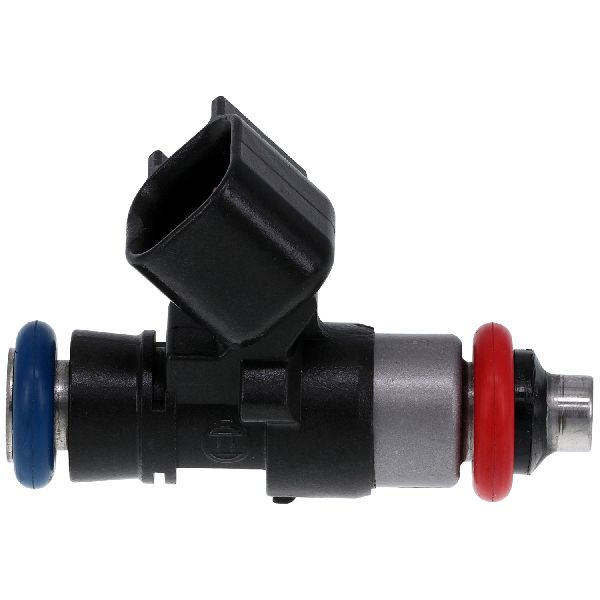
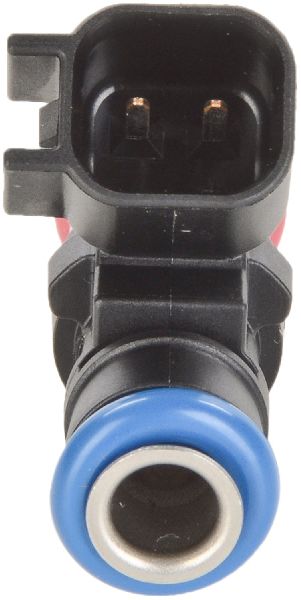
- Fuel Injector
(OEM #ZZJ1-13-250A (supersedes CY01-13-250 and ZZJ1-13-250))— This is the most common component to fail, causing an open or short in the injector circuit.
Trusted brands: Bosch (0280158091), Hitachi, Standard Motor Products, Carquest Premium (Remanufactured)
OEM price range: $80-$120 per injector
Aftermarket price range: $40-$100 - Upper and Lower Intake Manifold Gaskets
(OEM #C236-13-111 (Upper), ZZJ1-13-111C (Lower))— These are one-time-use gaskets and must be replaced anytime the intake manifold is removed to prevent vacuum leaks.
Trusted brands: Fel-Pro (MS 97120), Mahle
OEM price range: $50-$80 for a set
Aftermarket price range: $20-$40 for a set
Related Codes That Often Appear With This One
- P0303 — This code means 'Cylinder 3 Misfire Detected'. A fault in the injector circuit (P0203) prevents proper fueling, which directly causes a misfire in that cylinder. It is extremely common to see these two codes together.
Platform-Specific Known Issues
- The primary issue is the difficult access to the rear bank of cylinders (1, 2, 3), which requires removing the intake manifold. Due to the high labor involved, it is a common and highly recommended practice to replace all three rear fuel injectors, spark plugs, and intake gaskets at the same time to avoid a similar repair in the near future.
Technical Service Bulletins (TSBs) & Recalls
- TSB Bulletin #01-004-17: A multi-model manufacturer bulletin notes that vehicles may experience a rough-running engine and a check engine light with DTCs P0202 and P0203 occurring together.
- TSB Bulletin #01-004-17-3317a: This manufacturer record for other Mazda models describes instances where the engine runs rough with P0202 and P0203, noting that engine misfire codes like P0303 are usually stored at the same time.
Mechanic-Grade Diagnostic Values
- Fuel Injector Coil Resistance — expected: 11.3 - 12.7 ohms. Failure: A reading of infinite ohms (OL), near-zero ohms, or a value outside the specified range indicates a failed injector.
- Fuel Injector Power Supply — expected: ~12V (Battery Voltage). Failure: No voltage at the injector connector power pin (with key on) indicates a problem with the power supply circuit, fuse, or relay.
- Fuel Injector Pulse (Noid Light Test) — expected: Flashing light while cranking. Failure: A steady light or no light indicates a fault in the PCM driver or the wiring between the PCM and the injector.
Scan Tool Commands That Help
- Mazda M-MDS (or equivalent professional scanner): KOER Self Test (Key On, Engine Running) — Can be used to have the PCM run its own suite of diagnostic tests on engine components, which may help confirm faults after a repair or during diagnosis.
- Mazda M-MDS (or equivalent professional scanner): Active Test / Bidirectional Control — Allows a technician to command individual injectors to fire. This can be used to audibly check if an injector is clicking (operating) without having to remove the intake manifold, though it won't confirm proper flow.
Wiring & Ground Locations
- Cylinder 3 Injector PCM Pins (SKYACTIV-D example, pins may vary) — At the main PCM connector, located under the cowl panel which requires removing the battery, battery tray, and wiper assembly for access.. For deep diagnostics, you must test continuity from the injector connector back to the specific pins on the PCM. A Mazda service manual for a diesel engine lists injector 3 using pins 1DA and 1CS, demonstrating the level of detail needed from a correct wiring diagram for the MZI V6.
- Engine/Transaxle Ground Points — Key grounds for the engine harness are typically found on the passenger side motor mount, on the transaxle housing, and a main ground from the battery to the chassis.. A corroded or loose ground connection can introduce resistance into the electrical system, potentially causing erratic behavior or fault codes for sensitive components like fuel injectors. Cleaning these main ground points is a valid, low-cost diagnostic step.
- Injector Connector Type — At the fuel injector.. The injectors on this engine use a USCAR-style connector. This is critical information when sourcing a replacement connector pigtail to ensure it fits.
Real Owner Repair Stories
- Ford Edge Forum user 'macbwt' (2008 Ford Edge SE with 3.5L V6) — Intermittent rough idle and poor driving, eventually leading to a constant P0203 code.
❌ Tried (didn't work) Swapped the #3 fuel injector with the #4 fuel injector; the P0203 code did not change., Swapped the #3 spark plug with the #1 spark plug., Swapped the #2 ignition coil with the #3 ignition coil., Wired in a brand new replacement connector pigtail for the #3 injector.
✅ What actually fixed it The user suspected a faulty PCM after all other component swaps and wiring repairs failed to resolve the issue. The thread did not contain the final resolution, but it provides an excellent example of a deep diagnostic process where the injector itself was not the cause. - Mazdaspeeds.org user 'Davejb' (Vehicle not specified, but code is P0203) — P0203 code present.
❌ Tried (didn't work) Initial diagnosis was pointing towards component failure.
✅ What actually fixed it The issue was resolved by cleaning the contacts on the main PCM connector with electrical contact cleaner, suggesting a poor connection was causing the injector circuit fault.
OEM Part Supersession History
CY01-13-250→ZZJ1-13-250, then ZZJ1-13-250A— Standard part updates and revisions by the manufacturer.
Heads up: The Bosch aftermarket equivalent is part number 0280158091 (or 62399). This injector is widely used across Ford, Lincoln, and Mazda vehicles with the 3.5L and 3.7L V6 engines, indicating good cross-compatibility within the specified vehicle range.
Model Year Variations Within This Range
- 2007 vs 2008-2015: The 2007 model year used the 3.5L MZI V6, while 2008-2015 models used the 3.7L MZI V6. However, for the purposes of diagnosing P0203, the architecture, cylinder layout, and fuel injectors are effectively identical. The same Bosch 0280158091 injector is listed for both engines.
Diagnostic Flowchart
Other Known Issues on This Vehicle
Issues unrelated to this code that are worth knowing about as an owner of this generation:
- Internal Water Pump Failure 🔴 High — Common on engines over 80,000 miles. The pump is driven by the timing chain, and when its seal fails, it leaks coolant directly into the engine oil, leading to contaminated oil ('milky' appearance) and rapid destruction of timing components, often requiring engine replacement. (Ref: Subject of Mazda TSBs 01-012/13 and 01-007/15, and a class-action lawsuit (Case 8:17-cv-01583-JLS-JDE).)
- AWD Transfer Case (PTU) Failure 🔴 High — Very common on AWD models. The unit is prone to overheating, which degrades the gear oil and leads to internal failure. Symptoms include a burning oil smell (fluid leaking onto the exhaust), grinding noises, and eventual loss of AWD. (Ref: Mazda issued Special Service Program (SSP 92) extending the warranty on the PTU for certain 2010-2014 models.)
- Power Brake Booster Failure 🟠 Medium — Common on 2007-2013 models, especially in hotter climates. The internal diaphragm can tear, causing a hard brake pedal and a hissing noise from the pedal area, reducing braking effectiveness. (Ref: Mazda issued Special Service Program (SSP 93) extending the warranty on the brake booster for 2007-2013 models.)
- Front Suspension Component Wear 🟡 Low — Control arm bushings, sway bar links, and wheel bearings are common wear items that fail more frequently than on some competitors, leading to squeaking, clunking, or humming noises from the front end.
- Water-Damaged Body Control Module (BCM) 🟠 Medium — On models with a sunroof, the drain tubes can clog, causing water to overflow and drip onto the Body Control Module (BCM) located in the passenger-side kick panel area, leading to a variety of strange electrical problems.
Used vs. New Parts: Buying Guide for This Vehicle
When a used part is the smart pick: For this repair, using used parts is generally not recommended for the fuel injectors themselves. However, sourcing a used wiring harness connector pigtail from a junkyard is a viable and cost-effective option if the original connector is damaged.
Donor-vehicle mileage cap: roughly under 120000 miles for the part to have meaningful remaining life.
What to inspect on the donor part:
- For a connector pigtail, ensure the plastic is not brittle or cracked.
- Check that the locking tab is intact and functional.
- Inspect the wire insulation for at least 4-6 inches back from the connector to ensure it is not cracked, melted, or oil-soaked.
OEM-only on this vehicle (don't cheap out):
- While not strictly required, using OEM or a reputable OE-supplier like Bosch for the fuel injectors is highly recommended. The labor to access the rear bank is so significant that the risk of a premature failure from a low-quality, unbranded injector is not worth the small upfront cost savings.
Aftermarket brands forum-validated for this vehicle:
- Bosch (often the OE manufacturer, part #0280158091 or 62399)
- Standard Motor Products (SMP)
- Hitachi
Brands owners have reported issues with on this vehicle:
- Unbranded, 'white-box' injector sets from online marketplaces. These often have inconsistent flow rates and high failure rates, making them a poor choice for a labor-intensive job.
Real Owner Stories
Aggregated from forums and TSBs cited above. Mileages and costs reflect what owners reported in those sources.
2012 Mazda CX-9
Symptoms: Check engine light came on with codes for all six cylinders (P0201 through P0206) and a misfire on cylinder 5 (P0305).
What fixed it: The owner noted this pointed toward a larger electrical issue like a harness or PCM rather than six individual injector failures.
Source hint: Mazdas247.com thread titled 'Check Engine Light came on: Codes P0201, P0202, P0203, P0204, P0205, P0206 & P0305'
2008 Ford Edge 3.5L V6
Symptoms: Vehicle was running rough and throwing code P0203.
What fixed it: The diagnostic process confirmed the #3 injector failure, a common issue shared with the CX-9 due to the identical engine platform.
Source hint: FordEdgeForum.com thread titled '2008 Edge SEL running rough - throwing code P0203'
Mazda CX-9 V6
Symptoms: P0203 code present.
What fixed it: Cleaning the PCM connector contacts with electrical contact cleaner.
Source hint: Mazdaspeeds.org thread titled 'P0203 Code'
Mazda CX-9 V6
Symptoms: P020x code triggered by an injector failure.
What fixed it: The owner confirmed the injector was bad by finding it had 0 ohms resistance while others were within the 11.3-12.7 ohm spec.
Source hint: Mazdas247.com forum citation
Related OBD-II Codes
Frequently Asked Questions
Why is the labor cost so high to replace just one fuel injector on my Mazda CX-9?
Are there any specific gaskets I need to buy when fixing a P0203 code?
Is there a way to confirm the injector is bad before I buy a new one?
Could my P0203 code be related to the Mazda water pump TSBs?
Does the Mazda CX-9 share this injector issue with any other vehicles?
Could a dirty connector cause a P0203 code on this vehicle?
Helpful Videos
We Have This Part in Stock



The information in this article is provided for general reference and educational purposes only. Vehicle specifications, procedures, and part compatibility can vary by production date, trim level, and region. Always consult your vehicle's factory service manual and verify part numbers before purchasing or performing repairs. Safety-critical components such as airbags, seat belts, and braking systems should be installed by a qualified professional.
- Mazda CX-9:
- 🧭 Diagnostic Flowchart
- 🎬 Helpful Videos
- 🛍️ Shop This Part
- What's Unique About the 2007-2015 Mazda CX-9
- Symptoms You May Notice
- Most Likely Causes
- Rare But Worth Checking
- Diagnosis Steps
- Parts You'll Likely Need
- Related Codes That Often Appear With This One
- Platform-Specific Known Issues
- Technical Service Bulletins (TSBs) & Recalls
- Mechanic-Grade Diagnostic Values
- Scan Tool Commands That Help
- Wiring & Ground Locations
- Real Owner Repair Stories
- OEM Part Supersession History
- Model Year Variations Within This Range
- Other Known Issues on This Vehicle
- Used vs. New Parts: Buying Guide for This Vehicle
- Real Owner Stories
- 2012 Mazda CX-9
- 2008 Ford Edge 3.5L V6
- Mazda CX-9 V6
- Mazda CX-9 V6
- Related OBD-II Codes
- Frequently Asked Questions
- 🎟️ Get 5% Off