

P0203 on 2014-2016 Mazda MAZDA6: Injector Circuit Fixes & Causes
P0203 on a 2014-2016 Mazda6 indicates an electrical fault with the cylinder 3 fuel injector circuit. While a faulty injector is possible, a Mazda Technical Service Bulletin (TSB) points to a known issue with the Powertrain Control Module (PCM) on certain models, which is a more likely cause if P0202 is also present. Diagnosis should start by checking for this companion code before replacing any parts.
- Before buying any parts for a P0203 code, check if code P0202 is also present.
- If P0202 and P0203 are both stored, the problem is very likely a faulty DENSO PCM as described in TSB #01-004-17, especially on models built before May 2016.
- If P0203 is the only code, standard diagnosis of the injector, wiring, and connectors should be performed.
- In very rare cases of a no-start in extreme cold, a freezing relay could be the cause.
What's Unique About the 2014-2016 Mazda MAZDA6
For this generation of Mazda6, the P0203 code has a significant known issue documented by Mazda. A Technical Service Bulletin (TSB #01-004-17 and its revision #01-004-17-3317a) reveals that P0203 often appears with P0202 due to an internal failure of specific DENSO-made Powertrain Control Modules (PCMs). This TSB applies to Japan-built Mazda6 models with VINs lower than JM1GJ**484154, produced before May 23, 2016. This is a critical distinction, as the problem is very likely the computer itself, not the injector or wiring, making diagnosis highly specific compared to other vehicles.
Diagnostic Flowchart
Tap your situation to follow the diagnostic path that matches what you're seeing on this vehicle.
Symptoms You May Notice
- Check Engine Light is on
- Rough running engine or rough idle
- Engine misfires, which may feel like a popping or jerking sensation
- Reduced engine power and poor acceleration
- Decreased fuel economy
- Possible hard starting
- Replacing the fuel injector when the actual cause is the PCM. The TSB for this vehicle makes the PCM a primary suspect, especially if P0202 is also present. Always check for the companion code before buying parts.
Most Likely Causes
- Powertrain Control Module (PCM) Internal Failure 🔴 High Probability → Shop Engine Control Module (ECM) Mazda TSBs #01-004-17 and #01-004-17-3317a specifically identify an internal failure of DENSO-produced PCMs as the cause for P0203 appearing alongside P0202. This affects Japan-built 2014-2016 Mazda6 models with VINs lower than JM1GJ**484154 (produced before May 23, 2016).
How to confirm: The definitive sign is the simultaneous presence of codes P0202 and P0203. Next, inspect the PCM label to confirm it is a 'DENSO' unit, as specified in the TSB. If both conditions are met, the PCM is the confirmed culprit. A dealer must get authorization from the Mazda Major Assembly Service Hotline (MASH) before replacement.
Typical fix: Replace the Powertrain Control Module (PCM). This requires programming the new module to the vehicle's VIN.
Est. part cost: $760-$1050 for a new OEM unit. - Faulty Cylinder 3 Fuel Injector 🟡 Medium Probability → Shop Fuel Injector Fuel injectors are wear-and-tear components that can fail electrically or become clogged over time, especially with lower-quality fuel.
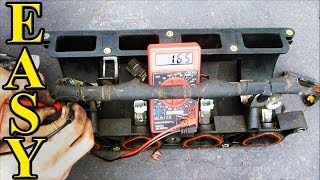
How to confirm: Swap the cylinder 3 fuel injector with another cylinder's injector (e.g., cylinder 2). Clear the codes and drive the vehicle. If the code changes to P0202, the injector is faulty. Alternatively, test the injector's resistance with a multimeter. The specification for the Skyactiv-G direct injector is 1.74–2.04 ohms at 20°C (68°F). A professional can perform an injector balance test.
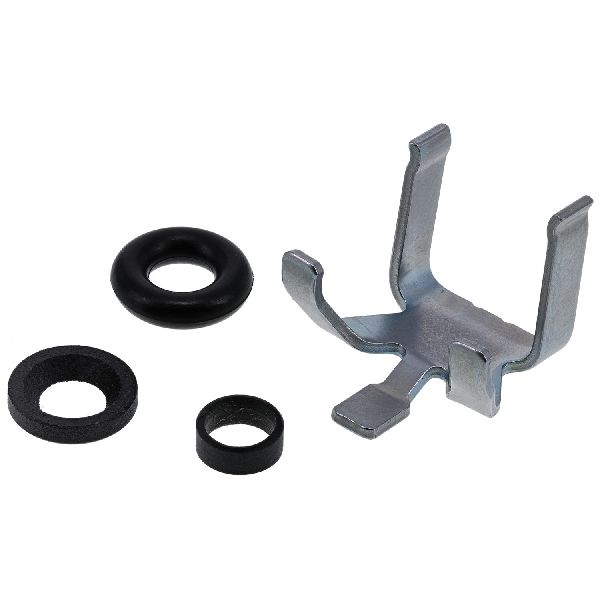
Typical fix: Replace the faulty fuel injector and its seals.
Est. part cost: $180-$265 - Wiring or Connector Issue ⚪ Low Probability Engine vibration and heat can cause wires to break or insulation to chafe over time, leading to an open or shorted circuit. A loose or corroded pin at the injector or PCM connector can also cause this fault.
How to confirm: Visually inspect the wiring harness and connector for cylinder 3's injector for any signs of damage, corrosion, or loose pins. Use a noid light to confirm if the injector is receiving a pulse signal from the PCM. The light should flash as the engine is cranked. If the noid light doesn't flash, check for continuity in the wiring between the injector connector and the PCM connector.
Typical fix: Repair the damaged section of the wiring harness or replace the injector connector. In some cases, cleaning the PCM connector with contact cleaner has resolved the issue.
Est. part cost: $10-$50
Rare But Worth Checking
- Freezing Main Relay:
Diagnosis Steps
- Scan the vehicle for all stored trouble codes. Note if P0202 is present with P0203. This is the most critical first step.
- If P0202 is also present, check your VIN against the TSB range (lower than JM1GJ**484154). If it matches, inspect the PCM to confirm it is a 'DENSO' unit, per TSB #01-004-17. If all conditions are met, the PCM is the confirmed cause and requires replacement.
- If P0203 is present alone or with P0303, begin by visually inspecting the wiring harness and connector for the cylinder 3 fuel injector. Look for any obvious damage, melting, or corrosion.
- Check the connector pins at both the injector and the PCM for looseness or corrosion.
- Disconnect the injector and test its electrical resistance with a multimeter. Compare the reading to the manufacturer's specification for the direct injector: 1.74–2.04 ohms at 20°C (68°F).
- Use a noid light plugged into the injector connector 🎬 See this guide on testing Mazda fuel injector signals. to verify that the PCM is sending a pulse signal. The light should flash as the engine is cranked.
- If the signal, wiring, and resistance are all good, swap the cylinder 3 injector with another cylinder (e.g., cylinder 2) to see if the fault code follows the injector. If the code changes to P0202, the injector is bad.
- If the noid light does not flash and the wiring has been confirmed to be good (continuity check from injector plug to PCM plug), the issue lies within the PCM's driver circuit for that injector.
Parts You'll Likely Need
- Powertrain Control Module (PCM)
(OEM #PYXX-18-881, PZY1-18-881, PY1T-18-881L, PY8D-18-881A)— A Mazda TSB identifies an internal failure in DENSO-made PCMs as a primary cause for this code, especially when paired with P0202. Part number varies by specific vehicle options (e.g., California emissions, i-ELOOP). Always order by the 4-digit code on the original PCM label. 🎬 Watch: How to locate and remove your Mazda 6 PCM.
Trusted brands: Mazda (OEM)
OEM price range: $760-$1050
Aftermarket price range: $400-$600 (Remanufactured) - Fuel Injector
(OEM #PE01-13-250B)— If the PCM is not the cause, the fuel injector itself is the next most likely component to have failed electrically or mechanically.
Trusted brands: Mazda (OEM), Denso, Bosch
OEM price range: $210-$265
Aftermarket price range: $80-$150
Related Codes That Often Appear With This One
- P0202 — According to Mazda TSB #01-004-17-3317a, a faulty PCM often causes injector circuit codes for cylinders 2 and 3 to appear together. This is the strongest indicator of the known PCM failure.
- P0303 — This is a misfire code for cylinder 3. Since P0203 indicates a fuel delivery problem for that same cylinder, the lack of fuel will cause a misfire. The TSBs confirm that misfire DTCs are usually stored at the same time.
- P0300 — If the misfire is severe or intermittent, it can be registered as a random misfire affecting multiple cylinders.
Technical Service Bulletins (TSBs) & Recalls
- 01-004-17-3317a: 'Some vehicles may experience an engine that runs rough and the check engine light on with DTCs P0201 and P0204 or P0202 and P0203.'
- 01-004-17: 'Multi-Model - engine runs rough and check engine light on with DTCS P0201 and P0204 or P0202 and P0203'. This TSB confirms the issue is caused by an internal failure of the DENSO-produced PCM.
- 01-023/13: 'MULTI-MODEL - ENGINE NO START IN EXTREMELY COLD AMBIENT TEMPERATURES'. Notes that a freezing injector relay can cause P0203 in extreme cold.
Platform-Specific Known Issues
- TSB #01-004-17-3317a and #01-004-17 document an issue where an internal PCM failure on models with a DENSO-produced PCM will cause DTCs P0202 and P0203 to set simultaneously, along with a rough running engine. This applies to Japan-built vehicles produced before May 23, 2016, with VINs lower than JM1GJ**484154.
Mechanic-Grade Diagnostic Values
- Fuel Injector Resistance — expected: 1.74–2.04 Ohms at 20°C (68°F). Failure: A reading of 0 ohms (short), infinite/OL (open), or a value outside the specified range indicates a failed injector.
- High-Pressure Fuel System Pressure — expected: Up to 200 bar (2900 psi), with at least 2176 psi at full throttle.. Failure: Significantly lower pressure could indicate a failing high-pressure fuel pump, though this would likely set other codes.
Hidden / Shadow Codes Worth Checking
- P0203:00: The ':00' is a Failure Type Code (FTC) indicating a general 'Circuit/Open' fault. Mazda TSBs use this format. (see via Professional scan tools like the Mazda M-MDS will display the code with its FTC.)
- Mode 6 Misfire Data: Not a code, but a diagnostic function to view misfire counts per cylinder. TSB 01-012/14 describes using Mode 6 to verify that the misfire detection learning process has completed successfully after a repair. (see via A scan tool with Mode 6 capability, such as the Mazda IDS or equivalent.)
Scan Tool Commands That Help
- Mazda M-MDS / IDS: KOER Self Test (Key On, Engine Running) — Used after a repair to verify that the fault does not immediately return under operating conditions.
- Dealer Communication System: Major Assembly Service Hotline (MASH) Authorization — Required before a dealer can order and replace a PCM under warranty for the known TSB issue.
Wiring & Ground Locations
- PCM Pin 1CS — At the Powertrain Control Module connector.. This is the terminal for the fuel injector No. 3 circuit. A continuity check should be performed between this pin and the injector connector. Note: This pinout is from a SKYACTIV-D (diesel) manual but indicates the type of specific information available in a wiring diagram.
- Engine Bay Ground Points — Common locations on similar Mazda platforms include: a ground on the passenger side motor mount, a ground for the HPFP, a large ground by the starter, and a multi-wire ground point on the frame under the driver's side headlight.. A poor ground connection for the PCM or injector relay can prevent the injector circuit from operating correctly, even if all components and wiring seem intact.
Real Owner Repair Stories
- Mazdaspeeds.org forum user 'Rogi' (2007 Mazdaspeed 6 (similar engine architecture principles)) — No voltage to any fuel injectors, car would not start.
❌ Tried (didn't work) Checking multiple known ground points in the engine bay.
✅ What actually fixed it The user discovered the PCM was not sending the required ground signal to the injector relay. The car started after a temporary ground wire was run to the relay, confirming the PCM was the point of failure.
OEM Part Supersession History
PE01-13-250B→PE01-13-250C, then PE01-13-250D— Standard part revision and improvement.
Heads up: The latest part number, PE01-13-250D, replaces the previous versions.
Model Year Variations Within This Range
- 2014-2016: The PCM manufacturer can be either DENSO or Mitsubishi. The TSB for P0202/P0203 specifically applies only to vehicles with a DENSO-produced PCM.
Helpful Videos
We Have This Part in Stock


The information in this article is provided for general reference and educational purposes only. Vehicle specifications, procedures, and part compatibility can vary by production date, trim level, and region. Always consult your vehicle's factory service manual and verify part numbers before purchasing or performing repairs. Safety-critical components such as airbags, seat belts, and braking systems should be installed by a qualified professional.
- Mazda MAZDA6:
- 🧭 Diagnostic Flowchart
- 🎬 Helpful Videos
- 🛍️ Shop This Part
- What's Unique About the 2014-2016 Mazda MAZDA6
- Symptoms You May Notice
- Most Likely Causes
- Rare But Worth Checking
- Diagnosis Steps
- Parts You'll Likely Need
- Related Codes That Often Appear With This One
- Technical Service Bulletins (TSBs) & Recalls
- Platform-Specific Known Issues
- Mechanic-Grade Diagnostic Values
- Hidden / Shadow Codes Worth Checking
- Scan Tool Commands That Help
- Wiring & Ground Locations
- Real Owner Repair Stories
- OEM Part Supersession History
- Model Year Variations Within This Range
- 🎟️ Get 5% Off