

P0203 on 2005-2012 Porsche Boxster: Injector Circuit Malfunction Causes and Fixes
P0203 on a 2005-2012 Porsche Boxster means there's an electrical problem with the cylinder 3 fuel injector. The most common cause is a failed injector, followed by wiring issues. Expect to pay $100-$200 for a port injector (2005-2008 models) or $150-$250+ for a DFI injector (2009-2012 models), plus significant labor if a shop does the work due to poor access.
- P0203 points to an electrical problem with the cylinder 3 injector, not a spark plug or coil.
- The most likely fix is replacing the cylinder 3 fuel injector.
- A definitive DIY diagnosis is to swap the cylinder 3 injector with another cylinder and see if the code 'follows' the injector.
- The repair is very difficult due to poor access in the mid-engine layout; what would be a 1-2 hour job on another car can take 3-6 hours on a Boxster.
- Be sure to buy the correct injector: 2005-2008 models use port injectors, while 2009-2012 models use different and more expensive DFI injectors.
What's Unique About the 2005-2012 Porsche Boxster
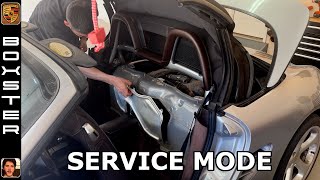
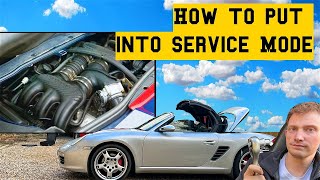
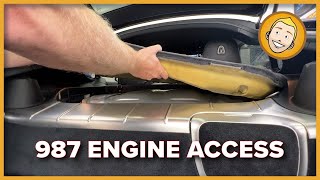
The 2005-2012 Boxster spans two key versions of the 987 generation. Early 987.1 models (2005-2008) use traditional port fuel injection, which is a simpler and less expensive technology. The updated 987.2 models (2009-2012) switched to Direct Fuel Injection (DFI), which uses more complex and costly high-pressure injectors that spray fuel directly into the combustion chamber. While the P0203 code means the same thing for both, the specific part needed and the diagnostic nuances can differ. Accessing the injectors on this mid-engine platform is notoriously difficult, making what could be a simple repair 🎬 Watch: How to put your Boxster into engine service mode. on another car a significant labor-intensive job that often requires removing the intake manifold runners.
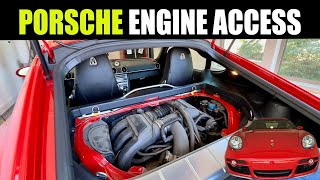
🎬 See this walkthrough on removing the intake to access injectors.Generation note: The 2005-2012 year range covers the second-generation Porsche Boxster (987). This is split into two important sub-models: the 987.1 (2005-2008) with port-injected M96/M97 engines, and the 987.2 (2009-2012) with Direct Fuel Injection (DFI) 9A1 engines. The type of fuel injector, its replacement cost, and the repair procedure differ significantly between these two versions.
Symptoms You May Notice
- Check Engine Light is on
- Engine runs rough or vibrates (rough idle)
- Noticeable loss of power and sluggish acceleration
- Engine misfires, sometimes described as a jerking or popping sensation
- Reduced fuel economy
- Difficulty starting the engine
- Smell of raw fuel from the exhaust
- Replacing the spark plug or ignition coil for cylinder 3. While these parts can cause a misfire code (P0303), they will not cause an injector *circuit* code like P0203. If you have P0203, the problem is electrical and related to the fuel injector's control system.
Most Likely Causes
- Failed Cylinder 3 Fuel Injector 🔴 High Probability → Shop Fuel Injector Injectors are wear-and-tear components that can fail electrically (internal coil shorts/opens) or mechanically over time. While not a chronic issue, electrical failures can happen at any mileage.
How to confirm: Disconnect the injector and measure its internal resistance with a multimeter. For a 987.1 port injector, the resistance should be between 12-15 Ohms. For a 987.2 DFI injector, the resistance is much lower, typically around 1-2 Ohms. A reading of infinity (open) or zero (short) indicates a bad injector. The most definitive test is to swap the cylinder 3 injector with another cylinder (e.g., cylinder 1). Clear the codes and run the engine. If the fault code changes to P0201, the injector is confirmed bad.
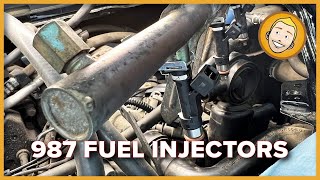
Typical fix: Replace the faulty fuel injector. It is often recommended to replace all injectors on that bank or the entire set if they are high-mileage, as others may fail soon. 🎬 Watch: A condensed guide to replacing fuel injectors on a 987.
Est. part cost: $100-$300 per injector, depending on generation - Wiring Harness or Connector Fault 🟡 Medium Probability The engine's heat and vibration can cause the wiring harness insulation to become brittle and crack, or wires can chafe against other components. The injector connector itself can also corrode or have its pins loosen over time, especially given the tight access in the engine bay. Rodent damage to the soy-based wire coatings is also a known issue, especially on cars that are stored for periods.
How to confirm: Visually inspect the wiring going to the cylinder 3 injector for any signs of melting, chafing, or breaks. Unplug the connector and check for corrosion or bent/loose pins. Use a 'noid light' plugged into the injector connector; if it flashes when the engine is cranked, the wiring and DME are likely providing a signal. If the noid light doesn't flash, use a multimeter to check for continuity on both wires from the DME connector to the injector connector.
Typical fix: Repair the damaged section of wire or replace the injector connector pigtail. Clean any corrosion from the connector terminals using electrical contact cleaner.
Est. part cost: $15-$40 - Faulty DME (Engine Computer) ⚪ Low Probability While rare, the internal transistor (injector driver) in the DME that controls the injector can fail due to an electrical surge or internal component failure.
How to confirm: This is diagnosed by exclusion. If the injector and wiring have both been tested and are known to be good (injector has correct resistance, wiring has continuity and isn't shorted to ground), but a noid light shows no pulse at the connector, the DME is the likely culprit.
Typical fix: The DME must be sent to a specialist for testing and repair, or be replaced and programmed to the vehicle. This is an expensive repair.
Est. part cost: $800-$2000+
Diagnosis Steps
- Read fault codes with an OBD-II scanner to confirm P0203 and check for other related codes like P0303.
- Locate cylinder 3 on the engine. On a Porsche flat-six, the cylinders are numbered 1-3 on the passenger side (right side in US) and 4-6 on the driver side (left side in US), with cylinder 1 being closest to the front of the car (towards the seats). Cylinder 3 is the rearmost cylinder on the passenger side.
- Visually inspect the wiring harness and electrical connector at the cylinder 3 fuel injector. Look for any obvious damage, melting, or corrosion. Pay close attention to signs of rodent activity like chewed wires or nests.
- Test the control signal using a 'noid light'. Disconnect the injector and plug the noid light into the harness connector. Crank the engine. If the light flashes, the DME is sending a signal, and the wiring is likely intact. If it does not flash, the issue is in the wiring or the DME itself.
- If the noid light flashes, test the injector. Disconnect the injector and measure its resistance using a multimeter. Compare the reading to the specification (approx. 12-16 Ohms for 987.1, 1.7-1.8 Ohms for 987.2). A reading of infinity or zero ohms indicates a failed injector.
- If resistance is within spec, perform an injector swap test. Move the injector from cylinder 3 to another cylinder on the same bank (e.g., cylinder 1). Clear the codes and drive the car. If the code returns as P0201 ('Injector Circuit Malfunction - Cylinder 1'), the injector is faulty. If the code remains P0203, the problem is in the wiring harness or DME.
- If the noid light did NOT flash, check for continuity and shorts in the wiring harness between the DME and the injector connector. If the wiring is confirmed to be good, the fault likely lies with the DME's injector driver.
Parts You'll Likely Need
- Port Fuel Injector (987.1, 2005-2008)
(OEM #99760512300)— This is the most common failure part for this code on early 987 models with port injection.
Trusted brands: Bosch, Genuine Porsche
OEM price range: $150-$285
Aftermarket price range: $100-$150 - Direct Fuel Injector (987.2, 2009-2012)
(OEM #9A160512402)— This is the most common failure part for this code on later 987 models with Direct Fuel Injection (DFI).
Trusted brands: Bosch, Genuine Porsche
OEM price range: $230-$300
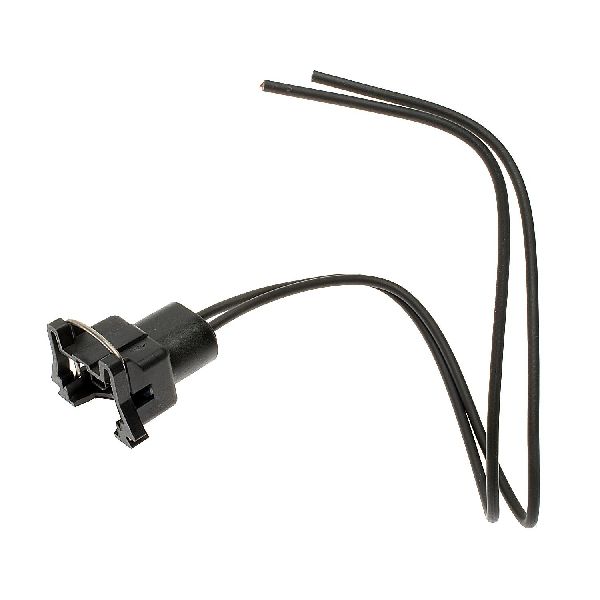
Aftermarket price range: $150-$250 - Fuel Injector Connector Pigtail — If the wiring connector is corroded or damaged, it will need to be cut out and replaced with a new pigtail.
Trusted brands: Various aftermarket
OEM price range: $30-$50
Aftermarket price range: $15-$30
Related Codes That Often Appear With This One
- P0303 — This code means 'Cylinder 3 Misfire Detected'. It is a direct result of the P0203 fault, as the injector circuit malfunction prevents fuel from being delivered, causing the cylinder to misfire.
- P0300 — This code for 'Random/Multiple Cylinder Misfire' can appear if the single-cylinder misfire from P0203 is severe enough to affect overall engine stability.
Platform-Specific Known Issues
- Access to the fuel injectors is extremely limited due to the mid-engine layout. Replacing them is considered a difficult and time-consuming DIY job.
- On many models, especially the Cayman S, the intake manifold runners must be removed to gain access to the fuel rail and injectors. This adds significant complexity and time to the job.
- A Rennlist forum member described the job on a 2006 Cayman S as 'the most frustrating car repair I've ever had the misfortune to undertake', spending multiple days on it due to the poor access, particularly for the forward-most manifold bolts.
Mechanic-Grade Diagnostic Values
- 987.1 Port Fuel Injector (High-Impedance) Resistance — expected: 12-16 Ohms. All injectors should measure within 0.5 Ohms of each other.. Failure: A reading of 0 Ohms (short circuit) or infinite/OL (open circuit).
- 987.2 Direct Fuel Injector (Low-Impedance) Resistance — expected: 1.7 - 1.8 Ohms.. Failure: A reading of 0 Ohms (short circuit) or infinite/OL (open circuit).
- Injector Pulse Width (ms) at idle — expected: Typically very short, in the range of 1-5 milliseconds. One example showed a normal pulse width of 36ms after a repair.. Failure: An abnormally long pulse width (e.g., 250ms) could indicate the DME is trying to compensate for a fault. A scan tool is needed to view this live data.
Scan Tool Commands That Help
- Durametric: Activations / Drive Links — After confirming the injector is receiving power, this function can be used to command a specific injector to fire. This helps isolate whether the fault is with the injector itself or the DME's driver circuit, without the engine running.
- PIWIS (Porsche Dealer Tool): Injector Test / Activation — This is the dealer-level method for performing a bidirectional test on an individual injector to confirm its mechanical operation by listening for a 'click' and observing its effect on the system.
- Generic Injector Tester/Pulser: Pulse Mode Activation — When an advanced scan tool is not available, this standalone tool connects directly to the injector and battery, sending a series of electrical pulses to check if the injector clicks open and closed. This tests the injector's solenoid function independently of the car's wiring or DME.
Wiring & Ground Locations
- DME (Engine Computer) — Located in the cabin, behind the rear seats/firewall area.. This is the source of the injector control signal. All wiring tests for continuity and shorts must terminate at the DME's main connectors.
- DME Connector III (for 987.1 DME 7.8) — This is a 52-pin connector on the main engine computer.. This connector contains the pins that send the ground signal to the fuel injectors. For example, pin 27 controls injector 4, and pin 28 controls injector 6. The pin for cylinder 3 would be in this same connector, and a wiring diagram is needed to confirm the exact pin number for testing continuity back from the injector.
- Under-seat Control Modules — Located on the floor pan directly under the driver's seat.. While not the DME, water damage to these modules from clogged drains is extremely common. This can cause widespread electrical issues and potentially short or damage wiring that shares looms or grounding points, indirectly causing a P0203 code.
Real Owner Repair Stories
- Reddit user post (2007 Porsche Boxster with 9,000 miles, stored for years) — Multiple fault codes, visible wire damage in engine bay.
✅ What actually fixed it The cause was confirmed to be rodent damage to the engine wiring harness. Repair estimates for such damage are often thousands of dollars ($5,000+), and it is recommended to file a comprehensive insurance claim. - 986 Forum user post (Porsche Boxster) — Odd starter noise, then discovered wiring issues.
✅ What actually fixed it A mouse nest was found between the engine and transmission, and rodents had chewed through several wires in the engine bay, which required repair.
OEM Part Supersession History
9A160512400, 9A160512401→9A160512402— Standard part revision and improvement by the manufacturer.
Heads up: The newer part number (9A160512402) is the correct replacement for the earlier versions on 987.2 DFI engines.
Model Year Variations Within This Range
- 2005-2008 (987.1): These models use the M96/M97 engine with high-impedance port fuel injectors and are controlled by a Bosch Motronic 7.8 DME.
- 2009-2012 (987.2): These models use the 9A1 engine with low-impedance Direct Fuel Injection (DFI) injectors, which operate at much higher pressure and have different electrical characteristics. Carbon buildup on intake valves is a potential long-term maintenance issue for these DFI engines, though it won't cause a P0203 code.
Diagnostic Flowchart
Other Known Issues on This Vehicle
Issues unrelated to this code that are worth knowing about as an owner of this generation:
- Intermediate Shaft (IMS) Bearing Failure 🔴 High — Primarily affects 2005 M96/M97 engines. Failure rate is estimated at 8-15% for the early single-row bearing. Porsche switched to a more robust, non-serviceable bearing mid-2005. 987.2 models (2009+) are not affected. Failure can be catastrophic to the engine.
- Cylinder Bore Scoring 🔴 High — Most prevalent in 3.4L M97 engines (Boxster S/Cayman S, 2006-2008). Can also occur in 9A1 engines (987.2) but is less common. Onset can be as early as 30k miles. Symptoms include a ticking noise, increased oil consumption, and a sooty tailpipe on one side.
- Air-Oil Separator (AOS) Failure 🟠 Medium — Common across all 987.1 M96/M97 engines. The internal diaphragm fails, causing large amounts of blue/white smoke on startup, high crankcase vacuum, and increased oil consumption. If it fails completely, it can hydrolock the engine.
- Water Pump Failure 🟠 Medium — A common wear-and-tear item. The plastic impeller can degrade and break apart, leading to overheating. Often replaced preventatively every 4-6 years or 40-60k miles.
- High-Pressure Fuel Pump (HPFP) Failure 🟠 Medium — Specific to 987.2 DFI models (2009-2012). Failure leads to hesitation, loss of power, and fault codes related to fuel pressure. It is one of the more common issues on the otherwise reliable 9A1 engine.
- Cracked Ignition Coils 🟡 Low — Common due to heat and vibration. Cracks in the plastic housing allow spark to arc to the cylinder head, causing misfires (P030x codes). Often replaced along with spark plugs.
Used vs. New Parts: Buying Guide for This Vehicle
When a used part is the smart pick: A used engine wiring harness from a reputable Porsche dismantler can be a cost-effective solution if the original is extensively damaged by rodents or heat. A used DME is also an option, but it is critical to know it MUST be sent to a specialist with the original immobilizer and keys to be coded to the car; it is not plug-and-play.
Donor-vehicle mileage cap: roughly under 80000 miles for the part to have meaningful remaining life.
What to inspect on the donor part:
- For a wiring harness, inspect for any signs of previous rodent activity, brittle or cracked insulation, and corrosion on connectors.
- For a DME, ensure it comes from the exact same model and transmission type. Ask for a guarantee that it is functional and not from a flood-damaged car.
- For injectors, avoid used parts unless they have been professionally cleaned, flow-tested, and come with a test report. The labor cost to access them is too high to risk installing a questionable part.
OEM-only on this vehicle (don't cheap out):
- Direct Fuel Injectors (DFI): Due to the high pressures and precision involved, it is strongly recommended to use Genuine Porsche or the OEM supplier (Bosch). Remanufactured units from Porsche are also a viable option.
Aftermarket brands forum-validated for this vehicle:
- Bosch (For both Port and DFI injectors, as they are the Original Equipment Manufacturer)
Brands owners have reported issues with on this vehicle:
- Unnamed, no-brand injectors sold on marketplaces. The quality control is unknown, and failure can lead to engine damage.
Real Owner Stories
Aggregated from forums and TSBs cited above. Mileages and costs reflect what owners reported in those sources.
2006 Porsche Cayman S (987.1)
Symptoms: The owner described the repair process as extremely frustrating due to poor access, specifically struggling with the forward-most manifold bolts.
What fixed it: Replacement of fuel injectors, which required removing the intake manifold runners to gain access to the fuel rail.
Source hint: Rennlist: 987 Forum - 'Replacing Fuel Injectors' (2023)
Related OBD-II Codes
Frequently Asked Questions
Where is cylinder 3 located on my 2005-2012 Porsche Boxster?
What are the specific resistance specs for testing the cylinder 3 injector on a 987.1 vs a 987.2?
Is it true that I have to remove the intake manifold to fix a P0203 code?
Could the P0203 code be caused by rodents?
If my injector resistance is good, what is the next vehicle-specific test for P0203?
Is a P0203 code related to the common IMS bearing or Bore Scoring issues?
Helpful Videos
We Have This Part in Stock


The information in this article is provided for general reference and educational purposes only. Vehicle specifications, procedures, and part compatibility can vary by production date, trim level, and region. Always consult your vehicle's factory service manual and verify part numbers before purchasing or performing repairs. Safety-critical components such as airbags, seat belts, and braking systems should be installed by a qualified professional.
- Porsche Boxster:
- 🧭 Diagnostic Flowchart
- 🎬 Helpful Videos
- 🛍️ Shop This Part
- What's Unique About the 2005-2012 Porsche Boxster
- Symptoms You May Notice
- Most Likely Causes
- Diagnosis Steps
- Parts You'll Likely Need
- Related Codes That Often Appear With This One
- Platform-Specific Known Issues
- Mechanic-Grade Diagnostic Values
- Scan Tool Commands That Help
- Wiring & Ground Locations
- Real Owner Repair Stories
- OEM Part Supersession History
- Model Year Variations Within This Range
- Other Known Issues on This Vehicle
- Used vs. New Parts: Buying Guide for This Vehicle
- Real Owner Stories
- 2006 Porsche Cayman S (987.1)
- Related OBD-II Codes
- Frequently Asked Questions
- 🎟️ Get 5% Off