

P0204 on 2009-2014 Buick Enclave: Injector Circuit Malfunction Causes and Fixes
Code P0204 on a Buick Enclave indicates an electrical fault in the cylinder 4 fuel injector circuit. This is most often caused by a failed fuel injector with an internal open or short, or a wiring issue. Expect to pay $180-$330 for a professional repair if it's the easily accessible front injector, but significantly more if the intake manifold must be removed for a different cylinder.
- P0204 on a 2009-2014 Buick Enclave means there's an electrical problem with the cylinder 4 fuel injector circuit.
- This will cause noticeable engine performance issues like misfiring and rough idling, and will almost always be paired with a P0304 misfire code.
- The most likely culprits are a bad fuel injector or a damaged wire/connector.
- On this vehicle, cylinder 4 is in the front bank, making it much easier and cheaper to repair than cylinders in the rear bank.
- A 'noid light' is an inexpensive and effective tool for quickly determining if the wiring/PCM or the injector itself is the problem.
What's Unique About the 2009-2014 Buick ENCLAVE
The 2009-2014 Enclave uses the 3.6L V6 engine (LLT or LFX with direct injection). A key consideration for this platform is the engine's transverse mounting. This places cylinder 4 in the front bank (Bank 2), making it relatively easy to access for diagnosis and replacement compared to the rear bank cylinders (1, 3, 5). GM has also issued Technical Service Bulletin (TSB) #PIP4924D for these vehicles, which includes P0204 in a long list of injector-related codes that can be caused by wiring harness issues, specifically rub-through or internal wire opens. This suggests that wiring should be closely inspected, especially where it may contact other components.
Diagnostic Flowchart
Tap your situation to follow the diagnostic path that matches what you're seeing on this vehicle.
Symptoms You May Notice
- Check Engine Light is on
- Engine misfire, which may feel like shaking or stumbling, especially at idle
- Rough running and poor engine performance
- Reduced power and sluggish acceleration
- Decreased fuel economy
- Flashing Check Engine Light under load
- Replacing the spark plug or ignition coil for cylinder 4 without testing the fuel injector circuit. A P0204 code is an electrical circuit code, which will almost always cause a P0304 (Cylinder 4 Misfire) code, but not the other way around. Diagnosing the P0204 code first is key. 🎬 Watch: A professional diagnosis of this misfire beyond coils and plugs.
Most Likely Causes
- Faulty Cylinder 4 Fuel Injector 🔴 High Probability → Shop Fuel Injector Direct injectors operate under high pressure and are subject to internal electrical failure. The internal coil winding can develop a short or an open circuit over time, which is the most frequent cause of this code.
How to confirm: After confirming the control circuit is pulsing with a noid light, check the resistance of the injector with a multimeter. The specification for these GM direct injectors is between 1.5 and 2.5 ohms. A reading of 1.5-1.6 ohms is commonly seen on new or known-good injectors. An infinite reading (Open Loop) or a reading near zero ohms confirms a bad injector.
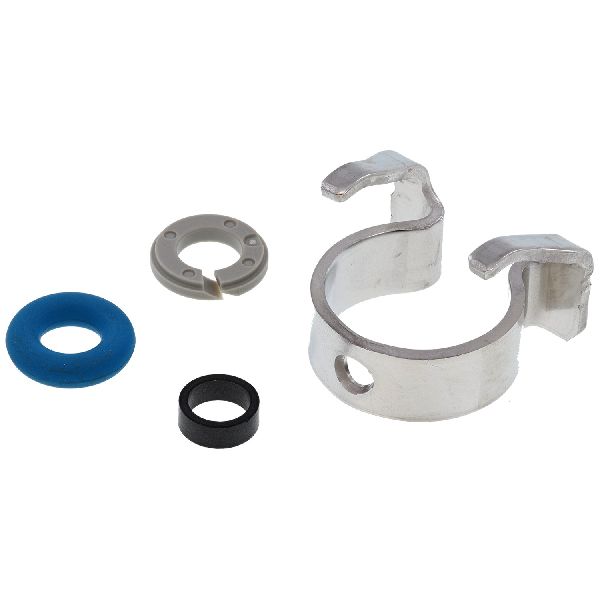
Typical fix: Replace the cylinder 4 fuel injector. Since cylinder 4 is on the front bank, this is a relatively straightforward repair that does not require intake manifold removal. 🎬 See this walkthrough for removing the fuel injector on an Enclave. It is also recommended to replace the Teflon seal and retaining clip.
Est. part cost: $70-$150 - Damaged Wiring or Corroded Connector 🟡 Medium Probability The engine bay is a harsh environment. Wires can become brittle from heat cycles, and connectors can accumulate moisture and corrode. TSB #PIP4924D specifically points to potential wiring harness rub-through or internal wire opens as a known issue on this platform. Wiggle tests on the harness can often reveal these intermittent connections.
How to confirm: Visually inspect the wiring harness leading to the cylinder 4 injector for any signs of chafing, melting, or breaks. Unplug the connector and check for corrosion or bent/loose pins. Perform a wiggle test on the harness while the engine is running to see if it induces a misfire. Check for continuity from the injector connector back to the main harness connector (X160 or X161) and the ECM.
Typical fix: Repair the damaged section of wire or clean/replace the electrical connector pigtail.
Est. part cost: $15-$40 - Powertrain Control Module (PCM) Fault ⚪ Low Probability → Shop Engine Control Module (ECM) Not a common issue, but the internal driver circuit within the PCM that grounds the injector to fire it can fail. This is extremely rare compared to injector or wiring failures.
How to confirm: This is a last resort after definitively proving the injector and wiring are good. If a noid light shows no pulse at the injector connector and the wiring has continuity back to the PCM with no shorts, the PCM driver is likely at fault. A scan tool may also show the injector circuit status as 'Open' or 'Fault'.
Typical fix: Replace and reprogram the Powertrain Control Module.
Est. part cost: $400-$900
Diagnosis Steps
- Verify the code P0204 is present using an OBD-II scanner. Check for any other codes, especially P0304, P0270, or P0271.
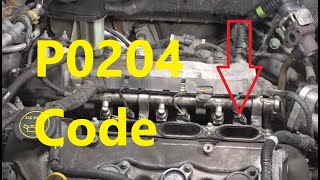
- Locate cylinder 4. On the 3.6L V6 in the Enclave, the cylinders are arranged with the rear bank (against the firewall) being 1-3-5 and the front bank (near the radiator) being 2-4-6, from passenger to driver side. Cylinder 4 is the middle cylinder on the front bank, making it easily accessible.
- Visually inspect the wiring and connector for cylinder 4's fuel injector. Look for any obvious damage, corrosion, or loose connections. A common failure is a loose connector clip.
- Perform a 'noid light' test. Disconnect the injector's electrical connector and plug in a noid light. Start the engine. The light should flash steadily. If it does, the PCM and wiring are likely good, and the injector itself is the prime suspect. If it does not flash, or stays on constantly, there is a problem with the wiring or the PCM.
- If the noid light test passed, test the injector resistance. Turn off the engine and disconnect the injector. Use a multimeter set to ohms to measure the resistance between the two pins on the injector. The reading should be between 1.5 and 2.5 ohms. A reading outside this range, or showing OL (open loop), indicates a failed injector.
- If the noid light test failed, check the wiring. Test for continuity on both wires between the injector connector and the ECM. Check for a short to ground and a short to voltage on both wires. TSB #PIP4924D suggests checking for harness rub-through.
- If the wiring and injector both test good, the problem may be a faulty driver in the PCM, although this is the least likely cause.
Parts You'll Likely Need
- Direct Fuel Injector
(OEM #12638530, 12669384)— The most common cause for a P0204 code is the electrical failure of the injector's internal coil. Part number 12669384 is a common supersession for 12638530.
Trusted brands: ACDelco, Bosch, Standard Motor Products
OEM price range: $100-$150
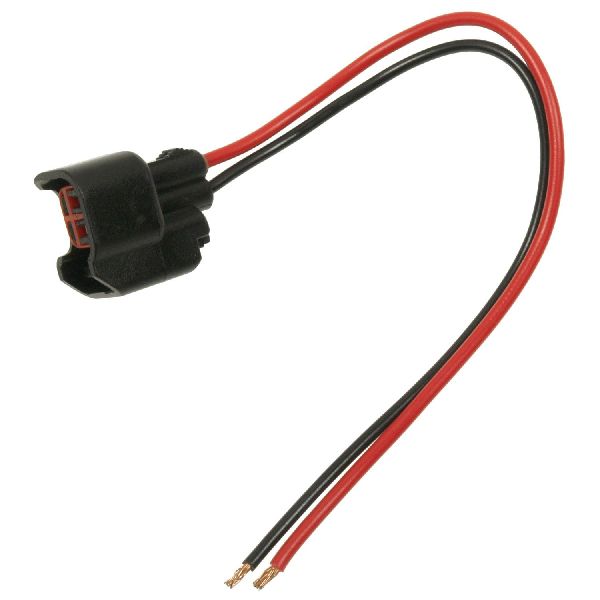
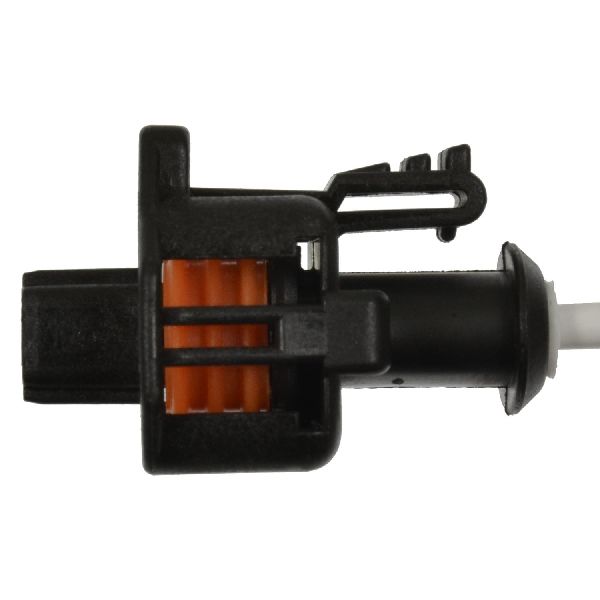
Aftermarket price range: $70-$120 - Fuel Injector Connector Pigtail — If the wiring check reveals a corroded, melted, or damaged connector at the injector, replacing the pigtail is the standard repair. 🎬 Watch: How to replace a damaged cylinder 4 injector connector.
Trusted brands: ACDelco, Dorman
OEM price range: $25-$45
Aftermarket price range: $15-$30
Related Codes That Often Appear With This One
- P0304 — P0304 means 'Cylinder 4 Misfire Detected.' Since the P0204 code indicates the injector isn't being controlled properly, cylinder 4 isn't getting the right amount of fuel, leading to a misfire.
- P0300 — P0300 means 'Random/Multiple Cylinder Misfire.' If there is a wiring issue affecting more than one injector (as suggested by TSB #PIP4924D), you may see this code along with multiple specific injector codes (P0201, P0202, etc.).
- P0270 — DTC P0270 is 'Injector 4 Control Circuit Low Voltage'. This is a related code that can be set along with P0204, pointing more specifically to a short-to-ground condition in the circuit.
- P0271 — DTC P0271 is 'Injector 4 Control Circuit High Voltage'. This is a related code that can be set along with P0204, pointing more specifically to a short-to-voltage condition in the circuit.
Technical Service Bulletins (TSBs) & Recalls
- PIP4924D: Mentions P0204 in a list of DTCs related to engine misfires and injector circuit issues, suggesting a check of the wiring harness and connections for rub-through or internal opens.
Platform-Specific Known Issues
- TSB #PIP4924D: This Technical Service Bulletin from GM addresses a condition where the Service Engine Soon light is on with misfires and various injector circuit DTCs, including P0204. It points technicians toward inspecting the fuel injector wiring harness for rub-through or internal wire opens and repairing as needed. This indicates a known pattern of wiring-related issues on this platform.
- Wiggle Test Failure: Multiple owner and technician accounts mention that wiggling the main engine harness near the fuse box or where it routes around the engine can cause the misfire to appear or disappear, pointing to an intermittent open or short in the harness.
Mechanic-Grade Diagnostic Values
- Fuel Injector Coil Resistance — expected: 1.5 to 2.5 ohms. Failure: A reading near 0 ohms (shorted) or OL/infinite (open). Known good injectors often read 1.5-1.6 ohms.
- Injector Pulse Width (at normal idle) — expected: 2.0 - 4.0 milliseconds (ms). Failure: A value of 0 ms on cylinder 4 while other cylinders are pulsing indicates a command issue from the ECM or a complete circuit failure.
- Injector Pulse Width (cold start, first ~60 seconds) — expected: Nearly double the normal idle pulse width (e.g., 4.0 - 8.0 ms). Failure: This is a normal condition. If the engine is rough during this period and then smooths out as the pulse width drops by ~50%, no repairs should be attempted for this symptom.
- Low-Pressure Fuel System Pressure — expected: 45-55 PSI. Failure: Pressure below this range could indicate a weak in-tank fuel pump, though it is not the primary cause for a single injector circuit code.
- Injector Circuit Status (Scan Tool PID) — expected: 'OK' or 'Not Run'. Failure: The parameter will change to 'Open' or 'Fault' when the PCM detects the circuit malfunction.
Scan Tool Commands That Help
- GDS2 / Tech2 (or equivalent professional scanner): Injector Balance Test / Cylinder Power Balance — This function allows a technician to disable one injector at a time. If disabling cylinder 4 causes no change in engine RPM or smoothness, it confirms that cylinder was not contributing, which helps verify the fault location before disassembly.
- Aftermarket Scan Tool with bidirectional controls: Injector Test — This function commands the PCM to send a pulse to a specific injector. It's used during wiring diagnostics to see if the command from the scan tool results in a voltage pulse at the injector connector, helping to isolate a wiring vs. PCM issue.
Wiring & Ground Locations
- Injector #4 ECM Pins — At the Engine Control Module (ECM/PCM). Pin 74 (Light Blue wire, High Voltage Control) and Pin 50 (Light Blue/White wire, High Voltage Supply).. These are the specific pins to test for continuity and shorts back to the injector connector, allowing a technician to test the entire circuit from the control module without removing the intake manifold.
- X160 / X161 — Multi-way harness connectors located at the rear of the intake manifold.. These are intermediate connectors between the ECM and the fuel injectors. Disconnecting them allows for isolating and testing specific sections of the injector harness.
- G104 — Mounted on the left (rear/firewall side) cylinder head.. This is a primary engine ground. A loose or corroded connection here can cause erratic voltage and sensor readings for multiple components, including the injector circuits.
- G110 — Located on the right front of the engine, mounted to the cylinder head.. Another critical engine ground point. Verifying this ground is clean and tight is a fundamental step in diagnosing any electrical fault.
Real Owner Repair Stories
- ScannerDanner Forum (2008 GMC Acadia 3.6L (platform mate)) — Engine runs for 30-45 minutes, then develops a severe misfire. Codes P0300, P0202, P0204, and P0206 set simultaneously.
❌ Tried (didn't work) Initial diagnosis was inconclusive.
✅ What actually fixed it The owner discovered that wiggling the engine wiring harness near the under-hood fuse box would trigger the misfire. A broken harness bracket had allowed the harness to chafe against a metal edge, causing an intermittent short across the Bank 2 injector circuits. Repairing the wiring and securing the harness resolved the issue. - YouTube video by 'World Mechanics' (Vehicle with P0204, likely a GM model) — Check engine light with code P0204.
❌ Tried (didn't work) Clearing the code resulted in it returning immediately.
✅ What actually fixed it A visual inspection revealed the metal retaining clip on the cylinder 4 injector's electrical connector was missing or had come loose. This prevented the connector from seating securely, causing a poor electrical connection. Pushing the connector on until it clicked and installing a new retaining clip fixed the problem instantly.
"I Checked Everything" — The Actual Cause
- In the context of this electrical code, the equivalent of a 'smoke test clean' scenario is when basic electrical tests (noid light, injector resistance) all pass. If a noid light flashes and the injector's resistance is within the 1.5-2.5 ohm spec, but code P0204 persists, the root cause is almost always an intermittent wiring issue or a failing PCM driver. The next step is to perform a 'wiggle test' on the entire injector harness—from the ECM to the injector—while the engine is running and monitoring scan tool data for the 'Injector Circuit Status' to change from 'OK' to 'Fault'. This can reveal hidden breaks or shorts that only manifest with engine vibration, as noted in TSB #PIP4924D.
OEM Part Supersession History
12638530→12669384— Standard part revision and improvement by the manufacturer.
Heads up: These parts are generally interchangeable for service. Other part numbers like 12632255 and 12611545 are also associated with this injector for the LLT engine.
Model Year Variations Within This Range
- 2009-2011 (LLT) vs. 2012-2014 (LFX): The 2012-2014 LFX engine uses a different Engine Control Module (Delphi) than the 2009-2011 LLT engine (Bosch). While the P0204 code's meaning is the same, the ECM pinouts and some internal components (like the intake manifold) are different. An LFX engine cannot be directly swapped into an LLT vehicle without also swapping the PCM and modifying wiring.
Helpful Videos
We Have This Part in Stock


The information in this article is provided for general reference and educational purposes only. Vehicle specifications, procedures, and part compatibility can vary by production date, trim level, and region. Always consult your vehicle's factory service manual and verify part numbers before purchasing or performing repairs. Safety-critical components such as airbags, seat belts, and braking systems should be installed by a qualified professional.
- Buick ENCLAVE:
- 🧭 Diagnostic Flowchart
- 🎬 Helpful Videos
- 🛍️ Shop This Part
- What's Unique About the 2009-2014 Buick ENCLAVE
- Symptoms You May Notice
- Most Likely Causes
- Diagnosis Steps
- Parts You'll Likely Need
- Related Codes That Often Appear With This One
- Technical Service Bulletins (TSBs) & Recalls
- Platform-Specific Known Issues
- Mechanic-Grade Diagnostic Values
- Scan Tool Commands That Help
- Wiring & Ground Locations
- Real Owner Repair Stories
- "I Checked Everything" — The Actual Cause
- OEM Part Supersession History
- Model Year Variations Within This Range
- 🎟️ Get 5% Off