

P0204 on 2009-2014 Buick LaCrosse: Injector Circuit Malfunction Causes and Fixes
P0204 on a Buick LaCrosse indicates an electrical fault in the cylinder 4 fuel injector circuit. The most likely cause is a faulty fuel injector, but on these models, it is critical to inspect the wiring harness for damage, as chafing against the intake manifold or valve covers is a known issue documented in a GM TSB. A new injector costs between $50 and $150.
- P0204 is an electrical circuit code for the cylinder 4 fuel injector, not a mechanical or fuel mixture code.
- Before replacing the fuel injector, thoroughly inspect the wiring harness for damage, as this is a known weak point on the 2009-2013 LaCrosse.
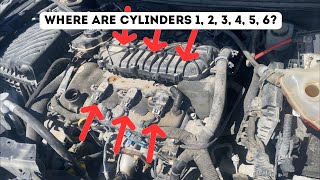
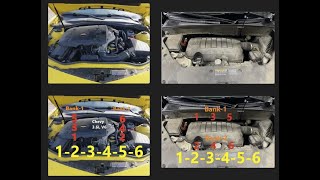
- The location of cylinder #4 is different depending on your engine (2.4L, 3.0L, 3.6L, 3.8L, or 5.3L). Verify the correct location before starting diagnosis.
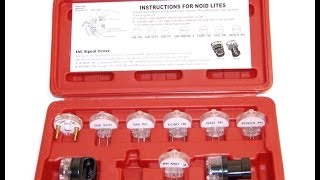
- A 'noid light' is the fastest tool to determine if the injector is receiving a signal from the computer.
- Driving with this code can cause damage to your catalytic converter over time, so a timely repair is recommended.
What's Unique About the 2009-2014 Buick LACROSSE
For the 2009-2014 LaCrosse, especially models with V6 engines (3.0L, 3.6L), a P0204 code should immediately lead to a careful inspection of the engine wiring harness. A General Motors Technical Service Bulletin (TSB #PIP4924D) specifically calls out that the fuel injector wiring harness can rub through against the intake plenum, valve cover bolts, or fuel lines, causing an open or short circuit. This makes wiring issues a more probable cause on this platform compared to others where the injector itself is almost always the primary culprit. Forum discussions frequently confirm this is a real-world problem for owners.
Diagnostic Flowchart
Tap your situation to follow the diagnostic path that matches what you're seeing on this vehicle.
Generation note: The 2009-2014 range covers two LaCrosse generations. The 2009 model is the first generation, while 2010-2014 models are the second. This is important because engine offerings and cylinder locations differ. The TSB regarding wiring issues applies to 2009-2013 models. For the common 3.6L V6 in 2010-2016 models, cylinder 4 is the middle cylinder on the front bank (closest to the radiator).
🎬 Watch: Locate cylinder 4 and the ignition coils here.Symptoms You May Notice
- Check Engine Light is on
- Rough, shaking, or vibrating idle
- Noticeable loss of power and poor acceleration.
- Engine hesitation or stumbling
- Reduced fuel economy.
- The engine may stall in some cases
- Engine sounds like it's misfiring or popping.
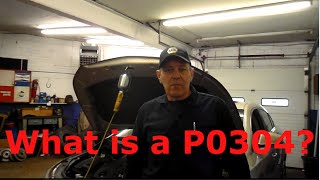
- Replacing the spark plug or ignition coil for cylinder 4. While these parts can cause a misfire (P0304), they will not cause an injector circuit code (P0204). P0204 is specifically an electrical circuit fault related to the fuel injector. A user on the GM-Forum for a 2013 LaCrosse with a 3.6L engine questioned a shop's diagnosis of a bad injector, considering a coil pack instead, highlighting this common confusion. 🎬 Watch this walkthrough of a cylinder 4 misfire diagnosis.
Most Likely Causes
- Damaged Fuel Injector Wiring Harness 🔴 High Probability → Shop Engine Wiring Harness A GM Technical Service Bulletin (#PIP4924D) specifically identifies that the injector harness is prone to chafing against engine components like the intake plenum, valve covers, and fuel lines, causing shorts or opens. This is a well-documented failure mode on GM's HFV6 engines.
How to confirm: Visually inspect the entire length of the fuel injector harness for cylinder 4. Pay close attention to any points where it contacts other parts of the engine, especially the edge of the valve cover and the intake manifold. Look for worn insulation, exposed wires, or sharp bends. A wiggle test on the harness while the engine is running may induce or stop the misfire, confirming a wiring issue.
Typical fix: Repair the damaged section of wire. This may involve soldering, heat-shrinking, and re-routing the harness to prevent future rubbing. In severe cases, the entire injector harness section may need to be replaced. A replacement harness from GM can be part number 12621096 or 12604950 depending on the specific engine bank and year.
Est. part cost: $10-$75 for wire repair materials or a new pigtail - Faulty Fuel Injector 🟡 Medium Probability → Shop Fuel Injector Fuel injectors are a common failure item on most vehicles after 80,000-150,000 miles due to internal coil failure or clogging. The direct injection injectors on the 3.0L and 3.6L V6 engines can be sensitive to fuel quality and deposits.
How to confirm: Swap the cylinder 4 injector with an adjacent one (e.g., cylinder 2). Clear the codes and run the engine. If the code changes to P0202, the injector is bad. Alternatively, check the injector's resistance with a multimeter. For the direct injection V6 engines, a healthy injector should have a low resistance. The 3.6L (LFX) should be between 1.2 and 1.8 ohms, while the 3.0L (LF1) should be around 12 ohms. A reading of 'OL' (open) or a value significantly different from the other injectors indicates a failure.
Typical fix: Replace the faulty fuel injector. It is often recommended to replace them in sets if they are high mileage. For direct injection engines, this is a more involved job requiring removal of the intake manifold.
Est. part cost: $50-$150 - Bad Injector Connector ⚪ Low Probability The connector lock tab can become brittle and break, or the terminals can loosen from engine vibration, causing a poor connection.
How to confirm: Inspect the electrical connector at the fuel injector for corrosion, bent pins, or a loose fit. Perform a 'wiggle test' on the connector while the engine is running to see if it affects the misfire. A loose connection was the specific cause of a P0204 in one documented repair.
Typical fix: Clean the connector terminals with electrical contact cleaner. If pins are damaged or the connector is broken, replace the connector pigtail. Dorman and ACDelco offer replacement pigtails.
Est. part cost: $10-$30
Rare But Worth Checking
- Faulty Engine Control Module (ECM): → Shop Engine Control Module (ECM) This is the least likely cause. The injector driver circuit within the ECM can fail, but all other possibilities should be exhausted before condemning the ECM. If a noid light fails to flash when connected to the injector harness, and the wiring between the ECM and injector is confirmed to be good (via a continuity test), the ECM may be at fault.
Diagnosis Steps
- Retrieve all stored DTCs with an OBD-II scanner.
- Identify the location of cylinder 4 for your specific engine. For the 2nd Gen LaCrosse with the 3.6L V6, the front bank (near the radiator) cylinders are, from right to left (passenger to driver side), 2, 4, 6.
- Visually inspect the wiring harness leading to the cylinder 4 injector. Look for signs of chafing, melting, or corrosion, especially where the harness touches the intake manifold or valve covers, per TSB #PIP4924D.
- Inspect the electrical connector on the injector for damage or corrosion.
- Disconnect the injector and plug in a 'noid light'. Start the engine. The light should flash steadily. If it doesn't flash, the problem is in the wiring or the ECM. If it does flash, the injector is likely the problem. 🎬 See how to test fuel injectors with a noid light.
- If the noid light test passes, turn off the engine and measure the resistance of the fuel injector with a multimeter. For the direct injection V6, compare the reading to the OEM specification (3.6L LFX: 1.2-1.8 Ohms; 3.0L LF1: ~12 Ohms). A reading of 'OL' (open circuit) or one that is significantly out of spec indicates the injector has failed.
- If the injector and wiring appear good, consider swapping the cylinder 4 injector with another cylinder's injector (e.g., cylinder 2). If the fault code follows the injector to the new cylinder (now P0202), the injector is confirmed bad.
- If all else fails, test for continuity on the two wires between the injector connector and the ECM connector to rule out a hidden wire break.
Parts You'll Likely Need
- Fuel Injector
(OEM #ACDelco 217-3427 (For 2.4L Ecotec), ACDelco 217-3449 (For 3.0L V6 LF1))— This is the most commonly replaced component to fix a P0204 code when wiring is not the issue. Part number varies significantly by engine.
Trusted brands: ACDelco, Bosch, Delphi
OEM price range: $90-$180
Aftermarket price range: $50-$120 - Fuel Injector Connector Pigtail
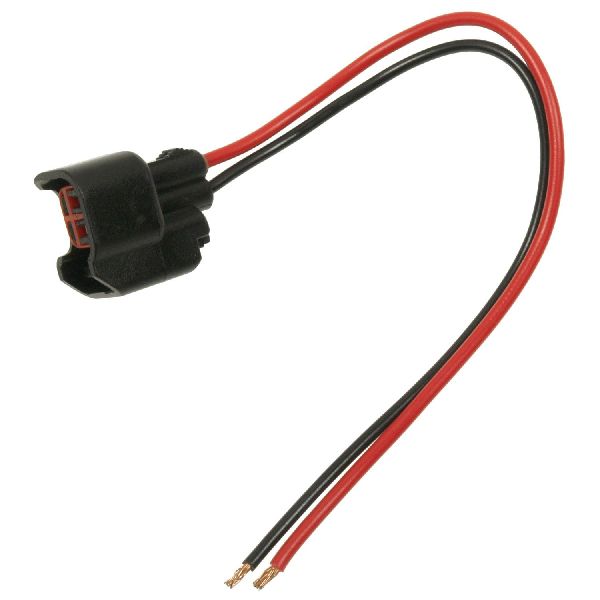
(OEM #ACDelco PT2160)— If the connector itself is damaged or corroded, replacing the pigtail is the proper repair.
Trusted brands: ACDelco, Dorman, Standard Motor Products
OEM price range: $25-$40
Aftermarket price range: $10-$25 - Upper Intake Manifold Gasket Set — Required when replacing fuel injectors on the V6 engines, as the intake manifold must be removed to access the fuel rail.
Trusted brands: Fel-Pro, ACDelco
OEM price range: $30-$60
Aftermarket price range: $15-$40
Related Codes That Often Appear With This One
- P0304 — P0304 means 'Cylinder 4 Misfire Detected'. Since a P0204 fault prevents the injector from delivering fuel correctly, it will almost always cause a misfire in that cylinder.
- P0201, P0202, P0203, P0205, P0206 — If multiple injector circuit codes are present, it strongly suggests a wiring harness issue common to all affected cylinders, as described in TSB #PIP4924D.
- P0171, P0174 — If the injector is failing in a way that causes a lean condition before the circuit fault is fully detected, lean codes for Bank 1 (P0171) or Bank 2 (P0174) might appear.
Technical Service Bulletins (TSBs) & Recalls
- PIP4924D: Addresses Service Engine Soon light and misfires with various injector codes (including P0204) due to the fuel injector wiring harness rubbing through. It advises careful inspection of the harness against the intake, valve cover bolts, and fuel lines.
- PI1369A: Details potential for cold start misfire
Platform-Specific Known Issues
- A known issue documented in TSB #PIP4924D involves the fuel injector wiring harness chafing against engine components, leading to an open or short circuit. This is a primary diagnostic path to check for P0201-P0206 codes on 2009-2013 models.
- Another TSB, #PI1369A, notes that on V6 engines, improper orientation of the fuel injectors after a repair can cause misfires on a cold start. The injector connectors for Bank 2 (front of engine, includes cyl 4) should be aimed toward the front of the engine.
Mechanic-Grade Diagnostic Values
- Fuel Injector Resistance (3.6L LFX V6) — expected: 1.2 - 1.8 Ohms. Failure: A reading outside this range, or OL (Open Loop), indicates an internal injector fault.
- Fuel Injector Resistance (3.0L LF1 V6) — expected: Approximately 12 Ohms. Failure: A significant deviation from 12 Ohms, OL, or near 0 Ohms indicates a failed injector.
- Injector Pulse Width (at idle, all engines) — expected: 2 - 4 milliseconds (ms). Failure: A value of 0 ms on cylinder 4 while other cylinders show a normal pulse width indicates the ECM is not commanding the injector, pointing to a wiring or ECM driver issue.
- Injector Circuit Voltage (Key On, Engine Off) — expected: Should be close to battery voltage (approx. 12V). Failure: Low or no voltage suggests a problem with the power supply wire to the injector.
Scan Tool Commands That Help
- GDS2 (GM Tech Tool): Injector Balance Test — This bidirectional test is used to functionally check an injector when wiring and resistance tests are inconclusive. The tool commands each injector to fire and measures the corresponding drop in fuel rail pressure. A minimal or excessive pressure drop for cylinder 4 compared to others confirms a faulty injector.
- GDS2 (GM Tech Tool) or high-end bidirectional scanner: Output Control - Fuel Injector Enable/Disable — Allows a technician to individually disable the cylinder 4 injector while the engine is running. If disabling the injector causes no change in engine idle, it confirms that cylinder 4 was not contributing, which supports the P0204 diagnosis.
Wiring & Ground Locations
- G103 — On the 2009 model, it is located at the left rear of the engine compartment on the cowl, above the brake booster. On later models (e.g., 2018), it's on the left frame rail. A poor connection at this ground can cause a wide range of electrical issues, including no-start or stalling with various communication codes.. This is a major ground for the Body Control Module (BCM) and Data Link Connector (DLC). While not directly for the injector circuit, a poor ground here can cause erratic electrical behavior and communication errors that could potentially be misdiagnosed.
- ECM/Injector Harness Chafe Points — As per TSB #PIP4924D, inspect the harness where it may contact the intake plenum, valve cover bolts, and fuel lines. For 2013-2014 3.6L LFX models, TSB #PI1067 identifies a specific chafe point where the ECM harness (from connector X1) can rub on the metal ECM bracket.. This is the most probable cause of P0204 on this platform besides the injector itself. The chafing can cause an open or short in the control wire for the cylinder 4 injector.
- ECM Location (2012+ 3.6L LFX) — The ECM for the LFX engine is typically located in the engine bay, often near the firewall or on one of the inner fenders.. Knowing the ECM location is essential for performing continuity tests on the injector wiring between the injector connector and the ECM connector pins.
OEM Part Supersession History
12638530→12669384— This is a common supersession for the fuel injector used in the 3.6L V6 (LLT) engine found in 2010-2011 LaCrosse models. The new part number represents a revised or updated version from the manufacturer.
Heads up: While the parts are interchangeable for the specified engine, it is generally recommended to replace injectors in a set to ensure consistent performance, as flow rates and spray patterns can differ slightly between original and superseded parts.
Model Year Variations Within This Range
- 2009-2011 vs 2012-2014 (3.6L V6): In 2012, the 3.6L V6 was updated from the LLT to the LFX engine. Key differences include a composite intake manifold (vs. aluminum), integrated exhaust manifolds, and a different ECM (Delphi on LFX vs. Bosch on LLT). These changes mean some parts, like intake gaskets and potentially injectors, are not interchangeable between the two engine versions.
- 2010-2012 vs 2013-2014: The primary V6 engine offering shifted from the 3.0L (LF1) in earlier second-gen models to the 3.6L (LFX) being standard in later years. The injectors for these engines have different resistance values (3.0L is high impedance at ~12 Ohms, 3.6L is low impedance at ~1.2-1.8 Ohms), making them incompatible.
Helpful Videos
We Have This Part in Stock


The information in this article is provided for general reference and educational purposes only. Vehicle specifications, procedures, and part compatibility can vary by production date, trim level, and region. Always consult your vehicle's factory service manual and verify part numbers before purchasing or performing repairs. Safety-critical components such as airbags, seat belts, and braking systems should be installed by a qualified professional.
- Buick LACROSSE:
- 🧭 Diagnostic Flowchart
- 🎬 Helpful Videos
- 🛍️ Shop This Part
- What's Unique About the 2009-2014 Buick LACROSSE
- Symptoms You May Notice
- Most Likely Causes
- Rare But Worth Checking
- Diagnosis Steps
- Parts You'll Likely Need
- Related Codes That Often Appear With This One
- Technical Service Bulletins (TSBs) & Recalls
- Platform-Specific Known Issues
- Mechanic-Grade Diagnostic Values
- Scan Tool Commands That Help
- Wiring & Ground Locations
- OEM Part Supersession History
- Model Year Variations Within This Range
- 🎟️ Get 5% Off