

P0204 on 2010-2014 Cadillac CTS: Injector Circuit Malfunction Causes and Fixes
P0204 on a 2010-2014 Cadillac CTS means there's an electrical problem with the cylinder 4 fuel injector circuit. The most common causes are a failed fuel injector or a wiring issue, often related to harness chafing as noted in a GM TSB. Expect to pay $100-$200 for a new injector and potentially more if the wiring harness is the culprit.
- P0204 is an electrical circuit code for the cylinder 4 fuel injector, not a fuel flow or misfire code (though it causes misfires).
- The most common fixes are replacing the fuel injector itself or repairing the wiring harness.
- A GM Technical Service Bulletin (PIP4924D) specifically warns about the injector wiring harness rubbing through on these cars, making a visual inspection a critical first step.
- Before buying parts, test the injector with a multimeter and check the wiring with a noid light to pinpoint the exact failure.
- Cylinder 4 is the middle cylinder on the driver's side of the engine.
What's Unique About the 2010-2014 Cadillac CTS
For this generation of Cadillac CTS with the 3.0L (LF1) or 3.6L (LLT, LFX) V6 engine, a P0204 code is often more than just a bad injector. GM issued a Technical Service Bulletin (TSB #PIP4924D) that points to the fuel injector wiring harness being a common point of failure. The harness can rub against engine components like the intake plenum, fuel rail, or valve covers, causing wires to chafe and create an open or short circuit. Owners and technicians on forums specifically mention the harness getting damaged near the back of the engine bay where it can be tight. Therefore, a thorough inspection of the wiring is critical before replacing the injector itself.
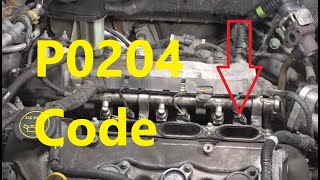
🎬 Watch: Common causes and fixes for the P0204 code.Diagnostic Flowchart
Tap your situation to follow the diagnostic path that matches what you're seeing on this vehicle.
Symptoms You May Notice
- Check Engine Light (Service Engine Soon lamp) is on
- Engine misfire, which may feel like shaking or stumbling, especially at idle.
- Rough or unstable idle.
- Poor acceleration and loss of engine power.
- Reduced fuel economy.
- Engine may go into "limp mode," limiting speed.
- A distinct smell of raw fuel from the exhaust if the injector is stuck open (less common for a circuit fault).
- Replacing the spark plug or ignition coil for cylinder 4. While these parts can cause a misfire code (P0304), they will not cause an injector circuit code (P0204). P0204 is specifically an electrical fault in the fuel injector's control circuit, which the ECM monitors independently of the ignition system.
Most Likely Causes
- Faulty Fuel Injector 🔴 High Probability → Shop Fuel Injector The internal electrical coil of the fuel injector is a wear-and-tear component that can fail over time, causing an open or shorted circuit. These direct injection (GDI) injectors operate under high pressure and can fail after 80,000-150,000 miles.
How to confirm: Disconnect the injector and measure its resistance with a multimeter. The expected resistance for these injectors is typically low, often in the 1-2 ohm range for GDI injectors, but check a known good injector for a reference value. An open circuit (infinite resistance) or a direct short (zero resistance) confirms failure. You can also swap the suspect injector with one from another cylinder to see if the code follows (e.g., P0204 changes to P0202 if swapped with cylinder 2).
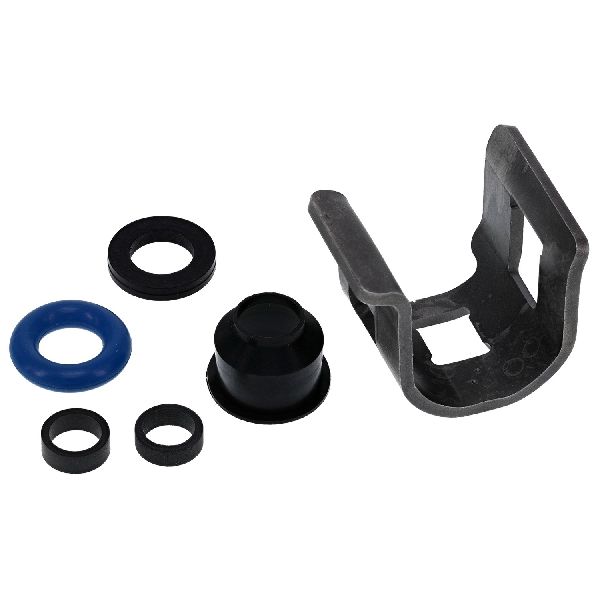
Typical fix: Replace the cylinder 4 fuel injector and its associated seals.
Est. part cost: $80-$150 - Wiring Harness Damage 🟡 Medium Probability As noted in TSB #PIP4924D, the injector wiring harness is known to chafe against various engine parts, leading to broken or shorted wires. Common rub spots include the sharp edges of the intake plenum, valve cover bolts, and where the harness is secured by clips. This is a well-documented issue across many GM vehicles using this engine family.
How to confirm: Visually inspect the entire wiring harness leading to the cylinder 4 injector. Peel back any loom or tape to get a clear view. Look for any signs of rubbing, melting, or broken wires. Perform a continuity test on the power and ground wires from the ECM connector to the injector connector to check for opens or shorts.
Typical fix: Repair the damaged section of the wire using solder and heat-shrink tubing. If the damage is close to the connector, replace the injector connector pigtail. Secure the repaired harness away from any sharp edges using zip ties or protective conduit.
Est. part cost: $15-$50 for a pigtail, much higher for a harness. - Corroded or Loose Injector Connector ⚪ Low Probability Engine vibrations and exposure to heat and moisture can cause the electrical connector at the fuel injector to become loose or develop corrosion on its pins, disrupting the electrical signal. Sometimes the locking tab on the connector can become brittle and break.
How to confirm: Disconnect the connector and inspect the pins for corrosion (green or white powder) or damage. Ensure it clicks securely back into place. A "wiggle test" on the connector while the engine is running may cause the misfire to change, indicating a poor connection.
Typical fix: Clean the connector terminals with electrical contact cleaner. If the connector is damaged or won't stay secure, replace the connector pigtail.
Est. part cost: $15-$50
Rare But Worth Checking
- Faulty Engine Control Module (ECM): → Shop Engine Control Module (ECM) This is the least likely cause. The internal driver circuit in the ECM that controls the injector can fail. This should only be considered after all other possibilities (injector, wiring, connectors) have been definitively ruled out through testing. Swapping the ECM requires programming to the vehicle's VIN.
Diagnosis Steps
- Read the trouble codes with an OBD-II scanner and confirm P0204 is present. Note any other codes, especially P0304 or other P020x codes.
- Visually inspect the wiring harness and connector for cylinder 4. On the V6 engines, cylinder 4 is the middle cylinder on the driver's side (left bank). The cylinders are numbered 1-3-5 on the passenger side (right bank, front to back) and 2-4-6 on the driver's side (left bank, front to back). Check for obvious signs of damage, chafing, or corrosion, paying close attention to the areas mentioned in TSB #PIP4924D.
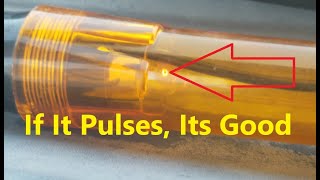
- Perform a noid light test. Disconnect the injector and plug a noid light into the connector. Crank the engine. If the light flashes rhythmically, the ECM and wiring are sending a signal, and the injector is the most likely culprit. If the light does not flash, is very dim, or stays on continuously, the problem is in the wiring or the ECM.
- Test the injector's resistance. Disconnect the injector and use a multimeter set to ohms to measure the resistance across its two terminals. Compare the reading to the OEM specification or to a known-good injector on another cylinder. An open circuit (OL) or a reading far out of spec indicates a bad injector.
- If the noid light test failed, check for power and ground at the injector connector. One wire should have battery voltage with the key on (KOEO). The other wire is the ground side, which is pulsed by the ECM. Check continuity of the ground wire back to the ECM connector.
- If the injector and wiring test good, consider swapping the cylinder 4 injector with an adjacent one (e.g., cylinder 2). Clear the codes and run the engine. If the code changes to P0202, you have definitively confirmed the injector is the problem.
Parts You'll Likely Need
- Fuel Injector
(OEM #12634126)— This is the most common component to fail internally, causing the P0204 electrical fault. This part number is applicable to both the 3.0L and 3.6L engines in the specified year range.
Trusted brands: ACDelco (GM Genuine), Bosch, Standard Motor Products
OEM price range: $100-$160
Aftermarket price range: $70-$120 - Fuel Injector Connector Pigtail
(OEM #PT2183)— If the connector itself is corroded, melted, or the locking tab is broken, it must be replaced to ensure a solid electrical connection. This is a common multi-purpose connector used by GM.
Trusted brands: ACDelco, Dorman, Standard Motor Products (S-1014)
OEM price range: $25-$40
Aftermarket price range: $15-$30
Related Codes That Often Appear With This One
- P0304 — P0304 means 'Cylinder 4 Misfire Detected.' Since a P0204 fault prevents the injector from delivering fuel, it will almost always cause a misfire in that cylinder, which the crankshaft position sensor detects.
- P0201, P0202, P0203, P0205, P0206 — If multiple injector circuit codes are present, it strongly points to a common wiring harness issue, as documented in TSB #PIP4924D, or a shared power/ground circuit problem, rather than multiple failed injectors at once.
Technical Service Bulletins (TSBs) & Recalls
- PIP4924D: Addresses Service Engine Soon light and misfires with various injector codes (including P0204) due to the fuel injector wiring harness rubbing through or having internal wire opens. It applies to a wide range of 2010-2014 GM vehicles with V6 and V8 engines.
Platform-Specific Known Issues
- TSB #PIP4924D highlights a known issue with the fuel injector wiring harness chafing against engine components, causing open or short circuits. This can trigger P0204 and other related injector codes. A thorough harness inspection is crucial.
- Real-world owner experiences on forums confirm the TSB's findings. One user on CadillacForums noted finding the injector harness rubbing against a bracket near the firewall on their 3.6L V6, causing an intermittent P0204 until the wire was repaired and protected.
Mechanic-Grade Diagnostic Values
- Fuel Injector Resistance (3.6L LFX Engine, 2012-2014) — expected: 1.2 - 1.8 Ohms. Failure: A reading outside this range, OL (open circuit), or near zero (short circuit).
- Fuel Injector Resistance (3.0L LF1 / 3.6L LLT Engines, 2010-2011) — expected: 11 - 14 Ohms. Failure: A reading significantly outside this range indicates an internal fault.
- Injector Pulse Width (at warm idle) — expected: 2 - 4 milliseconds (ms). Failure: A value of 0 ms on cylinder 4 while other cylinders show a normal pulse width.
- Injector Circuit Voltage (Initial GDI Pulse) — expected: ~65 Volts. Failure: Absence of this high-voltage opening pulse points to a problem with the ECM's internal step-up converter.
- Injector Circuit Voltage (GDI Hold Pulse) — expected: Pulse-Width Modulated (PWM) 12V. Failure: An incorrect or missing 12V PWM signal after the initial opening pulse points to a fault in the ECM driver circuit.
Scan Tool Commands That Help
- GDS2 (GM Factory Scan Tool): Fuel Injector Balance Test — This function is used to compare injector performance after verifying the electrical circuit is intact. The scan tool pulses each injector and measures the drop in fuel rail pressure to identify a mechanically weak or clogged injector without requiring physical removal or swapping.
- GDS2 (GM Factory Scan Tool): Injector Control Circuit Test Status — While the engine is operating, this parameter on a scan tool can be observed to see the status of the injector circuit test, which can help confirm if the ECM is actively detecting a fault.
Wiring & Ground Locations
- Main Engine Ground — On the passenger side of the engine block, where the larger portion of the negative battery cable connects.. A poor main engine ground can cause a host of electrical issues, including erratic behavior of sensor and actuator circuits. While not specific to P0204, it should be checked for tightness and corrosion as a preliminary step.
- Injector Harness Connector X160 — A large connector located at the rear of the intake manifold where the main engine harness connects to the injector sub-harness.. If multiple injector codes (P020x) are present, this connector is a likely culprit for a shared wiring problem. TSBs suggest checking for poor terminal tension or damage at this specific connector.
Real Owner Repair Stories
- 2CarPros Forum User (Vehicle unspecified, but symptoms are classic for heat-soak electrical issue) — Car starts and runs perfectly when cold. After reaching operating temperature and being shut off (e.g., for gas), it will misfire and run rough on restart. Codes P0204 and P0304 appear. The misfire persists until the engine cools down completely.
❌ Tried (didn't work) Not specified, user was asking for advice.
✅ What actually fixed it The professional advice given was that the P0204 is causing the P0304. The most likely cause for a heat-related electrical failure is either the fuel injector itself (whose internal coil resistance changes drastically when hot) or the electrical connector. The recommended fix was to first inspect the connector, and if it's sound, replace the cylinder 4 fuel injector.
OEM Part Supersession History
12642128→12634126— Unknown, likely an internal revision for reliability or manufacturing improvement.
Heads up: The new part number (12634126) is the correct replacement for the original.
Model Year Variations Within This Range
- 2010-2011: These models were primarily equipped with the 3.0L LF1 and 3.6L LLT V6 engines. These engines use high-impedance fuel injectors with a resistance of approximately 11-14 Ohms and a Bosch ECM.
- 2012-2014: The primary V6 was updated to the 3.6L LFX. This engine uses different, low-impedance fuel injectors with a resistance of approximately 1.2-1.8 Ohms and a Delphi ECM. The LFX also features a composite intake manifold and integrated exhaust manifolds. Using the wrong injector type between LLT and LFX engines will cause circuit faults and potential ECM damage.
Helpful Videos

We Have This Part in Stock



The information in this article is provided for general reference and educational purposes only. Vehicle specifications, procedures, and part compatibility can vary by production date, trim level, and region. Always consult your vehicle's factory service manual and verify part numbers before purchasing or performing repairs. Safety-critical components such as airbags, seat belts, and braking systems should be installed by a qualified professional.
- Cadillac CTS:
- 🧭 Diagnostic Flowchart
- 🎬 Helpful Videos
- 🛍️ Shop This Part
- What's Unique About the 2010-2014 Cadillac CTS
- Symptoms You May Notice
- Most Likely Causes
- Rare But Worth Checking
- Diagnosis Steps
- Parts You'll Likely Need
- Related Codes That Often Appear With This One
- Technical Service Bulletins (TSBs) & Recalls
- Platform-Specific Known Issues
- Mechanic-Grade Diagnostic Values
- Scan Tool Commands That Help
- Wiring & Ground Locations
- Real Owner Repair Stories
- OEM Part Supersession History
- Model Year Variations Within This Range
- 🎟️ Get 5% Off