

P0204 on 2011-2014 Chevrolet Camaro: Injector Circuit Malfunction Causes and Fixes
P0204 on a 2011-2014 Camaro indicates an electrical fault with the cylinder 4 fuel injector. The most common cause is a failed fuel injector, followed by wiring issues. Expect to pay $70-$150 for a replacement injector and plan for 1-2 hours of DIY labor. For V6 models, it is critical to identify your engine as the 2011 LLT (Port Injection) and 2012-2014 LFX (Direct Injection) use different, non-interchangeable injectors.
- P0204 specifically points to an electrical problem with the cylinder 4 injector circuit, not a mechanical misfire cause like a spark plug.
- The most likely fix is replacing the cylinder 4 fuel injector.
- Before buying parts, perform simple electrical tests. A noid light can quickly tell you if the injector is receiving a signal from the computer.
- If you see other injector codes for the same bank (P0202, P0206, P0208), suspect a wiring harness or ground issue before blaming a single injector.
- Be aware if you have a V6 model; 2012 and newer models have a GDI fuel system which is more complex to service than the port injection on V8s and 2011 V6s.
What's Unique About the 2011-2014 Chevrolet CAMARO
The 2011-2014 Camaro spans a key change in fuel systems for the V6 engine. The 2011 V6 (LLT) uses traditional port fuel injection (PFI), while the 2012-2014 V6 (LFX) uses a more complex, high-pressure Gasoline Direct Injection (GDI) system. V8 models in this period used port injection. This distinction is critical, as GDI injectors operate at much higher pressures, are more expensive, and are not interchangeable with PFI injectors. The diagnostic and repair procedure is also more involved for the LFX GDI system. Additionally, a GM Technical Service Bulletin (TSB #PIP4924D) for 2011 models suggests that seeing P0204 along with other injector codes can point to a broader wiring harness or control module issue rather than just a single bad injector. [⭐ MANUFACTURER TSB — highest authority]
Diagnostic Flowchart
Tap your situation to follow the diagnostic path that matches what you're seeing on this vehicle.
Symptoms You May Notice
- Check Engine Light is on
- Rough idle and engine stumbling
- Noticeable engine misfire
- Reduced power and poor acceleration
- Increased fuel consumption
- Engine may enter a limited power "limp mode"
- Engine shaking or vibrating noticeably
- Fuel smell from the exhaust due to unburnt fuel
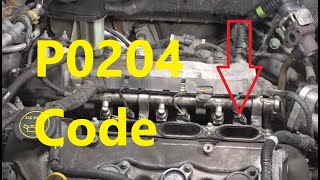
- Replacing the spark plug or ignition coil for cylinder 4. While these parts can cause a misfire (P0304), they will not cause an injector circuit code (P0204). The P0204 code is specifically for an electrical fault in the injector circuit, not a combustion problem. 🎬 Watch: A breakdown of P0204 causes and common fixes.
Most Likely Causes
- Failed Cylinder 4 Fuel Injector 🔴 High Probability → Shop Fuel Injector Fuel injectors are wear-and-tear items that can fail electrically when their internal coil winding shorts or breaks. This is the most cited reason for a solitary P0204 code. The failure can happen suddenly, even after the car has been parked for a few days.
How to confirm: Check the injector's resistance with a multimeter; it should be within OEM specs (typically 11-16 Ohms for high-impedance PFI injectors). The most definitive test for port-injected engines (LLT V6, all V8s) is to swap the cylinder 4 injector with another (e.g., cylinder 2). If the code changes to P0202, the injector is confirmed bad. This is less practical on GDI (LFX) engines due to complexity.
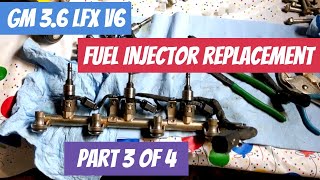
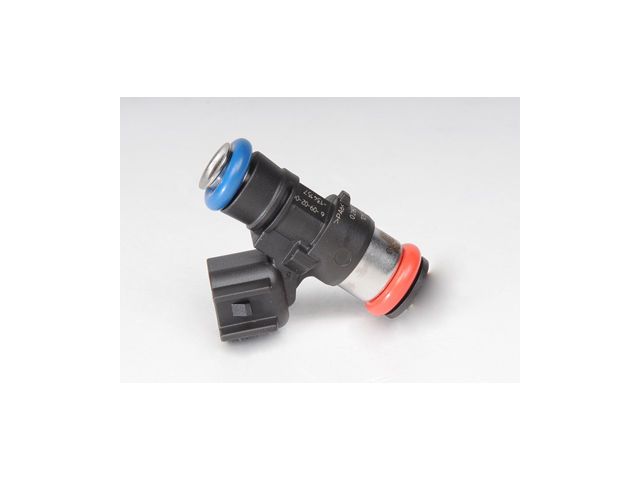
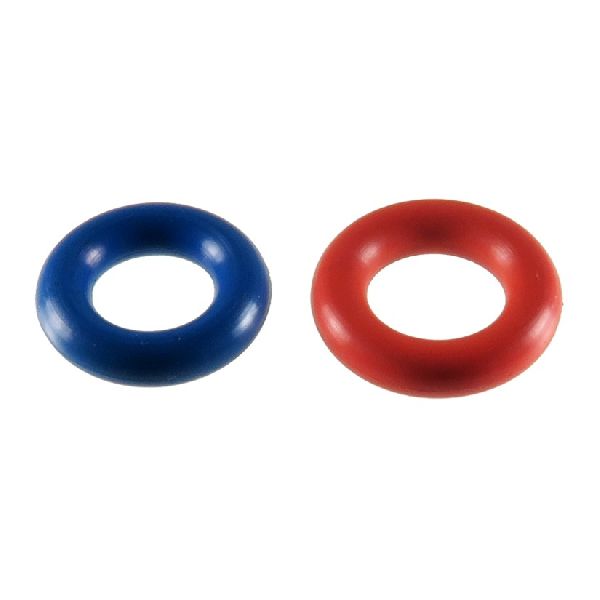
Typical fix: Replace the faulty fuel injector. It is often recommended to replace the full set if they are high mileage. For GDI injectors (LFX), it's also critical to replace the high-pressure seals. 🎬 See this walkthrough for replacing LFX high-pressure GDI injectors.
Est. part cost: $70-$150 for PFI (LLT/V8), $90-$200 for GDI (LFX) - Wiring Harness or Connector Fault 🟡 Medium Probability The engine bay's high heat and vibration can cause wiring insulation to become brittle and crack, or connector pins to become loose, spread, or corroded, causing high resistance. This is a known issue on many GM vehicles, sometimes being the true cause of failure when an injector is needlessly replaced.
How to confirm: Visually inspect the wiring going to the cylinder 4 injector for any signs of melting, chafing, or breaks. Check the connector for corrosion or spread/bent pins. Use a noid light to verify that a pulse signal is reaching the connector. Wiggling the harness while the engine is running may trigger the fault.
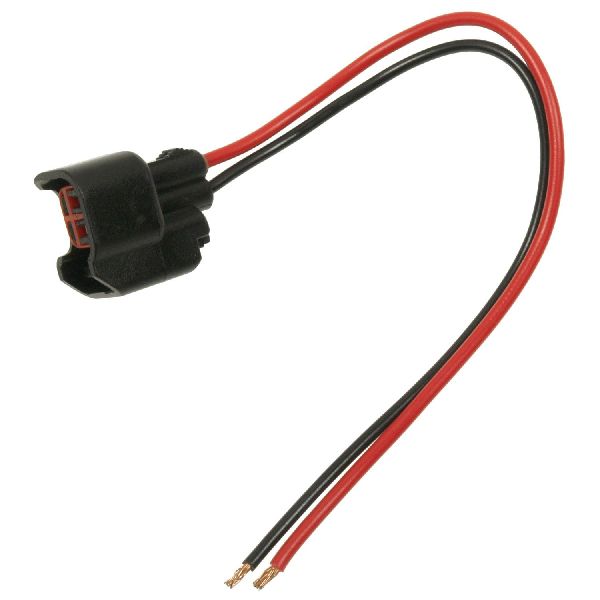
Typical fix: Repair the damaged section of wire or replace the injector connector pigtail. Pigtail connectors are readily available (e.g., GM part #19368140) and often come with heat-sealable butt connectors for a durable repair.
Est. part cost: $15-$40 - Faulty Engine Control Module (ECM) ⚪ Low Probability → Shop Engine Control Module (ECM) While not common, the internal driver circuit in the ECM that controls the injector can fail. This can happen from an internal short or an open circuit on the board. The presence of multiple injector codes simultaneously for one bank (e.g., P0202, P0204, P0206) increases the likelihood of an ECM or common ground/power issue, as noted in TSB #PIP4924D. 🎬 Watch: Diagnosing multiple injector circuit failures on a 2011 Camaro. [⭐ MANUFACTURER TSB — highest authority, 6]
How to confirm: This is typically diagnosed by exclusion. If the injector and wiring have been proven to be good (via resistance, noid light, and continuity tests), the ECM is the likely culprit. This requires advanced diagnostics, sometimes involving an oscilloscope or bench-testing the ECM.
Typical fix: Replace and reprogram the Engine Control Module. In some specialized cases, the ECM can be repaired by replacing the failed driver transistor on the circuit board.
Est. part cost: $600-$900 for a new, programmed ECM.
Diagnosis Steps
- Scan for Codes: Read the trouble codes with an OBD-II scanner to confirm P0204 and note any other codes present, such as P0304 or other injector codes.
- Visual Inspection: Locate cylinder 4 (On V6 and V8 engines, it is the second cylinder back on the passenger side/right bank). Inspect the wiring harness and electrical connector at the injector. Look for obvious signs of damage, melting, chafing, or corrosion. Ensure the connector is seated firmly.
- Use a Noid Light: Disconnect the injector and plug a noid light into the connector. Start the engine. A rhythmic flashing light indicates the ECM and wiring are sending the control signal correctly. No flash or a steady light points to a problem in the wiring or ECM.
- Check Injector Resistance: Disconnect the injector and use a multimeter set to Ohms (Ω). Measure the resistance across its two terminals. Compare the reading to the manufacturer's specification (typically 11-16 Ohms for high-impedance PFI injectors). An infinite reading (open) or near-zero reading (short) indicates a bad injector.
- Swap Injectors (PFI Engines Only): If you have a port-injected engine (2011 V6 LLT or any V8) and are comfortable doing so, swap the cylinder 4 injector with an adjacent one (like cylinder 2). Clear the codes and run the engine. If the code returns as P0202, the injector is faulty. If P0204 returns, the issue is in the wiring or ECM.
- Test the Wiring: If the injector tests good but the noid light test failed, check for 12V power on one wire of the connector with the key on. Then, check for continuity on the control wire (the other wire) back to the ECM connector pin. A wiring diagram is essential for this step. For the Camaro E38 ECM, the control wire for injector 4 is typically a Light Blue/Black wire at Pin 39 of the X1 connector.
- Suspect the ECM: If all other tests pass (injector is good, wiring has continuity, and power is present), the fault likely lies within the ECM's injector driver circuit. This should be confirmed by a professional before replacement.
Parts You'll Likely Need
- Fuel Injector
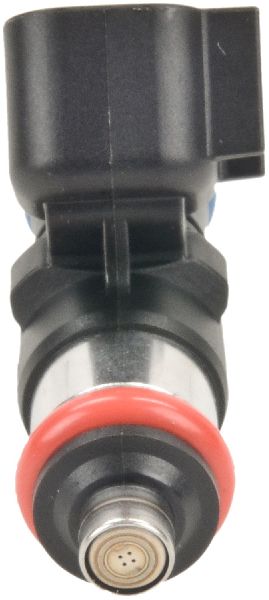
(OEM #ACDelco 217-3398 / GM 12631971 (for 2011 V6 LLT), ACDelco 12638530 (superseded by 12669384 for 2012-2014 V6 LFX))— This is the most common failure point for a P0204 code. The internal coil fails, leading to an electrical circuit fault. It is critical to get the correct part for your specific engine (LLT vs LFX).
Trusted brands: ACDelco, Bosch, Standard Motor Products
OEM price range: $110-$160
Aftermarket price range: $70-$120 - Fuel Injector Connector Pigtail
(OEM #19368140 (cross-reference))— The connector itself can fail due to heat and vibration, causing a poor connection that mimics a failed injector. Replacing the pigtail is a common repair.
Trusted brands: ACDelco, Duralast, Fleece Performance
OEM price range: $25-$40
Aftermarket price range: $15-$30
Related Codes That Often Appear With This One
- P0304 — P0304 means 'Cylinder 4 Misfire Detected'. Since a faulty injector circuit prevents proper fueling of cylinder 4, a misfire is an almost guaranteed side effect. The ECM detects the misfire by monitoring crankshaft speed variations.
- P0200, P0202, P0206, P0208 — When multiple injector circuit codes appear for the same bank of cylinders (all even or all odd), it strongly suggests a shared problem like a bad ground, a power supply issue to that bank, or a failed driver circuit in the ECM. TSB PIP4924D specifically addresses this scenario. [⭐ MANUFACTURER TSB — highest authority]
Technical Service Bulletins (TSBs) & Recalls
- PIP4924D: Mentions Diagnostic Trouble Codes P0201-P0206 and others in relation to a Service Engine Soon light and misfires on 2011 models.
Platform-Specific Known Issues
- A Technical Service Bulletin (TSB #PIP4924D) was issued for 2011 models that could experience a Service Engine Soon light with code P0204, often accompanied by other injector codes. This TSB addresses diagnostics for multiple injector circuit codes (P0201-P0206) and other related faults, pointing to a known potential for wiring harness or ECM-related faults on these vehicles. [⭐ MANUFACTURER TSB — highest authority]
- The V6 engine changed mid-generation. 2011 models use the port-injected LLT engine, while 2012-2014 models use the direct-injected LFX engine. The injectors, fuel system pressures, and repair procedures are completely different. The LFX has integrated exhaust manifolds and a composite intake manifold, which are easy visual identifiers.
Mechanic-Grade Diagnostic Values
- Port Fuel Injector (PFI) Resistance (LLT V6, V8) — expected: 11 - 16 Ohms. Failure: A reading of infinite Ohms (open circuit) or near-zero Ohms (short circuit) indicates a failed injector coil.
- Gasoline Direct Injector (GDI) Resistance (LFX V6) — expected: 1.2 - 2.5 Ohms (Low Impedance). Failure: A reading significantly outside this range, or one that differs greatly from the other injectors, points to a failure. GDI injectors have a lower resistance than PFI injectors.
- Injector Circuit Voltage (Key On, Engine Off) — expected: ~12 Volts (Battery Voltage). Failure: No voltage at the injector connector's power pin points to a break in the power supply wire or a blown fuse.
- LFX GDI Low-Side Fuel Pressure (In-tank pump) — expected: 35 - 75 PSI. Failure: Pressure below this range can starve the high-pressure pump, causing issues across all cylinders, not just P0204.
- LFX GDI High-Side Fuel Pressure (HPFP) — expected: 500 PSI at idle, up to 2,800-3,000 PSI under load.. Failure: Inconsistent or low high-side pressure points to a failing HPFP or sensor, though this would typically affect more than one cylinder.
- Injector Pulse Width (Live Scan Data) — expected: All injectors should have very similar readings in milliseconds (ms) at idle.. Failure: If cylinder 4's injector shows a significantly different pulse width (e.g., much longer) than the others, the ECM is trying to compensate for a flow issue, even if the electrical circuit is intact.
Scan Tool Commands That Help
- GDS2 / High-End Aftermarket Scanner: Injector Balance Test — This is a powerful bidirectional test to functionally check an injector when a resistance test passes. For GDI (LFX) engines, the tool disables each injector and measures the resulting pressure rise in the fuel rail; GM specifies a failure if one injector's reading varies by more than 20% from the average of the others. For PFI (LLT/V8) engines, the tool measures pressure drop, which should be within 1.5 PSI across all cylinders.
- GDS2 / High-End Aftermarket Scanner: Manual Injector Activation / Output Control — This command allows you to manually fire the cylinder 4 injector with the engine off. You should hear an audible 'click' from the injector. No click confirms either a dead injector or a complete break in the control circuit wiring.
Wiring & Ground Locations
- ECM Connector X1, Pin 39 — On the Engine Control Module (ECM), which is located at the right front of the engine compartment.. This is the specific pin for the 'Fuel Injector 4 Control' circuit. The wire is typically Light Blue with a Black stripe. Testing for continuity from this pin to the injector connector is the definitive way to rule out a wiring break.
- Cylinder Head Grounds — There is a ground point on the back of each cylinder head, often securing multiple ground wires from the main engine harness.. These are the primary grounds for many engine sensors and actuators. A loose or corroded ground on the passenger side head (Bank 2) can cause intermittent and difficult-to-diagnose electrical faults for cylinders 2, 4, and 6, including a P0204.
- Main Engine Block/Chassis Grounds — A large ground strap connects the engine block to the chassis/frame, often on the passenger side. There are also smaller grounds on the front of the block.. A poor main engine ground can cause a host of electrical problems, as return paths for high-current components like injector drivers can become unstable, leading to erratic behavior and fault codes.
Real Owner Repair Stories
- YouTube channel 'Grumpas Garage' (2011 Chevrolet Camaro V6) — Engine misfires (P0300) and low ignition voltage codes, similar electrical symptoms that can accompany injector circuit faults.
❌ Tried (didn't work) Initial diagnosis was inconclusive.
✅ What actually fixed it The root cause was found to be loose and corroded ground wires. The owner cleaned and tightened the main ground connections on the back of the cylinder heads and the main chassis ground, which resolved the electrical issues and misfires.
OEM Part Supersession History
12638530→12669384— Standard part lifecycle update by the manufacturer for improved reliability or manufacturing process.
Heads up: This applies to the LFX (2012-2014) GDI fuel injector. The new part number is a direct replacement for the old one.
Model Year Variations Within This Range
- 2011 vs 2012-2014: The most critical variation is the V6 engine change. The 2011 model uses the port-injected (PFI) LLT engine, while 2012-2014 models use the direct-injected (GDI) LFX engine. All diagnostic values (injector resistance, fuel pressure) and parts (injectors, pumps) are completely different and non-interchangeable between these two systems.
Helpful Videos
We Have This Part in Stock


The information in this article is provided for general reference and educational purposes only. Vehicle specifications, procedures, and part compatibility can vary by production date, trim level, and region. Always consult your vehicle's factory service manual and verify part numbers before purchasing or performing repairs. Safety-critical components such as airbags, seat belts, and braking systems should be installed by a qualified professional.
- Chevrolet CAMARO:
- 🧭 Diagnostic Flowchart
- 🎬 Helpful Videos
- 🛍️ Shop This Part
- What's Unique About the 2011-2014 Chevrolet CAMARO
- Symptoms You May Notice
- Most Likely Causes
- Diagnosis Steps
- Parts You'll Likely Need
- Related Codes That Often Appear With This One
- Technical Service Bulletins (TSBs) & Recalls
- Platform-Specific Known Issues
- Mechanic-Grade Diagnostic Values
- Scan Tool Commands That Help
- Wiring & Ground Locations
- Real Owner Repair Stories
- OEM Part Supersession History
- Model Year Variations Within This Range
- 🎟️ Get 5% Off