

P0204 on 2012-2014 Chevrolet Impala: Injector Circuit Malfunction Causes & Fixes
P0204 on a 2012-2014 Impala indicates an electrical fault in the cylinder 4 fuel injector circuit. The most common causes are a failed fuel injector or a damaged wiring harness. A known GM TSB points to harness chafing as a frequent issue on this engine. Expect to pay around $70-$180 for a quality aftermarket injector.
- P0204 is an electrical circuit code for the cylinder 4 fuel injector, not a mechanical problem.
- The most likely cause is a failed fuel injector, followed by a damaged wire or connector.
- A GM service bulletin (PIP4924D) specifically warns about the injector wiring harness rubbing through on the 3.6L engine, so a careful visual inspection is critical before buying parts.
- A simple 'noid light' test or swapping the injector to another cylinder are effective ways to diagnose the problem.
- Cylinder 4 on this engine is the middle cylinder on the bank closer to the radiator.
- Do not drive extensively with this code, as it can damage the catalytic converter.
What's Unique About the 2012-2014 Chevrolet IMPALA
For the Impala with the 3.6L LFX engine, the engine is mounted transversely, meaning the cylinder banks are oriented front-to-back. Cylinder 4 is the middle cylinder on the front bank (Bank 2), closer to the radiator. General Motors issued Technical Service Bulletin (TSB) #PIP4924D, which specifically addresses a pattern of injector circuit codes (including P0204) across various models using this engine. The bulletin advises technicians to carefully inspect the fuel injector wiring harness for damage where it might rub against the intake plenum, valve cover bolts, or fuel lines, suggesting that wiring issues are a known point of failure on this platform.
Diagnostic Flowchart
Tap your situation to follow the diagnostic path that matches what you're seeing on this vehicle.
Generation note: The 2012-2014 year range covers two generations. The 2012 and 2013 models are part of the ninth generation. For 2014, Chevrolet introduced the redesigned tenth generation, but also continued to sell the ninth-generation body style as the 'Impala Limited,' primarily to fleet customers. Both versions were available with the 3.6L LFX V6 engine, to which this guide primarily applies.
Symptoms You May Notice
- Check Engine Light is on
- Engine misfire, which may feel like shaking or stumbling, especially at idle
- Rough or unstable idle
- Reduced engine power and poor acceleration, especially under load
- Hesitation when pressing the gas pedal
- Decreased fuel economy by 10-20%
- Hard starting or stalling
- Fuel smell from the exhaust due to unburned fuel
- Replacing the spark plug or ignition coil for cylinder 4. While these parts can cause a misfire (P0304), they do not cause an injector circuit code like P0204, which is specifically an electrical fault in the injector's control circuit.
Most Likely Causes
- Faulty Cylinder 4 Fuel Injector 🔴 High Probability → Shop Fuel Injector Fuel injectors are wear-and-tear components that can fail electrically over time. The internal solenoid coil can develop an open or a short circuit, a common failure on many modern vehicles.
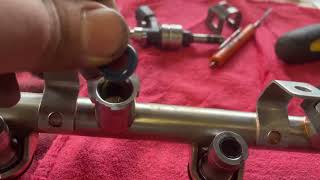
How to confirm: Swap the cylinder 4 injector with one from another cylinder (e.g., cylinder 2 or 6 on the same bank). If the trouble code changes to P0202 or P0206, the injector is faulty. You can also test the injector's resistance with a multimeter; for the 3.6L LFX GDI engine, the reading should be between 1.9 and 2.3 Ohms at 68°F (20°C). An out-of-spec reading 🎬 Watch: How to test injector resistance and circuit design confirms failure.
Typical fix: Replace the faulty fuel injector. It is recommended to replace the fuel injector seals and retainer clip at the same time.
Est. part cost: $70-$180 - Wiring Harness or Connector Issue 🟡 Medium Probability GM TSB #PIP4924D specifically calls out that the injector wiring harness on vehicles with the 3.6L engine is prone to chafing and damage against engine components like the intake plenum, valve covers, and fuel lines. The connector itself can also fail from heat and vibration, causing loose pins, a broken locking clip, or corrosion.
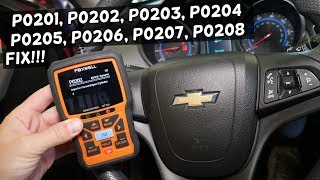
How to confirm: Visually inspect the wiring harness leading to the cylinder 4 injector for any signs of rubbing, melting, or breaks. Check the connector for corrosion or loose pins. A 'noid light' test can confirm if the ECM is sending a pulse; if the light doesn't flash when plugged into the connector while cranking, the problem is in the wiring or ECM. A 'wiggle test' on the harness while the engine is running can also reveal intermittent shorts if the 🎬 See how to diagnose and fix injector circuit codes misfire changes.
Typical fix: Repair the damaged section of wire or replace the connector pigtail. Secure the harness away from sharp edges or hot surfaces using loom or zip ties.
Est. part cost: $20-$50 - Faulty Engine Control Module (ECM) ⚪ Low Probability → Shop Engine Control Module (ECM)
How to confirm: This is diagnosed by exclusion. If the injector and wiring have been tested and are known to be good (e.g., noid light doesn't flash, but wiring has continuity and power), the ECM's internal driver for that injector may have failed. This is more likely if multiple injector codes appear at once.
Typical fix: The ECM must be repaired by a specialist or replaced and programmed to the vehicle, which typically requires a professional shop.
Est. part cost: $400-$900
Diagnosis Steps
- Read the trouble codes with an OBD-II scanner and confirm P0204 is present. Note any other codes, especially P0304 or other P020x codes.
- Identify Cylinder 4. On the transversely mounted 3.6L LFX V6, Bank 1 (cylinders 1, 3, 5) is against the firewall, and Bank 2 (cylinders 2, 4, 6) is at the front of the vehicle, near the radiator. Cylinder 4 is the middle cylinder of the front bank.
- Perform a thorough visual inspection of the cylinder 4 fuel injector, its electrical connector, and the wiring harness. Pay close attention to areas where the harness might rub against the intake plenum, valve cover bolts, and fuel lines, as noted in TSB #PIP4924D.
- Check the connector for a secure fit, broken locking tab, corrosion, or backed-out pins.
- Disconnect the injector and check for a pulse signal using a 'noid light'. Plug the noid light into the connector and crank the engine. If the light flashes, the ECM and wiring are likely okay, pointing to a bad injector.
- If the noid light does not flash, check for 12-volt power at one pin of the injector connector with the key on. If power is missing, check related fuses and relays.
- If power is present but the noid light doesn't flash, check the continuity of the ground/control wire from the injector connector back to the ECM connector to rule out an open or short in the wire.
- Measure the resistance of the fuel injector itself using a multimeter. For the LFX GDI engine, it should be between 1.9 and 2.3 ohms at 68°F (20°C). A reading of infinity (OL) or significantly different from other injectors indicates a failed injector.
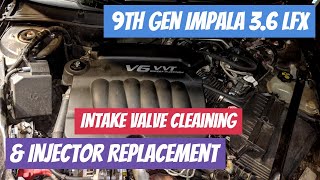
- As a definitive test, swap the cylinder 4 injector with an injector from another cylinder (e.g., cylinder 2). This requires removing the intake manifold. 🎬 Watch: Step-by-step intake removal and injector replacement guide Clear the codes and run the engine. If the code moves to the new cylinder (e.g., P0202), the injector is confirmed to be faulty. If P0204 returns, the problem is in the wiring or ECM.
Parts You'll Likely Need
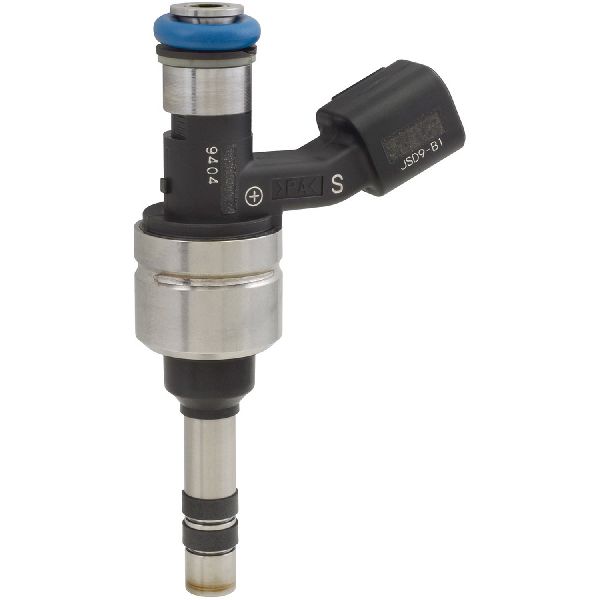
- Fuel Injector
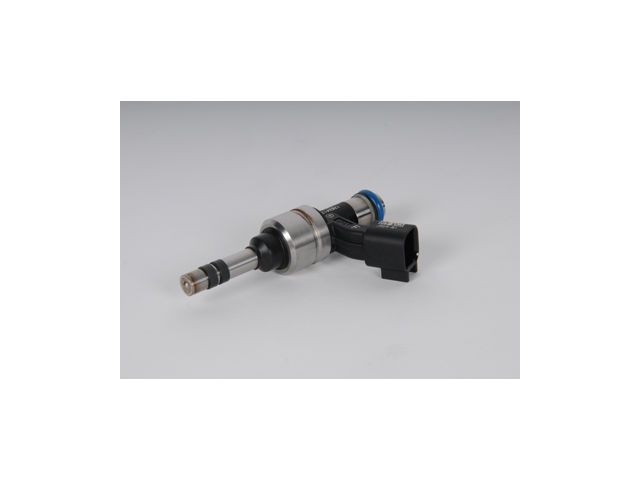
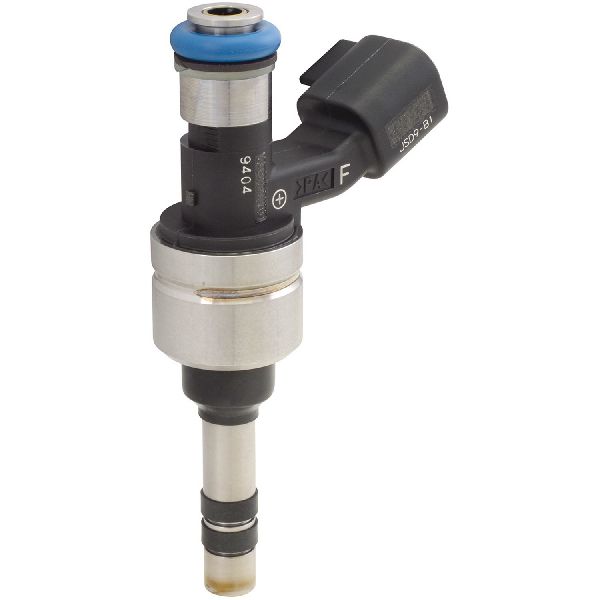
(OEM #12634123)— This is the most frequent cause of a P0204 code, where the injector's internal coil fails electrically. This part number is specific to the LFX engine.
Trusted brands: ACDelco (OEM), Bosch, Hitachi, Standard Motor Products
OEM price range: $130-$180
Aftermarket price range: $70-$120 - Fuel Injector Connector Pigtail
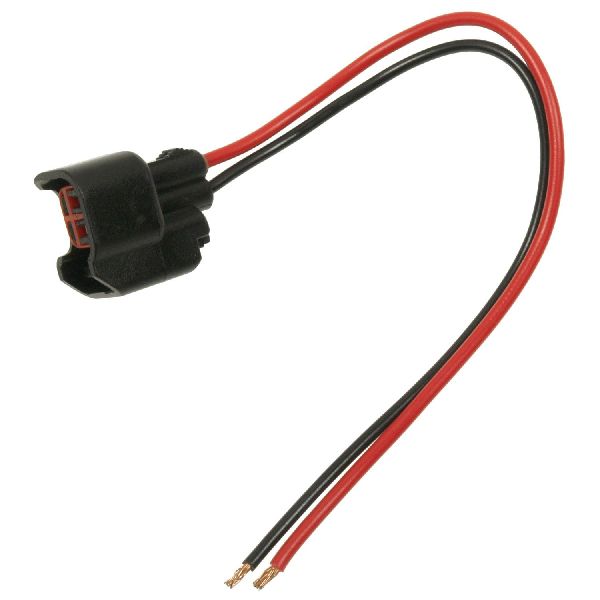
(OEM #ACDelco PT2160)— If the wiring is damaged at the connector or the connector's locking tab is broken, replacing the pigtail is the standard repair.
Trusted brands: ACDelco, Dorman, Standard Motor Products (S-1024)
OEM price range: $25-$40
Aftermarket price range: $15-$30
Related Codes That Often Appear With This One
- P0304 — P0304 means 'Cylinder 4 Misfire Detected.' Since P0204 indicates a fault in the fuel delivery circuit for cylinder 4, a misfire is a direct and very common consequence.
- P0201, P0202, P0203, P0205, P0206 — If other injector circuit codes appear at the same time, it strongly suggests a wiring harness problem common to multiple cylinders, such as a chafed harness or a bad power/ground connection, as described in TSB #PIP4924D.
- P0200 — This code for 'Injector Circuit Malfunction' is a general fault not tied to a specific cylinder. It can appear with P0204 if a widespread wiring issue is affecting the injector system.
Technical Service Bulletins (TSBs) & Recalls
- PIP4924D: Addresses a Service Engine Soon light and misfires with various injector codes, including P0204. It recommends inspecting the injector wiring harness for damage at several common rub points on 3.0L and 3.6L engines.
Platform-Specific Known Issues
- A known issue documented in GM Technical Service Bulletin #PIP4924D involves the fuel injector wiring harness chafing against engine components, leading to open or shorted circuits. Common chafe points include contact with the intake plenum, valve cover bolts, fuel lines, and the side of the cylinder head.
- Rodent damage to the soy-based wiring insulation under the engine cover has been reported by owners of similar GM vehicles as a cause for injector circuit faults.
Mechanic-Grade Diagnostic Values
- Fuel Injector Coil Resistance — expected: 1.9 - 2.3 Ohms at 20°C (68°F). Failure: A reading of infinity (OL), zero, or significantly outside this range indicates a failed injector coil. The DMM must be zeroed before testing.
- Injector Driver Voltage (at ECM) — expected: The ECM uses a 65V pulse from a boost capacitor to initially open the injector, then holds it open with a 12V signal.. Failure: This complex waveform is best viewed with an oscilloscope. A failure of the driver circuit in the ECM will result in a missing or incorrect waveform.
- Injector Power Supply Voltage (at connector) — expected: Approximately 12 Volts (battery voltage) with Key On, Engine Off.. Failure: Low or no voltage on the power supply wire points to a problem in the wiring, fuse, or relay, not the injector itself.
Scan Tool Commands That Help
- GDS2 / Tech 2 (or equivalent bidirectional scanner): Fuel Injector Balance Test — This test is used when an injector is suspected of a flow issue or to confirm even performance across all cylinders after a repair. The tool individually pulses each injector and measures the corresponding drop in fuel rail pressure. All injector pressure drops should be within 1.5-3.0 PSI (10-20 kPa) of each other to be considered balanced.
Wiring & Ground Locations
- G105 / G106 — Primary engine grounds located on the engine block or cylinder heads. On the 3.6L V6, G106 is often on the left (firewall side) rear of the engine, while G105 can be on the front of the engine or nearby frame rail.. The ECM and injector driver circuits rely on these main grounds for a stable voltage reference. A loose or corroded ground can cause erratic voltage, electrical noise, and false injector circuit codes for one or multiple cylinders.
- ECM Connector X1 — The main 73-pin connector at the Engine Control Module (ECM) in the engine bay.. This is the termination point for the injector control circuits. Performing continuity tests between the injector connector pins and the corresponding pins at this connector can definitively rule out an open or short in the wiring harness.
Real Owner Repair Stories
- ScannerDanner Forum (2008 GMC Acadia 3.6L (LLT engine, a direct predecessor to the LFX with similar wiring architecture)) — Engine would run fine for 30-45 minutes, then suddenly begin misfiring with codes P0202, P0204, and P0206 (the entire front bank of injectors).
❌ Tried (didn't work) Cleaning a corroded ground stud on the cylinder head.
✅ What actually fixed it A 'wiggle test' on the main engine wiring harness near the underhood fuse box caused the misfire to occur on command. This confirmed an intermittent open/short within the harness loom itself, not at a connector or ground point. The harness required repair. - Mechanic LifeStyle on YouTube (Land Rover Discovery (demonstrating a universal P0204 fix)) — Check Engine Light with code P0204 and a noticeable engine misfire.
❌ Tried (didn't work) Initial diagnosis pointed towards a bad injector or complex wiring issue.
✅ What actually fixed it After removing the intake manifold for access, it was discovered that the retaining clip on the cylinder 4 injector's electrical connector was not fully seated and had come loose. Pushing the connector on until it clicked and securing the clip resolved the code.
OEM Part Supersession History
12642125→12634123— Standard part evolution for improved performance, reliability, or manufacturing process.
Heads up: The newer part (12634123) is the correct service replacement for vehicles that originally used 12642125.
Model Year Variations Within This Range
- 2012-2014: While the 2014 model year saw the introduction of the 10th generation Impala, the 9th generation 'Impala Limited' continued to be sold to fleets with the same 3.6L LFX V6. For the purpose of diagnosing a P0204, there are no significant known changes to the fuel injection wiring, components, or diagnostic procedure across the 2012, 2013, and 2014 (Limited) models equipped with the LFX engine.
Helpful Videos
We Have This Part in Stock


The information in this article is provided for general reference and educational purposes only. Vehicle specifications, procedures, and part compatibility can vary by production date, trim level, and region. Always consult your vehicle's factory service manual and verify part numbers before purchasing or performing repairs. Safety-critical components such as airbags, seat belts, and braking systems should be installed by a qualified professional.
- Chevrolet IMPALA:
- 🧭 Diagnostic Flowchart
- 🎬 Helpful Videos
- 🛍️ Shop This Part
- What's Unique About the 2012-2014 Chevrolet IMPALA
- Symptoms You May Notice
- Most Likely Causes
- Diagnosis Steps
- Parts You'll Likely Need
- Related Codes That Often Appear With This One
- Technical Service Bulletins (TSBs) & Recalls
- Platform-Specific Known Issues
- Mechanic-Grade Diagnostic Values
- Scan Tool Commands That Help
- Wiring & Ground Locations
- Real Owner Repair Stories
- OEM Part Supersession History
- Model Year Variations Within This Range
- 🎟️ Get 5% Off