

P0204 on 1999-2007 Chevrolet Silverado 1500 5.3L: Injector Circuit Causes and Fixes
P0204 on a GMT800 Silverado most often means the fuel injector for cylinder 4 has failed or its wiring is faulty. A rough idle and misfire are common symptoms. Swapping the injector with another cylinder is the most effective way to confirm a bad injector before buying parts. Check wiring for damage, especially near the back of the engine by the bell housing.
- P0204 is an electrical code
What's Unique About the 1999-2007 Chevrolet Silverado 1500
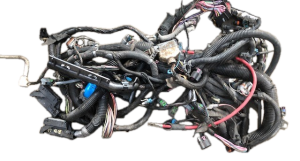
On the GMT800 platform (1999-2007 Classic), the P0204 code is typically a straightforward component failure due to age and heat cycles. Unlike newer trucks that have specific, well-documented TSBs for harness chafing in particular spots, the issues on this generation are more often from general degradation. The plastic on the injector connector can become brittle and fail, or the injector's internal coil windings can break down after 15-20+ years of service. In some cases, the wiring harness can be pinched or chafed in tight spots, such as between the back of the engine and the transmission bell housing.
Generation note: This year range covers the first-generation Silverado, known as the GMT800 platform (1999-2006). The 2007 model year was a split, offering both the GMT800 as the "Silverado Classic" and the new second-generation GMT900. This guide is primarily focused on the GMT800 platform, where the 5.3L LM7 engine was most common.
Symptoms You May Notice
- Noticeable engine misfire, shaking, or rough idle
- Flashing or solid Check Engine Light
- Reduced engine power and poor acceleration
- Decreased fuel economy
- Engine may hesitate or stall
- Smell of raw fuel from the exhaust
- Replacing the cylinder 4 spark plug or ignition coil. While these parts can cause a misfire code (P0304), they will not cause an injector *circuit* code like P0204, which is specifically an electrical fault.
Most Likely Causes
- Failed Cylinder 4 Fuel Injector 🔴 High Probability → Shop Fuel Injector After many years and heat cycles, the internal electronic coil of the injector can fail, creating an open or short circuit.
How to confirm: Swap the cylinder 4 injector with an adjacent one (e.g., cylinder 2). Clear the codes and run the engine. If the code changes to P0202, the injector is faulty. Alternatively, test the injector's resistance with a multimeter; it should be between 11 and 14 ohms. An infinite reading means an open circuit, and a reading near zero means a short circuit.
Typical fix: Replace the failed fuel injector. It's often recommended to replace them as a full set if they are original and have high mileage.
Est. part cost: $40-$90 - Damaged Wiring or Connector 🟡 Medium Probability The wiring harness and plastic connectors become brittle over time due to constant exposure to engine heat. This can lead to broken wires, a cracked connector housing, or lost pin tension. The harness can also be pinched or chafed where it passes behind the engine. Manufacturer TSB Bulletin #PIT5751C specifically instructs technicians to inspect the engine wiring harness for damage when DTC P0204 is set.
How to confirm: Visually inspect the wiring going to the cylinder 4 injector for cracks, melting, or breaks. Wiggle the connector while the engine is running to see if it causes the misfire to change. Use a noid light to confirm if an electrical pulse is reaching the connector. A real-world case found the harness pinched between the transmission bell housing and the engine block, causing intermittent P0204 and P0202 codes.
Typical fix: If the connector is damaged, replace it with a new pigtail connector. If a wire is broken, repair the circuit using solder and heat shrink.
Est. part cost: $10-$25
Rare But Worth Checking
- Faulty Powertrain Control Module (PCM): → Shop Engine Control Module (ECM) This is the least likely cause. The internal driver circuit for the injector can fail. This should only be considered after definitively ruling out the injector and wiring harness as the cause.
Diagnosis Steps
- Confirm the P0204 code is present using an OBD-II scanner.
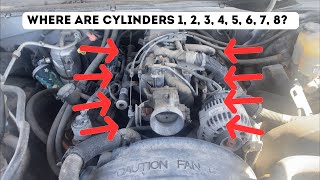
- Locate cylinder 4. On the 5.3L V8, the cylinders on the driver's side are 1, 3, 5, 7 (front to back). The passenger's side cylinders are 2, 4, 6, 8 (front to back). Cylinder 4 is the second one from the front on the passenger side.
- Visually inspect the wiring harness and electrical connector for cylinder 4. Look for any signs of cracking, melting, corrosion, or loose pins. Pay close attention to the harness routing at the back of the engine near the firewall and transmission.
- Perform a 'wiggle test' on the connector and nearby wiring with the engine running to see if it affects the idle.
- Disconnect the connector and use a 'noid light' to test for a signal. The light should flash as you crank the engine. If it flashes, the wiring and PCM are likely okay, and the injector is the problem. If it does not flash, the problem is in the wiring or PCM.
- Turn the engine off. Use a multimeter to test the resistance of the fuel injector. A typical reading for these injectors is between 11-14 ohms. An infinite reading means an open circuit, and a reading near zero means a short circuit.
- To definitively confirm a bad injector, swap the cylinder 4 injector with the cylinder 2 injector. Clear the codes, start the vehicle, and see which code returns. If P0202 appears, the injector is bad. If P0204 returns, the problem is in the wiring or PCM.
- If the injector swap points to a wiring issue, test the two wires for continuity from the PCM connector to the injector connector to find the break. Check for shorts to ground and voltage on both wires.
Parts You'll Likely Need
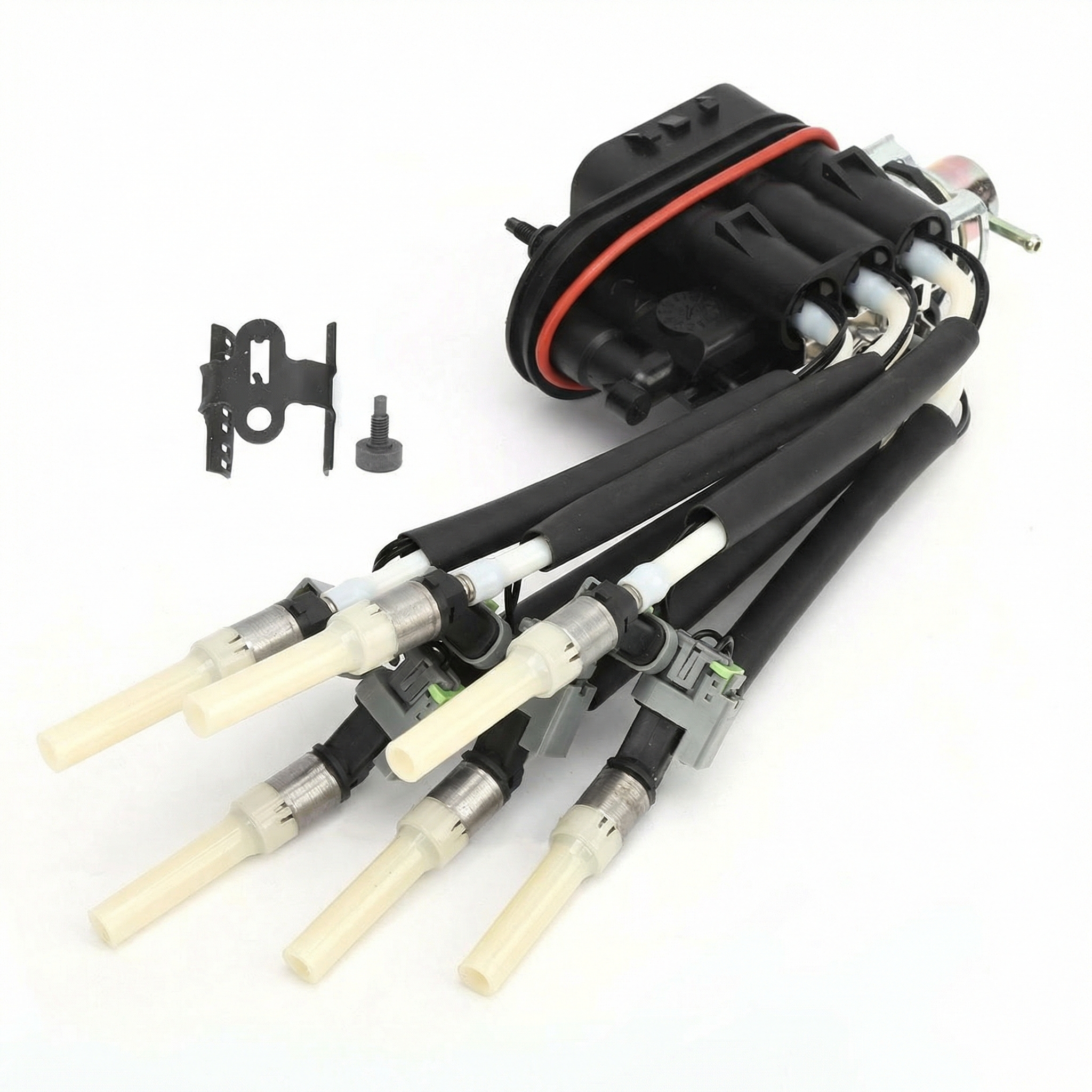
- Fuel Injector
(OEM #17113698, ACDelco 217-1621)— This is the most common cause of failure for a P0204 code on an older vehicle, as the internal electronics fail over time.
Trusted brands: ACDelco, Bosch, Delphi
OEM price range: $70-$100
Aftermarket price range: $30-$60 - Fuel Injector Connector Pigtail
(OEM #e.g., Dorman 645-509)— The plastic locking tab often becomes brittle and breaks, or the terminals corrode or lose tension, causing a poor connection. Replacing the pigtail is the standard repair.
Trusted brands: Dorman, ACDelco
OEM price range: $20-$35
Aftermarket price range: $10-$20
Related Codes That Often Appear With This One
- P0304 — This code means 'Cylinder 4 Misfire Detected.' Since P0204 indicates a fault that prevents the injector from delivering fuel, a misfire in that cylinder is an almost guaranteed side effect.
- P0300 — This code means 'Random/Multiple Cylinder Misfire.' It can sometimes be triggered along with P0204 if the misfire on cylinder 4 is severe enough to disrupt the engine's overall rotational speed and balance.
Technical Service Bulletins (TSBs) & Recalls
- TSB 03-06-04-030F: While not specifically for the P0204 electrical code, this bulletin addresses various driveability symptoms (including misfires, P0300, P0171, P0174) on 2000-2008 GM trucks with the 5.3L engine caused by restricted/clogged fuel injectors. It notes that fuel quality is the primary cause and provides a specific on-vehicle cleaning procedure using GM Upper Engine and Fuel Injector Cleaner. It also recommends the use of Top Tier Detergent Gasoline to prevent reoccurrence. This is relevant context for overall fuel system health on this platform.
- TSB Bulletin #22-NA-087: This bulletin discusses the replacement of the fuel injector and the wiring harness to correct customer concerns where the Malfunction Indicator Lamp is illuminated with DTC P0204 and other injector circuit codes.
Platform-Specific Known Issues
- Pinched Wiring Harness at Transmission Bell Housing: A documented repair on a forum for a similar GM truck found that intermittent P0204 and P0202 codes were caused by the main engine harness being pinched between the back of the engine and the transmission bell housing. The constant vibration eventually wore through the insulation on two injector wires, causing them to short. This is a difficult area to inspect but should be considered if the fault is intermittent and not resolved by replacing the injector or connector.
Mechanic-Grade Diagnostic Values
- Fuel Injector Coil Resistance — expected: 11-14 Ohms. Failure: Near zero Ohms (shorted) or infinite/O.L. (open).
- Fuel Pressure (1999-2003, Return-Style System) — expected: 55-62 PSI with key on, engine off, or at idle with vacuum line to regulator disconnected.. Failure: Pressure below 55 PSI indicates a weak pump or clogged filter. Pressure should hold and not bleed down quickly.
- Fuel Pressure (2004+ LM7, Returnless System) — expected: 55-62 PSI, constant.. Failure: Pressure below 55 PSI. Since it's a returnless system, pressure should remain steady under load.
- Injector Power Wire Voltage (Key On, Engine Off) — expected: Battery voltage (~12V) at the pink wire on the injector connector.. Failure: No voltage indicates a problem with the fuse (typically 'INJ 1' or 'INJ 2' fuse) or the ignition relay.
- Injector Control Wire (PCM Pinout) — expected: The control wire for the Cylinder 4 injector is located at PCM Connector C1 (Blue), Pin 25. It is a Dark Green/White wire.. Failure: This pin is where you would test for continuity back to the injector connector or check for shorts to ground/power if a wiring fault is suspected.
Scan Tool Commands That Help
- GM Tech 2: Fuel Injector Balance Test — This test allows a technician to individually disable each fuel injector while the engine is running. If disabling cylinder 4 causes no change in engine RPM or smoothness, while disabling other cylinders causes a noticeable drop, it confirms cylinder 4 was not contributing. This helps isolate the issue when a misfire is felt but before confirming the cause.
- GM Tech 2: Injector Flow Test (Pressure Drop) — This is a more advanced test where the scan tool pulses a specific injector for a set duration with the engine off and measures the corresponding drop in fuel rail pressure. By comparing the pressure drop across all injectors, you can identify one that is flowing less (clogged) or more (leaking) than the others. A pressure drop for each injector should be within 10 kPa (1.5 psi) of the average.
Wiring & Ground Locations
- G103 — On the front of the passenger side (right side) cylinder head.. This is a primary engine ground, and some sources indicate it is the ground for the ECM. A poor connection at G103 can cause a host of erratic engine management issues, including intermittent injector circuit codes.
- PCM Connector C1 (Blue) — On the Powertrain Control Module (PCM), typically located on the driver's side of the engine bay near the battery.. This connector contains the pin for the cylinder 4 injector driver. Specifically, Pin 25 (Dark Green/White wire) is the control circuit. This is the starting point at the PCM for testing continuity to the injector.
- Injector Bank 2 Fuse — In the underhood fuse block. The specific fuse is often labeled 'INJ B' or 'INJ 2'.. The injectors are powered in two banks. Cylinder 4 is on Bank 2 (passenger side). A blown fuse for this bank would cause all four injectors on that side (2, 4, 6, 8) to lose power, typically setting multiple codes (P0202, P0204, P0206, P0208), not just P0204. However, it's a crucial and simple check.
Real Owner Repair Stories
- silveradosierra.com forum user (2015 Silverado 5.3L L83 (newer truck, but identical wiring failure mode)) — Intermittent P0300 (Random Misfire) which progressed to include P0204 (Injector Circuit - Cylinder 4). The truck would shake and skip, but restarting the engine would temporarily resolve it.
❌ Tried (didn't work) A shop replaced the #4 fuel injector, but the problem returned after about a week.
✅ What actually fixed it The owner traced the injector wiring harness to the back of the engine and found it was pinched by the transmission bell housing. Two wires had rubbed through their insulation, causing an intermittent short. Repairing the damaged wires permanently fixed the issue. - NHTSA ODI #11633257 — An owner reported a check engine light accompanied by "Service ESC" and disabled traction control. Diagnostics revealed P0300, P0304, and P0204, all relating to cylinder 4 misfire and injector issues.
OEM Part Supersession History
17113553, 25317628→17113698— Part consolidation and design updates by GM/ACDelco over the years.
Heads up: The primary incompatibility is between standard gasoline (LM7) and Flex Fuel (L59) injectors. They may look similar but have different flow rates and require different PCM programming. Ensure the replacement part number is specified for your VIN and fuel type.12580681→217-1621— ACDelco part number update. 12580681 is the GM number, while 217-1621 is the ACDelco service part number.
Heads up: Some vendors list these as requiring programming or special setup procedures, which may refer to an injector flow rate relearn procedure in the PCM, especially if replacing a full set.
Model Year Variations Within This Range
- 1999-2003: These models used a return-style fuel system with a vacuum-referenced fuel pressure regulator on the fuel rail. Fuel pressure is typically 55-62 PSI with the vacuum line disconnected.
- 2004-2007 (Classic): Most non-Flex Fuel models switched to a returnless fuel system. The pressure regulator is in the fuel tank with the pump, and pressure at the rail is constant (55-62 PSI). This simplifies diagnosis as pressure should not vary with engine load. Note: 2004 Flex Fuel (L59) models retained the return-style system for that year only.
Diagnostic Flowchart
Other Known Issues on This Vehicle
Issues unrelated to this code that are worth knowing about as an owner of this generation:
- Instrument Cluster Stepper Motor Failure 🟠 Medium — Extremely common. Gauges for speedometer, tachometer, fuel, etc. may become erratic, get stuck, or stop working entirely. Typically occurs after 5-10 years. (Ref: GM issued a special coverage adjustment (07-08-49-018) for some vehicles, but it has long since expired. Repair involves replacing the individual stepper motors on the cluster's circuit board.)
- Cracked Castech Cylinder Heads 🔴 High → Shop Engine Cylinder Head — Affects a specific subset of LM7 engines that used cylinder heads manufactured by Castech. A small crack can develop, typically near a head bolt, causing a slow, hard-to-diagnose coolant leak into the engine oil ('milkshake' oil). Not all Castech heads crack, but they are a known failure point. (Ref: GM issued TSB 06-06-01-019B to address this, outlining diagnostic procedures for unexplained coolant loss.)
- Rusted Brake Lines 🔴 High — Very common in regions that use road salt. The factory-coated steel brake lines are highly susceptible to corrosion, which can lead to a sudden and complete loss of braking power. Lines often rust out above the fuel tank or along the frame rail. (Ref: Multiple recalls were issued (e.g., NHTSA campaign 14V224000) for this issue, but they were often limited by region and vehicle age.)
- Failing Fuel Pressure Regulator 🟠 Medium — The fuel pressure regulator, located on the fuel rail on earlier models, is prone to failure. A bad regulator can cause hard starting, rough idle, black smoke from the exhaust, and poor fuel economy.
- Intake Manifold Gasket Leaks 🟡 Low → Shop Engine Intake Manifold — The original design of the intake manifold gaskets can degrade over time, leading to vacuum leaks. Symptoms include a lean running condition (codes P0171, P0174), a rough idle, and sometimes a hissing sound from the engine.
Used vs. New Parts: Buying Guide for This Vehicle
When a used part is the smart pick: Used parts are a reasonable choice for components like wiring harness connectors (pigtails) or a complete engine wiring harness if the original is severely damaged. A used PCM from a matching vehicle can also be an option, but it will require security relearn procedures and programming.
Donor-vehicle mileage cap: roughly under 80000 miles for the part to have meaningful remaining life.
What to inspect on the donor part:
- For injectors, ask for them to be from a running, driving vehicle if possible.
- Inspect injector connectors for brittle plastic, broken locking tabs, or corrosion on the pins.
- When buying a used harness, check for any previous repairs (butt connectors, electrical tape) and inspect common chafe points like the back of the engine and near exhaust manifolds.
OEM-only on this vehicle (don't cheap out):
- Powertrain Control Module (PCM): While used is possible, a new or professionally remanufactured PCM is often a safer bet to avoid inheriting another vehicle's problems. It must be programmed for the specific vehicle VIN.
Aftermarket brands forum-validated for this vehicle:
- Injectors: ACDelco (OEM), Bosch, Delphi, Standard Motor Products (SMP).
- Connectors: Dorman, ACDelco.
Brands owners have reported issues with on this vehicle:
- No-name, unbranded injector sets from online marketplaces. Forum users and mechanics frequently report high failure rates, inconsistent flow rates leading to other engine issues, and poor quality control with these parts.
Real Owner Stories
Aggregated from forums and TSBs cited above. Mileages and costs reflect what owners reported in those sources.
2015 Chevrolet Silverado 1500 L83
Symptoms: Intermittent P0204 and P0202 codes along with a P0300 misfire.
What fixed it: Repaired the wiring harness which was pinched against the transmission bell housing, exposing and cutting wire strands.
Source hint: silveradosierra.com forum thread titled 'Injector P0204 and misfire P0300 help needed 2015'
NHTSA Reported Incident
Symptoms: Check engine light with “Service ESC” and disabled traction control.
What fixed it: Diagnostics confirmed P0300, P0304, and P0204 codes relating to cylinder 4 misfire and injector issues.
Source hint: NHTSA ODI #11633257
Related OBD-II Codes
Frequently Asked Questions
Where is cylinder 4 located on my 5.3L V8 engine?
Does TSB 03-06-04-030F explain why I have a P0204 electrical code?
I have intermittent P0204 and P0202 codes; could this be a wiring harness issue?
What should the resistance be when I test my Silverado's fuel injector with a multimeter?
Is there a specific TSB for the coolant leak I noticed while diagnosing my misfire?
Can I use a noid light to check the injector circuit on my 1999-2007 Silverado?
Helpful Videos
Used OEM Parts in Stock
New Aftermarket Parts Available


The information in this article is provided for general reference and educational purposes only. Vehicle specifications, procedures, and part compatibility can vary by production date, trim level, and region. Always consult your vehicle's factory service manual and verify part numbers before purchasing or performing repairs. Safety-critical components such as airbags, seat belts, and braking systems should be installed by a qualified professional.
- Chevrolet Silverado 1500:
- 🧭 Diagnostic Flowchart
- 🎬 Helpful Videos
- 🛍️ Shop This Part
- What's Unique About the 1999-2007 Chevrolet Silverado 1500
- Symptoms You May Notice
- Most Likely Causes
- Rare But Worth Checking
- Diagnosis Steps
- Parts You'll Likely Need
- Related Codes That Often Appear With This One
- Technical Service Bulletins (TSBs) & Recalls
- Platform-Specific Known Issues
- Mechanic-Grade Diagnostic Values
- Scan Tool Commands That Help
- Wiring & Ground Locations
- Real Owner Repair Stories
- OEM Part Supersession History
- Model Year Variations Within This Range
- Other Known Issues on This Vehicle
- Used vs. New Parts: Buying Guide for This Vehicle
- Real Owner Stories
- 2015 Chevrolet Silverado 1500 L83
- NHTSA Reported Incident
- Related OBD-II Codes
- Frequently Asked Questions
- 🎟️ Get 5% Off