

P0204 on 1998-2003 Dodge RAM 1500: Injector Circuit Fixes & Causes
P0204 on a 1998-2003 Dodge RAM 1500 most often points to a faulty fuel injector or a problem in its wiring circuit. Before replacing the injector, thoroughly inspect the wiring harness and connectors for damage, as they are a common failure point. A manufacturer TSB also points to the wiring loom in the valve cover gasket as a potential culprit on some models.
- P0204 indicates an electrical fault in the cylinder 4 fuel injector circuit, not necessarily a bad injector.
- Always test the wiring and connector before replacing the fuel injector. A noid light is the best tool for this.
- Swapping the suspect injector with one from another cylinder is a definitive way to confirm if the injector itself is the faulty component.
- On this platform, wiring issues are a very common cause for this code, as noted by a manufacturer TSB.
What's Unique About the 1998-2003 Dodge RAM 1500
For this generation of Dodge Ram, especially on V8 models, the injector wiring is a known weak point. A Technical Service Bulletin (TSB) from the manufacturer specifically advises technicians to check the wiring loom and connector at the valve cover gasket *before* replacing any fuel injectors for a P0204 code. This suggests that a wiring fault is a very common, and often misdiagnosed, cause for this issue, making it critical to test the circuit thoroughly before buying parts. The location of cylinder #4 on both Magnum (5.2L/5.9L) and PowerTech (4.7L) V8 engines is on the passenger side of the engine, the second cylinder from the front.
Diagnostic Flowchart
Tap your situation to follow the diagnostic path that matches what you're seeing on this vehicle.
Generation note: This range covers the end of the 2nd generation (BR/BE, 1998-2001) and the start of the 3rd generation (DR, 2002-2003). While the P0204 code has the same meaning for both, the specific engine (e.g., 5.2L/5.9L Magnum V8s in 2nd gen vs. 4.7L PowerTech V8 in 3rd gen) will determine the exact location of parts, wiring harness routing, and injector part numbers. A critical difference is the Powertrain Control Module (PCM): 1998-2001 models use the JTEC PCM, while 2002-2003 models with the 4.7L engine use the NGC PCM, which have completely different connector pinouts.
Symptoms You May Notice
- Check Engine Light is on (may be flashing if the misfire is severe).
- Rough or shaking idle.
- Engine hesitation or stumbling during acceleration.
- Noticeable loss of power, especially under load.
- Reduced fuel economy.
- Engine misfire sound or feeling.
- Fuel smell from the exhaust
- Replacing the fuel injector without first testing the electrical circuit. The provided TSB specifically warns against this, as the wiring is a known failure point. A noid light test or multimeter 🎬 Watch: How to diagnose a fuel injector circuit malfunction check of the connector should always be performed first.
Most Likely Causes
- Faulty Fuel Injector #4 🔴 High Probability → Shop Fuel Injector Injectors are a wear item. The internal electromagnetic coil can fail over time due to heat cycles and mileage, causing an open circuit (infinite resistance) or a short circuit (very low resistance).
How to confirm: Swap the #4 injector with an injector from another cylinder (e.g., #2). If the code changes to P0202, the injector is bad. You can also test the injector's resistance with a multimeter. Disconnect the injector and measure across its two pins. A typical good reading is between 11 and 16 ohms, but check the spec for your specific engine. A reading of OL (open) or near zero ohms indicates a failed injector.
Typical fix: Replace the faulty fuel injector. It is often recommended to replace all injectors as a set on high-mileage vehicles to ensure balanced fuel delivery.
Est. part cost: $40-$90 - Damaged Wiring or Connector at the Injector 🔴 High Probability Engine heat and vibration can make the wiring insulation brittle and cause the plastic connector to crack. This can lead to an open or short in the circuit right at the injector. As highlighted by TSB #9002688, the wiring loom and connector, particularly where it passes through the valve cover gasket on some engines, can fail.
How to confirm: Visually inspect the wiring harness for cylinder 4 for any signs of cracking, melting, or corrosion, especially near the connector. Wiggle the connector and harness with the engine running to see if it affects the idle. Use a noid light to confirm if the injector is receiving a pulse from the PCM. If no pulse, check for continuity from the PCM to the injector connector.
Typical fix: Repair the damaged section of wire or replace the injector pigtail connector. In some cases, the valve cover gasket with its integrated wiring loom may need replacement.
Est. part cost: $10-$50 for a pigtail, $70-$150 for a valve cover gasket set with wiring. - Open or Short in the Wiring Harness 🟡 Medium Probability Engine bay heat and vibrations can cause wires to become brittle and crack over time, leading to intermittent or permanent circuit faults anywhere between the PCM and the injector. On Magnum engines, the harness is known to melt where it passes under the intake manifold plenum.
How to confirm: Perform a continuity test on the injector control wire and power wire between the PCM connector and the injector connector. Check for shorts to ground or power. A detailed factory service manual will have the specific pinouts for the PCM connector.
Typical fix: Repair or replace the damaged section of the wiring harness.
Est. part cost: $5-$20 in wiring supplies.
Rare But Worth Checking
- Faulty Powertrain Control Module (PCM): → Shop Engine Control Module (ECM) This is the least likely cause, but it does happen. The internal transistor (driver) that controls the ground signal for the #4 injector can fail. This should be the last item to check after exhausting all other possibilities. One forum user reported that a rebuilt PCM solved their P020x issue after other fixes failed.
Diagnosis Steps
- Verify the code with an OBD-II scanner. Note any other codes present, especially P0304.
- Visually inspect the #4 fuel injector wiring and connector for obvious damage, corrosion, or loose connections. Cylinder 4 is on the passenger side, second from the front for both Magnum and PowerTech V8s.
- Connect a 'noid light' to the injector harness connector for cylinder 4. Crank the engine. The light should flash steadily. If it flashes, the wiring and PCM are likely okay, and the injector is the probable cause. If it does not flash, or stays on constantly, the problem is in the wiring or the PCM.
- If the noid light doesn't flash, check for power at the connector. Use a multimeter or test light. One of the two pins should have 12V+ with the key in the 'ON' position. This wire is typically Dark Green with an Orange tracer. If there is no power, check the ASD (Auto Shutdown) relay and related fuses.
- If power is present but the noid light doesn't flash, the issue is likely in the ground control wire running back to the PCM, or the PCM itself. Perform a continuity test on the control wire between the PCM connector and the injector connector.
- If the noid light flashes correctly, test the fuel injector itself. Turn the ignition off and disconnect the injector. Use a multimeter set to Ohms to measure the resistance between the two pins on the injector. Compare the reading to the manufacturer's specification (typically 11-16 Ohms). An out-of-spec reading (like 0 Ohms or infinite/OL) means the injector is bad.
- As a final confirmation, swap the #4 injector with another one (e.g., #2). Clear the codes and run the engine. If the fault code moves to P0202, the injector is confirmed to be faulty. If P0204 returns, the issue is in the wiring or PCM.
Parts You'll Likely Need
- Fuel Injector
(OEM #53030778 (For 5.2L/5.9L Magnum V8s, check fitment for specific year))— The internal coil of the injector can fail, causing an electrical fault. This is the most common part replaced for this code.
Trusted brands: Bosch, Standard Motor Products, Mopar
OEM price range: $100-$150
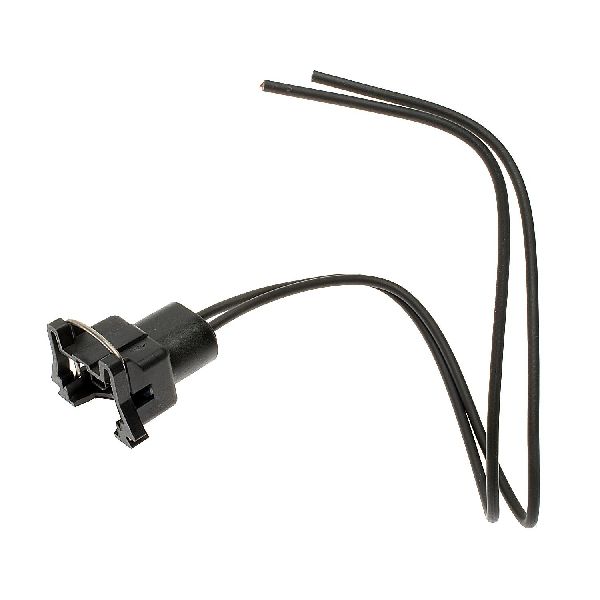
Aftermarket price range: $40-$90 - Fuel Injector Harness Connector (Pigtail) — The plastic connector and its locking tab can become brittle and break, or the terminals can corrode, causing a poor connection.
Trusted brands: Dorman, Mopar
OEM price range: $25-$40
Aftermarket price range: $10-$20 - Valve Cover Gasket with Injector Loom
(OEM #R8027067A$)— Per TSB #9002688, the wiring loom integrated into the gasket is a known failure point for this code on certain engines.
Trusted brands: Mopar
OEM price range: $100-$150
Aftermarket price range: $70-$120
Related Codes That Often Appear With This One
- P0304 — P0304 means "Cylinder 4 Misfire Detected". Since P0204 indicates a problem with the fuel injector circuit for cylinder 4, that cylinder isn't getting the right amount of fuel, which directly causes a misfire.
- P0420 — P0420 indicates "Catalyst System Efficiency Below Threshold (Bank 1)". If cylinder 4 is not firing correctly due to the P0204 fault, unburnt fuel can be dumped into the exhaust, overheating and damaging the catalytic converter over time, which triggers the P0420 code.
Technical Service Bulletins (TSBs) & Recalls
- Bulletin #9002688: Advises checking the wiring loom and connector in the valve cover gasket before replacing injectors for P0201-P0206 codes.
Platform-Specific Known Issues
- TSB #9002688 explicitly identifies the wiring loom and/or connector in the valve cover gasket as a potential root cause for P0204, advising it be checked before injector replacement.
Mechanic-Grade Diagnostic Values
- Fuel Injector Coil Resistance — expected: 11-16 Ohms. A service manual for a Magnum engine specifies 12 Ohms +/- 1.2 Ohms.. Failure: A reading of infinite resistance (OL) indicates an open coil, while near-zero Ohms indicates a shorted coil.
- Injector Power Wire Voltage — expected: Battery Voltage (~12.6V with key on, engine off).. Failure: Zero or low voltage indicates a problem with the ASD (Auto Shutdown) relay, its fuse, or the wiring from the relay.
- Injector Control Wire Continuity (PCM to Injector) — expected: Less than 5.0 Ohms, ideally close to 0 Ohms.. Failure: A reading higher than 5.0 Ohms indicates excessive resistance in the wire. An OL reading indicates a complete break (open circuit).
Scan Tool Commands That Help
- DRB III or equivalent professional scanner: Injector Actuation Test / Actuator Test — This bidirectional command is used when a noid light test fails (no pulse). It allows the technician to manually command the PCM to pulse the #4 injector. If the injector clicks, it confirms the PCM driver and the wiring are functional, pointing to a problem with the PCM's trigger signal (e.g., from the crank/cam sensors). If it doesn't click, it isolates the fault to the PCM driver or the wiring itself.
Wiring & Ground Locations
- Cylinder #4 Location — Passenger side of the engine (Right Bank), second cylinder from the front.. This is the physical location for all visual inspections, part swaps, and electrical tests for the P0204 code.
- Injector Power Feed Wire — At the fuel injector connector for all cylinders.. This wire, typically Dark Green/Orange, supplies 12V+ power from the ASD relay. A lack of power here will prevent the injector from firing. A short in this shared wire could cause multiple injector codes.
- PCM Connector C2 (JTEC, 1998-2001 5.2L/5.9L) — This is the center connector on the PCM, located on the passenger-side firewall.. This connector contains the driver circuits for the fuel injectors. While the exact pin for #4 is not confirmed, #1 is pin 4 and #2 is pin 5, indicating the #4 driver is also on this connector. This is the connector to test for continuity back from the injector.
- PCM Connector C2 (NGC, 2002-2003 4.7L) — This is one of four large connectors on the PCM, located on the passenger-side firewall. It is often a Black or Gray connector.. This connector contains the injector driver circuits. The control wire for injector #4 is Tan/Light Green. Testing continuity from this wire at the injector back to its pin on this connector is a definitive test of the wiring harness.
- Grounds G102 / G104 — Located in the left front of the engine compartment, near the negative battery terminal.. These are primary engine and chassis ground points. A loose or corroded connection here can cause a host of bizarre electrical problems, including erratic PCM behavior that could potentially trigger false injector codes.
Real Owner Repair Stories
- DodgeForum.com user report (paraphrased) (2000 Dodge Ram 1500 5.9L Magnum) — P0203 code (Cylinder 3 Injector Circuit, same principle as P0204) and a severe engine misfire.
❌ Tried (didn't work) Replacing the injector connector pigtail., Replacing all eight fuel injectors.
✅ What actually fixed it The initial cause was found to be a rat chewing through the injector wires. Even after the obvious damage was repaired, the problem continued. The final diagnosis pointed to a remaining, less obvious fault in the wiring harness between the connector and the PCM, or a damaged PCM driver from the initial short circuit. The story highlights that replacing parts at the end of the circuit is not enough; the entire wire must be verified.
OEM Part Supersession History
53030778→53030778AB, RL030778AB— Standard part revision and availability of remanufactured units.
Heads up: This part number is for the 3.9L/5.2L/5.9L Magnum engines. Do not use on 4.7L PowerTech engines.53032704AB→N/A— This is a common OEM part number for the 4.7L PowerTech engine.
Heads up: This part number is for the 4.7L PowerTech engine found in 2002-2003 models. Do not use on Magnum engines.
Model Year Variations Within This Range
- 1998-2001: These models use the 5.2L and 5.9L Magnum V8s, which have a JTEC (Jeep/Truck Engine Controller) PCM with three 32-pin connectors. The injector drivers are located on the C2 (center) connector.
- 2002-2003: These models introduced the 4.7L PowerTech V8, which uses an NGC (Next Generation Controller) PCM with four distinct connectors. The injector drivers are located on the C2 (often black or gray) connector, but the pin locations are completely different from the JTEC PCM. Using a JTEC pinout for an NGC vehicle will lead to an incorrect diagnosis.
Helpful Videos

We Have This Part in Stock


The information in this article is provided for general reference and educational purposes only. Vehicle specifications, procedures, and part compatibility can vary by production date, trim level, and region. Always consult your vehicle's factory service manual and verify part numbers before purchasing or performing repairs. Safety-critical components such as airbags, seat belts, and braking systems should be installed by a qualified professional.
- Dodge RAM 1500:
- 🧭 Diagnostic Flowchart
- 🎬 Helpful Videos
- 🛍️ Shop This Part
- What's Unique About the 1998-2003 Dodge RAM 1500
- Symptoms You May Notice
- Most Likely Causes
- Rare But Worth Checking
- Diagnosis Steps
- Parts You'll Likely Need
- Related Codes That Often Appear With This One
- Technical Service Bulletins (TSBs) & Recalls
- Platform-Specific Known Issues
- Mechanic-Grade Diagnostic Values
- Scan Tool Commands That Help
- Wiring & Ground Locations
- Real Owner Repair Stories
- OEM Part Supersession History
- Model Year Variations Within This Range
- 🎟️ Get 5% Off