

P0204 on 2007-2010 Dodge RAM 1500: Injector Circuit Fixes and Causes
P0204 on a 2007-2010 Dodge RAM 1500 indicates an electrical fault in the cylinder 4 fuel injector circuit. Common causes are a faulty injector, damaged wiring, or a bad connector. For the 4.7L V8, a known weak point is the wiring loom inside the valve cover gasket (per TSB 18-004-08). For the 5.7L HEMI, wiring damage from heat is more common. Always diagnose the wiring before replacing the injector.
- P0204 points to an electrical problem in the cylinder 4 injector circuit, not necessarily a bad injector.
- Always check the wiring and connector to the injector first, as damage is a very common cause.
- On this specific truck, a Dodge TSB warns that the wiring passing through the valve cover gasket is a known weak point and should be inspected before replacing parts.
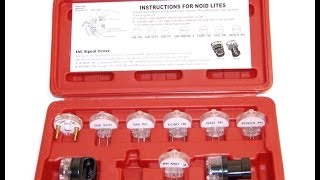
- A simple 'noid light' test can quickly tell you if the problem is with the injector itself or the wiring/PCM.
- If you replace an injector on a high-mileage engine, consider replacing them all as a set for balanced performance and future reliability.
What's Unique About the 2007-2010 Dodge RAM 1500
The diagnostic approach for P0204 on this truck depends heavily on which engine it has. For the 4.7L V8: A widely known and manufacturer-acknowledged issue is the injector wiring harness that passes through the passenger-side valve cover gasket. Heat and vibration cause the wires to become brittle and break, creating an open circuit. Chrysler issued Technical Service Bulletin (TSB) 18-004-08 for this specific problem, advising technicians to inspect this harness before replacing injectors. This makes the wiring inside the valve cover a primary suspect for P0204 on 4.7L models. For the 5.7L HEMI V8: This engine has a different design. The injector wiring does not pass through the valve cover. Instead, the harness runs over the top of the intake manifold. On the HEMI, P0204 is more commonly caused by a failed injector, a damaged pigtail connector at the injector, or wiring that has become brittle and cracked from engine heat exposure in the main harness.
Diagnostic Flowchart
Tap your situation to follow the diagnostic path that matches what you're seeing on this vehicle.
Symptoms You May Notice
- Check Engine Light is on
- Rough or shaking idle
- Engine misfires, which may feel like a stutter or hesitation during acceleration
- Reduced engine power and poor acceleration
- Increased fuel consumption
- Strong smell of unburned gasoline from the exhaust
- Replacing the spark plug or ignition coil for cylinder 4. While these can cause a misfire (P0304), they will not cause an injector circuit code (P0204). If you have both P0304 and P0204, the injector circuit is the root cause of the misfire.
Most Likely Causes
- Faulty Fuel Injector 🔴 High Probability → Shop Fuel Injector Fuel injectors are wear items that can fail electrically after many miles and heat cycles. The internal coil winding can break, creating an open circuit.
How to confirm: Swap the cylinder 4 injector with an adjacent one (e.g., cylinder 2). Clear the codes and run the engine. If the code changes to P0202, the injector is bad. You can also test the injector's resistance with a multimeter; it should be within the manufacturer's specified range (typically 11-14 ohms for these engines). An 'open' or infinite resistance reading confirms a failed coil.
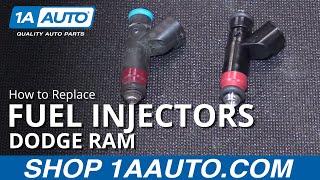
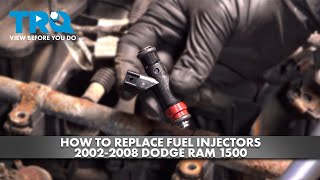
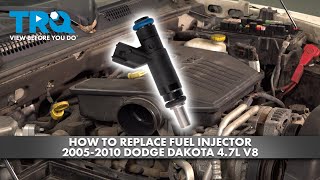
Typical fix: Replace the faulty fuel injector. It is often recommended to replace all injectors as a set 🎬 Watch: Step-by-step fuel injector replacement walkthrough. if the vehicle has high mileage to ensure balanced fuel delivery.
Est. part cost: $40-$120 - Damaged Wiring or Connector 🔴 High Probability On 4.7L V8s, the wiring inside the valve cover gasket is the most common cause. For 5.7L HEMIs, the harness over the intake manifold is exposed to intense heat. In both cases, wires can break, or the plastic connector at the injector can become brittle and fail.
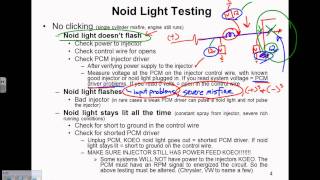
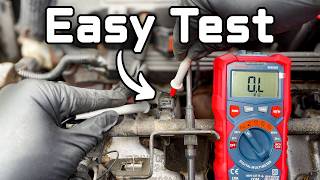
How to confirm: Visually inspect the wiring harness leading to the cylinder 4 injector for any signs of cracking, melting, or rodent damage. Unplug the connector and check for corrosion or bent pins. Use a 'noid light' to verify the PCM is sending a pulse signal 🎬 See this expert guide on testing circuits with a noid light. to the connector. If the light flashes, the wiring and PCM are likely good. If it doesn't flash, the problem is in the wiring or the PCM.
Typical fix: Repair the damaged section of wire or replace the injector pigtail connector. If the damage is at the valve cover pass-through on a 4.7L, the valve cover gasket with its integrated wiring loom must be replaced.
Est. part cost: $15-$50 for a pigtail, $60-$150 for a 4.7L valve cover gasket with wiring. - Faulty Powertrain Control Module (PCM) ⚪ Low Probability → Shop Engine Control Module (ECM) While less common, the internal driver circuit within the PCM that controls the injector can fail. This can sometimes happen if a failing injector shorts out and damages the driver.
How to confirm: This is a diagnosis of exclusion. If the injector and wiring have been tested and are confirmed to be good (e.g., injector has correct resistance, wiring has continuity and a noid light flashes), the PCM is the likely culprit. A professional may use an oscilloscope to analyze the signal directly from the PCM pin.
Typical fix: Replace and reprogram the Powertrain Control Module. This usually requires a professional or a specialized service that provides pre-programmed PCMs. A user on DodgeForum.com confirmed a PCM replacement fixed his P0204 and P0420 codes after other checks passed.
Est. part cost: $200-$700
Rare But Worth Checking
- Faulty Totally Integrated Power Module (TIPM):
Diagnosis Steps
- Read the trouble codes with an OBD-II scanner to confirm P0204 is present and see if P0304 is also stored.
- Identify your engine (4.7L V8 or 5.7L HEMI) as the diagnostic path differs.
- Locate cylinder #4. On a 5.7L HEMI, it is the second cylinder back on the passenger's side. On a 4.7L V8, it is the rearmost cylinder on the passenger's side.
- Visually inspect the wiring harness and connector for the cylinder 4 fuel injector. Look for obvious damage like breaks, melting, or corrosion.
- Perform a 'noid light' test. Disconnect the injector and plug the noid light into the harness connector. Start the engine. The light should flash steadily. If it flashes, the PCM and wiring are likely good, pointing to the injector. If it doesn't flash or stays on solid, there is a problem in the wiring or the PCM driver.
- If the noid light flashed, confirm a bad injector. Turn off the engine and swap the cylinder 4 injector with another one (e.g., cylinder 2). Clear the codes, start the engine, and see if the code follows the injector (i.e., you now have a P0202 code). If it does, the injector is faulty.
- If the noid light did not flash, check for power. With the key on (engine off), use a multimeter to check for battery voltage on one of the pins in the injector connector. If there is no power, check the auto shutdown (ASD) relay and related fuses.
- For 4.7L V8 Only: If wiring is suspected, pay close attention to the harness where it passes through the valve cover gasket, per TSB 18-004-08. The break is often inside the loom and not externally visible. You may need to check continuity of the injector control wire from the PCM connector to the injector connector.
- If the injector and all wiring test good, the PCM is the most likely remaining cause.
Parts You'll Likely Need
- Fuel Injector
(OEM #5.7L HEMI: 53032712AB, 05037479AC; 4.7L: 53032146AA)— This is a common component to fail electrically, causing the P0204 code.
Trusted brands: Mopar, Bosch, Standard Motor Products
OEM price range: $90-$150
Aftermarket price range: $40-$90 - Fuel Injector Connector Pigtail — The plastic connector and its terminals can become brittle and fail, or wires can be damaged near the connector, requiring a new pigtail to be spliced in.
Trusted brands: Mopar, Dorman
OEM price range: $25-$40
Aftermarket price range: $15-$25 - Valve Cover Gasket with Wiring Loom (4.7L V8 Only)
(OEM #53022158AH, 68002012AA)— Specific to the 4.7L V8, this is the official fix for the known wiring failure documented in TSB 18-004-08. The wiring that passes through the valve cover gasket is a known failure point that can cause injector circuit codes.
Trusted brands: Mopar, Fel-Pro
OEM price range: $100-$180
Aftermarket price range: $60-$120
Related Codes That Often Appear With This One
- P0304 — P0304 means 'Cylinder 4 Misfire Detected.' Since the P0204 code indicates a problem with fuel delivery to cylinder 4, that cylinder cannot fire correctly, which directly causes a misfire.
Technical Service Bulletins (TSBs) & Recalls
- 18-004-08: (Applies to 4.7L V8) Addresses engine misfires and injector circuit codes caused by a faulty injector wiring harness that passes through the valve cover. The fix is to replace the valve cover gasket assembly which contains the new wiring.
- 9002688: This is an NHTSA reference number that points to the issue described in Chrysler TSB 18-004-08.
Platform-Specific Known Issues
- 4.7L V8 Engine: A Technical Service Bulletin (TSB 18-004-08) highlights that the wiring loom integrated into the passenger side valve cover gasket is a common failure point for injector circuit codes. The wires fatigue and break internally. The official repair is to replace the entire gasket and loom assembly.
Mechanic-Grade Diagnostic Values
- Fuel Injector Coil Resistance — expected: 12 Ohms +/- 1.2 Ohms (approx. 10.8 to 13.2 Ohms). Failure: A reading of infinite resistance (OL) indicates an open coil. A reading significantly lower than 10 Ohms suggests a short. All injectors should read within 0.5 Ohms of each other for a balanced set.
- Injector Control Circuit Voltage (at injector connector) — expected: Approximately 12V (battery voltage) on the power feed wire (from ASD relay) with key on. The control wire will show 12V when the injector is off and pulse to ground (near 0V) when the PCM commands it to fire.. Failure: No voltage on the power feed wire points to an issue with the ASD relay or its circuit. No pulse on the control wire (verified with a noid light or oscilloscope) indicates a wiring or PCM driver problem.
- Injector Control Circuit Resistance to Ground — expected: Greater than 10k Ohms (no continuity). Failure: Resistance below 10k Ohms indicates a short to ground in the control wire between the PCM and the injector.
- Injector Control Circuit Continuity — expected: Below 5.0 Ohms. Failure: Resistance above 5.0 Ohms between the PCM connector pin and the injector connector pin indicates an open or high resistance in the wire.
Scan Tool Commands That Help
- Professional Scan Tool (e.g., WiTech): Actuate ASD Relay / ASD Relay Control State — This command forces the Auto Shutdown (ASD) relay on, which supplies power to the fuel injectors. It is used during diagnosis to verify if battery voltage is reaching the injector connector without needing to crank the engine.
- Professional Scan Tool (e.g., WiTech): Fuel Injector Actuator Test — This bidirectional test commands the PCM to pulse a specific injector (e.g., cylinder 4). While listening to the injector with a stethoscope or by touch, you can confirm if the PCM driver and wiring are capable of activating the injector. A test light or noid light connected to the harness will also flash during this test.
- Injector Balance Tester: Injector Balance/Flow Test — While not directly for a P0204 electrical fault, this tool is used to find a mechanically faulty but electrically sound injector. It pulses the injector for a set duration while monitoring fuel pressure drop. An inconsistent pressure drop for cylinder 4 compared to others would indicate a clogged or leaking injector, which typically sets different codes but can be a related issue.
Wiring & Ground Locations
- Cylinder 4 Injector Control Circuit (4.7L) — Pin 58 in the C1 (Black) PCM connector. The wire is typically Brown/Dark Blue.. This is the specific wire that the PCM uses to ground-pulse the cylinder 4 injector. Testing for continuity from this pin to the injector connector is critical for finding an open or short in the harness.
- Cylinder 4 Injector Control Circuit (5.7L) — Pin 14 in the C2 PCM harness connector. The circuit is designated (K14).. This is the control wire for the cylinder 4 injector on the 5.7L HEMI. Technicians must probe this circuit at the PCM and injector ends to check for opens, shorts to ground, or high resistance.
- ASD Relay Output Circuit — This circuit, often designated (F342) or (K342), provides 12V power to the bank of injectors that includes cylinder 4.. A failure in this power supply wire will prevent the injector from firing, even if the control circuit is good. It's the first thing to check with a test light if a noid light doesn't flash.
- Engine/Chassis Ground Straps — Key grounds are located from the rear of both cylinder heads to studs on the firewall, and from the battery negative terminal to the chassis and engine block.. Poor engine or PCM grounds can cause floating voltages and erratic behavior in sensor and actuator circuits, including injector drivers. While not a direct cause of a single-cylinder code, verifying grounds are clean and tight is a fundamental step in any electrical diagnosis.
Real Owner Repair Stories
- DodgeForum.com user (1997 Dodge Ram 1500 5.2L (similar wiring principles)) — P0204 code, rough running, and backfiring, regardless of whether the injector was plugged in or not.
❌ Tried (didn't work) Replacing the #4 fuel injector, Swapping injectors between cylinders, Disconnecting the MAP sensor, Repairing the exhaust system
✅ What actually fixed it The user discovered a broken wire in the harness for the #4 injector. After repairing the wire, the backfiring stopped and the code was resolved.
OEM Part Supersession History
53032712AB→Discontinued— This part number, which appears to be for a 5.7L fuel rail assembly rather than a single injector, is listed as discontinued by multiple Mopar parts retailers.
Heads up: When searching for this part, results often point to used parts or entire fuel rail assemblies. The individual injector part number is what should be used for replacement.
Model Year Variations Within This Range
- 2008-2010: The 4.7L V8 engine received a major update for the 2008 model year, increasing horsepower from ~235 to 310. This 'Next Generation' 4.7L features different heads, a higher compression ratio, and two spark plugs per cylinder. While the P0204 diagnosis is similar, be aware that some engine components, sensors, and the PCM calibration are different from the 2007 4.7L engine.
Helpful Videos
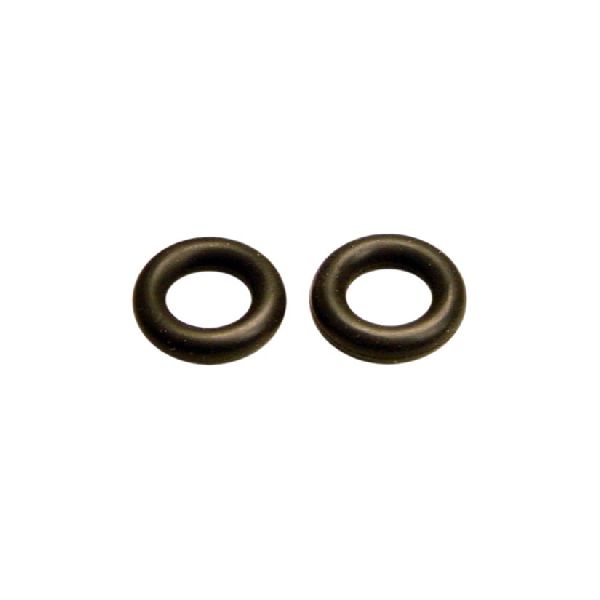
We Have This Part in Stock


The information in this article is provided for general reference and educational purposes only. Vehicle specifications, procedures, and part compatibility can vary by production date, trim level, and region. Always consult your vehicle's factory service manual and verify part numbers before purchasing or performing repairs. Safety-critical components such as airbags, seat belts, and braking systems should be installed by a qualified professional.
- Dodge RAM 1500:
- 🧭 Diagnostic Flowchart
- 🎬 Helpful Videos
- 🛍️ Shop This Part
- What's Unique About the 2007-2010 Dodge RAM 1500
- Symptoms You May Notice
- Most Likely Causes
- Rare But Worth Checking
- Diagnosis Steps
- Parts You'll Likely Need
- Related Codes That Often Appear With This One
- Technical Service Bulletins (TSBs) & Recalls
- Platform-Specific Known Issues
- Mechanic-Grade Diagnostic Values
- Scan Tool Commands That Help
- Wiring & Ground Locations
- Real Owner Repair Stories
- OEM Part Supersession History
- Model Year Variations Within This Range
- 🎟️ Get 5% Off