

P0204 on 2000-2003 Dodge Ram Wagon: Injector Circuit Fault Causes and Fixes
For a P0204 code on a 2000-2003 Dodge Ram Wagon, the problem is most often the injector wiring harness that passes through the passenger side valve cover gasket, not the fuel injector itself. Before replacing the injector, inspect the wiring harness for damage or corrosion as noted in Dodge TSB #9002688. A new valve cover gasket with the integrated harness, such as Mopar part #53002012 or Fel-Pro #VS50522T, is the likely fix.
- P0204 on your Ram Wagon points to an issue in the cylinder 4 fuel injector circuit.
- Before you buy a new fuel injector, you MUST check the wiring. A faulty harness inside the passenger side valve cover gasket is the most common cause.
- A 'noid light' is the best tool to quickly determine if the wiring or the injector is the problem.
- This issue is also common on Dodge Ram pickups, Dakotas, and Durangos from the same era with Magnum V8 engines.
What's Unique About the 2000-2003 Dodge RAM WAGON
On these Dodge Ram Wagons and their platform mates with Magnum engines, a P0204 code is frequently caused by a specific, well-documented issue. The wiring for the fuel injectors passes through the valve cover gasket itself. Over time, constant exposure to engine heat and oil causes this internal wiring to become brittle and fail, creating an open or short circuit. This common failure point leads many to mistakenly replace the fuel injector when the true fault lies in the valve cover gasket and its integrated harness. A Technical Service Bulletin (TSB #9002688) was issued by Dodge to address this exact misdiagnosis.
Diagnostic Flowchart
Tap your situation to follow the diagnostic path that matches what you're seeing on this vehicle.
Symptoms You May Notice
- Check Engine Light is on
- Rough idle or stalling
- Engine misfire (may feel like a shake or stumble)
- Reduced engine power and acceleration
- Poor fuel economy
- Smell of unburnt fuel from the exhaust
- Engine backfiring
- Replacing the fuel injector without testing the circuit. The TSB for this vehicle explicitly warns that the wiring in the valve cover gasket is a more likely culprit than the injector itself.
Most Likely Causes
- Faulty Wiring in Valve Cover Gasket 🔴 High Probability → Shop Engine Valve Cover As documented in TSB #9002688, the wiring loom for the injectors is integrated into the valve cover gasket, a known failure point. Heat and oil exposure cause the wiring to become brittle and fail, leading to an open or short circuit right where the wires pass through the gasket or connect to the injector.
How to confirm: After confirming no signal at the injector connector with a noid light, disconnect the main harness at the valve cover and test for continuity between the external connector pins and the injector connector pins. Any high resistance or open circuit points to the gasket harness. A visual inspection after removing the valve cover often reveals cracked or broken insulation on the wires.
Typical fix: Replace the valve cover gasket, which includes the new injector wiring loom. The passenger side gasket houses the harness for cylinder 4. Popular part numbers include Mopar #53002012 (superceded by newer numbers) and aftermarket equivalents like Fel-Pro #VS50522T.
Est. part cost: $50-$100 - Failed Fuel Injector 🟡 Medium Probability → Shop Fuel Injector
How to confirm: If a noid light flashes correctly at the connector (indicating the wiring is okay), the injector itself is suspect. Check the injector's internal resistance with a multimeter; it should be within the manufacturer's specified range (typically 12-15 ohms for these engines). An out-of-spec reading or an open circuit indicates a failed injector.
Typical fix: Replace the fuel injector for cylinder 4. The OEM part number is typically 53030778AA.
Est. part cost: $40-$90 - Damaged Wiring Harness or Connector ⚪ Low Probability
How to confirm: Visually inspect the external wiring harness leading to the valve cover for any signs of chafing, melting, or corrosion. Check the main connector at the valve cover for bent, pushed-out, or corroded pins.
Typical fix: Repair the damaged section of wire or clean/replace the connector.
Est. part cost: $10-$30
Rare But Worth Checking
- Faulty Powertrain Control Module (PCM): → Shop Engine Control Module (ECM) This is the least likely cause. A failed injector driver in the PCM can cause this code, but it should only be considered after all other possibilities—wiring, connectors, and the injector itself—have been thoroughly tested and ruled out. Often, if the PCM is the issue, multiple injector codes may be present.
Diagnosis Steps
- Confirm the code with an OBD-II scanner.
- Check for Technical Service Bulletins (TSBs). TSB #9002688 is directly relevant to this code and vehicle.
- Locate cylinder #4. On the V6 and V8 Magnum engines, the passenger side of the engine contains cylinders 2, 4, 6, and 8 from front to back. Cylinder #4 is the second one back on the passenger side.
- Disconnect the electrical connector at the cylinder 4 fuel injector.
- Use a 'noid light' and plug it into the connector. Start the engine. The light should flash steadily. If it does not flash, the problem is in the wiring or PCM. If it does flash, the wiring is likely good and the injector itself is likely faulty.
- If the noid light doesn't flash, the next step is to inspect the wiring inside the valve cover gasket, as per the TSB. This involves removing the passenger side valve cover and visually inspecting the harness for brittle, cracked, or broken wires, especially near the injector plug. You can also test for continuity from the main engine harness connector (outside the valve cover) to the injector connector (inside).
- If the noid light does flash, test the resistance of the fuel injector with a multimeter. It should read between 12-15 Ohms. If it's significantly higher, lower, or shows an open circuit (OL), the injector is bad.
- As a final check, you can swap the cylinder 4 injector with an adjacent one (like cylinder 2). Clear the codes and run the engine. If the code changes to P0202, the injector is confirmed to be the problem. If the P0204 code returns, the problem is in the wiring.
Parts You'll Likely Need
- Valve Cover Gasket with Injector Harness
(OEM #53002012 (and subsequent revisions))— This is the most common failure point for this code on this specific vehicle, as documented by Dodge's own TSB #9002688. The harness for cylinders 2, 4, 6, 8 is integrated into the passenger side gasket.
Trusted brands: Mopar, Fel-Pro (p/n VS50522T), Mahle
OEM price range: $80-$120
Aftermarket price range: $50-$90 - Fuel Injector
(OEM #53030778AA)— If the wiring and gasket are confirmed to be good, the injector itself is the next logical part to fail.
Trusted brands: Bosch, Standard Motor Products, Delphi
OEM price range: $70-$110
Aftermarket price range: $40-$80
Related Codes That Often Appear With This One
- P0304 — P0304 means "Cylinder 4 Misfire Detected." Since P0204 indicates a problem with the fuel injector circuit for cylinder 4, that cylinder isn't getting the right amount of fuel, which directly causes a misfire.
- P0420 — P0420 indicates "Catalyst System Efficiency Below Threshold (Bank 1)". If cylinder 4 is not firing correctly due to the injector issue, unburnt fuel is dumped into the exhaust, which can overwhelm and damage the catalytic converter, triggering this code.
Technical Service Bulletins (TSBs) & Recalls
- Bulletin #9002688: Warns against replacing fuel injectors for Diagnostic Trouble Codes P0201 through P0206 before verifying the wiring loom and/or connector in the valve cover gasket is not the root cause.
Platform-Specific Known Issues
- A prominent issue for this vehicle is the failure of the injector wiring harness that is integrated into the valve cover gasket. This design makes the wiring susceptible to heat and oil damage over its service life, leading to circuit faults that are often misdiagnosed as injector failures. TSB #9002688 was released to guide technicians to check this wiring before replacing injectors. Owners on forums like DodgeForum.com report the wires becoming extremely brittle, with insulation cracking off and causing a direct short or open circuit inside the valve cover.
Mechanic-Grade Diagnostic Values
- Fuel Injector Internal Resistance — expected: 12.0 Ohms for OEM Siemens injector (p/n 53030778). Aftermarket may vary slightly, e.g., 12.4 Ohms for comparable Bosch EV14.. Failure: A reading of OL (Open Loop) or significantly higher/lower than 12 Ohms indicates a failed injector coil.
- Injector Pulse Width (at idle) — expected: 3ms - 10ms on a fully warmed-up engine at idle with no load.. Failure: A value of 0ms on cylinder 4 while others show normal readings points to the PCM not commanding the injector to fire. Unusually high values could indicate a separate fueling issue the PCM is trying to correct.
- Injector Connector Voltage (backprobed, cranking) — expected: Approximately 12V (battery voltage) on BOTH wires. One wire is constant power from the ASD relay, the other is the ground-side pulse from the PCM. A multimeter is too slow to see the pulse, so it also reads as voltage.. Failure: Reading 0V on the power feed wire indicates a problem upstream (ASD relay, fuse, or wiring). Reading 0V on the control wire while cranking could indicate an open in the wire to the PCM or a faulty PCM driver.
- Injector Harness Wire Resistance — expected: 0-1 Ohm from the PCM connector pin to the valve cover pass-through connector pin.. Failure: High resistance (>1 Ohm) or an open circuit (OL) indicates a break in the wire that needs to be repaired.
Scan Tool Commands That Help
- DRB III or equivalent professional scanner (Launch, Autel): Injector Kill / Actuation Test / Power Balance Test — To confirm if the PCM and wiring are capable of controlling the injector. The command allows a technician to selectively disable cylinder 4's injector. If the engine's idle changes, the circuit is likely working. If the idle does not change, it confirms that cylinder was not contributing, pointing directly to a fault in that circuit.
Wiring & Ground Locations
- Injector #4 PCM Circuits — At the main Powertrain Control Module (PCM) connector C1.. These are the specific wires that control the injector. Use these for testing continuity to the injector harness. The circuits are: K614 (High Side Driver) and K14 (Low Side Driver).
- G104 — Left front of the engine compartment, often near the battery.. This is a primary engine compartment ground. While the injector is controlled via a PCM driver, a poor main ground can cause widespread, unpredictable electrical issues and voltage drops that could affect sensor readings and module performance.
OEM Part Supersession History
53030262→53030778AA— Standard OEM part update/revision.
Heads up: The original part number 53030262 is obsolete. The direct replacement is 53030778AA (Siemens Deka). Using other injectors may alter the duty cycle and affect performance.
Model Year Variations Within This Range
- 2000-2002 (JTEC) vs 2003 (NGC): A potential change in the Powertrain Control Module (PCM) occurred around 2002-2003, from the JTEC (3-plug, 96-pin total) to the NGC (4-plug) controller. While the P0204 diagnosis is similar, technicians must ensure they are using the correct wiring diagram for their specific PCM. A JTEC PCM has three large connectors, while the later NGC PCM has four. This is critical if diagnosing at the PCM is required.
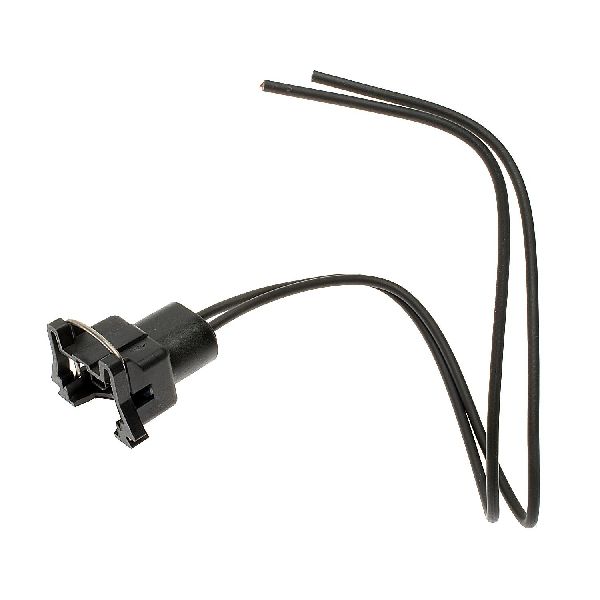
We Have This Part in Stock


The information in this article is provided for general reference and educational purposes only. Vehicle specifications, procedures, and part compatibility can vary by production date, trim level, and region. Always consult your vehicle's factory service manual and verify part numbers before purchasing or performing repairs. Safety-critical components such as airbags, seat belts, and braking systems should be installed by a qualified professional.
- Dodge RAM WAGON:
- 🧭 Diagnostic Flowchart
- 🛍️ Shop This Part
- What's Unique About the 2000-2003 Dodge RAM WAGON
- Symptoms You May Notice
- Most Likely Causes
- Rare But Worth Checking
- Diagnosis Steps
- Parts You'll Likely Need
- Related Codes That Often Appear With This One
- Technical Service Bulletins (TSBs) & Recalls
- Platform-Specific Known Issues
- Mechanic-Grade Diagnostic Values
- Scan Tool Commands That Help
- Wiring & Ground Locations
- OEM Part Supersession History
- Model Year Variations Within This Range
- 🎟️ Get 5% Off