

P0204 on 2007-2016 GMC Acadia 3.6L: Injector Circuit Fixes and Causes
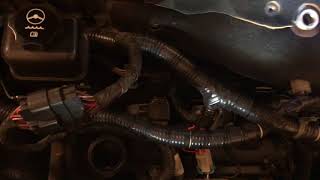
On a 2007-2016 GMC Acadia, code P0204 is most often caused by a chafed engine wiring harness, a known issue documented in GM TSB #PIP4924D. Before replacing the fuel injector, thoroughly inspect the harness for damage, especially where it rubs against the intake plenum, valve cover bolts, and near the underhood fuse box. A broken plastic mounting bracket for the fuse box is a common culprit that allows the harness to sag and get damaged. A simple wiring repair can often resolve the issue for und
- For code P0204 on a 2007-2016 Acadia, the most likely cause is a damaged wiring harness, not a bad fuel injector.
- Always start your diagnosis with a thorough visual inspection of the wiring harness, especially around the engine and under the fuse box, as detailed in TSB #PIP4924D.
- Cylinder 4 is the middle cylinder on the front bank (near the radiator), which is relatively easy to access for inspection and testing.
- Do not replace any parts until you have confirmed the cause with a diagnostic test, such as a 'wiggle test' for wiring or a resistance test for the injector.
- Driving with this code can cause expensive damage to the catalytic converter, so it should be addressed promptly.
What's Unique About the 2007-2016 GMC Acadia
For this generation of GMC Acadia and its platform-mates (Buick Enclave, Chevy Traverse, Saturn Outlook), the primary suspect for P0204 is not the fuel injector itself, but the engine wiring harness. General Motors issued Technical Service Bulletin #PIP4924D specifically because the harness is prone to rubbing against engine components like the intake plenum, valve cover bolts, and fuel lines, causing the wires to break or short out. This is such a common failure that a thorough visual inspection of the wiring is the mandatory first step before considering any parts replacement. Cylinder 4 is the middle cylinder on the front bank (Bank 2, closest to the radiator), making it easier to access for inspection than the rear cylinders against the firewall.
Generation note: The 2007-2016 range covers the entire first generation of the GMC Acadia. However, there are key engine differences: 2007-2008 models used the port-injected 3.6L LY7 V6, while 2009-2016 models used direct-injected 3.6L V6s (LLT and later LFX). While the wiring chafe issue can affect all, diagnostic values and part numbers are different. The 2009-2011 LLT engine injectors have a resistance of 11-14 Ohms, whereas the 2012-2016 LFX injectors have a much lower resistance of 1.2-2.5 Ohms. Using the wrong spec will lead to a misdiagnosis.
Symptoms You May Notice
- Check Engine Light is on
- Rough, unstable idle
- Engine misfiring or stumbling, especially under load
- Noticeable loss of engine power and poor acceleration
- Reduced fuel economy
- "Service Stabilitrak" or "Traction Control Off" message on the dashboard
- Engine may enter "Reduced Engine Power" mode
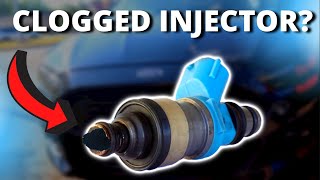
- Hard starting or stalling 🎬 Watch: Learn more about common symptoms of a clogged fuel injector.
- Replacing the fuel injector without first inspecting the wiring harness. The TSB makes it clear that wiring chafe is the most common issue and can perfectly mimic a failed injector.
- Replacing the spark plug or ignition coil for cylinder 4. While these parts can cause a misfire (P0304), the P0204 code specifically points to an electrical fault in the fuel injector circuit, not the ignition system.
Most Likely Causes
- Chafed or Damaged Fuel Injector Wiring Harness 🔴 High Probability → Shop Engine Wiring Harness As documented in GM TSB #PIP4924D, the harness routing makes it susceptible to rubbing against the intake plenum, valve cover bolts, fuel lines, or cylinder head, causing wires to short or break. A broken plastic mounting bracket for the underhood fuse box is a known weak point that allows the harness to sag and get damaged.
How to confirm: Perform a thorough visual inspection of the harness, focusing on the documented chafe points. With the engine running, carefully perform a 'wiggle test' by moving the harness near the fuse box and where it runs over the engine to see if it induces or changes the misfire.
Typical fix: Repair the damaged section of wire using solder and heat-shrink tubing. Protect the repaired area and the rest of the harness with split-loom conduit or high-quality automotive tape (like Tesa tape) to prevent future damage. Ensure the harness is secured away from sharp edges.
Est. part cost: $10-$50 - Faulty Cylinder 4 Fuel Injector 🟡 Medium Probability → Shop Fuel Injector The direct injection (DI) injectors on the 2009-2016 LLT/LFX engines operate under very high pressure and can fail electrically over time. The internal coil winding can develop an open or short circuit.
How to confirm: After confirming the wiring is intact, disconnect the injector and measure its resistance with a multimeter. For the 2009-2011 LLT engine, it should be 11-14 Ohms. For the 2012-2016 LFX engine, it should be 1.2-1.8 Ohms. The most definitive test is to swap the cylinder 4 injector with an adjacent one (like cylinder 2 or 6), clear the codes, and see if the fault code follows the injector (e.g., changes to P0202 or P0206).
Typical fix: Replace the faulty fuel injector. 🎬 See this walkthrough on how to replace the fuel injectors. It is required to replace the Teflon seal and retainer clip at the same time. Many technicians recommend replacing all injectors on the same bank if they are high mileage.
Est. part cost: $70-$150 - Poor Connection at Injector or ECM ⚪ Low Probability Vibration and heat can cause the injector connector terminals to become loose or corroded over time. TSB #23-NA-027 for a similar issue on other GM vehicles points to fretting corrosion (visible as black powder) on the connector pins as a cause.
How to confirm: Disconnect the connector at the #4 fuel injector and inspect for any signs of corrosion, backed-out pins, or damage. Wiggle the connector with the engine running to see if it affects the idle. Check for a secure click when reconnecting; a loose retaining clip can cause an intermittent connection.
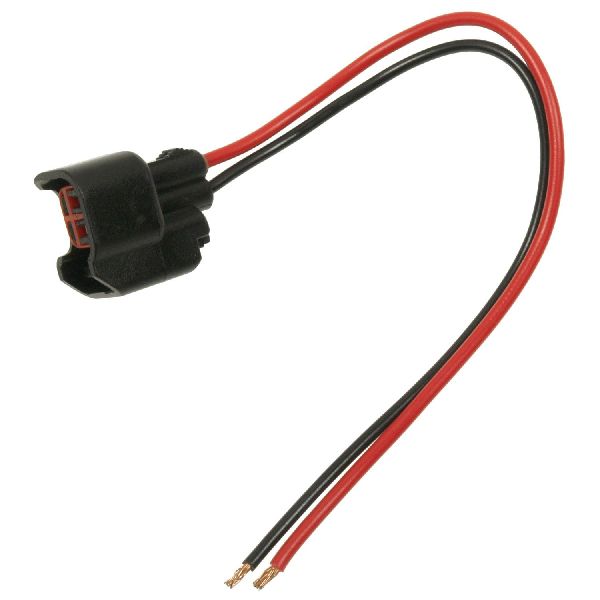
Typical fix: Clean the connector terminals with electrical contact cleaner and apply dielectric grease to prevent future moisture intrusion. If the connector itself is damaged, replace the connector pigtail by splicing it into the harness.
Est. part cost: $15-$40
Rare But Worth Checking
- Faulty Powertrain Control Module (PCM): → Shop Engine Control Module (ECM) This is very rare. The injector driver circuit inside the PCM can fail, but all other potential causes, especially wiring and the injector itself, should be exhaustively ruled out before condemning the PCM.
Diagnosis Steps
- Read all stored fault codes with an OBD-II scanner. Note if P0304 or other injector codes are present.
- Locate cylinder 4. It is the middle cylinder on the engine bank closest to the radiator (Bank 2).
- Perform a detailed visual inspection of the engine wiring harness, especially where it passes over the valve covers, near the intake manifold, and around the underhood fuse box, per TSB #PIP4924D. Check for a broken plastic fuse box mounting bracket which is a common cause of harness sag.
- With the engine idling, carefully wiggle the wiring harness in the suspect areas to see if the misfire changes, which would indicate a short or open circuit.
- If no wiring damage is found, disconnect the cylinder 4 injector connector. Plug a 'noid light' into the connector and start the engine. The light should flash steadily, confirming the PCM is sending a signal.
- If the noid light flashes correctly, turn off the engine and test the fuel injector. Set a multimeter to Ohms and measure the resistance across the two pins on the injector itself. For a 2009-2011 LLT engine, the reading should be between 11-14 Ohms. For a 2012-2016 LFX engine, the reading should be 1.2-1.8 Ohms. An 'OL' (open) or near-zero reading indicates a failed injector.
- If the resistance is out of spec, the injector is faulty. If it is within spec, the issue may be an intermittent connection. Clean the connector terminals or consider swapping the injector with another cylinder (e.g., cylinder 2) to see if the code follows (e.g., becomes P0202).
- If the code does not follow the injector, the fault is in the wiring. Perform a continuity test on both wires from the injector connector back to the PCM.
Parts You'll Likely Need
- Fuel Injector Wiring Harness (Passenger Side/Front Bank)
(OEM #12621096)— This is the most common failure point due to chafing, as documented in GM TSB #PIP4924D. Often, only a wire repair is needed, but if damage is extensive, the harness section may need replacement. This part number has been superseded by GM from 12614936.
Trusted brands: GM Genuine Parts
OEM price range: $90-$160
Aftermarket price range: $50-$90 - Fuel Injector (LLT Engine, 2009-2011)
(OEM #12638530 (superseded by 12669384))— This is the second most likely cause if the injector's internal coil has failed electrically. Part number 12638530 was used on early DI models and has been superseded by 12669384.
Trusted brands: ACDelco, Bosch
OEM price range: $80-$150
Aftermarket price range: $50-$100 - Fuel Injector (LFX Engine, 2012-2016)
(OEM #12638530 (superseded by 12669384))— The LFX engine uses a different injector than the earlier LLT. This is the second most likely cause if the injector's internal coil has failed electrically. Part number 12638530 was used on early DI models and has been superseded by 12669384.
Trusted brands: ACDelco, Bosch
OEM price range: $70-$150
Aftermarket price range: $40-$90
Related Codes That Often Appear With This One
- P0304 — This code means 'Cylinder 4 Misfire Detected.' Since P0204 indicates a fuel circuit problem for cylinder 4, a misfire in that same cylinder is a direct and expected symptom.
- P0300 — This means 'Random/Multiple Cylinder Misfire.' It can appear if the electrical fault is intermittent or if the wiring damage is severe enough to affect multiple injector circuits.
- P0202, P0206 — If the wiring harness damage affects the power or ground supply shared by the entire front bank of injectors (Bank 2), you may see circuit codes for the other cylinders on that bank as well. This can also be caused by a corroded shared ground point for that bank.
- P2149 — This code means 'Fuel Injector Group 'B' Supply Voltage Circuit/Open.' Group B on the 3.6L V6 corresponds to cylinders 2, 4, and 6 (the front bank). This indicates a fault affecting the entire bank's power supply, often caused by the same harness chafe issue described in TSB #PIP4924D.
Technical Service Bulletins (TSBs) & Recalls
- PIP4924D: Recommends inspecting the fuel injector wiring harness for chafing when injector circuit codes like P0204 are present. This bulletin notes that technicians may find a range of codes including P0201 through P0206, as well as injector voltage codes like P2149.
Platform-Specific Known Issues
- Broken Underhood Fuse Box Bracket: A common point of failure is the plastic bracket that secures the underhood fuse box. When it breaks, the entire assembly can sag, putting stress on the main engine harness that routes underneath it. This constant movement and tension is a primary contributor to the wire chafing that causes P0204 and other injector codes.
Mechanic-Grade Diagnostic Values
- Fuel Injector Resistance (2012-2016 3.6L LFX) — expected: 1.2 - 1.8 Ohms. Failure: A reading of 0 Ohms (short), OL/infinity (open), or significantly outside this range.
- Fuel Injector Resistance (2009-2011 3.6L LLT) — expected: 11 - 14 Ohms. Failure: A reading significantly outside this range, or showing an open (OL) or shorted (near 0 Ohms) circuit.
- Injector Pulse Width (Live Scan Data at idle, warm engine) — expected: 2 - 4 milliseconds (ms). Failure: A value of 0 ms on cylinder 4 while other cylinders show a normal pulse width indicates the ECM has shut down the injector due to a fault.
- Injector Control Circuit Voltage (Key On, Engine Off, at injector connector control wire) — expected: Approx. 0V. Failure: A reading near battery voltage (12V) on the control wire indicates a short to power in the wiring harness.
- Injector Power Feed Circuit Voltage (Key On, Engine Off, at injector connector power wire) — expected: Battery Voltage (Approx. 12V). Failure: No voltage or low voltage suggests a problem in the power supply circuit, fuse, or relay, not the control side.
Scan Tool Commands That Help
- GM GDS2 / Tech2Win: Injector Balance Test — This bidirectional test is used to functionally check an injector when wiring and resistance tests are inconclusive. The tool commands the injector to fire a specific number of times and measures the resultant drop in fuel rail pressure. A minimal or no pressure drop for cylinder 4 compared to others confirms a clogged or non-functioning injector.
- GM GDS2 / Tech2Win: Fuel Injector Control — This function allows a technician to manually enable or disable a specific injector. Disabling cylinder 4 and observing no change in engine idle confirms that cylinder was not contributing, while disabling a good cylinder should cause a noticeable drop in RPM.
Wiring & Ground Locations
- Bank 2 (Front Bank) — The bank of cylinders closer to the radiator.. Cylinder 4 is the middle cylinder of this bank (2-4-6, from passenger to driver side). The wiring harness for this entire bank is a common failure point.
- G110 — On the right front of the engine, mounted to the cylinder head for Bank 2.. This is a primary engine ground for Bank 2 components. A loose or corroded G110 can cause intermittent and difficult-to-diagnose electrical issues for all injectors on this bank, including P0204, P0202, and P0206.
- G113 — Located on the left side of the engine, at an engine-to-transmission stud.. This is the primary ground for Bank 1 (rear bank), but checking all major engine grounds is good practice when chasing electrical faults.
- ECM Connector X1 — The main 73-pin connector on the Engine Control Module, located on the left side of the engine.. This is where the control circuit for the #4 injector originates. The final step in diagnosing a wiring fault is to check for continuity and shorts on the specific pin for the injector #4 control wire back to this connector.
Real Owner Repair Stories
- ScannerDanner Forum (2008 GMC Acadia 3.6L, 130k miles) — Engine runs for 30-45 minutes then develops a miss. Service Stabilitrak light comes on. Codes P0300, P0202, P0204, and P0206 all appear at the same time.
❌ Tried (didn't work) Cleaning VVT intake cam solenoid, Swapping upstream O2 sensors, Cleaning MAF, PCV valve, and lines
✅ What actually fixed it The ground on the side of the Bank 2 cylinder head was found to be corroded. Although an initial cleaning did not fix it, a more thorough cleaning and securing of the ground connection resolved the issue where the entire bank of injectors was losing control.
"I Checked Everything" — The Actual Cause
- In a case involving a 2008 Acadia, the vehicle would run fine cold but then set codes for the entire front bank of injectors (P0202, P0204, P0206) after 30-45 minutes of driving. Standard tests for wiring shorts might not immediately show a problem. The actual cause was a high-resistance, corroded ground connection on the Bank 2 cylinder head. As the engine bay heated up, the resistance at the corroded ground increased, causing the injector driver circuits to fault.
When the Usual Fixes Don't Work
- While the TSB pointing to a chafed wiring harness is the most probable cause for a single P0204 code, it is not the only cause. In an instance where a 2008 Acadia presented with codes for the entire front bank of injectors (P0202, P0204, P0206) that only appeared after the engine was warm, the root cause was not the harness chafing. Instead, it was a corroded main ground point on the cylinder head for that bank. This demonstrates that when multiple injectors on the same bank fail simultaneously, a shared power or ground issue should be investigated before assuming multiple wires have chafed through at the same time.
OEM Part Supersession History
12614936→12621096— Standard part revision by manufacturer.12638530→12669384— Standard part revision for direct injectors, possibly for improved reliability or manufacturing process.
Model Year Variations Within This Range
- 2009-2011 vs 2012-2016: The engine was updated from the LLT (2009-2011) to the LFX (2012-2016). For diagnosing P0204, the critical difference is the fuel injectors and ECM. LLT injectors have a high resistance (11-14 Ohms), while LFX injectors have a very low resistance (1.2-1.8 Ohms). The ECM also changed from a Bosch unit on the LLT to a Delphi unit on the LFX, which can affect wiring diagrams and connector pinouts.
Diagnostic Flowchart
Used vs. New Parts: Buying Guide for This Vehicle
When a used part is the smart pick: A used engine wiring harness from a junkyard can be a cost-effective choice if the damage to the original is extensive and beyond a simple spot repair. It is a static component that does not typically wear out, but fails due to external factors.
Donor-vehicle mileage cap: roughly under 80000 miles for the part to have meaningful remaining life.
What to inspect on the donor part:
- Inspect the entire harness for any signs of previous repairs, such as splices or electrical tape that isn't factory.
- Check for brittle plastic conduit or cracked wire insulation, which indicates excessive heat exposure.
- Carefully examine all connector plugs for broken locking tabs or corroded pins.
- Specifically inspect the areas known to chafe on the Acadia (near fuse box mount, over valve covers) to ensure the donor part is not already compromised.
OEM-only on this vehicle (don't cheap out):
- Direct Fuel Injectors
Aftermarket brands forum-validated for this vehicle:
- ACDelco (OEM)
- Bosch
Real Owner Stories
Aggregated from forums and TSBs cited above. Mileages and costs reflect what owners reported in those sources.
2008 GMC Acadia 3.6L — 130000 miles
Symptoms: The engine would run normally for about 30-45 minutes, then suddenly develop an obvious miss and trigger the Service Stabilitrak light. It set codes P0300, P0202, P0204, and P0206 all at once.
What fixed it: The problem was confirmed to be in the wiring harness near the underhood fuse box. Simply pulling up on the harness (a 'wiggle test') would cause the engine to start missing.
Source hint: ScannerDanner Forum
GMC Acadia 3.6L
Symptoms: Check Engine Light was on for code P0204, indicating an injector circuit malfunction.
What fixed it: The root cause was a loose connector clip on the fuel injector. Properly securing the electrical connector to the injector resolved the fault code.
Source hint: youtube.com/watch?v=Gk5a_e-G3E8 titled 'P0204 Injector Circuit Malfunction . Engine light code FIX'
GMC Acadia 3.6L
Symptoms: Check Engine Light on with P0204 and other related injector codes.
What fixed it: The fix was repairing a damaged section of the engine wiring harness, typically near the fuse box or where the harness is draped over the top of the engine.
Source hint: acadiaforum.net
Related OBD-II Codes
Frequently Asked Questions
Where is cylinder #4 located on my 2007-2016 Acadia's 3.6L V6 engine?
I heard there's a Technical Service Bulletin (TSB) for this P0204 code. What does it say?
Why is the wiring harness so likely to get damaged on this vehicle?
My dashboard is showing a "Service Stabilitrak" message along with the Check Engine Light for P0204. Are these related?
How can I test the cylinder 4 fuel injector myself to see if it's bad?
I'm replacing the fuel injector for cylinder 4. Is there anything else I need to replace at the same time?
I have a Buick Enclave / Chevy Traverse with a P0204 code. Does this information apply to my vehicle?
Helpful Videos
We Have This Part in Stock


The information in this article is provided for general reference and educational purposes only. Vehicle specifications, procedures, and part compatibility can vary by production date, trim level, and region. Always consult your vehicle's factory service manual and verify part numbers before purchasing or performing repairs. Safety-critical components such as airbags, seat belts, and braking systems should be installed by a qualified professional.
- GMC Acadia:
- 🧭 Diagnostic Flowchart
- 🎬 Helpful Videos
- 🛍️ Shop This Part
- What's Unique About the 2007-2016 GMC Acadia
- Symptoms You May Notice
- Most Likely Causes
- Rare But Worth Checking
- Diagnosis Steps
- Parts You'll Likely Need
- Related Codes That Often Appear With This One
- Technical Service Bulletins (TSBs) & Recalls
- Platform-Specific Known Issues
- Mechanic-Grade Diagnostic Values
- Scan Tool Commands That Help
- Wiring & Ground Locations
- Real Owner Repair Stories
- "I Checked Everything" — The Actual Cause
- When the Usual Fixes Don't Work
- OEM Part Supersession History
- Model Year Variations Within This Range
- Used vs. New Parts: Buying Guide for This Vehicle
- Real Owner Stories
- 2008 GMC Acadia 3.6L — 130000 miles
- GMC Acadia 3.6L
- GMC Acadia 3.6L
- Related OBD-II Codes
- Frequently Asked Questions
- 🎟️ Get 5% Off