

P0204 on 2010-2014 GMC Terrain: Injector Circuit Malfunction Causes and Fixes
P0204 on a 2010-2014 GMC Terrain indicates an electrical fault with the cylinder 4 fuel injector. The most common causes are a faulty fuel injector, a damaged wiring harness, or a loose/corroded connector. Expect to pay $70-$120 for a single OEM injector and 1-2 hours of labor.
- P0204 means an electrical problem with the cylinder 4 fuel injector, not necessarily a clogged injector.
- Always check the wiring and electrical connector at the injector first, as harness chafing is a very common problem on this platform.
- The platform-mate Chevrolet Equinox with the 2.4L engine suffers from the exact same P0204 causes and requires the same diagnostic approach.
- Do not replace the spark plug or ignition coil for this code; it is an electrical fault in the fuel injector circuit.
What's Unique About the 2010-2014 Gmc TERRAIN
The first-generation GMC Terrain (2010-2017) and its sibling, the Chevrolet Equinox, are known for injector circuit issues, particularly related to the wiring harness. A GM Technical Service Bulletin (TSB #PIP4924D) acknowledges a suite of injector codes, including P0204, in relation to engine misfires across many GM models, including the Terrain. The 2.4L Ecotec engine uses Gasoline Direct Injection (GDI), and its injectors have a very low resistance (around 1-2 ohms). Technicians unfamiliar with GDI may mistakenly diagnose a healthy injector as being shorted, as older port injectors typically have much higher resistance (12-16 ohms).
Diagnostic Flowchart
Tap your situation to follow the diagnostic path that matches what you're seeing on this vehicle.
Symptoms You May Notice
- Check Engine Light is on
- Rough idle or engine misfire
- Reduced engine power and acceleration
- Hesitation or stumbling when accelerating
- Poor fuel economy
- Engine stalling or struggling to stay running at low RPM
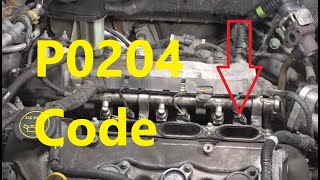
- Replacing the spark plug or ignition coil for cylinder 4. While these can cause a misfire (P0304), they will not cause an injector circuit code like P0204. P0204 is strictly an electrical circuit fault. 🎬 Watch: A guide to diagnosing and fixing P0204 circuit codes.
Most Likely Causes
- Wiring Harness or Connector Issue 🔴 High Probability The engine wiring harness is exposed to heat and vibration, which can cause wires to chafe, break, or short out. TSB #PIP4924D and other related bulletins specifically call out inspecting the fuel injector wiring harness for rubbing against components like the intake plenum, valve cover bolts, or fuel lines. This is a widely documented failure pattern on the 2.4L Ecotec platform.
How to confirm: Visually inspect the wiring going to the cylinder 4 injector for any signs of damage, chafing, or melting. Ensure the electrical connector is fully seated and the locking tab is engaged. Wiggle the connector with the engine running to see if it causes a change in idle. Use a noid light to confirm a pulse signal is reaching the connector from the ECM. If the noid light test fails, check for continuity and shorts to ground/power on the two wires between the ECM connector and the injector connector.
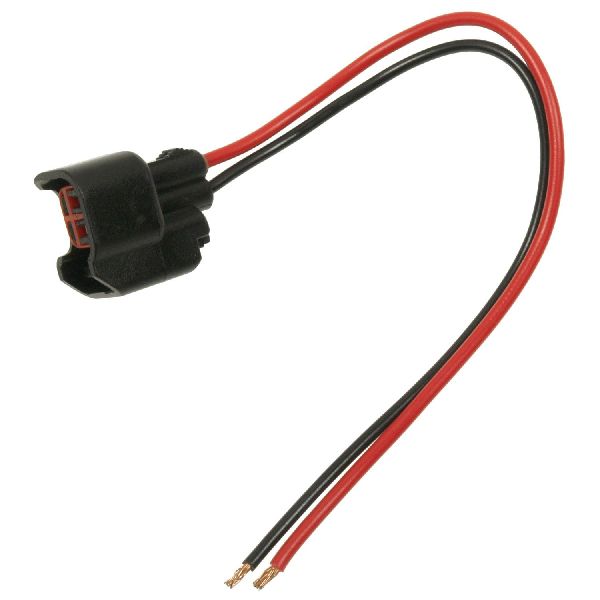
Typical fix: Repair the damaged section of wiring using solder and heat shrink, or replace the injector connector pigtail. Protect the repaired area with high-quality electrical tape or loom to prevent future chafing. Ensure the connector is clean and securely fastened.
Est. part cost: $15-$40 - Faulty Cylinder 4 Fuel Injector 🟡 Medium Probability → Shop Fuel Injector The direct injectors on the 2.4L engine operate under high pressure and can fail internally (solenoid coil burns out) over time. While less common than wiring issues on this platform, injector failure is still a significant possibility.
How to confirm: After confirming the wiring is okay, swap the cylinder 4 injector with another cylinder (e.g., cylinder 1). Clear the codes and run the engine. If the trouble code changes to P0201, the injector is faulty. You can also measure the injector's resistance with a multimeter; it should be around 1.1-2.0 ohms for the 2.4L GDI engine. A reading of infinity (OL) or near zero indicates a bad injector.
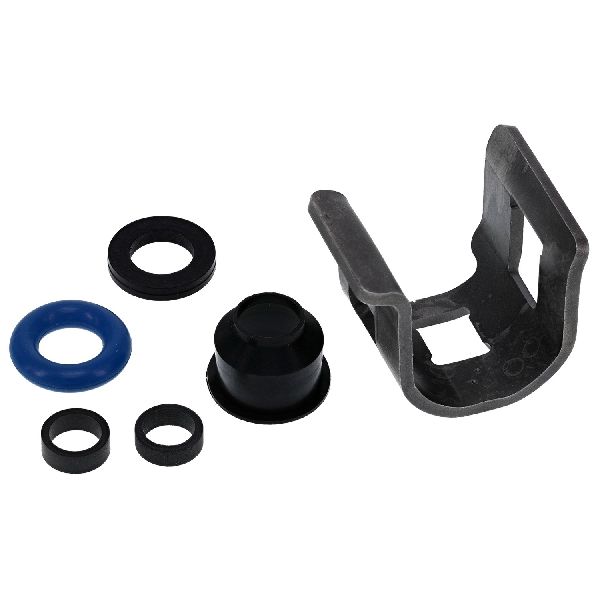
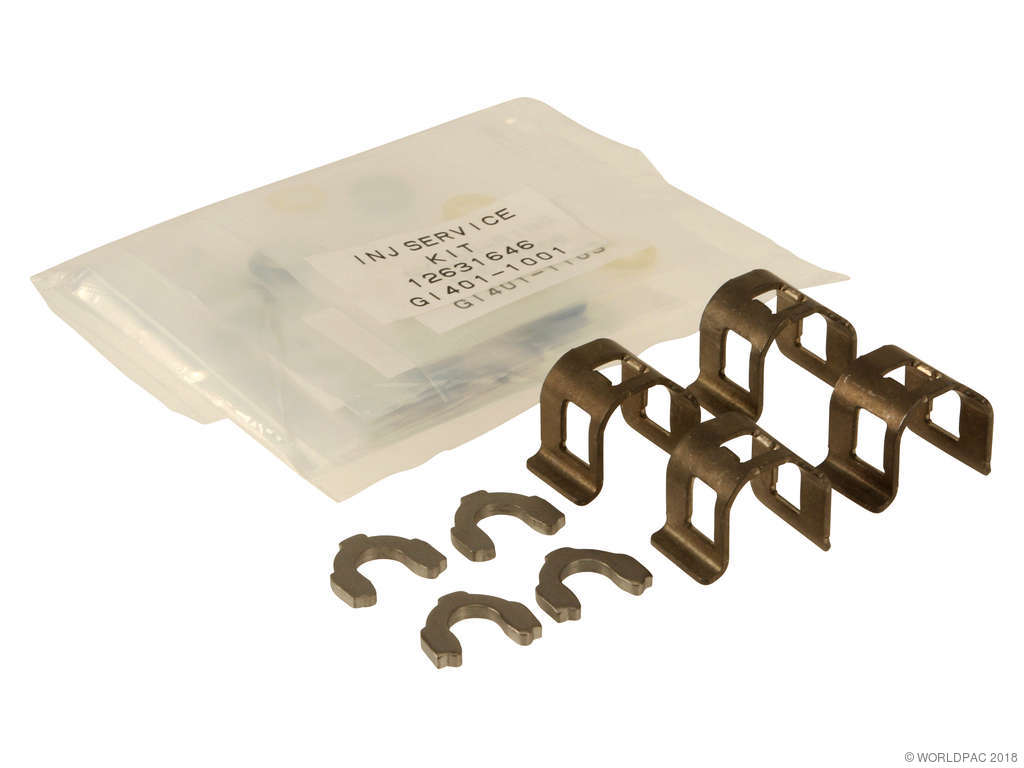
Typical fix: Replace the faulty fuel injector. It is highly recommended to replace the Teflon seal and retaining clip at the same time. Many owners and mechanics advise replacing all four injectors if they are high-mileage, as others may fail soon.
Est. part cost: $70-$120 - Powertrain Control Module (PCM) Failure ⚪ Low Probability → Shop Engine Control Module (ECM) While not common, the internal driver circuit within the PCM that controls the injector can fail, causing an open or short.
How to confirm: This is typically diagnosed by exclusion. If the injector, wiring, and connector have all been tested and confirmed to be good, and a noid light shows no pulse at the connector, the PCM is the likely culprit. This requires advanced diagnostics to confirm the driver has failed.
Typical fix: Replace and reprogram the Powertrain Control Module. This repair must be done by a dealer or a qualified shop with programming capabilities.
Est. part cost: $400-$900
Diagnosis Steps
- Read the trouble codes with an OBD-II scanner to confirm P0204 and any other related codes.
- Visually inspect the wiring harness and electrical connector for the cylinder 4 fuel injector. Look for obvious damage, corrosion, or a loose connection. Per TSB #PIP4924D, pay close attention to where the harness may rub against the intake plenum, valve cover, and fuel lines. For the 2.4L engine, cylinder 4 is the cylinder closest to the passenger side.
- With the engine running, carefully wiggle the connector for the cylinder 4 injector to see if it affects the engine idle. If it does, the connection is faulty.
- Use a 'noid light' to test the electrical signal at the injector connector. Disconnect the injector and plug in the noid light. Crank the engine; a flashing light indicates the ECM is sending the correct pulse signal. If the light is off or stays on continuously, there is a problem with the wiring or the ECM.
- If the noid light test passes, check the fuel injector itself. Turn off the engine and disconnect the injector. Use a multimeter to measure the electrical resistance across the injector's two pins. For the 2.4L GDI engine, expect a reading between 1.1 and 2.0 ohms. An open circuit (OL) or a reading far outside this range indicates a bad injector.
- As a final confirmation, you can swap the cylinder 4 injector with an injector from another cylinder (e.g., cylinder 1). Clear the codes and run the engine. If the code returns for the new cylinder (e.g., P0201 if you moved it to cylinder 1), the injector is definitively bad.
- If the injector and wiring are good, the problem may be with the ECM, which requires professional diagnosis.
Parts You'll Likely Need
- Fuel Injector
(OEM #12633784 (ACDelco #217-3427))— This is the most common part to fail internally, causing the electrical circuit fault, after wiring issues are ruled out.
Trusted brands: ACDelco (OEM), Hitachi, Standard Motor Products
OEM price range: $80-$120
Aftermarket price range: $45-$90 - Fuel Injector Connector Pigtail
(OEM #ACDelco PT2160)— If the wiring or connector is damaged at the injector, replacing the pigtail is the standard repair.
Trusted brands: Dorman, ACDelco
OEM price range: $25-$40
Aftermarket price range: $15-$30
Related Codes That Often Appear With This One
- P0304 — P0304 means 'Cylinder 4 Misfire Detected.' Since P0204 indicates a fuel delivery circuit problem for cylinder 4, a misfire is a direct and expected consequence.
- P0300 — This code for 'Random/Multiple Cylinder Misfire' can appear if the injector fault is intermittent or if the underlying wiring issue is affecting multiple injector circuits, causing general engine instability.
- P0261, P0264, P0267, P0270 — These are 'Injector Circuit Low' codes for cylinders 1-4. Seeing multiple injector codes together strongly suggests a wiring harness issue (like a short to ground) or a failing ECM, rather than multiple failed injectors.
Technical Service Bulletins (TSBs) & Recalls
- Bulletin #PIP4924D: Mentions DTCs including P0204 related to engine misfires and points directly to inspecting the fuel injector wiring harness for chafing or open circuits.
Platform-Specific Known Issues
- A GM Technical Service Bulletin (PIP4924D) exists for 2010-2014 models that lists P0204 among a large group of injector circuit codes. It specifically advises technicians to 'Carefully inspect the fuel injector wiring harness for rub through or internal wire opens.'
- Common chafe points for the wiring harness on the 2.4L engine are against the intake plenum, at valve cover bolts, against the fuel line, and on the side of the cylinder head under the plenum.
Mechanic-Grade Diagnostic Values
- Low-Side Fuel Pressure (In-tank pump) — expected: 75-85 PSI. Failure: Pressure below this range indicates a failing in-tank fuel pump, which can cause starvation issues for the high-pressure pump.
- Injector High Voltage Supply and Control Circuit Resistance — expected: 1.5-2.5 Ω. Failure: A reading outside this range points to a fault in the injector's internal coil or its immediate wiring.
- Injector Circuit Resistance at ECM Connector — expected: 0.2-0.3 Ω. Failure: A reading outside this range indicates a wiring problem (excessive resistance) between the ECM and the injector.
- Voltage at Injector Connector (Key On, Engine Off) — expected: 11.5–12.5 V (Battery Voltage). Failure: Voltage below 10V indicates an upstream wiring problem, a bad fuse, or an issue with the ECM's power supply.
Scan Tool Commands That Help
- GDS2 / Tech 2 (or equivalent professional scanner): Fuel Injector Balance Test — This bidirectional command sequentially disables each injector and measures the RPM drop. A smaller RPM drop for cylinder 4 confirms it is not contributing properly, helping to isolate the fault after initial checks.
- GDS2 / Tech 2 (or equivalent professional scanner): Injector Test / Manual Activation — This function allows the technician to manually command the cylinder 4 injector to fire. Listening for an audible 'click' from the injector can quickly confirm if the injector's solenoid is mechanically functioning, assuming the wiring to it is intact.
Wiring & Ground Locations
- Engine Harness Ground (G10x series) — For the 2.4L engine, a key ground is located on the right rear of the engine, approximately 3.5 cm from the ignition coil #4 takeout in the harness.. A loose or corroded engine ground can cause floating voltages and intermittent electrical faults across multiple components, including the fuel injectors. This specific ground is physically close to the affected cylinder's components.
- Main PCM Ground — A critical PCM ground is located on a stud on the engine block, tucked under the alternator and just above the A/C compressor bracket.. This ground is a known failure point for corrosion and wire breakage on the 2.4L Ecotec platform. A poor connection here can cause a wide range of erratic PCM behavior and sensor faults, including intermittent injector circuit codes like P0204, even if the injector and its direct wiring test okay.
Real Owner Repair Stories
- Common narrative synthesized from forum discussions on TerrainForum.net and EquinoxForum.net (2011 GMC Terrain 2.4L, ~95,000 miles) — Check Engine Light with codes P0204 and P0304. Engine runs rough, especially at idle, and hesitates on acceleration.
❌ Tried (didn't work) Replaced spark plug for cylinder 4., Swapped ignition coil from cylinder 4 with cylinder 1; misfire did not move., Replaced the cylinder 4 fuel injector with a new OEM part.
✅ What actually fixed it After the new injector didn't solve the issue, the owner closely re-inspected the wiring harness as per TSB PIP4924D. They found the harness had been rubbing against the sharp edge of the intake plenum support bracket. The insulation on two wires going to the injector connector was worn through, causing an intermittent short. The fix was to repair the damaged wires with solder and heat shrink, then wrap the harness in protective loom and secure it away from the bracket with a zip tie.
Model Year Variations Within This Range
- 2013-2014: For 2013, the optional V6 engine was upgraded from a 3.0L to a more powerful 3.6L V6. This change does not affect the 2.4L I4 engine or the diagnosis of code P0204, which remained consistent throughout the 2010-2014 model years.
Helpful Videos
We Have This Part in Stock


The information in this article is provided for general reference and educational purposes only. Vehicle specifications, procedures, and part compatibility can vary by production date, trim level, and region. Always consult your vehicle's factory service manual and verify part numbers before purchasing or performing repairs. Safety-critical components such as airbags, seat belts, and braking systems should be installed by a qualified professional.
- Gmc TERRAIN:
- 🧭 Diagnostic Flowchart
- 🎬 Helpful Videos
- 🛍️ Shop This Part
- What's Unique About the 2010-2014 Gmc TERRAIN
- Symptoms You May Notice
- Most Likely Causes
- Diagnosis Steps
- Parts You'll Likely Need
- Related Codes That Often Appear With This One
- Technical Service Bulletins (TSBs) & Recalls
- Platform-Specific Known Issues
- Mechanic-Grade Diagnostic Values
- Scan Tool Commands That Help
- Wiring & Ground Locations
- Real Owner Repair Stories
- Model Year Variations Within This Range
- 🎟️ Get 5% Off