

P0204 on 2007-2015 Lexus RX350: Injector Circuit Malfunction Causes and Fixes
P0204 on a Lexus RX350 means there's an electrical problem with the fuel injector circuit for cylinder 4. This is most often a failed fuel injector, but can also be caused by damaged wiring or a bad connector. The fix is usually to replace the injector, which costs around $70-$150 for the part.
- P0204 specifically points to an electrical problem in the cylinder 4 fuel injector circuit, not a mechanical issue or a problem with spark.
- Cylinder 4 is on the front bank of the engine, making it one of the easier injectors to access.
- The most effective and simple diagnostic step is to swap the cylinder 4 injector with another one on the same bank (like #2 or #6) to see if the trouble code follows the injector.
- Before replacing any parts, always perform a thorough visual inspection of the wiring harness for damage, especially from rodents.
- If you replace the injector, it's best practice to apply a light coat of oil to the new O-rings to ensure a proper seal and prevent damage during installation.
What's Unique About the 2007-2015 Lexus RX350
On the 2GR-FE V6 engine in the RX350, the cylinders are numbered with the rear bank (against the firewall) being 1-3-5 and the front bank (by the radiator) being 2-4-6. This means cylinder #4 is the middle cylinder on the front bank, making it relatively easy to access for diagnosis and repair compared to the rear bank injectors. While the injectors themselves are generally reliable, wiring damage from rodents has been noted by owners, as the engine cover can provide an attractive nesting spot. This engine is used across a wide variety of Toyota and Lexus models, so this issue and its diagnosis are very well-documented.
Generation note: This range covers two generations of the Lexus RX350: the second generation (2007-2009) and the third generation (2010-2015). Both generations use the same 2GR-FE engine, so the causes, symptoms, and diagnostic procedures for code P0204 are identical between them.
Symptoms You May Notice
- Check Engine Light is on
- Engine misfire, which may feel like a shake or stumble, especially at idle
- Rough running and poor acceleration
- Reduced engine power
- Decreased fuel economy
- Replacing the spark plug or ignition coil for cylinder 4. While these parts can cause a misfire (code P0304), they will not cause a P0204 circuit code. The P0204 code is specific to the fuel injector's electrical circuit.
Most Likely Causes
- Failed Fuel Injector 🔴 High Probability → Shop Fuel Injector Injectors can fail electrically over time due to internal coil winding issues. This is the most common cause for a P020x circuit code.
How to confirm: Measure the resistance of the injector with a multimeter; it should be within the manufacturer's specified range of 11.6 to 12.4 ohms at 20°C (68°F). A reading of infinite ohms indicates an open circuit, while near-zero indicates a short. The most definitive test is to swap the cylinder #4 injector with an adjacent one (like #2 or #6). Clear the codes and run the engine. If the code changes to P0202 or P0206, the injector is faulty.
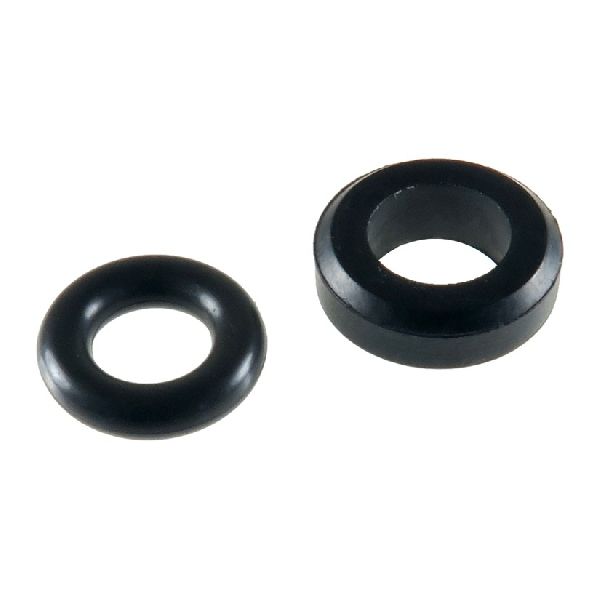
Typical fix: Replace the failed fuel injector. It's recommended to replace the O-rings and seals at the same time.
Est. part cost: $70 - $180 - Wiring Harness Damage 🟡 Medium Probability The engine bay can be a target for rodents, who may chew through the injector wiring. Wires can also become brittle from heat and vibration over time, leading to an open or short circuit.
How to confirm: Visually inspect the wiring harness leading to the cylinder #4 injector for any signs of chewing, chafing, or breaks. If a swap test doesn't move the code, use a noid light to confirm if the electrical pulse is reaching the connector. If the noid light doesn't flash, the problem is in the wiring or ECM.
Typical fix: Repair the damaged section of wire or replace the injector connector pigtail.
Est. part cost: $10 - $30 - Bad Injector Connector ⚪ Low Probability The plastic locking tab on the connector can become brittle and break, leading to a loose connection. Corrosion can also build up on the terminals, creating high resistance.
How to confirm: Wiggle the connector while the engine is running to see if it affects the misfire. Unplug the connector and inspect the pins for corrosion or damage. Ensure the connector 'clicks' into place and is secure.
Typical fix: Clean the connector terminals. If the locking tab is broken or the terminals are badly corroded, replace the connector pigtail.
Est. part cost: $10 - $30
Rare But Worth Checking
- Faulty Engine Control Module (ECM): → Shop Engine Control Module (ECM) This is the least likely cause. The internal driver circuit for the injector can fail, but all other possibilities should be exhausted before condemning the ECM. A failed ECM is often misdiagnosed.
Diagnosis Steps
- Read the codes with an OBD-II scanner to confirm P0204 is present. Note any other codes, like P0304.
- Locate cylinder #4. It is the middle cylinder on the front bank of the engine, closest to the radiator.
- Perform a visual inspection. Check the wiring and connector for cylinder #4's fuel injector for any obvious damage, such as chewed wires, corrosion, or a loose connection.
- Test the injector signal with a noid light. Disconnect the injector and plug the noid light into the connector. Start the engine; the light should flash steadily. If it does, the wiring and ECM are likely okay, and the injector is the probable cause. If it does not flash, there is a problem with the wiring or the ECM.
- Swap the injector. If the noid light test passes, swap the fuel injector from cylinder #4 with one from an adjacent cylinder (e.g., cylinder #2 or #6). Clear the codes and run the engine. If the code returns as P0202 or P0206, the injector is confirmed to be faulty.
- Test the wiring. If the code remains P0204 after the swap, the problem is in the wiring harness or the ECM. Check for continuity on the two wires from the injector connector back to the ECM.
- If the injector and wiring are confirmed to be good, the final possibility is a fault in the ECM's injector driver circuit, though this is rare.
Parts You'll Likely Need
- Fuel Injector
(OEM #23250-31050 (primary part number), also cross-references to 23250-0P040 and 23209-31050.)— This is the most common failure point for a P0204 circuit code. The internal coil fails, creating an open or short circuit.
Trusted brands: Denso (OEM), Bosch, Standard Motor Products
OEM price range: $150-$180
Aftermarket price range: $70-$120 - Fuel Injector Connector Pigtail — Needed if the original connector is damaged, corroded, or has a broken locking clip, causing a poor connection.
Trusted brands: Dorman, Standard Motor Products
OEM price range: $20-$40
Aftermarket price range: $10-$25
Related Codes That Often Appear With This One
- P0304 — P0304 means "Cylinder 4 Misfire Detected." Since a malfunctioning injector circuit prevents proper fueling, it will almost always cause a misfire on that cylinder.
- P0300 — This is a "Random/Multiple Cylinder Misfire" code. It can sometimes appear alongside P0204 if the single-cylinder misfire is severe enough to affect overall engine balance and crankshaft speed readings.
Platform-Specific Known Issues
- Post-Repair Code Occurrence: In one documented case on ClubLexus, a user reported that the P0204 code appeared immediately after having the spark plugs and ignition coils replaced. This suggests that the injector connector may have been damaged or not fully seated during the prior repair, highlighting the need to carefully check recent work in the area.
Mechanic-Grade Diagnostic Values
- Fuel Injector Resistance — expected: 11.6 to 12.4 Ω at 20°C (68°F). Failure: A reading of infinite ohms (Open Loop) or near-zero ohms (short circuit) indicates a failed injector coil.
- Injector Pulse Width (at idle) — expected: 1.0 to 3.0 ms. Failure: A value of 0 ms for cylinder 4 while other cylinders show a normal pulse width indicates the ECM is not commanding the injector to fire, pointing to a wiring or ECM driver issue.
- Injector Circuit Voltage (Key On, Engine Off) — expected: Approximately 12V (Battery Voltage) on the power supply wire at the injector connector.. Failure: Low or no voltage indicates a problem with the power supply circuit, which could be a fuse or relay.
Scan Tool Commands That Help
- Toyota Techstream: Active Test: Control the Injection Volume — This function allows the technician to incrementally increase or decrease fuel injection volume across all cylinders. While not cylinder-specific, observing engine response can help confirm if the fuel system is responding to commands.
- Toyota Techstream: Active Test: Control the Fuel Pump / Speed — This test can verify that the fuel pump is operational, helping to rule out a fuel supply issue as a contributing factor, although P0204 is an electrical circuit code.
Wiring & Ground Locations
- Engine Harness Ground — There are two primary grounding points for the engine harness on the 2GR-FE. One is on the front cylinder head (Bank 2), underneath the throttle body area. The other is on the rear cylinder head (Bank 1).. A poor or corroded ground connection for the engine harness can introduce electrical noise and voltage drops, potentially causing the ECM to misinterpret sensor and actuator signals, including the injector circuit feedback.
- Injector #4 ECM Pins — The two wires for the #4 injector run from the injector connector directly to the Engine Control Module (ECM). A wiring diagram is required to identify the specific pin numbers on the ECM connector for a continuity test.. To definitively rule out a wiring issue after an injector swap fails to move the code, a continuity test must be performed from the injector connector plug to the corresponding pins at the ECM. This confirms the integrity of the wires themselves.
Real Owner Repair Stories
- ClubLexus Forum User (2007 Lexus IS350 (with 2GR-FSE, similar diagnostics for port injectors)) — P0204 Injector circuit open (cylinder 4), along with other codes after previous repairs.
❌ Tried (didn't work) Replaced MAF sensor, Replaced spark plugs and ignition coils, Replaced high-pressure fuel pump and fuel pressure sensor
✅ What actually fixed it The owner decided to replace the fuel injectors, and after installation, the issue was resolved. Although other diagnostic steps were recommended (checking wiring resistance), replacing the injectors at 185k miles was seen as a reasonable step and ultimately solved the problem.
OEM Part Supersession History
23209-31050→23209-0P040— This is a common supersession for this part. Both part numbers refer to the same Denso injector for the 2GR-FE engine.
Heads up: The primary OEM part number is 23250-31050, which is an assembly that includes the injector (23209-31050). The superseding part 23209-0P040 is compatible.
Diagnostic Flowchart
Other Known Issues on This Vehicle
Issues unrelated to this code that are worth knowing about as an owner of this generation:
- Rupturing VVT-i Oil Line (Rubber Portion) 🔴 High — Common on earlier 2GR-FE engines (approx. 2007-2010). Can fail without warning, leading to rapid oil loss and catastrophic engine failure. (Ref: Lexus issued Limited Service Campaign (LSC) 9LH to replace the rubber hose with an all-metal line. This campaign expired on December 31, 2021.)
- Water Pump Failure 🟠 Medium — A well-known weak point. Failure can be a coolant leak or a noisy/failed bearing. It can occur at a wide range of mileages, typically from 80k miles onward.
- Power Steering Rack and/or Hose Leaks 🟠 Medium — Commonly reported on the second-generation RX (2007-2009), often before 100,000 miles. Results in loss of power steering fluid and requires costly replacement of the rack or hoses.
- Cracked or Melting/Sticky Dashboard 🟡 Low — Affects 2007-2009 models in climates with high heat and humidity. The dashboard surface can become sticky, shiny (causing glare), and crack. (Ref: Lexus issued a Warranty Enhancement Program (ZE6/ZLD) to replace affected dashboards, but the program has expired.)
Used vs. New Parts: Buying Guide for This Vehicle
When a used part is the smart pick: Used OEM injectors can be a cost-effective option if they are sourced from a reputable seller who has professionally cleaned, flow-tested, and matched them. A simple used part from a junkyard without testing is a gamble, as it may have the same or other issues.
Donor-vehicle mileage cap: roughly under 120000 miles for the part to have meaningful remaining life.
What to inspect on the donor part:
- Look for sellers who provide a report showing the flow rate and spray pattern before and after cleaning.
- Ensure the seller offers a warranty.
- Inspect the plastic connector for cracks and the nozzle (pintle) for any visible damage or heavy deposits.
OEM-only on this vehicle (don't cheap out):
- For this repair, using OEM Denso injectors (either new or professionally remanufactured) is highly recommended. Cheap, unbranded aftermarket injectors are known to cause performance issues, poor fuel economy, and may fail prematurely.
Aftermarket brands forum-validated for this vehicle:
- Denso (Original Equipment Manufacturer)
- Bosch (Reputable alternative)
Brands owners have reported issues with on this vehicle:
- Unbranded, low-cost injector sets found on marketplaces like Amazon or eBay. These often have inconsistent flow rates and poor durability.
Real Owner Stories
Aggregated from forums and TSBs cited above. Mileages and costs reflect what owners reported in those sources.
2007 Lexus LS (2GR-FE related discussion)
Symptoms: The P0204 code appeared immediately after having the spark plugs and ignition coils replaced.
What fixed it: Checking the wiring harness for damage and ensuring the injector connector was properly seated and not damaged during the previous spark plug/coil repair.
Source hint: ClubLexus - 'P0204 Code Persists, Any Ideas'
2006-2011 Lexus GS (2GR-FE related discussion)
Symptoms: P0204 injector open/closed circuit code.
What fixed it: The owner was advised to check the fragile pigtail connector for security and then swap the injector to another cylinder to confirm the part failure.
Source hint: ClubLexus - 'P0204 injector open closed circuit'
2016 Lexus RX350
Symptoms: P0201 and P0204 codes appearing together.
What fixed it: Inspection for rodent damage, as chewed wiring on injectors is a known issue for this platform.
Source hint: ClubLexus - '2016 RX 350 Fuel Injector Codes'
Related OBD-II Codes
Frequently Asked Questions
Where is the cylinder #4 injector located on my Lexus RX350 2GR-FE engine?
What is the correct resistance for a fuel injector on a 2007-2015 RX350?
I just had my spark plugs and coils replaced and now I have a P0204 code. Is this a coincidence?
Could rodents be responsible for the P0204 code on my Lexus?
Is there a TSB for the oil leaks I'm seeing alongside my engine codes?
How can I tell if the P0204 code is a bad injector or a wiring problem?
Helpful Videos
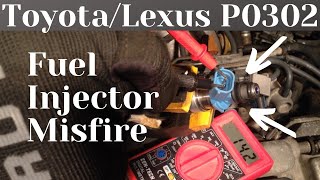
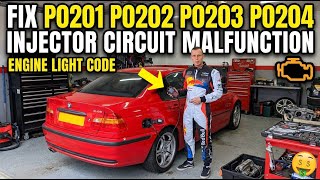
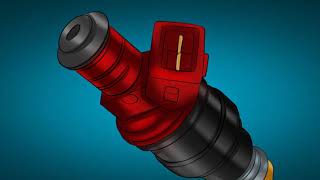
We Have This Part in Stock


The information in this article is provided for general reference and educational purposes only. Vehicle specifications, procedures, and part compatibility can vary by production date, trim level, and region. Always consult your vehicle's factory service manual and verify part numbers before purchasing or performing repairs. Safety-critical components such as airbags, seat belts, and braking systems should be installed by a qualified professional.
- Lexus RX350:
- 🧭 Diagnostic Flowchart
- 🎬 Helpful Videos
- 🛍️ Shop This Part
- What's Unique About the 2007-2015 Lexus RX350
- Symptoms You May Notice
- Most Likely Causes
- Rare But Worth Checking
- Diagnosis Steps
- Parts You'll Likely Need
- Related Codes That Often Appear With This One
- Platform-Specific Known Issues
- Mechanic-Grade Diagnostic Values
- Scan Tool Commands That Help
- Wiring & Ground Locations
- Real Owner Repair Stories
- OEM Part Supersession History
- Other Known Issues on This Vehicle
- Used vs. New Parts: Buying Guide for This Vehicle
- Real Owner Stories
- 2007 Lexus LS (2GR-FE related discussion)
- 2006-2011 Lexus GS (2GR-FE related discussion)
- 2016 Lexus RX350
- Related OBD-II Codes
- Frequently Asked Questions
- 🎟️ Get 5% Off