

P0204 on 2014-2016 Mazda CX-5: Injector Circuit Malfunction Causes and Fixes
This code means there's an electrical problem with the cylinder 4 fuel injector circuit. The most common causes are a faulty fuel injector or a wiring issue. However, a known issue for this vehicle is an internal PCM failure, which is covered by a Mazda TSB, especially if code P0201 appears at the same time.
- P0204 on a 2014-2016 Mazda CX-5 points to an electrical fault in the cylinder 4 injector circuit.
- Before replacing the injector, check if code P0201 is also present. If so, the issue is very likely a faulty PCM, as documented in Mazda TSB #01-017/16.
- Standard diagnosis involves checking the wiring, connector, and the injector itself. Swapping the injector to another cylinder is a good way to confirm if the injector is the problem.
- Do not ignore this code. Driving with a faulty injector circuit can lead to a constant misfire, which can quickly destroy your expensive catalytic converter.
- If the PCM needs replacement, it will require programming by a dealer or a specialized repair shop.
What's Unique About the 2014-2016 Mazda CX-5
For this generation of Mazda CX-5, the P0204 code has a specific history documented by Mazda itself. Technical Service Bulletins (TSBs) reveal that it's common for this code to appear alongside another injector code on the same cylinder bank (P0201). This pattern is often caused by an internal failure of the injector driver circuit within the DENSO-made Powertrain Control Module (PCM), not just a simple injector or wiring fault. This makes it critical to check for the specific TSB conditions before replacing other parts.
Diagnostic Flowchart
Tap your situation to follow the diagnostic path that matches what you're seeing on this vehicle.
Symptoms You May Notice
- Check Engine Light is on
- Rough or shaky idle
- Engine misfiring or stumbling
- Hesitation during acceleration
- Reduced engine power and potential 'limp mode'
- Poor fuel economy
- Hard starting condition, especially when cold
- Replacing the spark plug or ignition coil for cylinder 4 without first diagnosing the fuel injector circuit. While a misfire code (P0304) may be present, the P0204 code specifically points to an electrical fault 🎬 See a mechanic diagnose a cylinder 4 misfire on a CX-5. in the fuel circuit, not ignition.
Most Likely Causes
- Faulty Powertrain Control Module (PCM) 🔴 High Probability → Shop Engine Control Module (ECM) Mazda TSBs #01-004-17 and #01-017/16 specifically identify an internal failure in DENSO-produced PCMs as a cause for paired injector codes (P0201/P0204 or P0202/P0203). This applies to Japan-built CX-5s with VINs lower than JM3KE**820183 (produced before May 23, 2016).
How to confirm: Scan for codes and check if P0201 is also present. If so, inspect the PCM label to verify it is a DENSO-manufactured unit, as described in the TSB. If both conditions are met, the PCM is the highly likely culprit.
Typical fix: Replacement of the PCM. This must be done by a dealer or a qualified shop as it requires programming to the vehicle and may require authorization from Mazda's service hotline.
Est. part cost: $600-$900 - Faulty Fuel Injector 🟡 Medium Probability → Shop Fuel Injector Direct injection fuel injectors operate under high pressure and can fail electrically or become clogged over time.
How to confirm: Check the injector's internal resistance with a multimeter; the specification for Skyactiv engines is approximately 1.74–2.04 ohms at 20°C (68°F). 🎬 Watch: How to test a Mazda fuel injector with a multimeter. A reading of 0 (short) or OL (open) indicates a failed injector. A more definitive test is to swap the cylinder 4 injector with one from another cylinder (e.g., cylinder 3). If the code changes to P0203, the injector is faulty.
Typical fix: Replace the faulty fuel injector. It is often recommended to replace the full set to ensure balanced flow.
Est. part cost: $120-$170 - Wiring or Connector Issue 🟡 Medium Probability Engine bay wiring is exposed to heat and vibration, which can cause damage over time. In one documented case, a loose connector clip after a repair caused an intermittent P0204 code.
How to confirm: Visually inspect the wiring harness and connector for cylinder 4's injector for any signs of damage, corrosion, or loose pins. Use a multimeter to check for 12-volt power and a pulse signal from the PCM at the connector. A 'noid light' can also be used to verify the pulse signal from the PCM.
Typical fix: Repair the damaged section of the wiring harness or replace the connector pigtail.
Est. part cost: $20-$50
Diagnosis Steps
- Scan for all OBD-II codes. Note if P0304 or, most importantly, P0201 are also present.
- If P0201 and P0204 are present together, immediately refer to TSB #01-004-17. Inspect the PCM to see if it is a DENSO unit. If it is, the likely cause is the PCM, which should be replaced by a qualified technician.
- If only P0204 (and possibly P0304) is present, begin by visually inspecting the fuel injector for cylinder 4, its connector, and the surrounding wiring for any obvious damage, corrosion, or loose connections.
- Disconnect the injector connector. Use a noid light or oscilloscope to test for a pulse signal from the PCM while cranking the engine. If the light flashes or a pulse is seen, the PCM and wiring are likely okay.
- If no pulse is present, check for 12V power on one pin of the connector with the key on. If power is missing, there is a wiring issue between the fuse box and the injector.
- If power is present but there's no pulse, check the wiring continuity between the PCM and the injector connector's ground/signal wire (Terminal A).
- If the wiring and signal are good, test the fuel injector itself. Measure its resistance with a multimeter. It should be between 1.74 and 2.04 ohms. An open (OL) or shorted (near 0 ohms) reading indicates a bad injector.
- As a final confirmation, swap the cylinder 4 injector with the cylinder 3 injector. Clear the codes and drive the vehicle. If the code returns as P0203, the injector is confirmed to be faulty. If P0204 returns, the issue is in the wiring or PCM.
Parts You'll Likely Need
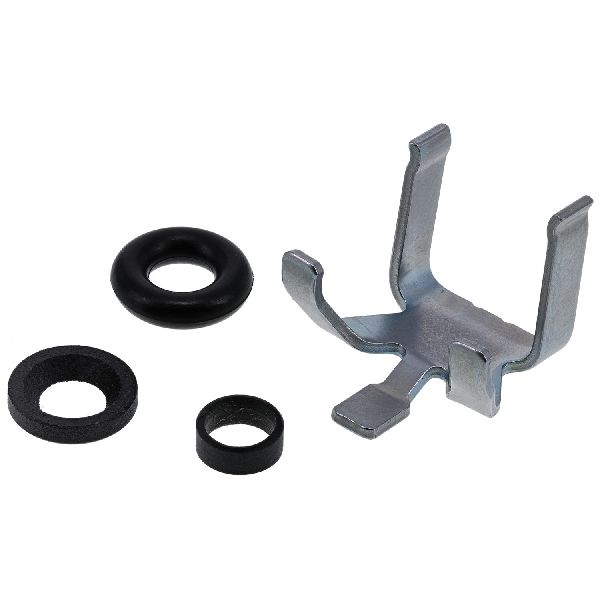
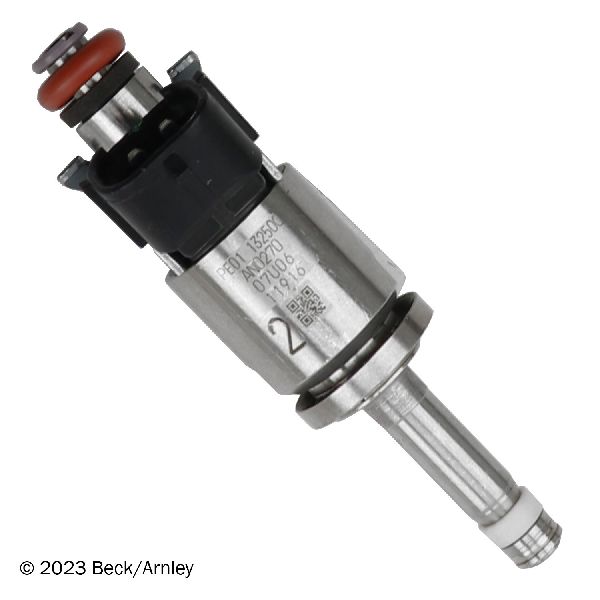
- Fuel Injector
(OEM #PY01-13-250)— The injector itself can fail electrically, causing an open or short in the circuit. This part number fits the 2.5L Skyactiv-G engine in the 2015-2016 CX-5, as well as other Mazda models.
Trusted brands: Mazda Genuine, Bosch, Standard Motor Products
OEM price range: $165
Aftermarket price range: $90-$130 - Powertrain Control Module (PCM)
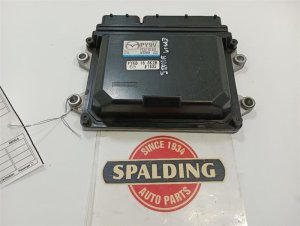
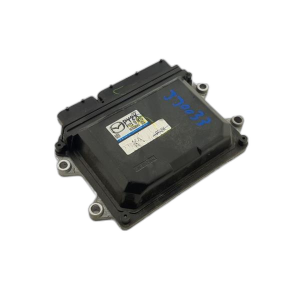
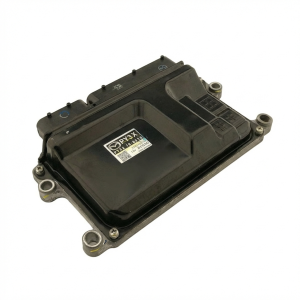
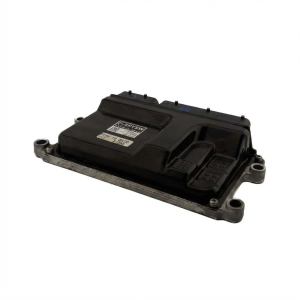
(OEM #****-18-881* (Varies by VIN))— A known issue documented in Mazda TSBs points to internal PCM failure as a cause for this code, especially when paired with P0201. The TSB notes to check the Mazda parts catalog for the latest part number applicable to the specific vehicle VIN.
Trusted brands: Mazda Genuine (DENSO)
OEM price range: $800-$900
Related Codes That Often Appear With This One
- P0304 — This is a 'Cylinder 4 Misfire' code. A fault in the injector circuit prevents proper fueling, which almost always leads to a misfire in that cylinder.
- P0201 — According to Mazda TSBs #01-004-17 and #01-017/16, an internal PCM failure often causes faults on injectors 1 and 4 simultaneously. The presence of both codes is a strong indicator that the PCM is the root cause.
Technical Service Bulletins (TSBs) & Recalls
- 01-004-17: 'Some vehicles may experience an engine that runs rough and the check engine light on with DTCs P0201 and P0204 or P0202 and P0203.' This bulletin supersedes 01-017/16 and confirms the cause is an internal failure of the DENSO PCM.
- 01-017/16: 'ENGINE RUNS ROUGH AND CHECK ENGINE LIGHT ON WITH DTCS P0201 AND P0204 OR P0202 AND P0203... This concern may be caused by an internal failure of the PCM (DENSO produced only).'
Platform-Specific Known Issues
- Mazda issued Technical Service Bulletin #01-004-17 (which supersedes #01-017/16) for 2013-16 CX-5s built in Japan (VINs lower than JM3KE**820183) that may experience a rough running engine with DTCs P0201 and P0204 (or P0202 and P0203) stored together. The cause is identified as an internal failure of the DENSO-produced PCM. The repair involves replacing the PCM.
Mechanic-Grade Diagnostic Values
- PCM Open Circuit Detection Logic — expected: The PCM expects to receive a verification signal after commanding the injector to fire.. Failure: If the verification signal is not received for 25 consecutive attempts, the PCM logs P0204.
- Injector Circuit Voltage (Short to Power Test) — expected: 0 Volts. Failure: Any voltage reading above 0V indicates a short to power in the harness.
- Injector Circuit Voltage (General Principle) — expected: Near battery voltage when injector is off (dormant); near 0 Volts when injector is commanded on (active).. Failure: Voltage does not change or does not match the commanded state.
- High Pressure Fuel System — expected: Up to 3,000 PSI. Failure: Pressure significantly below specification (Note: P0204 is an electrical code, but this indicates system context).
Scan Tool Commands That Help
- FORScan / Advanced Scanners: Injector Buzz Test — To audibly verify the mechanical operation of the injector solenoid. The tool commands the injector to rapidly open and close, creating a 'buzzing' sound. A silent or weak-sounding injector indicates a failure.
- FORScan / Autel / Advanced Scanners: Injector Balance/Correction Values — To view live data showing how the PCM is adjusting fuel trims for each cylinder. A large correction value for cylinder 4 can indicate a poorly performing (but not completely failed) injector.
- FORScan / Autel / Advanced Scanners: Injector Coding / Calibration — Required after replacing a fuel injector on many direct injection systems. The unique flow rate calibration code from the new injector must be programmed into the PCM for proper operation.
- Advanced Scanners: ECM/PCM Adaptation Reset — After a repair is completed (like replacing an injector or fixing wiring), this function should be used to clear the PCM's learned fuel trim adjustments, forcing it to relearn based on the new, correct parameters.
Wiring & Ground Locations
- Fuel Injector #4 Connector, Terminal A — On the fuel injector for cylinder #4 (the cylinder closest to the transmission).. This is the control (ground/signal) wire from the PCM. Diagnostic procedures require checking for continuity and shorts to power on this specific wire between the injector and the PCM.
- Engine Wiring Harness Ground Points — Various locations on the cylinder head and engine block. A detailed wiring diagram is required for exact locations.. While P0204 is a specific circuit code, a poor main engine or PCM ground can cause a variety of unpredictable electrical issues, including injector driver faults. This should be checked if direct circuit testing is inconclusive.
Real Owner Repair Stories
- Mazda6Forums user 'Robando' (2011 Mazda 6 2.2D (Diesel)) — Misfire, engine light, and flashing glow plug light after a failed manual calibration attempt.
❌ Tried (didn't work) Using a cheap WiFi OBD2 scanner that failed to connect to the ECU., Attempting a manual injector calibration by grounding a pin.
✅ What actually fixed it The user purchased a Vgate vLinker FS OBD2 adapter and used FORScan software. FORScan revealed a misfire on cylinder 4. A used injector was purchased for £30, installed, and then coded/calibrated using FORScan. This resolved the misfire and codes. While this is a diesel model, it highlights the capability and necessity of tools like FORScan for diagnosing and properly replacing modern injectors.
Helpful Videos
Used OEM Parts in Stock
New Aftermarket Parts Available



The information in this article is provided for general reference and educational purposes only. Vehicle specifications, procedures, and part compatibility can vary by production date, trim level, and region. Always consult your vehicle's factory service manual and verify part numbers before purchasing or performing repairs. Safety-critical components such as airbags, seat belts, and braking systems should be installed by a qualified professional.
- Mazda CX-5:
- 🧭 Diagnostic Flowchart
- 🎬 Helpful Videos
- 🛍️ Shop This Part
- What's Unique About the 2014-2016 Mazda CX-5
- Symptoms You May Notice
- Most Likely Causes
- Diagnosis Steps
- Parts You'll Likely Need
- Related Codes That Often Appear With This One
- Technical Service Bulletins (TSBs) & Recalls
- Platform-Specific Known Issues
- Mechanic-Grade Diagnostic Values
- Scan Tool Commands That Help
- Wiring & Ground Locations
- Real Owner Repair Stories
- 🎟️ Get 5% Off