

P0204 on 2014-2016 Mazda MAZDA3: Injector Circuit Fixes & Causes
On a 2014-2016 Mazda3, code P0204 indicates a fault in the cylinder 4 fuel injector circuit. While a bad injector is possible, a known issue covered by a Technical Service Bulletin (TSB) points to an internal PCM failure, which often triggers P0204 along with P0201. Always check for paired codes (P0201/P0204 or P0202/P0203) before replacing parts, as this strongly suggests a PCM fault.
- Before buying any parts for a P0204 code on a 2014-2016 Mazda3, always check if code P0201 is also present. If it is, the problem is very likely a known PCM failure covered by a TSB, not a bad fuel injector.
- The TSB for the PCM failure specifically applies to Japan-built models with DENSO PCMs made before May 23, 2016.
- When testing the fuel injector with a multimeter, compare its resistance to another injector on the same engine, as real-world values may differ from the official service manual.
What's Unique About the 2014-2016 Mazda MAZDA3
For this generation of Mazda3, P0204 has a very specific and documented history. Mazda issued Technical Service Bulletins for a known issue where an internal failure in certain DENSO-made PCMs would cause injector circuit codes to appear in pairs (P0201 with P0204, or P0202 with P0203). This means that unlike many other vehicles where P0204 points directly to the cylinder 4 injector or its wiring, on this Mazda3 it could be a symptom of a faulty engine computer. The issue was prevalent enough to affect not just the Mazda3, but also the Mazda6 and CX-5 models from similar years that used the same engine and PCM architecture.
Diagnostic Flowchart
Tap your situation to follow the diagnostic path that matches what you're seeing on this vehicle.
Symptoms You May Notice
- Check Engine Light is on
- Rough or shaking engine idle, sometimes dropping to 200-400 RPM or stalling
- Engine misfire (may feel like a vibration or stumble)
- Reduced engine power and poor acceleration 🎬 Watch: Understanding the causes and fixes for the P0204 code
- Hesitation when pressing the gas pedal
- Worse fuel economy
- Engine starts and then immediately shuts off
- Replacing only the fuel injector without checking for paired codes. If the root cause is the PCM, a new injector will not solve the problem and the code will return.
- Assuming the injector is bad when the resistance is out of the specified range, without comparing it to a known-good injector on the same engine. Real-world measurements can differ from official documentation.
Most Likely Causes
- Internal PCM Failure (DENSO units) 🔴 High Probability A known issue acknowledged by Mazda in TSBs #01-004-17 and #01-017/16. The bulletins state that certain DENSO-produced PCMs are prone to an internal failure causing paired injector codes. This affects Japan-built Mazda3 vehicles with VINs lower than JM1BM**352403 (produced before May 23, 2016).
How to confirm: Scan for other codes. If P0201 is present along with P0204 (or P0202 with P0203), a PCM failure is highly likely. A dealership or qualified shop can verify if the PCM is a DENSO unit by inspecting the label on the module, as described in the TSB.
Typical fix: Replace the Powertrain Control Module (PCM). This must be followed by programming the new module to the vehicle. The TSB instructs dealers to replace the PCM if it is a DENSO unit and the paired codes are present.
Est. part cost: $600-$955 - Faulty Cylinder 4 Fuel Injector 🟡 Medium Probability → Shop Fuel Injector
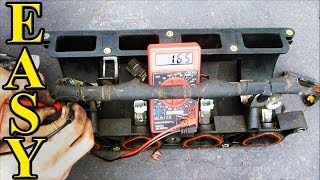
How to confirm: Use a multimeter to check the resistance of the injector. According to Mazda's service documentation for Skyactiv-G engines, the resistance should be between 1.6-2.52 ohms. However, owner experiences suggest a reading closer to 12-13 ohms is normal for a good injector on related models, with a failed injector showing an open circuit (0 ohms). You can also swap the cylinder 4 injector with another one (e.g., cylinder 3) and see if the code changes to P0203.
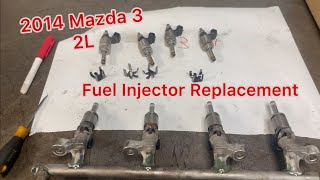
Typical fix: Replace the fuel injector for cylinder 4. 🎬 Watch: Step-by-step fuel injector replacement for your Mazda 3
Est. part cost: $50-$180 - Wiring Harness or Connector Issue ⚪ Low Probability While not a unique prone issue, oil spills during maintenance (like an oil filter change) have been anecdotally linked to subsequent injector circuit codes if the oil contaminates the wiring harness connectors.
How to confirm: Visually inspect the wiring going to the cylinder 4 injector for any signs of damage, chafing, or corrosion. Unplug the connector and check for bent or corroded pins. Use a noid light to confirm if the injector is receiving a pulse signal from the PCM. Mazda's diagnostic procedure includes checking for shorts to ground or power in the harness between the injector connector and PCM terminals 1DT and 1DS.
Typical fix: Repair the damaged section of the wiring harness or replace the injector pigtail connector.
Est. part cost: $10-$50
Rare But Worth Checking
- Fuel Injector Relay Malfunction: → Shop Fuel Injector Mazda's diagnostic documentation lists a faulty fuel injector relay as a possible, though less common, cause.
Diagnosis Steps
- Scan for Codes: Use an OBD-II scanner to confirm P0204 and check for any other codes. Pay close attention to whether P0201, P0202, or P0203 are also present. The presence of P0201 strongly suggests the PCM issue described in Mazda's TSBs.
- Visual Inspection: Inspect the wiring harness and connector for the cylinder 4 fuel injector. Look for any obvious signs of damage, such as frayed wires, melting, or corrosion on the connector pins. Check for any recent oil spills in the area.
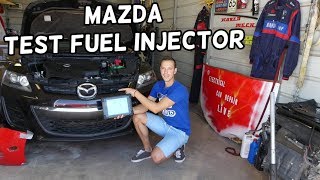
- Check for Injector Pulse: Use a noid light to test the injector connector. 🎬 See this guide on how to test Mazda fuel injectors Disconnect the injector, plug in the noid light, and start the engine. The light should flash steadily. If it doesn't flash, the problem is in the wiring or the PCM driver circuit. If it flashes, the circuit is likely okay and the injector itself may be faulty.
- Test the Injector Resistance: If the pulse is good, turn off the engine and disconnect the injector. Use a multimeter set to ohms. Mazda's official spec for Skyactiv-G injectors is 1.6-2.52 ohms. However, be aware that some forum users report values around 12-13 ohms on similar engines. The key is to compare the reading from cylinder 4 to a known-good injector (e.g., from cylinder 2 or 3). A reading of 0 or infinite resistance indicates a failed injector.
- Check for Paired Codes (TSB): If you found P0201 and P0204 together, refer to TSB #01-017/16 or #01-004-17. This bulletin points to a likely PCM failure on Japan-built vehicles with a DENSO-produced PCM. This step may require a professional diagnosis to confirm the PCM manufacturer by inspecting its label.
- Swap Injectors: As a final confirmation, you can swap the cylinder 4 injector with one from another cylinder (e.g., cylinder 2). Clear the codes and run the engine. If the code changes to P0202, you have confirmed the injector is the faulty part.
Parts You'll Likely Need
- Powertrain Control Module (PCM)
(OEM #PE19-18-881A (example for 2.0L/2.5L, always verify with VIN))— This is the most likely cause if P0204 is paired with P0201, as documented in Mazda TSBs for this specific vehicle range.
Trusted brands: Mazda (OEM)
OEM price range: $675-$955
Aftermarket price range: $400-$600 (Remanufactured) - Fuel Injector
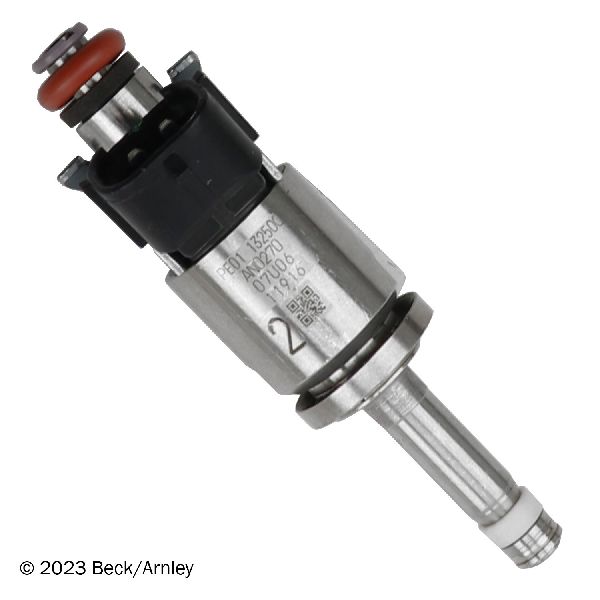
(OEM #PE01-13-250B (example, always verify with VIN))— If the PCM is not the cause, the injector itself is the next most common failure point, due to an internal electrical fault.
Trusted brands: Bosch, Denso, Hitachi, Mazda (OEM)
OEM price range: $120-$180
Aftermarket price range: $50-$100
Related Codes That Often Appear With This One
- P0304 — P0304 means "Cylinder 4 Misfire Detected." Since P0204 indicates a problem with the fuel supply to cylinder 4, the cylinder will inevitably misfire. The TSBs confirm that misfire codes are usually stored at the same time.
- P0201 — According to Mazda TSB #01-004-17, an internal PCM failure often causes injector circuit codes for cylinders 1 and 4 to appear together.
- P0300 — P0300 indicates a random or multiple cylinder misfire. This can occur if the primary P0204 fault is severe enough to disrupt engine timing and balance.
Technical Service Bulletins (TSBs) & Recalls
- 01-004-17-3317a: Notes that a rough running engine with DTCs P0201 and P0204 (or P0202 and P0203) may be caused by an internal failure of the PCM on certain vehicles. Confirms misfire codes (P0301-P0304) are also usually stored.
- 01-017/16: An earlier bulletin that specifies the affected models, including 2014-16 Mazda3, 2013-16 CX-5, and 2014-16 Mazda6. It provides specific VIN ranges for affected Japan-built vehicles and instructs technicians on how to identify the faulty DENSO PCM.
- 01-004/17: A superseding bulletin that reiterates the same issue and repair procedure, confirming the problem is with DENSO-produced PCMs only.
Platform-Specific Known Issues
- A Technical Service Bulletin (TSB #01-017/16, later superseded by #01-004-17) was issued for 2014-2016 Mazda3 models (Japan-built with VINs lower than JM1BM**352403) for a rough running engine with paired DTCs P0201/P0204 or P0202/P0203. The cause is identified as an internal failure of the DENSO-produced PCM.
Mechanic-Grade Diagnostic Values
- Fuel Injector Resistance — expected: 1.6–2.52 ohms (Official Mazda Spec). Failure: A reading of 0 ohms (short) or infinite resistance (open). Note that healthy real-world readings on similar injectors are often reported in the 10-18 ohm range.
- Injector Circuit Voltage (Key On, Engine Off) — expected: Approximately 12V (Battery Voltage) at the power feed wire to the injector.. Failure: Low or no voltage indicates an issue with the power supply, fuse, or fuel injector relay.
- Injector Pulse Width (Live Scan Data) — expected: 1–10 ms, varying with engine load and speed.. Failure: A value that is fixed, zero, or drastically different from the other injectors suggests a control or circuit problem.
- PCM Fault Trigger Condition — expected: The PCM must not receive the fuel injection verification signal for 25 consecutive times.. Failure: If this condition is met, the PCM determines an open circuit exists and stores DTC P0204:00.
Scan Tool Commands That Help
- Professional Aftermarket Scan Tool: Injector Test / Active Test — This function allows the technician to command the PCM to pulse the injector. While the test is active, a noid light or oscilloscope can be used at the injector connector to confirm if the PCM driver is sending the signal, which helps isolate the fault between the PCM and the wiring/injector.
Wiring & Ground Locations
- PCM Terminals (Cylinder 4) — At the main PCM electrical connector.. For continuity tests, the cylinder 4 injector circuit runs between injector terminal B and PCM terminal 1DT, and between injector terminal A and PCM terminal 1DS. Checking for continuity, shorts to ground, or shorts to power on these specific wires is a definitive diagnostic step.
- G02 — Main engine compartment ground located on the left side of the engine compartment.. A poor engine ground can cause a host of electrical issues, including erratic sensor and actuator behavior. Ensuring this ground point is clean and tight is a fundamental step in diagnosing any powertrain electrical fault.
- G08 — Engine ground located at the left rear of the engine.. This is another critical ground point for the engine assembly. A loose or corroded connection here can lead to voltage drops and intermittent circuit problems.
When the Usual Fixes Don't Work
- While the TSB pointing to a PCM failure is the most common unique issue for this vehicle when P0204 is paired with P0201, it should not lead to skipping fundamental diagnostics. A technician should still verify injector pulse with a noid light and check the wiring harness for damage, as these more common failures can still occur independently of the known PCM issue. The TSB is a high-probability diagnostic shortcut, not a guarantee.
OEM Part Supersession History
PE01-13-250B→PE01-13-250C, then PE01-13-250D— Standard part revision and improvement by the manufacturer.
Heads up: The newer part numbers are direct replacements for the older ones.PE19-18-881A (DENSO PCM)→Same part number— The TSB indicates that the internal fault was corrected in mass production, but the part numbers themselves were not changed.
Heads up: When ordering a replacement, it is critical to provide the VIN to ensure the correct hardware and software version is supplied, even if the base part number is the same.
Model Year Variations Within This Range
- 2014 - May 23, 2016: Japan-built vehicles with VINs lower than JM1BM**352403 are susceptible to the DENSO PCM internal failure described in TSB #01-004-17. Vehicles built after this date should have a revised PCM.
- 2014 - 2015: For the 2.0L engine, there was a fuel injector part change effective from 06/07/2015. While the parts are likely interchangeable, it's a specific production change to note when sourcing replacements.
Helpful Videos
We Have This Part in Stock



The information in this article is provided for general reference and educational purposes only. Vehicle specifications, procedures, and part compatibility can vary by production date, trim level, and region. Always consult your vehicle's factory service manual and verify part numbers before purchasing or performing repairs. Safety-critical components such as airbags, seat belts, and braking systems should be installed by a qualified professional.
- Mazda MAZDA3:
- 🧭 Diagnostic Flowchart
- 🎬 Helpful Videos
- 🛍️ Shop This Part
- What's Unique About the 2014-2016 Mazda MAZDA3
- Symptoms You May Notice
- Most Likely Causes
- Rare But Worth Checking
- Diagnosis Steps
- Parts You'll Likely Need
- Related Codes That Often Appear With This One
- Technical Service Bulletins (TSBs) & Recalls
- Platform-Specific Known Issues
- Mechanic-Grade Diagnostic Values
- Scan Tool Commands That Help
- Wiring & Ground Locations
- When the Usual Fixes Don't Work
- OEM Part Supersession History
- Model Year Variations Within This Range
- 🎟️ Get 5% Off