

P0204 on 2014-2016 Mazda MAZDA6: Injector Circuit Malfunction Causes and Fixes
On a 2014-2016 Mazda6, code P0204 indicates an electrical fault in the cylinder 4 fuel injector circuit. While it can be a bad injector or wiring, a known Mazda issue points to a faulty Powertrain Control Module (PCM), especially if P0201 appears at the same time. A single injector replacement costs around $200-$400, but a PCM replacement can exceed $1,000. This issue also affects the Mazda3 and CX-5 with the same engine.
- P0204 on a 2014-2016 Mazda6 is an electrical fault in the cylinder 4 injector circuit.
- A major known issue is a faulty PCM, especially if code P0201 is also present. Check TSB #01-017/16.
- Other causes are a bad injector or wiring/connector issues.
- Do not immediately replace spark plugs or coils; this code points to a fuel delivery electrical problem.
- Driving is not recommended as it can lead to catalytic converter damage.
What's Unique About the 2014-2016 Mazda MAZDA6
For this specific generation of Mazda6, the P0204 code has a significant known issue documented by Mazda. A Technical Service Bulletin reveals that on vehicles built before May 23, 2016, it's common for an internal failure in the DENSO-made PCM to cause P0204 to appear along with P0201 (Cylinder 1). This elevates a typically rare cause (bad PCM) to a primary suspect, making it crucial to check for paired injector codes before replacing other parts. This exact issue is also documented for the contemporary Mazda3 and CX-5 models with the same engine.
Diagnostic Flowchart
Tap your situation to follow the diagnostic path that matches what you're seeing on this vehicle.
Symptoms You May Notice
- Check Engine Light is on
- Rough or shaking idle
- Engine misfire, sometimes felt as a stumble or hesitation
- Poor acceleration and loss of power
- Reduced fuel economy
- Engine may be difficult to start, especially on cold starts
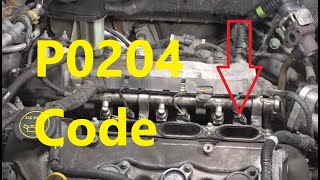
- Replacing the cylinder 4 spark plug or ignition coil. While these parts can cause a misfire (P0304), they do not cause an injector circuit code like P0204. The code specifically points to an electrical issue with the fuel injector circuit, not a combustion failure, although the former causes the latter. 🎬 Watch: A quick overview of P0204 causes and common fixes.
Most Likely Causes
- Faulty Powertrain Control Module (PCM) 🔴 High Probability → Shop Engine Control Module (ECM) A specific TSB (#01-017/16, later revised to #01-004/17) was issued for 2014-2016 Mazda6 models built before May 23, 2016, noting that an internal failure of the DENSO-produced PCM can cause paired injector fault codes (P0201 & P0204, or P0202 & P0203).
How to confirm: Check if code P0201 is also present. If so, inspect the PCM to see if it is a DENSO unit as described in the TSB. If both conditions are met, the PCM is the most likely culprit. The TSB applies to Mazda6 vehicles with VINs lower than JM1GJ**484154.
Typical fix: Replace the Powertrain Control Module. The new module will require programming to the vehicle. 🎬 Watch: How to program a used PCM for your Mazda6. The TSB notes that the replacement part numbers were not changed, but the internal fault was corrected in later production.
Est. part cost: $800-$1200 (OEM), $400-$700 (Remanufactured) - Damaged Wiring or Loose Connector 🟡 Medium Probability Engine vibration and heat can cause wiring to fray or connectors to become loose over time. In one documented case, a user found the injector connector clip had failed and the connector simply came loose.
How to confirm: Visually inspect the wiring harness and connector going to the cylinder 4 fuel injector for any signs of damage, corrosion, or loose pins. Ensure the connector is fully seated and the locking clip is engaged. Use a multimeter to check for continuity and proper voltage at the connector.
Typical fix: Repair the damaged section of the wire or replace the connector pigtail. In many cases, simply re-seating a loose connector can solve the problem.
Est. part cost: $10-$50 - Failed Fuel Injector 🟡 Medium Probability → Shop Fuel Injector
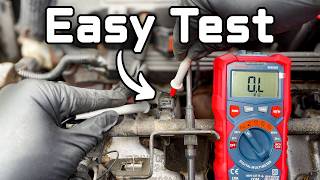
How to confirm: Measure the electrical resistance of the fuel injector using a multimeter. A reading of 0 ohms (short) or infinite/OL (open) indicates a failed injector. A good injector should have a consistent resistance; one owner on a Mazdas247 forum reported his good injectors measured between 12.3-12.6 ohms, and a new OEM injector measured 12.8 ohms. 🎬 See how to test fuel injector resistance with a multimeter. You can also swap the injector with another cylinder (e.g., cylinder 3) and see if the code changes to P0203.
Typical fix: Replace the cylinder 4 fuel injector.
Est. part cost: $60-$160
Rare But Worth Checking
- Fuel Injector Relay Malfunction: → Shop Fuel Injector The official Mazda diagnostic chart lists a faulty fuel injector relay as a possible, though less common, cause that can affect the power supply to the injectors.
Diagnosis Steps
- Read the codes with an OBD-II scanner and confirm P0204 is present. Note any other codes, especially P0304 or P0201.
- CRITICAL TSB CHECK: If P0201 is also present, check your vehicle's VIN and build date. If the VIN is lower than JM1GJ**484154 (produced before May 23, 2016), the PCM is the most likely cause per TSB #01-017/16. Visually confirm the PCM is a DENSO unit.
- If P0204 is the only injector code, turn off the ignition and visually inspect the wiring harness and electrical connector at the cylinder 4 fuel injector. Look for frayed wires, corrosion, or a loose connection. A loose connector is a known simple fix.
- Disconnect the injector and use a multimeter to check its resistance. A healthy injector should read around 12-13 ohms. A reading of 0 or OL (Open Loop) indicates a failed injector.
- With the connector disconnected and the key on (engine off), use a multimeter to check for battery voltage on one of the pins in the connector. If there's no voltage, check the fuel injector relay and fuses.
- Use a noid light on the injector connector. Crank the engine; the light should flash, indicating the PCM is sending a signal. If it doesn't flash, or stays on continuously, the problem is in the wiring or the PCM driver.
- If the injector and wiring test good, consider swapping the cylinder 4 injector with the cylinder 3 injector. Clear the codes and drive the vehicle. If the code returns as P0203, the injector is faulty.
- If the code remains P0204 after the swap, the issue is confirmed to be in the wiring or the PCM driver for that specific cylinder.
Parts You'll Likely Need
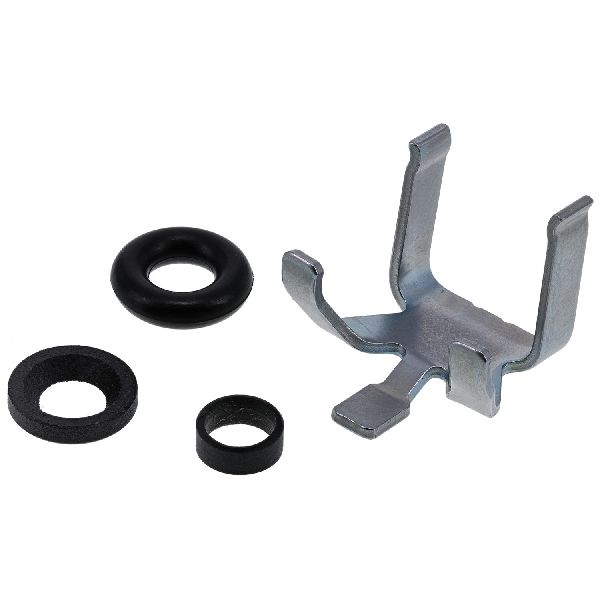
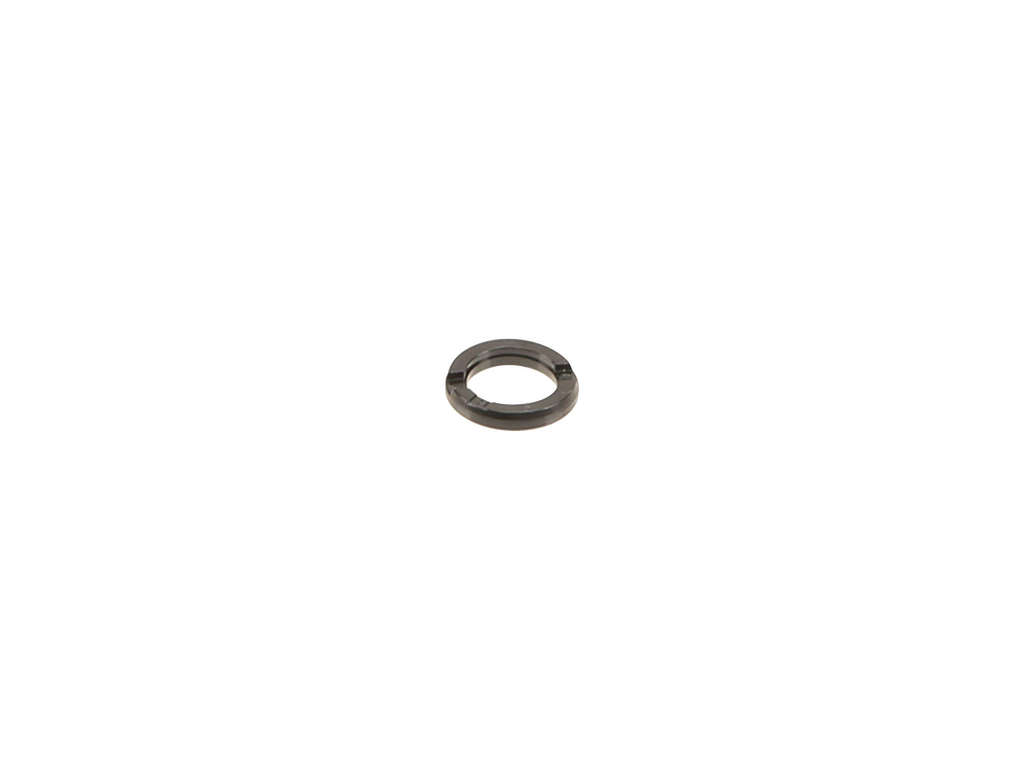
- Fuel Injector
(OEM #PY01-13-250)— The fuel injector can fail electrically (open or shorted circuit), which is a common cause if the PCM and wiring are confirmed to be good.
Trusted brands: Mazda (OEM), Standard Motor Products, GB Remanufacturing
OEM price range: $65-$90
Aftermarket price range: $45-$160 - Powertrain Control Module (PCM)
(OEM #****-18-881* (Format from TSB))— A known TSB for this vehicle indicates a high likelihood of PCM failure when P0204 is paired with P0201. The TSB specifies ordering the latest part number applicable to the VIN, using the format '****-18-881*'. Used/reman units like PY8D-18-881 or PY1W-18-881B may be found.
Trusted brands: Mazda (OEM), Flagship One (Remanufactured), Circuit Board Medics (Repair Service)
OEM price range: $900-$1200
Aftermarket price range: $400-$700 (Remanufactured)
Related Codes That Often Appear With This One
- P0304 — This code means "Cylinder 4 Misfire Detected." Since the P0204 code indicates a problem delivering fuel to cylinder 4, a misfire is an expected and direct consequence. The TSB for the PCM issue explicitly notes that misfire codes are usually stored at the same time.
- P0201 — As per Mazda TSB #01-017/16, this code for the cylinder 1 injector circuit often appears with P0204 due to a specific internal failure mode of the PCM on these vehicles. Seeing these two codes together is a very strong indicator that the PCM is the root cause.
Technical Service Bulletins (TSBs) & Recalls
- 01-004/17: 'MULTI-MODEL - ENGINE RUNS ROUGH AND CHECK ENGINE LIGHT ON WITH DTCS P0201 AND P0204 OR P0202 AND P0203'. This bulletin supersedes the earlier TSB.
- 01-017/16: 'MULTI-MODEL - ENGINE RUNS ROUGH AND CHECK ENGINE LIGHT ON WITH DTCS P0201 AND P0204 OR P0202 AND P0203... This concern may be caused by an internal failure of the PCM (DENSO produced only).'
Platform-Specific Known Issues
- Mazda Technical Service Bulletin #01-017/16 (and the later revision #01-004/17) specifically addresses an issue on 2014-2016 Mazda6 vehicles (produced before May 23, 2016, with VINs lower than JM1GJ**484154). It states that a rough running engine with DTCs P0201 and P0204 (or P0202 and P0203) may be caused by an internal failure of the DENSO-produced PCM. The repair is to replace the PCM. This TSB also applies to 2014-16 Mazda3 and 2013-16 CX-5 models.
Mechanic-Grade Diagnostic Values
- Fuel Injector Coil Resistance — expected: 11–16 ohms. Failure: A reading below 11 ohms (short) or above 16 ohms / OL (open) indicates a failed injector.
- High-Pressure Fuel System — expected: Up to 200 bar (2900 psi). Failure: While not a direct cause for P0204, low high-side pressure can indicate other fuel system issues.
- Voltage at Injector Connector (harness-side) — expected: 0 V with ignition ON, engine off (when disconnected from injector). Failure: If voltage is present, it indicates a short to power supply in the wiring harness between the injector and the PCM.
Scan Tool Commands That Help
- Mazda M-MDS (or equivalent): KOER Self Test (Key On, Engine Running) — Used after a repair to verify the malfunction is gone. The Mazda diagnostic procedure requires running this test to confirm the fix.
- FORScan: Injector Buzz Test — This bidirectional control pulses each injector individually, allowing a technician to listen for an audible click. If an injector doesn't 'buzz' or sounds different from the others, it points to a failure in the injector or its circuit.
- Advanced OBD-II Scanners (e.g., iCarsoft): Cylinder Balance Test — This function sequentially disables each injector and measures the corresponding drop in engine RPM. A smaller RPM drop for cylinder 4 confirms it is not contributing power correctly, helping to isolate the fault.
Wiring & Ground Locations
- PCM Connector Pin 1DS — At the Powertrain Control Module (PCM) harness connector.. This is the terminal for the control circuit from the PCM to fuel injector #4 (terminal A). An open circuit or short between this pin and the injector will cause P0204.
- PCM Connector Pin 1DT — At the Powertrain Control Module (PCM) harness connector.. This is the terminal for the power circuit from the PCM to fuel injector #4 (terminal B). An open circuit or short on this wire will trigger the code.
- Engine Bay Grounds — Key ground points are located near the passenger motor mount, on the transmission housing, and on the frame underneath the driver's side headlight.. A poor ground connection can cause a variety of electrical issues, including intermittent faults in the injector circuits. In one case involving a no-start, a user discovered the PCM was not sending a ground signal to the injector relay due to a bad ground, preventing the injectors from firing.
Real Owner Repair Stories
- YouTube video 'how I EASILY FIXED codes P0201...' (Not specified, but a multi-cylinder vehicle with P0204.) — Check Engine Light with code P0204.
❌ Tried (didn't work) Initial diagnosis pointed to a bad injector or wiring.
✅ What actually fixed it The wiring connector for the fuel injector had come loose. The retaining spring clip was missing or had failed, allowing the connector to back off. Re-securing the connector and installing a new clip resolved the code. - Mazdaspeeds.org forum user (2007 Mazdaspeed 6 (different model, but relevant ground issue)) — No voltage to injectors, no-start condition.
❌ Tried (didn't work) Checking multiple known ground points in the engine bay.
✅ What actually fixed it The user discovered the PCM was not providing the necessary ground signal to the main injector relay. By running a temporary ground wire to the relay, the car started, confirming the root cause was a fault in the PCM's ground-switching output for the relay.
OEM Part Supersession History
PY8D-18-881, PY8D-18-881A, PY8D-18-881B, PY8D-18-881C, PY8D-18-881D→PY8D-18-881F— Internal revisions to correct faults and improve reliability. The TSB for the P0201/P0204 issue notes that while the part number may not have changed initially, the internal fault was corrected in later production units.
Heads up: These PCMs are specific to vehicle options like transmission type and i-ELOOP regenerative braking system. The part must be ordered by VIN and programmed to the vehicle.
Model Year Variations Within This Range
- 2014 - May 22, 2016: Vehicles produced before May 23, 2016 (VINs lower than JM1GJ**484154) are susceptible to the PCM failure described in TSB #01-017/16. Vehicles produced after this date have an updated PCM where the internal fault has been corrected.
Helpful Videos
We Have This Part in Stock


The information in this article is provided for general reference and educational purposes only. Vehicle specifications, procedures, and part compatibility can vary by production date, trim level, and region. Always consult your vehicle's factory service manual and verify part numbers before purchasing or performing repairs. Safety-critical components such as airbags, seat belts, and braking systems should be installed by a qualified professional.
- Mazda MAZDA6:
- 🧭 Diagnostic Flowchart
- 🎬 Helpful Videos
- 🛍️ Shop This Part
- What's Unique About the 2014-2016 Mazda MAZDA6
- Symptoms You May Notice
- Most Likely Causes
- Rare But Worth Checking
- Diagnosis Steps
- Parts You'll Likely Need
- Related Codes That Often Appear With This One
- Technical Service Bulletins (TSBs) & Recalls
- Platform-Specific Known Issues
- Mechanic-Grade Diagnostic Values
- Scan Tool Commands That Help
- Wiring & Ground Locations
- Real Owner Repair Stories
- OEM Part Supersession History
- Model Year Variations Within This Range
- 🎟️ Get 5% Off