

P0204 on 2009-2010 Saturn Outlook: Injector Circuit Malfunction Causes and Fixes
P0204 on a 2009-2010 Saturn Outlook means there's an electrical problem with the cylinder 4 fuel injector circuit. The most common causes are a failed fuel injector or a damaged wiring harness, an issue noted in a GM Technical Service Bulletin. Expect to pay $890-$1,215 for a professional injector replacement, though dealer costs can be higher.
- P0204 indicates an electrical fault with the cylinder 4 injector circuit, not just a bad injector.
- Always inspect the wiring harness for damage before replacing parts, as this is a known issue on the Saturn Outlook and its sister vehicles (TSB #PIP4924D).
- The most reliable DIY diagnostic is to swap the cylinder 4 injector with another one and see if the code follows the injector.
- Due to the high labor cost of accessing the injectors, consider replacing all injectors on the same bank if one has failed, especially on a high-mileage vehicle.
What's Unique About the 2009-2010 Saturn OUTLOOK
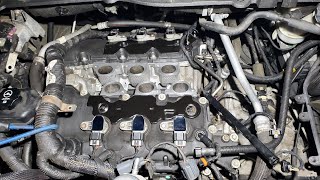
The 2009-2010 Saturn Outlook uses the 3.6L LLT direct-injection V6 engine, shared with the GMC Acadia, Buick Enclave, and Chevrolet Traverse. A notable issue on this GM Lambda platform is the wiring harness's susceptibility to damage. A specific Technical Service Bulletin (TSB #PIP4924D) highlights that a wide range of injector codes, including P0204, can result from the engine wiring harness chafing. The bulletin identifies common chafe points against the intake plenum, valve cover bolts, fuel lines, and the side of the cylinder head. This makes a thorough wiring inspection more critical on these vehicles compared to others. Cylinder 4 is located on Bank 2, the front bank of cylinders closer to the radiator, which is slightly easier to access for inspection than the rear bank.
Diagnostic Flowchart
Tap your situation to follow the diagnostic path that matches what you're seeing on this vehicle.
Symptoms You May Notice
- Check Engine Light is on
- Engine misfire or rough idle
- Reduced engine power and poor acceleration
- Hesitation or stumbling when accelerating
- Decreased fuel economy
- Fuel smell from the exhaust
- Replacing the spark plug or ignition coil for cylinder 4. While these parts can cause a misfire (P0304), they will not cause an injector circuit code (P0204). The P0204 code is specifically for an electrical fault in the fuel injector's control circuit.
Most Likely Causes
- Faulty Cylinder 4 Fuel Injector 🔴 High Probability → Shop Fuel Injector The 2009-2010 models use direct injection, and injectors can fail electrically (open or shorted internal coil) or become clogged over time. A 2010 Acadia owner reported an open circuit failure at just 53,000 miles. Injectors on this engine typically last 80,000-150,000 miles.
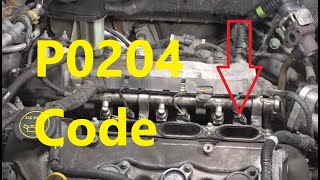
How to confirm: Swap the cylinder 4 injector with an injector from another cylinder (e.g., cylinder 2). If the code changes to P0202, the injector is faulty. Alternatively, test the injector's resistance with a multimeter; it should be between 11-14 ohms for the LLT engine. 🎬 See how to test injector resistance and circuit design. A reading of infinity (open) or near zero (short) indicates a faulty injector.
Typical fix: Replace the failed fuel injector. Many technicians and owners recommend replacing all three injectors on the same bank (Bank 2: cylinders 2, 4, 6) at the same time due to the labor involved in accessing them. The Teflon seals and O-rings must also be replaced.
Est. part cost: $80-$150 - Damaged Wiring Harness or Connector 🟡 Medium Probability As noted in TSB #PIP4924D, the engine harness on the GM Lambda platform is known to chafe against the intake plenum, valve cover bolts, fuel lines, and the side of the cylinder head, causing an open or short in the injector circuit.
How to confirm: Visually inspect the wiring harness leading to the cylinder 4 injector for any signs of rubbing, melting, or breaks, paying close attention to the TSB-noted areas. Check the connector for corrosion, backed-out pins, or a loose clip. Use a noid light to confirm if a control signal is reaching the injector; a steady flash while cranking is normal.
Typical fix: Repair the damaged section of wire with a new connector pigtail or by soldering and using heat-shrink tubing. Secure the harness away from sharp edges with loom and zip ties.
Est. part cost: $15-$40
Rare But Worth Checking
- Faulty Powertrain Control Module (PCM): → Shop Engine Control Module (ECM) This is rare. The internal driver circuit in the PCM that controls the injector can fail. This should only be considered after the injector and wiring have been definitively ruled out as the cause.
- Corroded Injector Bank Ground Wire: A forum post on a GM 3.6L engine noted that multiple injector codes for one bank (e.g., P0202, P0204, P0206) were traced back to a single corroded ground connection on the cylinder head for that bank.
Diagnosis Steps
- Read the trouble codes with an OBD-II scanner and confirm P0204 is present. Note any other codes, especially P0304 or other P020x codes.
- Visually inspect the wiring harness and connector for the cylinder 4 fuel injector. Cylinder 4 is on the front bank (Bank 2). Pay close attention to areas where the harness might rub against the intake plenum, valve cover bolts, and fuel lines, as noted in TSB #PIP4924D.
- Disconnect the injector and test for a control signal using a noid light. Crank the engine; the light should flash rhythmically. If it doesn't flash, or stays on constantly, the problem is in the wiring or the PCM.
- If a signal is present, test the fuel injector's internal resistance using a multimeter. A reading between 11-14 ohms is specified for the LLT engine. A reading of infinity (open) or near zero (short) indicates a faulty injector.
- For a definitive diagnosis, swap the cylinder 4 injector with one from another cylinder on the same bank (e.g., cylinder 2). Clear the codes and run the engine. If the code returns as P0202, the injector is bad. If P0204 returns, the issue is in the wiring or PCM.
- If the wiring is suspected, perform a continuity test on both wires (Light Blue and Light Blue/White) from the injector connector back to the ECM connector (pins 50 and 74 at the X1 connector) to check for opens or shorts to ground.
- If the injector and wiring are confirmed to be good, the PCM is the likely, though rare, culprit.
Parts You'll Likely Need
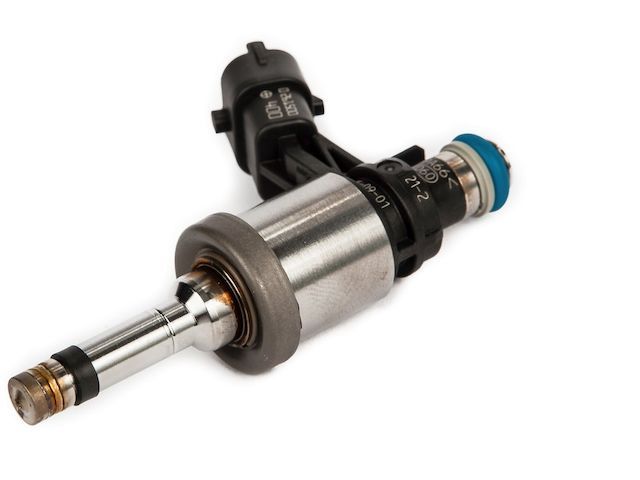
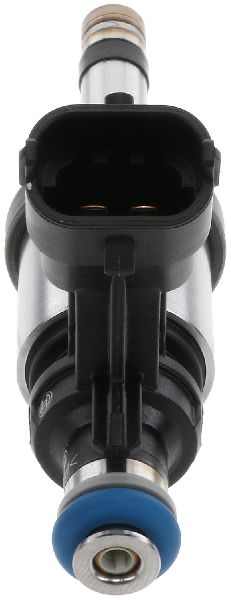
- Direct Fuel Injector
(OEM #12669384)— This is the most common cause of a P0204 code when wiring is intact. The internal coil windings can fail, creating an open or short circuit. This part number supersedes previous versions 12638530, 12632255, and 12611545.
Trusted brands: ACDelco (GM Genuine), Bosch, Duralast
OEM price range: $110-$200
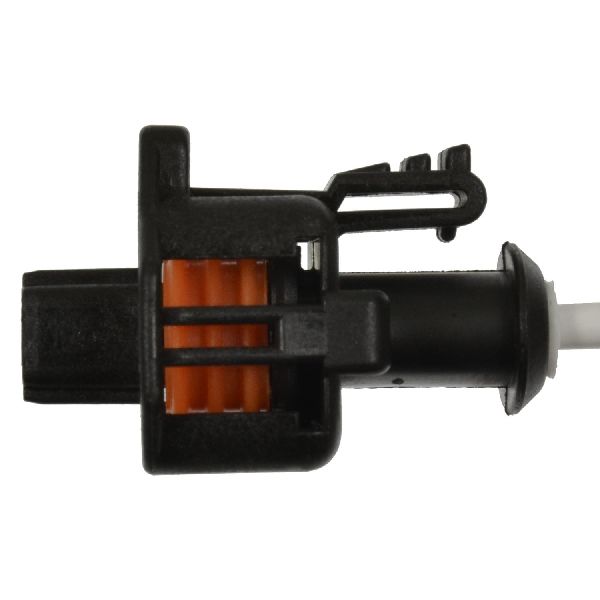
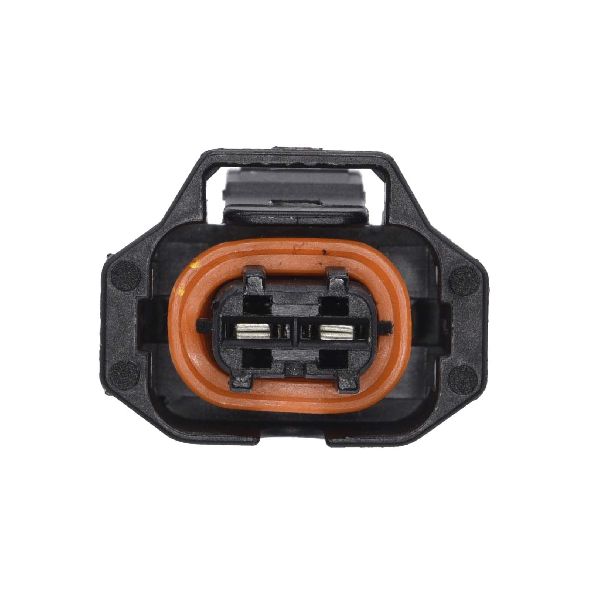
Aftermarket price range: $50-$100 - Fuel Injector Connector Pigtail — If the connector at the injector is corroded, melted, or has broken locking tabs, it must be replaced to ensure a solid electrical connection. This is a common failure point due to engine vibration.
Trusted brands: ACDelco, Dorman
OEM price range: $25-$45
Aftermarket price range: $15-$30
Related Codes That Often Appear With This One
- P0304 — P0304 means 'Cylinder 4 Misfire Detected.' Since a malfunctioning injector circuit prevents proper fueling of cylinder 4, a misfire is an almost guaranteed secondary code.
- P0201, P0202, P0203, P0205, P0206 — The presence of multiple injector circuit codes alongside P0204 strongly points to a systemic issue like a damaged wiring harness affecting several injector circuits, as described in TSB #PIP4924D, or a corroded bank ground wire.
- P2149 — This code means 'Fuel Injector Group 'B' Supply Voltage Circuit/Open'. Group B on the 3.6L V6 corresponds to cylinders 2, 4, and 6 (the front bank). This code indicates the ECM has detected a fault affecting the entire bank and will often appear with one or more specific codes like P0204.
Technical Service Bulletins (TSBs) & Recalls
- PIP4924D: Addresses engine misfires and various injector DTCs, including P0204, potentially caused by wiring harness issues. Specifies chafe points to inspect.
Platform-Specific Known Issues
- TSB #PIP4924D: This General Motors bulletin applies to the 2009 Saturn Outlook and related vehicles. It warns that multiple injector DTCs (including P0204) can be caused by the engine wiring harness chafing against specific engine components like the intake plenum, valve cover bolts, and fuel lines, leading to shorts or opens. A thorough inspection of the harness is required before replacing parts.
Mechanic-Grade Diagnostic Values
- Fuel Injector Coil Resistance (LLT Engine) — expected: 11-14 Ohms. Failure: A reading of infinity (OL), near zero, or significantly outside the specified range indicates a failed injector coil.
- Injector Circuit Voltage (Key On, Engine Off) — expected: Battery Voltage (approx. 11.5V - 12.5V). Failure: Voltage below 11V suggests excessive resistance or a problem in the power supply wiring to the injector.
- High-Pressure Fuel System (at operating temp) — expected: Up to 1,740 PSI (120 bar). Failure: While not a direct cause of P0204, low high-side fuel pressure can indicate a failing high-pressure fuel pump (HPFP), a known issue on these engines.
- Injector Pulse Width (at idle) — expected: 2 - 4 milliseconds (ms). Failure: A value of 0 ms for cylinder 4 while other cylinders show a normal pulse width indicates the PCM is not commanding the injector to open.
Scan Tool Commands That Help
- Tech2 / GDS2 / Professional Scan Tool: Fuel Injector Balance Test — This is a critical test when an injector passes a resistance test but is suspected of being clogged or having poor flow. The tool individually pulses each injector and measures the drop in fuel rail pressure. If the pressure drop for cylinder 4 is significantly different (more than 3 PSI or 20 kPa) from the others, the injector is mechanically faulty.
- GDS2 / Professional Scan Tool: Cylinder Power Balance — Used to confirm a misfire. The tool deactivates one cylinder at a time. If deactivating cylinder 4 causes no change in engine smoothness or RPM, it confirms that cylinder was not contributing power, strengthening the P0204 diagnosis.
- Professional Scan Tool: Injector Test / Activation — This bidirectional command manually fires the injector solenoid. Hearing an audible 'click' confirms the injector's coil and pintle are not seized, helping to differentiate between an electrical open/short and a completely dead injector.
Wiring & Ground Locations
- ECM Connector X1, Pins 50 & 74 — At the Engine Control Module (ECM).. These are the specific pins for the cylinder 4 injector circuit on the 3.6L LLT. Pin 50 is the low-side driver (Light Blue wire) and Pin 74 is the high-side driver (Light Blue/White wire). Testing for continuity and shorts should be performed from these pins to the injector connector.
- G112 — Rear of the engine, mounted to the rear of the cylinder head.. This is a primary engine ground. A corroded or loose G112 can cause intermittent issues for an entire bank of injectors, potentially triggering P0202, P0204, and P0206 simultaneously.
- G102 — On the right side of the engine compartment, on the right inner fender panel.. This is a major chassis ground point for the engine compartment. While less likely to cause a single injector code, a poor connection here can lead to various difficult-to-diagnose electrical faults.
Real Owner Repair Stories
- ScannerDanner Forum user 'Rm370' (2008 GMC Acadia 3.6L (Lambda platform-mate)) — Engine runs fine for 30-45 minutes, then develops a severe miss and sets codes P0300, P0202, P0204, and P0206 all at once.
❌ Tried (didn't work) Cleaning VVT solenoids, Swapping O2 sensors, Cleaning MAF sensor
✅ What actually fixed it The ground wire for the Bank 2 coils/injectors, located on the side of the cylinder head, was corroded. Thoroughly cleaning the ground connection point and terminal resolved the issue. - YouTube channel 'mechaniclifestyle' (Land Rover Discovery (demonstrating a universal P0204 fix)) — Check Engine Light with code P0204 and a misfire immediately after an engine replacement.
❌ Tried (didn't work) Initial diagnosis pointed towards a bad injector or wiring fault.
✅ What actually fixed it The electrical connector for the cylinder 4 injector was not fully seated. The retaining clip was missing or not engaged, causing a loose connection. Firmly pushing the connector on until it clicked into place and clearing the codes permanently fixed the problem.
When the Usual Fixes Don't Work
- While a faulty injector is a common cause, multiple forum reports and TSB #PIP4924D strongly suggest that wiring issues are a very frequent root cause on this platform. A user on the ScannerDanner forum fixed multiple injector codes (P0202, P0204, P0206) that only appeared when the engine was hot by cleaning a corroded bank ground, after initial checks were inconclusive. This highlights that if multiple injector codes for the same bank are present, the primary suspect should be the shared wiring or ground for that bank, not multiple simultaneous injector failures.
OEM Part Supersession History
12611545, 12632255, 12638530→12669384— Standard part evolution for improved reliability or manufacturing process changes.
Heads up: No known incompatibilities. The newer part number is the correct service replacement for all previous versions on the 3.6L LLT engine.
Model Year Variations Within This Range
- 2009-2010: The 2009 model year was the first for the Saturn Outlook to receive the 3.6L LLT V6 with direct injection, replacing the port-injected LY7 engine from 2007-2008. The 2010 model continued to use the LLT. This distinction is critical, as injectors, fuel pumps, and diagnostic values are completely different between the LY7 and LLT engines.
Helpful Videos
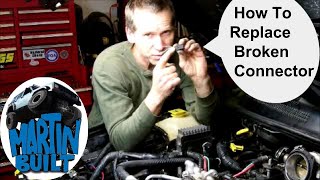
We Have This Part in Stock


The information in this article is provided for general reference and educational purposes only. Vehicle specifications, procedures, and part compatibility can vary by production date, trim level, and region. Always consult your vehicle's factory service manual and verify part numbers before purchasing or performing repairs. Safety-critical components such as airbags, seat belts, and braking systems should be installed by a qualified professional.
- Saturn OUTLOOK:
- 🧭 Diagnostic Flowchart
- 🎬 Helpful Videos
- 🛍️ Shop This Part
- What's Unique About the 2009-2010 Saturn OUTLOOK
- Symptoms You May Notice
- Most Likely Causes
- Rare But Worth Checking
- Diagnosis Steps
- Parts You'll Likely Need
- Related Codes That Often Appear With This One
- Technical Service Bulletins (TSBs) & Recalls
- Platform-Specific Known Issues
- Mechanic-Grade Diagnostic Values
- Scan Tool Commands That Help
- Wiring & Ground Locations
- Real Owner Repair Stories
- When the Usual Fixes Don't Work
- OEM Part Supersession History
- Model Year Variations Within This Range
- 🎟️ Get 5% Off