

P0205 on 2009-2014 Buick LaCrosse: Injector Circuit Fixes & Causes
P0205 on a V6 Buick LaCrosse indicates an electrical fault with the cylinder 5 fuel injector circuit. The most common causes are a faulty fuel injector or a damaged wiring harness, often due to chafing as noted in a GM Technical Service Bulletin. A bad injector can cost $50-$150 for the part, while wiring repairs vary.
- P0205 on a 2009-2014 LaCrosse V6 points to an electrical issue with the cylinder 5 injector.
- Before replacing the injector, thoroughly inspect the wiring harness for chafing, as this is a known issue documented in a GM Technical Service Bulletin (TSB).
- Symptoms include a rough idle, engine misfires, and poor acceleration.
- Driving with this code is not recommended as it can lead to damage to the catalytic converter.
- Diagnosis can be done with a multimeter and a noid light to determine if the fault is in the injector, the wiring, or the ECM.
What's Unique About the 2009-2014 Buick LACROSSE
For this generation of Buick LaCrosse and many other GM vehicles with the 3.0L (LF1) and 3.6L (LLT, LFX) V6 engines, a well-documented issue is the fuel injector wiring harness chafing against engine components. GM issued Technical Service Bulletin (TSB) #PIP4924D that specifically calls out P0205 and other injector codes, directing technicians to inspect the harness for damage at common rub points like the intake plenum, valve cover bolts, and fuel lines. This makes a wiring fault a higher-than-usual probability compared to other vehicles and should be the first item to inspect.
🎬 Watch: Common causes and fixes for the P0205 codeDiagnostic Flowchart
Tap your situation to follow the diagnostic path that matches what you're seeing on this vehicle.
Generation note: The 2009 model year was the last of the first-generation LaCrosse, while 2010-2014 belongs to the second generation. However, the V6 engines (3.0L LF1, 3.6L LLT/LFX) and the associated TSB PIP4924D apply across these model years, so the causes and diagnostics are consistent.
Symptoms You May Notice
- Check Engine Light is on
- Rough or unstable idle
- Engine misfires, which may be felt as a shudder or stumble
- Poor acceleration and loss of power
- Reduced fuel economy
- Engine may stall
- Engine may enter a reduced power or "limp-in" mode
- Replacing the fuel injector when the actual problem is a chafed wire in the harness. This is a very common mistake given the known TSB.
- Replacing spark plugs or ignition coils, which would typically set a misfire code (P0305) but not an injector circuit code (P0205).
Most Likely Causes
- Damaged Fuel Injector Wiring Harness 🔴 High Probability → Shop Engine Wiring Harness As documented in GM TSB #PIP4924D, the injector wiring harness is known to rub against the intake plenum, valve cover bolts, or fuel lines, causing wires to chafe and short out or break. This is the most vehicle-specific and highly probable cause.
How to confirm: Visually inspect the entire fuel injector harness for cylinder 5, from the injector connector back to the main loom. Pay close attention to points where the harness touches or is secured near metal engine parts like the intake plenum and the side of the cylinder head. A "wiggle test" (gently moving the harness with the engine running) may cause the misfire to change or the code to appear/disappear, confirming a wiring issue.
Typical fix: Repair the damaged section of wire with a new connector pigtail or by splicing, soldering, and heat-shrinking the wire. If damage is extensive or at the main connector, the entire harness may need replacement. Reroute the repaired harness using zip ties or loom to create clearance and prevent future chafing.
Est. part cost: $10-$300 - Faulty Fuel Injector 🟡 Medium Probability → Shop Fuel Injector The direct injection (DI) fuel injectors on the GM 3.6L V6 are a known failure point as they age, either electrically (internal coil shorts or opens) or mechanically (clogging). Failures over 80,000 miles are common.
How to confirm: Use a multimeter to test the resistance of the injector; for the 3.6L LLT/LFX engines, the spec is typically 1.9-2.3 ohms when the engine is cool (68°F/20°C). Compare the reading to an adjacent, working injector. A reading that is out of specification indicates a failed injector. A "noid light" is not effective for these GDI injectors; a lab scope is needed to properly view the voltage pulse.
Typical fix: Replace the faulty fuel injector. It is often recommended to replace all injectors on the same bank (Bank 1 for cylinder 5), or all six, if they are high-mileage originals to ensure balanced performance.
Est. part cost: $50-$150 - Loose or Corroded Connector ⚪ Low Probability
How to confirm: Disconnect the electrical connector at the cylinder 5 fuel injector. Inspect the pins on both the injector and the connector for corrosion, moisture, bent pins, or damage. Ensure the connector clicks securely into place.
Typical fix: Clean the terminals with electrical contact cleaner and a small brush. Apply a small amount of dielectric grease to the connector before reconnecting to prevent future corrosion and ensure a good seal.
Est. part cost: $5-$15
Rare But Worth Checking
- Faulty Engine Control Module (ECM): → Shop Engine Control Module (ECM) This is a rare cause. Before condemning the ECM, all other possibilities (wiring, injector) must be exhaustively ruled out. An ECM failure for a single injector driver is uncommon, but possible. A diagnostic test would involve checking for a pulse signal directly at the ECM pin for the cylinder 5 injector.
Diagnosis Steps
- Verify the code with an OBD-II scanner. Note any other codes present, especially P0305.
- Identify cylinder 5. On the transverse-mounted V6 in the LaCrosse, Bank 1 is the cylinder bank closer to the firewall, and Bank 2 is closer to the radiator. Cylinder 5 is the middle cylinder on Bank 1 (firewall side).
- Start with the TSB. Visually inspect the injector wiring harness for obvious signs of damage, chafing, or melting. Focus on where it contacts the intake plenum, valve cover bolts, and fuel lines as noted in TSB PIP4924D.
- Perform a 'wiggle test' on the harness with the engine idling to see if it affects the misfire. If wiggling the wires causes a change in engine sound, it's almost certainly a wiring issue.
- If wiring looks good, disconnect the injector connector. A standard noid light will NOT work correctly on these GDI systems. A lab scope is required to observe the 65V/12V injector waveform. The absence of this complex signal points to a wiring or ECM issue.
- If you do not have a lab scope, perform a resistance test. Turn off the engine and test the injector's resistance with a multimeter. It should be between 1.9-2.3 ohms for a cool engine. An open circuit (infinite resistance) or a short (zero resistance) confirms a bad injector.
- If the resistance is good, swap the cylinder 5 injector with an adjacent one (e.g., cylinder 3). Clear the codes and run the engine. If the code moves to P0203, the injector is confirmed to be faulty.
- If the injector and its resistance test good, check the wiring integrity. Check for battery voltage at the power supply wire on the injector connector with the key on. Then, check for continuity on the control wire from the injector connector back to the ECM. An open or short in this wire is the cause.
- If all wiring and the injector test good, the fault may lie within the ECM's injector driver circuit, but this is the least likely scenario.
Parts You'll Likely Need
- Fuel Injector
(OEM #12638530)— This is the most common part to fail internally, causing the circuit fault. This part number is for the 3.0L and 3.6L LLT engines (2009-2011) and was superseded by 12669384.
Trusted brands: ACDelco, Bosch, Standard Motor Products
OEM price range: $80-$150
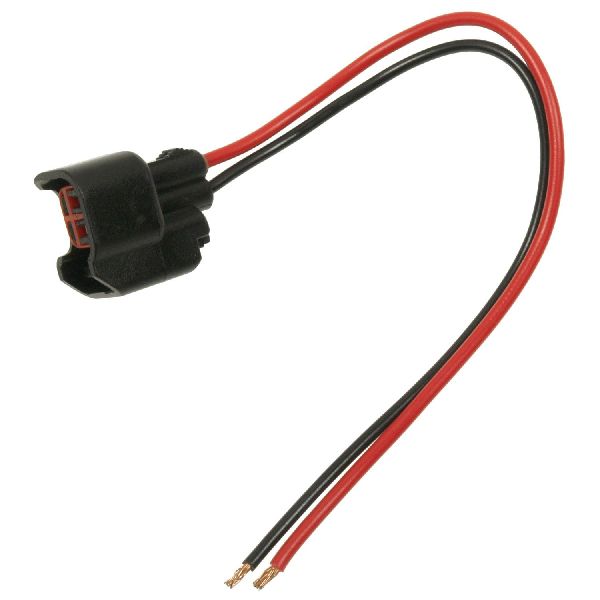
Aftermarket price range: $40-$90 - Fuel Injector Connector Pigtail
(OEM #PT2798)— If the wiring is damaged at the connector, replacing the pigtail is the standard repair. This is a common fix due to harness chafing.
Trusted brands: ACDelco, Dorman
OEM price range: $25-$40
Aftermarket price range: $10-$20
Related Codes That Often Appear With This One
- P0305 — P0305 means 'Cylinder 5 Misfire Detected'. Since P0205 indicates a problem with the fuel injector circuit for that same cylinder, the cylinder will not get the correct amount of fuel, leading to a misfire.
- P0201, P0202, P0203, P0204, P0206 — If multiple injector circuit codes appear at once, it strongly suggests a common wiring harness problem, a bad ground, or a faulty fuse/relay that supplies power to all injectors.
- P216B, P216C — DTCs P216B (Injector 5 Positive Voltage Control Circuit Low Voltage) and P216C (Injector 5 Positive Voltage Control Circuit High Voltage) are more specific electrical fault codes that point directly to issues on the power supply side of the injector circuit, often seen alongside P0205.
Technical Service Bulletins (TSBs) & Recalls
- PIP4924D: Addresses Service Engine Soon light and misfires with various injector codes (including P0205) due to a chafed wiring harness. Specific inspection points are the intake plenum, valve cover bolts, and fuel lines.
Platform-Specific Known Issues
- TSB #PIP4924D explicitly identifies a recurring issue with the fuel injector wiring harness chafing against engine parts on 2009-2014 Buick LaCrosse models with V6 engines, leading to codes like P0205.
- A user on the ScannerDanner forum with a 2011 LaCrosse 3.6L experienced misfires on multiple cylinders due to a faulty ECM that was not grounding the injectors. While rare, it highlights that ECM failure is a possibility after wiring and injectors are ruled out.
Mechanic-Grade Diagnostic Values
- Fuel Injector Coil Resistance (3.0L LF1 & 3.6L LLT/LFX GDI Engines) — expected: 1.9-2.3 Ω at 20°C (68°F). Failure: A reading of infinity (open circuit), near-zero (short circuit), or significantly outside the specified range.
- Injector Circuit Voltage (GDI Engines) — expected: A 65V capacitive discharge pulse to open the injector, immediately followed by a 12V signal to hold it open.. Failure: Absence of the 65V pulse or 12V hold voltage. This can only be accurately measured with a lab scope.
- Low-Side Fuel Pressure (Key On, Engine Off) — expected: 345-690 kPa (50-100 psi). Failure: Pressure below this range indicates a problem with the in-tank fuel pump or its control module, not the injector circuit itself.
Scan Tool Commands That Help
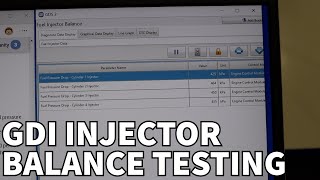
- GM GDS2 (Global Diagnostic System 2): Fuel Injector Balance Test — This bidirectional test is used after confirming the electrical circuit is intact. The tool commands each injector to open for a set duration while the engine is running and measures the corresponding drop in fuel rail pressure. A cylinder that shows a significantly different pressure drop compared to others indicates a poorly performing (clogged or weak) injector.
- GM GDS2 (Global Diagnostic System 2): Injector Test (Cylinder Deactivation) — This function allows a technician to individually disable each fuel injector while the engine is idling. When the injector for cylinder 5 is disabled, if there is no change in engine RPM or sound, it confirms that cylinder was not contributing in the first place, pointing to a problem with that injector or its circuit.
Wiring & Ground Locations
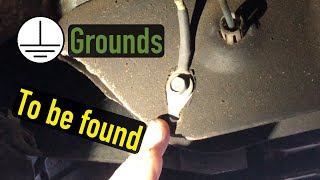
- G104 — Typically located on the rear of the left (firewall side) cylinder head.. This is a primary engine-to-chassis ground strap. While not exclusively for the injectors, a loose or corroded G104 can create electrical noise and unstable ground references for the entire engine management system, including the ECM and its injector drivers, potentially causing intermittent circuit codes.
- G102 — Located on the left rear of the engine block.. This ground point is specified for the ignition coils. While not directly for the injectors, a fault here can cause electrical interference (EMI) that could potentially be misinterpreted by the sensitive injector monitoring circuits in the ECM.
- ECM Connectors (X1/X2) — The Engine Control Module is located in the engine bay, near the airbox. The injector circuits terminate at specific pins within its main connectors.. When diagnosing a persistent P0205 where the injector and harness at the cylinder test good, the final check is to test for continuity and the correct pulse signal directly at the ECM connector pins to rule out a harness break mid-loom or a failed ECM driver.
OEM Part Supersession History
12638530→12669384— Standard part update for improved reliability or manufacturing process change.
Heads up: This part number is specific to the 3.0L LF1 and 3.6L LLT engines used from 2009-2011. It is NOT compatible with the 3.6L LFX engine used from 2012-2014, which uses a different injector (e.g., part number 12634126).
Model Year Variations Within This Range
- 2009-2011: These models used the 3.0L LF1 and 3.6L LLT V6 engines. They use fuel injector part number 12638530 (or its supersession 12669384) and a Bosch ECM.
- 2012-2014: These models feature the updated 3.6L LFX V6 engine. This engine is lighter and has redesigned cylinder heads with integrated exhaust manifolds, a composite intake manifold, and different fuel injectors (PN 12634126). It uses a Delphi ECM. Parts, particularly injectors and intake components, are not interchangeable with the earlier LLT engine.
Helpful Videos
We Have This Part in Stock


The information in this article is provided for general reference and educational purposes only. Vehicle specifications, procedures, and part compatibility can vary by production date, trim level, and region. Always consult your vehicle's factory service manual and verify part numbers before purchasing or performing repairs. Safety-critical components such as airbags, seat belts, and braking systems should be installed by a qualified professional.
- Buick LACROSSE:
- 🧭 Diagnostic Flowchart
- 🎬 Helpful Videos
- 🛍️ Shop This Part
- What's Unique About the 2009-2014 Buick LACROSSE
- Symptoms You May Notice
- Most Likely Causes
- Rare But Worth Checking
- Diagnosis Steps
- Parts You'll Likely Need
- Related Codes That Often Appear With This One
- Technical Service Bulletins (TSBs) & Recalls
- Platform-Specific Known Issues
- Mechanic-Grade Diagnostic Values
- Scan Tool Commands That Help
- Wiring & Ground Locations
- OEM Part Supersession History
- Model Year Variations Within This Range
- 🎟️ Get 5% Off