

P0205 on 2010-2014 Cadillac SRX: Injector Circuit Malfunction Causes and Fixes
P0205 on a Cadillac SRX indicates an electrical fault with the cylinder 5 fuel injector circuit. The most common cause is a failed fuel injector, followed by wiring issues. Expect to pay $60-$100 for an OEM ACDelco injector. Professional replacement is costly ($900-$1300) due to 3-5 hours of labor to remove the intake manifold.
- P0205 on your SRX means there's an electrical problem with the fuel injector circuit for cylinder 5, which is on the hard-to-access rear bank.
- The most likely cause is a failed fuel injector, but a wiring issue (chafing, open circuit) is a strong second possibility according to GM service bulletins.
- While a DIY injector replacement is possible, it requires removing the upper intake manifold, making it a difficult job.
- Always diagnose the circuit with a noid light and multimeter before buying parts to avoid replacing a good injector when the fault is in the wiring or ECM.
What's Unique About the 2010-2014 Cadillac SRX
For the second-generation Cadillac SRX (equipped with 3.0L LF1/LFE and 3.6L LLT/LFX engines), this code is often a straightforward component failure. However, General Motors issued Technical Service Bulletin (TSB) #PIP4924D for 2010 models, which also applies to later years, acknowledging a range of injector circuit codes including P0205. This TSB specifically advises technicians to inspect the injector wiring harness for rub-through or internal wire opens, suggesting that wiring issues are a notable cause alongside simple injector failure, warranting a careful circuit inspection before replacing parts.
Diagnostic Flowchart
Tap your situation to follow the diagnostic path that matches what you're seeing on this vehicle.
Symptoms You May Notice
- Check Engine Light is on
- Engine misfiring or running rough, especially at idle
- Hesitation or lack of power during acceleration
- Reduced fuel economy
- Engine may stall
- Noticeable fuel smell if the injector is stuck open
- Replacing the spark plug or ignition coil for cylinder 5. While these can cause a misfire (P0305), they will not cause an injector circuit code like P0205.
Most Likely Causes
- Failed Cylinder 5 Fuel Injector 🔴 High Probability → Shop Fuel Injector The internal electronic solenoid within the direct fuel injector can fail over time from heat cycles and wear, creating an open or short circuit. This is a common failure point for all modern fuel injectors.
How to confirm: After confirming a pulse signal at the connector with a noid light, measure the resistance across the two terminals of the fuel injector itself using a multimeter. A reading that is out of the manufacturer's specification (typically 11-16 Ohms for port injection, but can vary for direct injection) or shows an open circuit (infinite resistance) confirms a bad injector.
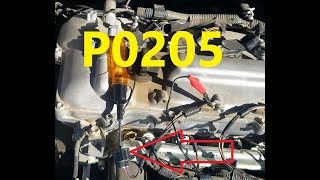
Typical fix: Replace the cylinder 5 fuel injector. 🎬 See this video on common causes and fixes for P0205 It is often recommended to replace all injectors on that bank (Bank 1: cylinders 1, 3, 5) or all six if they are high-mileage, as they have been subjected to the same conditions and may fail soon.
Est. part cost: $60-$100 - Wiring Harness or Connector Issue 🟡 Medium Probability As noted in TSB #PIP4924D, electrical circuit issues are a known possibility. The bulletin specifically directs technicians to inspect for 'rub through or internal wire opens'. The engine wiring harness is exposed to heat and vibration, which can cause wires to chafe against the engine or other components, leading to an open or short circuit. The connector pins can also corrode or lose tension.
How to confirm: Visually inspect the wiring harness leading to the cylinder 5 injector for any signs of melting, chafing, or breaks. Pay close attention to where the harness may contact the engine block or brackets. Disconnect the connector and check for corrosion or bent/loose pins. Use a multimeter to check for continuity on the control and power wires between the ECM connector and the injector connector to find an internal break.
Typical fix: Repair the damaged section of wiring or replace the injector connector pigtail. In some cases of extensive damage, a new engine wiring harness may be required.
Est. part cost: $15-$30 for a pigtail, $200+ for a used harness - Faulty Engine Control Module (ECM) ⚪ Low Probability → Shop Engine Control Module (ECM)
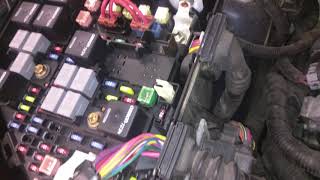
How to confirm: This should only be considered after the injector and wiring have been proven to be good. If a noid light shows no pulse at the injector connector and the wiring has continuity back to the ECM, the injector driver circuit inside the ECM has likely failed. A detailed diagnostic, as shown in some repair videos, involves checking the entire circuit's resistance from the fuse box through the injector and back to the ECM pin, confirming the wiring is intact before condemning the module.
Typical fix: Replace and reprogram the Engine Control Module. This requires specialized tools and software and must be done by a qualified shop or dealership.
Est. part cost: $400-$800
Diagnosis Steps
- Connect an OBD-II scanner and confirm P0205 is the active code. Note any other codes present (especially P0305) and review the freeze frame data to see the engine conditions when the code was set.
- Locate cylinder 5 on your engine. For the transverse V6 in the SRX, it is the middle cylinder on the rear bank, against the firewall (Bank 1).
- Visually inspect the fuel injector's electrical connector and the surrounding wiring for obvious damage, melting, or corrosion. Check for common chafe points.
- Disconnect the injector and plug a 'noid light' into the harness connector. Crank the engine and watch the light. A steady, rhythmic flashing indicates the ECM and wiring are sending the signal correctly.
- If the noid light flashes, the injector is the prime suspect. Turn the ignition off, and use a multimeter set to Ohms (Ω) to measure the resistance between the two pins on the fuel injector. Compare the reading to the manufacturer's specification. If it's out of spec or shows an open circuit, the injector is faulty.
- If the noid light does not flash or stays on constantly, the problem is in the wiring or the ECM. Check for 12V power on one wire of the connector with the key on. Then, check for continuity on the ground/control wire from the injector connector back to the ECM connector. Wiggle the harness during the continuity test to check for intermittent breaks.
- If the wiring checks out perfectly and there is still no pulse signal, the ECM's injector driver is likely faulty, and the ECM will need to be tested by a professional and likely replaced.
Parts You'll Likely Need
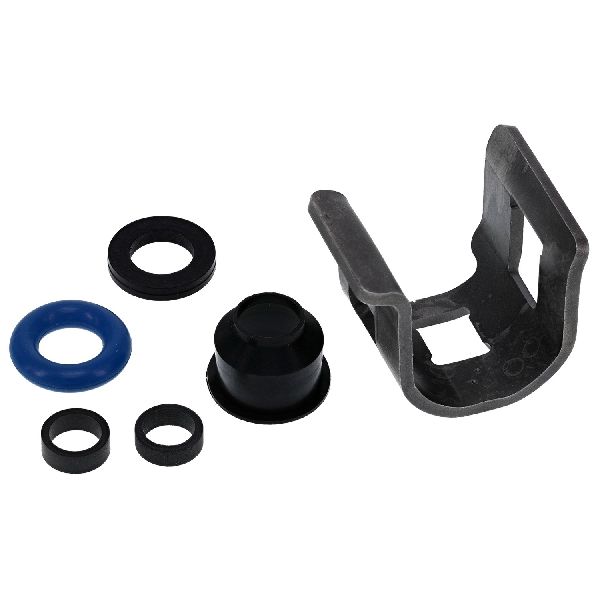
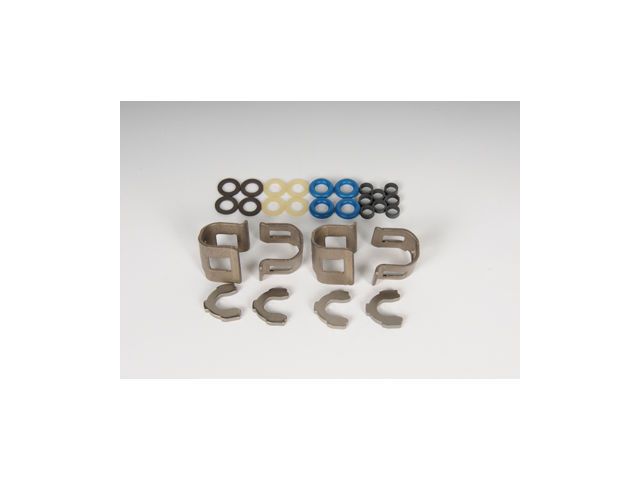
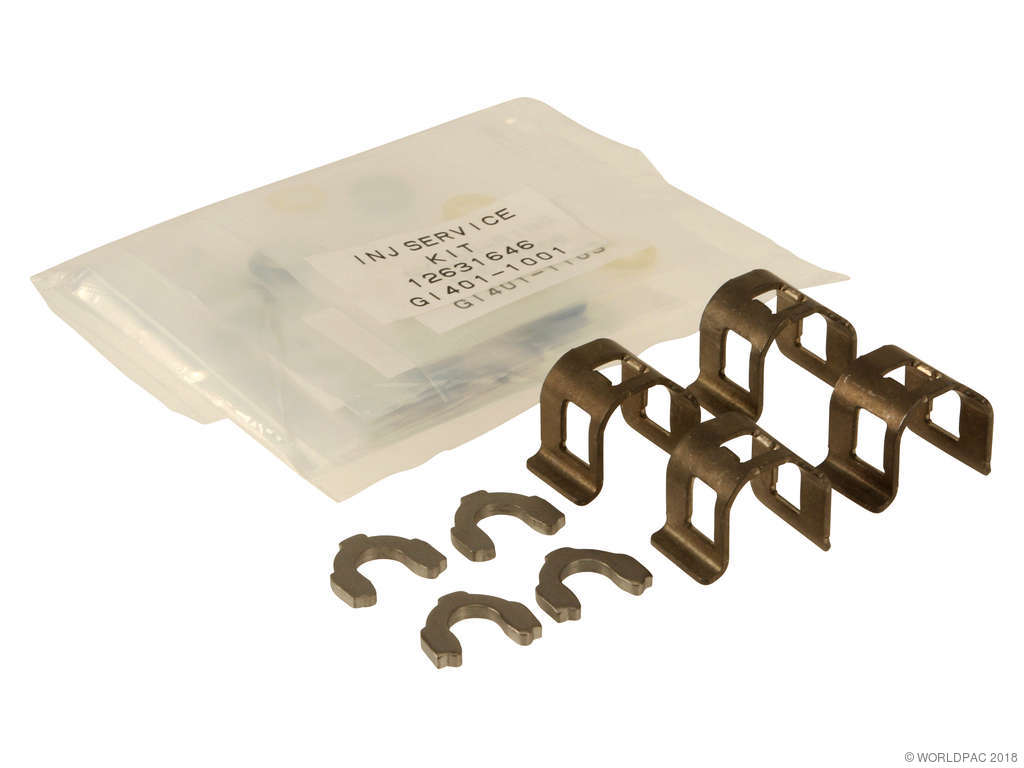
- Fuel Injector
(OEM #12669384)— This is the most common component to fail. The OEM part number 12669384 is the current part for the 3.6L engine and supersedes older part numbers 12638530, 12632255, and 12611545. The 3.0L engine uses a different injector, part number 12634126.
Trusted brands: ACDelco (OEM), Bosch, Standard Motor Products
OEM price range: $60-$100
Aftermarket price range: $40-$70 - Fuel Injector Connector Pigtail — If the connector is corroded, melted, or the locking tab is broken, replacing the pigtail is necessary to ensure a solid electrical connection.
Trusted brands: ACDelco, Dorman
OEM price range: $20-$35
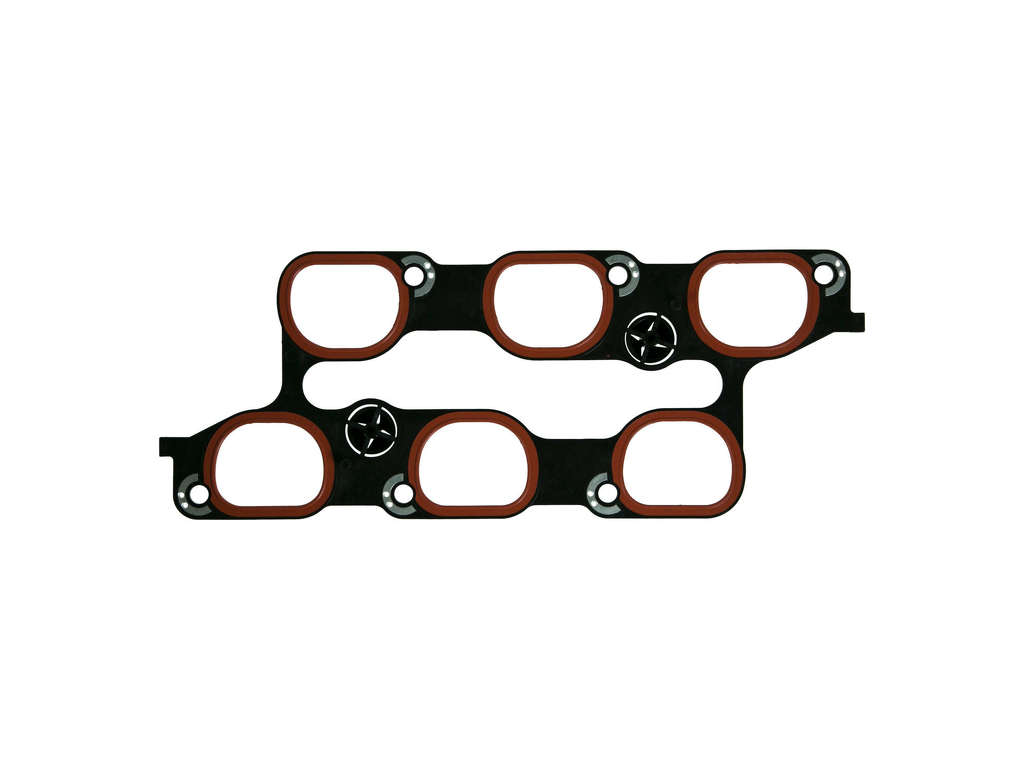
Aftermarket price range: $10-$20 - Upper Intake Manifold Gasket Set
(OEM #12679529 (for 3.6L LFX))— This must be replaced anytime the upper intake manifold is removed to access the fuel injectors on the rear bank (including cylinder 5).
Trusted brands: ACDelco (OEM), Fel-Pro
OEM price range: $25-$40
Aftermarket price range: $15-$30
Related Codes That Often Appear With This One
- P0305 — P0305 means 'Cylinder 5 Misfire Detected'. Since P0205 indicates a problem with fuel delivery to cylinder 5, a misfire is the direct and expected result.
- P0201, P0202, P0203, P0204, P0206 — If multiple injector circuit codes are present, it points towards a more systemic issue like a damaged wiring harness common to all injectors, a problem with the main injector fuse/relay, or a failure within the ECM affecting multiple driver circuits.
Technical Service Bulletins (TSBs) & Recalls
- PIP4924D: Mentions DTCs P0201 through P0206 related to engine misfires and Service Engine Soon lamps, pointing to potential electrical issues like harness rub-through or internal wire opens.
Platform-Specific Known Issues
- Technical Service Bulletin PIP4924D was issued for 2010 models with various engine electrical problems, including DTCs P0201-P0206. The bulletin explicitly advises technicians to 'inspect the fuel injector wiring harness for rub through or internal wire opens,' indicating that wiring harness faults should be carefully checked on these vehicles.
Mechanic-Grade Diagnostic Values
- Fuel Injector Coil Resistance (3.6L LFX Engine) — expected: 1.5 - 1.6 Ohms. Failure: A reading of OL (Open Loop/infinite resistance) or a significant deviation from this narrow range indicates a failed injector coil.
- Fuel Injector Coil Resistance (3.0L LF1 Engine) — expected: Approx. 11.7 - 12.0 Ohms. Failure: A reading of OL (Open Loop/infinite resistance) or a value significantly outside the 10-19 Ohm general range suggests a faulty injector.
- Injector Harness Supply Voltage (Key On, Engine Off) — expected: 11.5 - 14.0 Volts. Failure: Voltage below 11V points to an upstream wiring, fuse, or power supply issue before the injector.
- Wiring Harness Continuity (ECM to Injector Connector) — expected: < 1.0 Ohm. Failure: Resistance higher than 1.0 Ohm indicates excessive resistance in the wire; an OL reading indicates a complete break in the wire.
Scan Tool Commands That Help
- GDS2 / Tech 2: Fuel Injector Balance Test — This function should be used when an injector is suspected of a mechanical or flow issue, rather than a purely electrical one. The tool commands each injector to fire and measures the corresponding drop in fuel rail pressure, allowing for a direct comparison of performance between cylinders. It is most effective after electrical circuit integrity has been confirmed.
Wiring & Ground Locations
- G110 — Lower left side of the engine block (on 3.6L LFX models).. This is a primary engine block ground. A loose or corroded connection here can cause a wide range of difficult-to-diagnose electrical issues, including erratic signals in the fuel injector circuits controlled by the ECM.
- G112 — On the rear of the intake manifold (on 3.6L LFX models).. Due to its close proximity to the Bank 1 (rear bank) fuel injector harness, a poor connection at this ground point could directly affect the injector circuits or introduce electrical noise, potentially triggering a circuit code.
- Injector Harness Chafe Points — The harness loom running over the engine, specifically where it can contact the intake plenum, valve cover bolts, fuel lines, or the side of the cylinder head.. TSB #PIP4924D specifically calls out these locations as common areas for the harness to rub through, causing a short or open circuit that directly triggers codes like P0205. This is a known failure pattern.
Real Owner Repair Stories
- Reddit user on r/AskMechanics (2009 Dodge Journey 3.5L V6 (Note: Different vehicle, but identical diagnostic logic for P0205/P0305 codes)) — Rough idle, noticeable misfire, and both P0205 (Injector Circuit) and P0305 (Cylinder Misfire) codes present.
❌ Tried (didn't work) The user first sought advice before replacing parts.
✅ What actually fixed it The user tested the resistance of the #5 fuel injector and found it was faulty ('dead'). Replacing the single failed fuel injector resolved the issue.
OEM Part Supersession History
12638530, 12632255, 12611545→12669384— Part has been updated multiple times by GM for performance and reliability.
Heads up: While older part numbers may physically fit, it is always recommended to use the latest superseded part number for a given VIN. Do not use in 3.0L engines.ACDelco 217-3449 (service part number)→GM OEM #12629927— Cross-reference for the OEM part.
Heads up: This injector has a different resistance (~12 Ohms) and is not interchangeable with the low-resistance injectors used in the 3.6L LFX engine.
Model Year Variations Within This Range
- 2010-2011 vs 2012-2014: The primary difference is the engine. 2010-2011 models use the 3.0L V6 (LF1), while 2012-2014 models use the 3.6L V6 (LFX). This is a critical distinction for diagnosis, as the fuel injectors are not interchangeable and have vastly different electrical resistance specifications (~12 Ohms for the 3.0L vs. ~1.6 Ohms for the 3.6L).
Helpful Videos
We Have This Part in Stock



The information in this article is provided for general reference and educational purposes only. Vehicle specifications, procedures, and part compatibility can vary by production date, trim level, and region. Always consult your vehicle's factory service manual and verify part numbers before purchasing or performing repairs. Safety-critical components such as airbags, seat belts, and braking systems should be installed by a qualified professional.
- Cadillac SRX:
- 🧭 Diagnostic Flowchart
- 🎬 Helpful Videos
- 🛍️ Shop This Part
- What's Unique About the 2010-2014 Cadillac SRX
- Symptoms You May Notice
- Most Likely Causes
- Diagnosis Steps
- Parts You'll Likely Need
- Related Codes That Often Appear With This One
- Technical Service Bulletins (TSBs) & Recalls
- Platform-Specific Known Issues
- Mechanic-Grade Diagnostic Values
- Scan Tool Commands That Help
- Wiring & Ground Locations
- Real Owner Repair Stories
- OEM Part Supersession History
- Model Year Variations Within This Range
- 🎟️ Get 5% Off