

P0205 on 2009-2011 Cadillac STS: Injector Circuit Malfunction Causes and Fixes
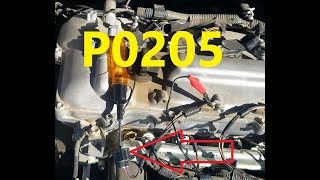
P0205 on a 2009-2011 Cadillac STS indicates an electrical problem with the cylinder 5 fuel injector circuit. A GM Technical Service Bulletin suggests a chafed wiring harness is a very common cause. If not wiring, the injector itself is the next likely culprit. Expect a repair cost of $450-$700.
- P0205 means an electrical fault in the cylinder 5 injector circuit.
- For the 2009-2011 STS, a GM service bulletin (PIP4924D) points to a chafed wiring harness as a highly probable cause. Inspect the wiring thoroughly before buying parts.
- If the wiring is good, the fuel injector is the next most likely failure point.
- Repairing this code requires accessing the injectors, which involves removing the upper intake manifold.
What's Unique About the 2009-2011 Cadillac STS
For this specific Cadillac, General Motors issued a service bulletin (PIP4924D) that directly addresses P0205, among other injector codes. The bulletin warns technicians that the fuel injector wiring harness is prone to rubbing through against engine components like the intake plenum, valve cover bolts, fuel lines, or the side of the cylinder head. This makes a wiring fault a more likely cause on the STS than on many other vehicles, and it should be inspected carefully before you decide to replace the injector itself. Additionally, on the 3.6L V6 engine, the ECM pairs the injector drivers for cylinders 2 and 5, meaning a short circuit on cylinder 2 can set a fault code for cylinder 5.
Diagnostic Flowchart
Tap your situation to follow the diagnostic path that matches what you're seeing on this vehicle.
Symptoms You May Notice
- Check Engine Light is on
- Engine misfire and rough idle, which may be more noticeable when warm.
- Hesitation or lack of power during acceleration.
- Reduced fuel economy.
- Difficulty starting the engine.
- Engine may stall or run very poorly.
- Replacing the fuel injector without first thoroughly checking the wiring harness. Given the TSB for this vehicle, a wiring issue is a very likely cause and checking it first can save hundreds of dollars.
Most Likely Causes
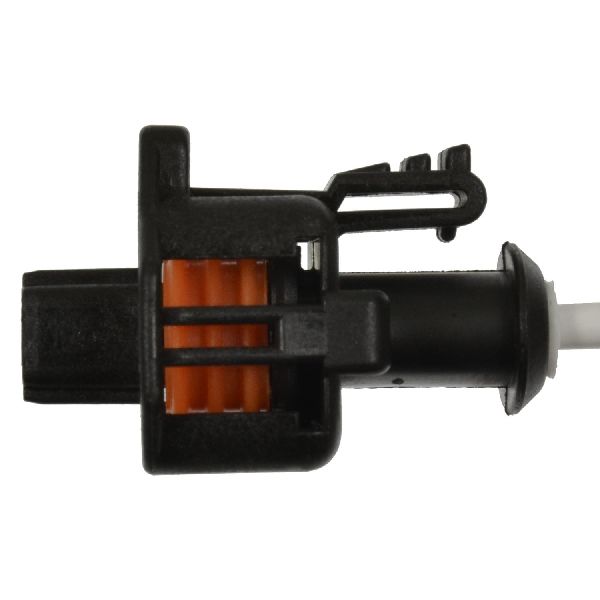
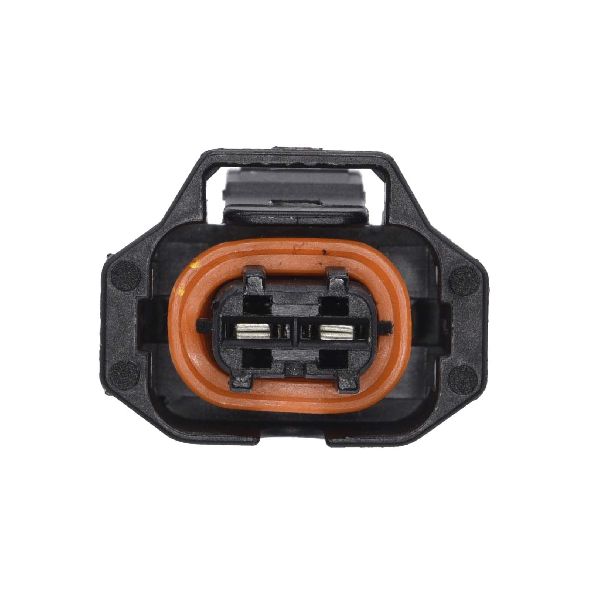
- Fuel Injector Wiring Harness or Connector Fault 🔴 High Probability → Shop Engine Wiring Harness GM Technical Service Bulletin #PIP4924D specifically calls out the injector harness for rubbing through (chafing). Common chafe points are against the intake plenum, at valve cover bolts, against a fuel line, and on the side of the cylinder head under the plenum.
How to confirm: Visually inspect the entire wiring harness leading to the cylinder 5 injector. Pay close attention to any points where it contacts other engine parts. Wiggle the harness and connectors while the engine is running to see if it induces a misfire or code. Check the connector for corrosion, backed-out pins, or a loose fit. Also inspect the main ECM connector pins to ensure they are fully seated.
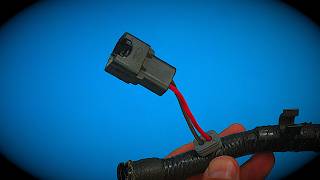
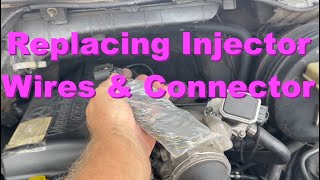
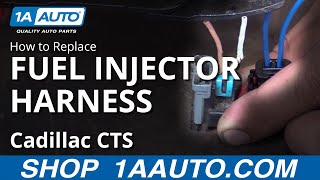
Typical fix: Repair the damaged section of wire with a new piece of wire and heat-shrink tubing. 🎬 Learn how to repair damaged harness wiring like a pro. If the damage is extensive or at the connector, a new harness pigtail may be required. Secure the repaired harness away from the component it was rubbing against.
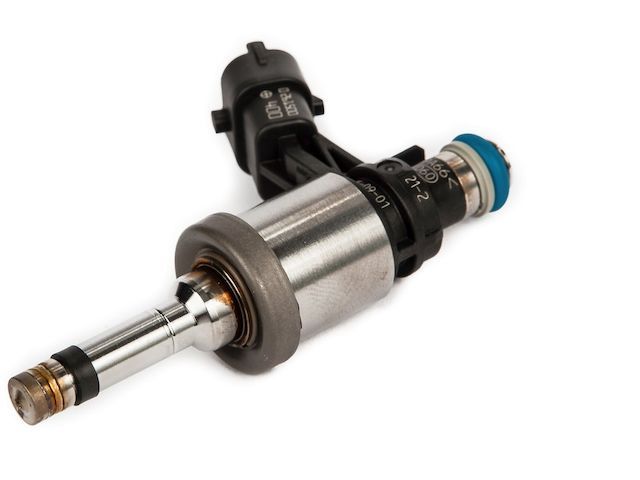
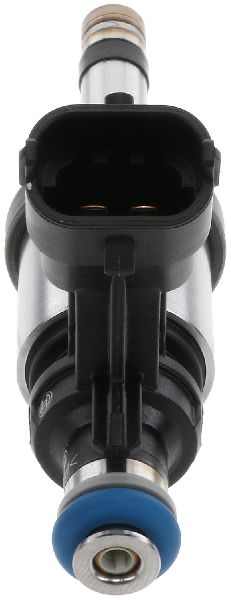
Est. part cost: $10-$50 - Faulty Cylinder 5 Fuel Injector 🔴 High Probability → Shop Fuel Injector Fuel injectors are electro-mechanical parts that can fail over time, especially with over 80,000 miles. The internal solenoid coil can develop an open or short, leading to an electrical fault.
How to confirm: Swap the cylinder 5 fuel injector with an adjacent one (e.g., cylinder 3). Clear the codes and run the engine. If the code changes to P0203, the injector is faulty. You can also test the injector's resistance with a multimeter. For the 3.6L and 4.6L engines, the resistance should be between 11 and 14 ohms. An infinite reading means an open circuit, while a very low reading indicates a short.
Typical fix: Replace the faulty fuel injector. It is often recommended to replace all injectors as a set to ensure balanced fuel flow, especially on higher mileage vehicles.
Est. part cost: $190-$260 for a single injector. - Powertrain Control Module (PCM) Fault ⚪ Low Probability → Shop Engine Control Module (ECM)
How to confirm: This should be the last resort after confirming the injector and wiring are both good. A specialized scan tool is needed to monitor the injector driver signal directly from the PCM. If a noid light test shows no pulse at the connector (and the wiring is confirmed good), the PCM's injector driver may have failed.
Typical fix: The PCM must be replaced and programmed by a dealer or a qualified shop.
Est. part cost: $500-$1000+
Rare But Worth Checking
- Oil or Coolant in Spark Plug Tube (3.6L V6):
Diagnosis Steps
- Scan the vehicle for any other trouble codes. Note any misfire codes like P0305.
- Identify cylinder 5. On the 3.6L V6 (LLT), the cylinders are numbered 1-3-5 on the passenger side (right bank, front to back) and 2-4-6 on the driver's side (left bank, front to back). Cylinder 5 is the rearmost cylinder on the passenger side, near the firewall. On the 4.6L V8 (Northstar), the cylinders are numbered 1-3-5-7 on the passenger side and 2-4-6-8 on the driver's side. Cylinder 5 is the third cylinder from the front on the passenger side.
- Carefully inspect the wiring harness and connector for the cylinder 5 fuel injector. Look for signs of chafing, melting, or corrosion, especially in the areas mentioned by TSB PIP4924D: against the intake plenum, valve cover bolts, fuel lines, and the side of the cylinder head.
- If the wiring looks good, disconnect the injector and use a 'noid light' to test for a signal. The light should flash when the engine is cranked or running, indicating the PCM is sending a pulse.
- If there is no pulse, re-check the wiring for continuity between the PCM and the injector connector. If the wiring is good, a PCM fault is possible.
- If there is a pulse, test the resistance of the fuel injector itself using a multimeter. It should be between 11-14 ohms. An infinite reading means an open circuit, while a very low reading indicates a short.
- The most definitive test: Swap the cylinder 5 injector with another cylinder's injector (e.g., cylinder 3). Clear the codes and drive the vehicle. If the code returns as P0203, the injector is confirmed to be the problem.
Parts You'll Likely Need
- Fuel Injector
(OEM #ACDelco 217-3445 (for 3.6L V6 LLT) or ACDelco 217-2443 (for 4.6L V8 LH2))— This is the most common component to fail that causes a P0205 code, after ruling out wiring issues.
Trusted brands: ACDelco, Bosch, Standard Motor Products
OEM price range: $90-$150
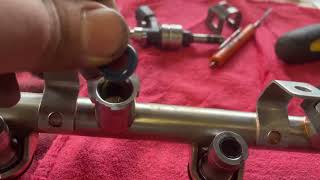
Aftermarket price range: $60-$110 - Intake Manifold Gasket Set — On both the 3.6L V6 and 4.6L V8 engines, the upper intake manifold must be removed to access the fuel injectors. The gaskets are single-use and must be replaced. 🎬 See this walkthrough for removing the intake and injectors.
Trusted brands: ACDelco, Fel-Pro, Mahle
OEM price range: $50-$80
Aftermarket price range: $25-$50
Related Codes That Often Appear With This One
- P0305 — P0305 means 'Cylinder 5 Misfire Detected'. Since P0205 indicates the injector circuit isn't working, cylinder 5 isn't getting fuel, which directly causes a misfire.
- P0300 — P0300 indicates a 'Random/Multiple Cylinder Misfire'. While the primary fault is on cylinder 5, the resulting engine imbalance can sometimes be interpreted by the PCM as a random misfire affecting other cylinders as well.
Technical Service Bulletins (TSBs) & Recalls
- PIP4924D: Addresses misfires and various injector codes (including P0205) and directs technicians to inspect the injector wiring harness for damage from rubbing on engine components.
- PIP5095: Pertains to the 3.6L V6 and describes how leaking spark plug tubes can cause misfires and other electrical issues, which could potentially lead to an injector circuit code.
Platform-Specific Known Issues
- A known issue, documented in GM TSB #PIP4924D, is the fuel injector wiring harness chafing against engine components, causing an open or short in the circuit. Specific chafe points to check are against the intake plenum, at valve cover bolts, against the fuel line, and on the side of the cylinder head under the plenum.
Mechanic-Grade Diagnostic Values
- Fuel Injector Balance Test — expected: The fuel pressure drop for each injector should be within 20 kPa (3 psi) of the average pressure drop value for all cylinders.. Failure: An injector with a pressure drop significantly different from the average is likely faulty (either clogged or leaking).
- Injector Pulse Width (Live Scan Tool Data) — expected: At idle, the pulse width in milliseconds (ms) should be relatively stable and consistent across all working cylinders.. Failure: If the PCM is commanding a significantly longer pulse width on cylinder 5 compared to others (e.g., 3.6 ms vs. 1.9 ms on others), it is likely compensating for a weak or clogged injector.
Scan Tool Commands That Help
- GM Tech 2 / GDS2: Fuel Injector Balance Test — This function is used to identify a mechanically faulty (clogged or leaking) injector that may not have a purely electrical fault. The tool commands the fuel pump to prime the system, then individually pulses each injector while a technician monitors the fuel pressure drop on a connected gauge. This helps confirm if an injector is flowing more or less fuel than its counterparts.
Wiring & Ground Locations
- G101 / G106 — G101 is located at the lower front of the engine block, and it jumpers to G106 at the center of the frame cross rail under the crank pulley.. This is a primary ground point for the Engine Control Module (ECM) and Transmission Control Module (TCM). A poor connection here can cause erratic ECM behavior and trigger various engine codes, including injector circuit faults.
- G102 — Located at the left rear of the engine.. This ground serves all ignition coils. While not directly for the injectors, electrical noise or poor grounding in the ignition system can sometimes interfere with other sensitive engine electronics and potentially contribute to misdiagnoses.
- ECM Connector (J2 on E38 ECM) — The main multi-pin connectors at the Engine Control Module.. The individual pins that send the signal to the fuel injectors can become loose or fail to seat properly, even in a new harness. This creates an open circuit that perfectly mimics a wiring or injector failure, but the fault is right at the source.
Real Owner Repair Stories
- EFILive Forum (2010 Camaro SS with LS3 and E38 ECM (similar architecture)) — Persistent and intermittent injector (P0204) and coil (P0358) circuit codes, lean AFR on one bank.
❌ Tried (didn't work) Replacing the ignition coil, Swapping parts, Ohm testing the wiring harness (continuity checked out okay), Considering a faulty tune or bad ECM
✅ What actually fixed it The root cause was found to be improperly seated pins within the brand new PSI wiring harness connector at the ECM (J2 connector). The pins for the injector and coil control circuits were not pushed in all the way, causing an intermittent connection that set the open circuit codes.
OEM Part Supersession History
N/A→ACDelco 217-3445 / GM 12638530— This is the correct part for the 3.6L V6 LLT engine. It is also cross-referenced as 12669384 and FJ994.ACDelco 217-3444 (Incorrect)→ACDelco 217-2443 / GM 12597871— Corrects the part number for the 4.6L V8 LH2 Northstar engine. The previously listed part is for a different engine family.
Heads up: Using part number 217-3444 will not work for the 4.6L V8 engine in the Cadillac STS. The correct injector cross-references to Bosch 0280158083.
Helpful Videos
We Have This Part in Stock


The information in this article is provided for general reference and educational purposes only. Vehicle specifications, procedures, and part compatibility can vary by production date, trim level, and region. Always consult your vehicle's factory service manual and verify part numbers before purchasing or performing repairs. Safety-critical components such as airbags, seat belts, and braking systems should be installed by a qualified professional.
- Cadillac STS:
- 🧭 Diagnostic Flowchart
- 🎬 Helpful Videos
- 🛍️ Shop This Part
- What's Unique About the 2009-2011 Cadillac STS
- Symptoms You May Notice
- Most Likely Causes
- Rare But Worth Checking
- Diagnosis Steps
- Parts You'll Likely Need
- Related Codes That Often Appear With This One
- Technical Service Bulletins (TSBs) & Recalls
- Platform-Specific Known Issues
- Mechanic-Grade Diagnostic Values
- Scan Tool Commands That Help
- Wiring & Ground Locations
- Real Owner Repair Stories
- OEM Part Supersession History
- 🎟️ Get 5% Off