

P0205 on 2009-2014 Chevrolet Traverse: Cylinder 5 Injector Circuit Causes and Fixes
This code indicates an electrical fault in the cylinder 5 fuel injector circuit. The most common causes are a failed fuel injector or a wiring harness issue, particularly chafing against engine components. Expect to pay $200-$450 for a professional repair, which is often a new injector or harness repair.
- P0205 points to an electrical problem in the cylinder 5 injector circuit, not a mechanical one.
- The most likely cause is a failed fuel injector, but do not rule out a wiring or connector issue.
- A simple way to confirm a bad injector is to swap it with one from another cylinder and see if the trouble code follows the injector.
- Avoid driving for long distances to prevent expensive damage to your catalytic converter.
- Always check the wiring and connector for visible damage before buying any parts.
What's Unique About the 2009-2014 Chevrolet TRAVERSE
On the 2009-2014 Traverse with the 3.6L V6 engine, this code is frequently caused by wiring issues specific to the GM Lambda platform. GM issued a Technical Service Bulletin (TSB #PIP4924D) that includes P0205 among a long list of other injector codes, pointing to wiring harness problems as a common root cause. Owners and technicians on forums for the Traverse and its platform-mates (GMC Acadia, Buick Enclave) often report the injector wiring harness chafing against valve cover bolts, the intake plenum, or the side of the cylinder head, leading to a short or open circuit. These engines, particularly the direct-injection LLT version (2009-2012), are also known for timing chain stretch issues which can cause misfires, so a thorough diagnosis is key to avoid misattributing the fault.
Diagnostic Flowchart
Tap your situation to follow the diagnostic path that matches what you're seeing on this vehicle.
Symptoms You May Notice
- Check Engine Light is on (may be steady or flashing)
- Rough or shaking idle, which may worsen as the engine warms up
- Engine misfires, which may feel like a shudder, stumble, or audible popping
- Poor acceleration and loss of power, especially under light throttle
- Reduced fuel economy
- In some cases, the vehicle may enter a reduced power "limp mode"
- Engine may stall
- Replacing the spark plug or ignition coil for cylinder 5. While these parts can cause a misfire code (P0305), they will not cause an injector circuit code (P0205). The P0205 code is specifically for an electrical fault in the fuel injector's control circuit, not a combustion misfire.
Most Likely Causes
- Failed Cylinder 5 Fuel Injector 🔴 High Probability → Shop Fuel Injector Direct injectors operate under high pressure and temperature. Internal electrical coils can fail over time, creating an open or shorted circuit. This is a common failure on many direct injection vehicles, including the Traverse.
How to confirm: Measure the resistance of the injector's two electrical pins with a multimeter; it should be between 1.5-2.5 Ohms for these GDI engines. The most definitive test is to swap the cylinder 5 injector with an adjacent one (like cylinder 3). Clear the codes and run the engine. If the code changes to P0203, the injector is faulty.
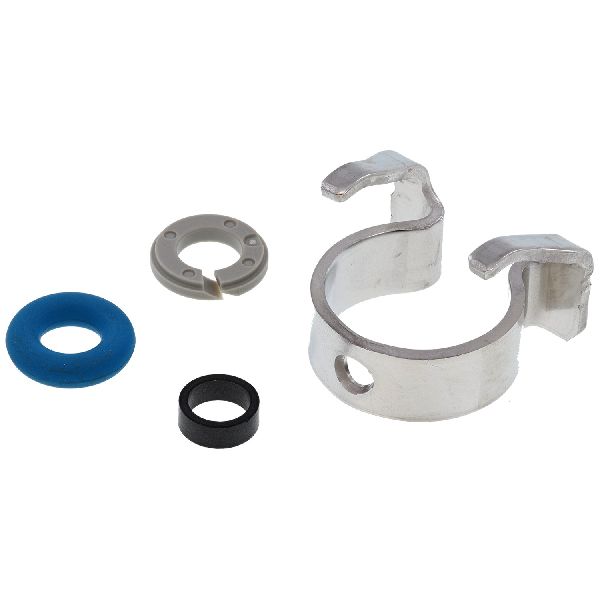
Typical fix: Replace the cylinder 5 fuel injector. It is often recommended to replace the seals for the surrounding injectors at the same time. Due to the labor involved in accessing the injectors, some owners opt to replace all three on that bank.
Est. part cost: $40-$120 - Wiring Harness or Connector Issue 🔴 High Probability As documented in TSBs and forum discussions, the injector wiring harness on the 3.6L V6 is prone to chafing. Common rub points include the edge of the intake plenum, valve cover bolts, and the side of the cylinder head. Vibration and heat cause the loom to wear through, exposing wires that can short to ground or break.
How to confirm: Visually inspect the wiring harness leading to the cylinder 5 injector for any signs of chafing, melting, or breaks. Pay close attention to where the harness makes contact with other engine components. Check that the connector is securely plugged in and free of corrosion. Use a 'noid light' to confirm that the ECM is sending a pulse signal to the connector.
Typical fix: Repair the damaged section of wire or replace the injector pigtail connector. If the damage is extensive, the entire bank's injector harness (GM Part #12621096 for the passenger side bank) may need replacement. Secure the repaired or new harness away from heat sources or sharp edges using zip ties or protective conduit.
Est. part cost: $15-$110 - Faulty Engine Control Module (ECM) ⚪ Low Probability → Shop Engine Control Module (ECM) While not common, the internal driver circuit in the ECM that controls the injector can fail, sometimes due to a shorted injector or wiring drawing too much current. This is more likely if multiple injector codes are present and all injectors and wiring have been tested and confirmed to be good.
How to confirm: This is typically a last resort after ruling out the injector and wiring. A professional shop can use an oscilloscope to analyze the signal from the ECM to the injector, confirming the absence of a proper control signal despite good wiring.
Typical fix: Replace and reprogram the Engine Control Module. This requires specialized tools for programming the new module to the vehicle.
Est. part cost: $400-$800
Rare But Worth Checking
- Poor Main Engine Ground:
Diagnosis Steps
- Read the code with an OBD-II scanner and note any other codes present, especially P0305 or other injector circuit codes (P0201, P0203).
- Visually inspect the wiring and connector for the cylinder 5 fuel injector. On the transversely mounted 3.6L V6, Bank 1 (cylinders 1, 3, 5) is against the firewall, and Bank 2 (cylinders 2, 4, 6) is against the radiator. Cylinder 5 is on the firewall side, in the middle position. Look carefully for chafed wires where the harness passes over the valve cover or near the intake manifold.
- Disconnect the injector and check its resistance with a multimeter. For the GDI injectors in the Traverse, the reading should be between 1.5 and 2.5 Ohms. Compare the reading to an adjacent injector (like cylinder 3). A reading that is significantly different (e.g., infinite for an open circuit, or near zero for a short) indicates a bad injector.
- While the connector is off, plug in a 'noid light' and have a helper crank the engine. The light should flash, indicating the ECM is sending a signal. If it doesn't flash or stays on continuously, the problem is in the wiring or the ECM.
- If the noid light flashes and the injector resistance seems okay, perform an injector swap. This requires removing the fuel rail. Swap the cylinder 5 injector with another one (e.g., cylinder 3).
- Reassemble, clear the codes, and run the engine. If the code returns as P0203, the injector you moved is faulty. If the code remains P0205, the problem is definitively in the wiring or the ECM.
- If wiring is the suspected cause, perform a continuity test on both wires from the injector connector back to the ECM connector to check for breaks or shorts to ground. Resistance should be less than 0.5 Ohms.
Parts You'll Likely Need
- Fuel Injector
(OEM #12634126 (LFX, 2013-2014), 12638530 (LLT, 2009-2012))— The internal coil of the fuel injector is a common failure point that causes an electrical circuit fault. Part numbers differ between the LLT and LFX engines.
Trusted brands: ACDelco, Bosch
OEM price range: $70-$120
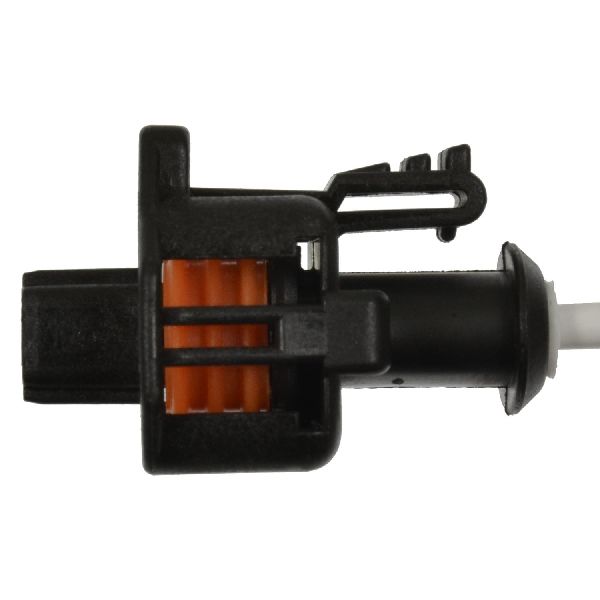
Aftermarket price range: $40-$80 - Fuel Injector Connector (Pigtail)
(OEM #PT2785 (ACDelco))— If the wiring is damaged right at the connector, or the connector itself is broken or corroded, replacing the pigtail is the standard repair.
Trusted brands: ACDelco, Dorman
OEM price range: $25-$40
Aftermarket price range: $15-$25 - Passenger Side Fuel Injector Wiring Harness
(OEM #12621096)— If wiring damage from chafing is extensive along the harness for Bank 1 (firewall side), replacing the entire sub-harness is often easier and more reliable than multiple wire repairs. This part covers cylinders 1, 3, and 5.
Trusted brands: GM Genuine Parts
OEM price range: $95-$160
Related Codes That Often Appear With This One
- P0305 — P0305 means 'Cylinder 5 Misfire Detected.' Since the P0205 code indicates the injector isn't firing correctly, the cylinder will inevitably misfire due to a lack of fuel, triggering P0305 as a direct result.
- P0300 — This code means 'Random/Multiple Cylinder Misfire Detected.' It can appear alongside P0205 if the underlying issue, like a wiring problem or unstable voltage, is intermittently affecting other cylinders as well.
- P0201, P0203 — These are injector circuit codes for cylinders 1 and 3. Since cylinders 1, 3, and 5 are on the same bank (Bank 1, against the firewall), a wiring harness issue that affects cylinder 5 could easily affect the others that share the same harness routing.
- P0273, P0274 — These are more specific codes for the cylinder 5 injector circuit. P0273 indicates 'Circuit Low Voltage' and P0274 indicates 'Circuit High Voltage'. They may appear instead of, or in addition to, the general P0205 fault.
Technical Service Bulletins (TSBs) & Recalls
- PIP4924D: Mentions that a Service Engine Soon lamp with a misfire may be accompanied by a wide range of injector codes, including P0205, suggesting a potential common circuit issue. The cause is often a chafed wiring harness.
Platform-Specific Known Issues
- A known TSB (#PIP4924D) from GM addresses a condition where the Service Engine Soon light is on with a misfire and various injector circuit DTCs, including P0205. This indicates that a wiring harness problem could be the cause, potentially affecting more than just one injector.
- Forum reports frequently cite the injector harness for Bank 1 (firewall side) rubbing through on the engine, causing shorts. This is a very common failure pattern for P0201, P0203, and P0205 on the Traverse and its platform-mates.
Mechanic-Grade Diagnostic Values
- Fuel Injector Coil Resistance (GDI) — expected: 1.5 to 2.5 Ohms. Failure: A reading near zero (short circuit) or infinite/OL (open circuit).
- Injector Circuit Voltage (Key On, Engine Off) — expected: ~12 Volts (Battery Voltage). Failure: Voltage significantly below battery voltage suggests high resistance in the power supply circuit.
- Wiring Continuity (ECM to Injector Connector) — expected: < 0.5 Ohms. Failure: A high or infinite (OL) resistance reading indicates a break (open) in the wire.
Hidden / Shadow Codes Worth Checking
- P0273 / P0274: These are more specific faults for the same circuit. P0273 indicates 'Cylinder 5 Injector Control Circuit Low Voltage' (e.g., a short to ground), while P0274 indicates 'Cylinder 5 Injector Control Circuit High Voltage' (e.g., a short to power). They provide more diagnostic clues than the general P0205 code. (see via Standard professional OBD-II scan tool.)
Scan Tool Commands That Help
- GM GDS2 (or equivalent professional scan tool): Injector Balance Test — This bidirectional command is used to functionally test an injector without removing it. The tool commands the injector to fire and measures the corresponding drop in fuel rail pressure. If cylinder 5 shows significantly less pressure drop than the others, it confirms it's not flowing fuel correctly, even if it passes a resistance test.
Wiring & Ground Locations
- Injector Circuit Pairing (Cylinders 2 & 5) — This is an electrical pairing within the Engine Control Module (ECM), not a physical wire location.. The high voltage supply circuits for injectors 2 and 5 are paired. A short circuit on the cylinder 2 injector circuit can cause the ECM to set a fault code (like P0205) for cylinder 5, and vice-versa. This is a critical piece of information if diagnostics on the cylinder 5 circuit find no issues.
- G103 / G104 — These are primary engine ground points located on the cylinder heads. G103 is on the passenger side (Bank 1) and G104 is on the driver's side (Bank 2).. The ECM's injector driver circuits require a clean ground reference. A loose or corroded ground at G103 can cause erratic voltage and trigger injector circuit faults for Bank 1, which includes cylinder 5.
- Injector Harness Chafe Points — The harness running over the engine to the firewall-side injectors (Bank 1). Common rub points are against the intake plenum, valve cover bolts, and fuel lines.. This is the most common location for wiring damage that directly causes a P0205 by creating an open or short in the cylinder 5 injector circuit.
Real Owner Repair Stories
- Multiple threads on traverseforum.com and acadiaforum.net (2009-2014 Chevrolet Traverse / GMC Acadia with 3.6L V6) — Check engine light with codes P0205 and P0305, rough idle, engine shaking, and loss of power.
❌ Tried (didn't work) Replacing the spark plug and ignition coil on cylinder 5., In some cases, replacing the cylinder 5 fuel injector did not solve the problem.
✅ What actually fixed it The definitive fix for many owners was locating and repairing a chafed wire in the fuel injector wiring harness. The damage was most often found where the harness for Bank 1 (the firewall side) rubs against the intake manifold or a valve cover bolt. Repairing the broken/shorted wire and protecting the harness with loom or tape resolved the code.
"I Checked Everything" — The Actual Cause
- A smoke test is not applicable for this electrical fault. The equivalent scenario is when basic electrical tests pass but the code persists. For P0205, a technician might find that the injector resistance is correct (1.5-2.5 ohms) and a noid light flashes, suggesting the circuit is okay. However, the actual cause could be the paired injector circuit. The ECM for the 3.6L engine pairs the high-side drivers for injectors 2 and 5. A short-to-ground on the cylinder 2 circuit can cause the ECM to shut down the driver, which also disables cylinder 5 and sets a P0205 code, even if the wiring and injector for cylinder 5 are perfectly fine. The fault is electronically linked, not physically on the cylinder 5 circuit.
When the Usual Fixes Don't Work
- While a failed fuel injector is a very common cause for P0205, some owners have replaced the cylinder 5 injector only to have the code return immediately. In many of these cases, the root cause was not the injector itself, but rather an overlooked wiring issue. The most frequent culprit is the known harness chafing problem specific to this platform. A less common but more difficult scenario is when the fault lies in the paired cylinder 2 circuit, which can erroneously trigger a code for cylinder 5. This highlights the importance of thoroughly inspecting all related wiring and understanding the specific electrical architecture of the vehicle before replacing parts.
OEM Part Supersession History
12638530 (also 12611545, 12632255)→12669384— Standard part revision and improvement by the manufacturer.
Heads up: This injector is for the LLT engine and is not compatible with the 2013-2014 LFX engine.12642128→12634126— Standard part revision and improvement by the manufacturer.
Heads up: This injector is for the LFX engine and is not compatible with the 2009-2012 LLT engine.
Model Year Variations Within This Range
- 2009-2012: These models use the 3.6L LLT V6 engine with a Bosch ECM. The correct fuel injector part number is 12638530, which has been superseded by 12669384.
- 2013-2014: These models use the updated 3.6L LFX V6 engine with a Delphi ECM. This engine features a composite intake manifold and cylinder heads with integrated exhaust manifolds, which may alter the labor procedure for injector replacement. The correct fuel injector part number is 12634126.
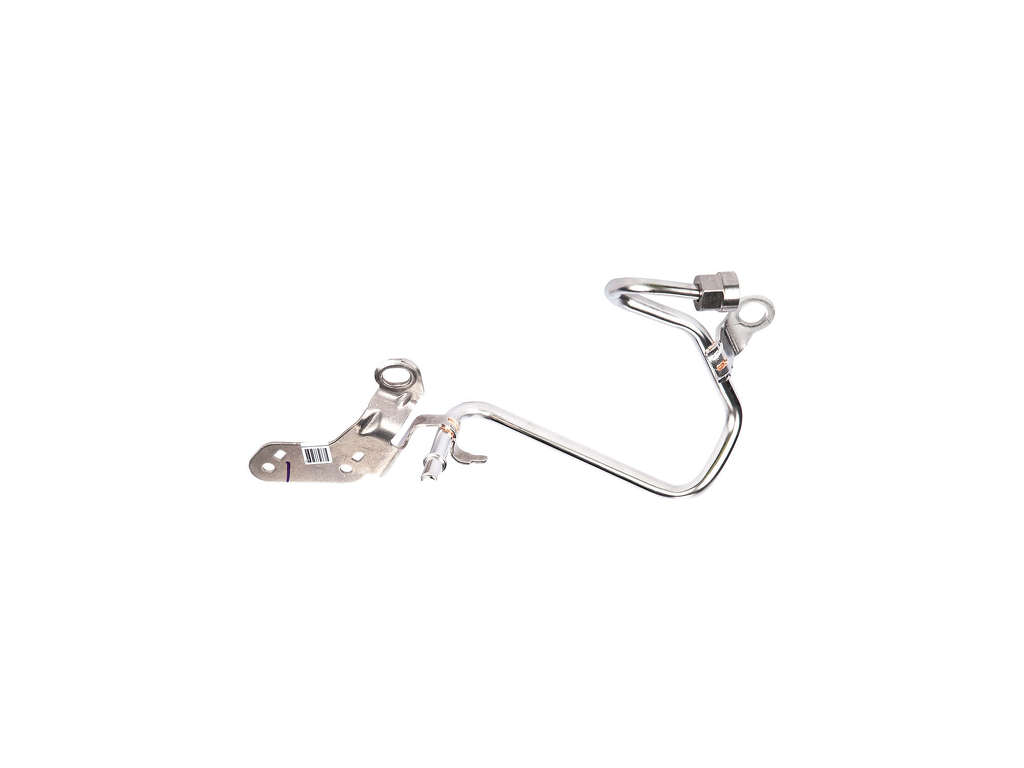
We Have This Part in Stock


The information in this article is provided for general reference and educational purposes only. Vehicle specifications, procedures, and part compatibility can vary by production date, trim level, and region. Always consult your vehicle's factory service manual and verify part numbers before purchasing or performing repairs. Safety-critical components such as airbags, seat belts, and braking systems should be installed by a qualified professional.
- Chevrolet TRAVERSE:
- 🧭 Diagnostic Flowchart
- 🛍️ Shop This Part
- What's Unique About the 2009-2014 Chevrolet TRAVERSE
- Symptoms You May Notice
- Most Likely Causes
- Rare But Worth Checking
- Diagnosis Steps
- Parts You'll Likely Need
- Related Codes That Often Appear With This One
- Technical Service Bulletins (TSBs) & Recalls
- Platform-Specific Known Issues
- Mechanic-Grade Diagnostic Values
- Hidden / Shadow Codes Worth Checking
- Scan Tool Commands That Help
- Wiring & Ground Locations
- Real Owner Repair Stories
- "I Checked Everything" — The Actual Cause
- When the Usual Fixes Don't Work
- OEM Part Supersession History
- Model Year Variations Within This Range
- 🎟️ Get 5% Off