

P0205 on 1998-2005 Dodge RAM 3500: Causes and Fixes for Injector Circuit Malfunction
On a 1998-2005 Dodge RAM 3500 with a 5.9L Cummins engine, P0205 is most often caused by a faulty injector wiring harness where it passes through the valve cover gasket or the internal injector-to-injector harnesses. Before replacing the #5 injector, thoroughly inspect this wiring. A new gasket with integrated wiring or individual injector pigtails are common fixes.
- For Cummins engines, always suspect the injector wiring harness that passes through or under the valve cover first.
- P0205 indicates an electrical circuit problem, not necessarily a clogged or mechanically failed injector.
- A simple 'noid light' can quickly test if the PCM is sending a signal to the injector.
- Swapping the suspect injector with a known good one is a cost-effective way to confirm if the injector is the root cause before buying a new one.
What's Unique About the 1998-2005 Dodge RAM 3500
For Dodge RAM 3500s of this era equipped with the 5.9L Cummins engine, this code has a very specific and common cause. On 24-valve engines (1998.5-2002), the injector wiring harness runs through a pass-through connector integrated into the valve cover gasket. Over time, heat and vibration cause this internal harness to fail, creating an open or short. On common-rail engines (2003-2005), there are three separate injector wiring harnesses under the valve cover, and these are known to become brittle and fail from heat and oil exposure, causing intermittent connections. A manufacturer Technical Service Bulletin (TSB #9002688) specifically advises checking this wiring *before* condemning the fuel injector, as it is a frequent point of failure.
Diagnostic Flowchart
Tap your situation to follow the diagnostic path that matches what you're seeing on this vehicle.
Generation note: This range covers two generations of the Dodge RAM. The 2nd Generation (1998-2002) and the 3rd Generation (2003-2005). The 5.9L Cummins engine changed significantly in 1998.5 to a 24-valve design (ISB) with a VP44 injection pump, and again in 2003 to a common-rail system. While the P0205 code's meaning is the same, the specific injectors, wiring harnesses, and diagnostic procedures differ. For common-rail engines, injectors 4, 5, and 6 are on the same bank (Bank 2) and may set codes together if there is a shared wiring or PCM driver issue.
Symptoms You May Notice
- Check Engine Light is on
- Noticeable engine misfire or shudder
- Rough, unstable idle
- Significant loss of power and acceleration
- Poor fuel economy
- Engine may be hard to start
- Engine may stall at stops
- Replacing the fuel injector for cylinder 5 without first thoroughly testing the wiring harness. Given the high failure rate of the under-valve-cover harnesses on Cummins engines, the wiring should always be the first suspect.
Most Likely Causes
- Injector Wiring Harness / Valve Cover Gasket Failure 🔴 High Probability → Shop Engine Wiring Harness On 5.9L Cummins models, the injector harness is under the valve cover, exposed to constant heat cycles and engine vibration. The wiring and connectors become brittle and fail, creating opens or shorts. This is a well-documented weak point on both 24v and common-rail engines.
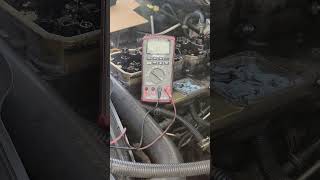
How to confirm: Visually inspect the external connector. Disconnect the main harness from the valve cover and test for continuity and resistance on the pins leading to injector #5. A 'wiggle test' on the harness while the engine is running may induce the misfire. On common-rail engines, the resistance between the high and low side driver circuits should be between 0-1 Ohm. 🎬 Watch: A comprehensive guide to testing injector ohms and circuits. A user on Diesel Truck Resource forums noted that the wire lugs can rotate and touch a rocker arm, shorting the circuit.
Typical fix: For 1998.5-2002 models, replace the valve cover gasket which includes the pass-through harness. For 2003-2005 models, replace the individual injector wiring harness for the bank (cylinders 4-5-6). Three harnesses are used per engine.
Est. part cost: $40-$200 - Failed Cylinder 5 Fuel Injector 🟡 Medium Probability → Shop Fuel Injector Injectors are wear items and can fail electrically over time. The internal solenoid coil can develop an open or short circuit.
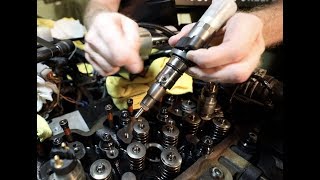
How to confirm: After confirming the wiring is good, test the injector itself. Measure the resistance across the injector's two terminals with a multimeter. For a 5.9L Cummins, the resistance should be very low, less than 1.0 Ohm. Zero the ohmmeter before testing for accuracy. An open circuit (infinite resistance) or a shorted circuit (zero resistance) indicates a failed injector. A definitive test is to swap the #5 injector with an adjacent one (like #4 or #6) and see if the trouble code follows the injector (e.g., changes to P0204 or P0206).
Typical fix: Replace the cylinder 5 fuel injector. It is often recommended to replace the high-pressure connector tube at the same time to prevent leaks.
Est. part cost: $150-$500 - Faulty Powertrain Control Module (PCM) ⚪ Low Probability → Shop Engine Control Module (ECM) An internal short in the injector wiring harness can sometimes damage the injector driver circuit inside the PCM, requiring PCM replacement even after the wiring is fixed.
How to confirm: This is diagnosed by exclusion. If both the wiring and the injector have been tested (including swapping the injector) and are known to be good, the PCM is the likely culprit. This is especially suspected if codes for all three injectors in a bank (e.g., P0204, P0205, and P0206) appear simultaneously.
Typical fix: Replace or repair the Powertrain Control Module. This requires programming to the vehicle's VIN.
Est. part cost: $200-$800
Rare But Worth Checking
- Corroded Connector Pins:
- Poor Ground Connection:
Diagnosis Steps
- Read the code using an OBD-II scanner and note any other codes present, especially other injector or misfire codes.
- Visually inspect the main wiring harness and the large connector on the valve cover for any signs of damage, melting, or corrosion.
- Perform a 'wiggle test': With the engine idling, carefully wiggle the injector wiring harness at the valve cover and along its path. If the engine stumble changes or the misfire is induced, it strongly indicates a wiring fault.
- Use a 'noid light' to test the injector signal. Unplug the injector harness at the valve cover, connect the noid light to the pins for cylinder 5, and crank the engine. A flashing light indicates the PCM is sending a pulse signal. No light or a steady light points to a wiring or PCM issue.
- Test the injector and harness resistance. Disconnect the valve cover harness. Using a multimeter, measure the resistance of the fuel injector circuit from the main connector pins. It should be less than 1 Ohm. Then, measure the resistance of the injector itself at the injector terminals (requires removing the valve cover). An out-of-spec reading points to a bad injector.
- If wiring and resistance tests are inconclusive, swap the #5 injector with a neighboring injector (e.g., #4 or #6). Clear the codes and run the engine. If the code changes to P0204 or P0206, the injector is faulty. If the P0205 code returns, the problem is in the wiring or PCM.
- If the injector and harness are confirmed good, perform continuity tests on the wiring harness between the PCM connector and the valve cover connector to find any opens or shorts to ground.
- If all wiring and the injector are confirmed good, the PCM's injector driver is the likely culprit.
Parts You'll Likely Need
- Injector Wiring Harness (Common Rail)
(OEM #Cummins 3966805 (or superseding part))— This is the most common failure point on 2003-2005 5.9L Cummins engines. Three are required per engine, one for each pair of injectors. They become brittle from heat.
Trusted brands: Cummins (OEM), Dorman
OEM price range: $40-$60 per harness
Aftermarket price range: $25-$40 per harness - Valve Cover Gasket with Injector Harness (24-Valve)
(OEM #Mopar 5086954AA (2003-2005, gasket only))— On 1998.5-2002 models, the harness is integrated. On 2003-2005, the gasket is separate but often replaced during the job.
Trusted brands: Mopar, Fel-Pro
OEM price range: $150-$250
Aftermarket price range: $70-$150 - Fuel Injector
(OEM #Bosch 0445120255 (or 0986435503 for reman, fits 2003-2004.5))— If the wiring is confirmed to be good, the injector itself is the next most likely component to have failed electrically.
Trusted brands: Bosch (OEM), Mopar
OEM price range: $350-$500
Aftermarket price range: $150-$300
Related Codes That Often Appear With This One
- P0305 — P0305 indicates 'Cylinder 5 Misfire Detected'. Since P0205 means the injector circuit is failing, the cylinder isn't getting fuel, which directly causes a misfire.
- P0204, P0206 — On common-rail Cummins engines, injectors 4, 5, and 6 are on the same electrical bank. A short to ground or voltage in any one of these circuits can cause the PCM to set a DTC for all three injectors on that bank.
- P2149 — This code indicates 'Fuel Injector Group 'B' Supply Voltage Circuit/Open'. On common-rail engines, this points to a fault in the supply voltage for injectors 4, 5, and 6, often caused by the same wiring harness failures that trigger P0205.
Technical Service Bulletins (TSBs) & Recalls
- Bulletin #9002688: Advises checking the valve cover gasket wiring loom/connector before replacing injectors for P020x codes.
Platform-Specific Known Issues
- A known issue documented in manufacturer TSB #9002688 for the 2002 model year advises checking the injector wiring loom and connector in the valve cover gasket before replacing injectors for P020x codes.
Mechanic-Grade Diagnostic Values
- Fuel Injector Solenoid Resistance (Common Rail) — expected: 0.3 - 0.5 Ohms. Failure: A reading of 1.0 Ohm or higher, or an open circuit (infinite resistance), indicates a failed solenoid.
- Injector Harness Continuity (from PCM connector) — expected: < 0.5 Ohms. Failure: Resistance greater than 0.5 Ohms indicates excessive resistance in the wiring.
- Injector Hold-Down Bolt Torque — expected: 89 in-lbs. Failure: Over or under-torquing can lead to compression leaks or damage to the injector.
- High-Pressure Connector Tube Nut Torque — expected: 37 ft-lbs. Failure: Improper torque can cause high-pressure fuel leaks.
- Injector Wire Connector Nut Torque — expected: 11 in-lbs. Failure: Over-torquing can break the solenoid post and cause a loss of continuity.
Scan Tool Commands That Help
- DRB III or equivalent professional scan tool: Injector Cutout Test / Injector Kill Test — This bidirectional command allows the technician to disable one injector at a time while the engine is running. If disabling cylinder 5 causes no change in engine idle, it confirms that cylinder 5 was not contributing, which helps isolate the fault.
Wiring & Ground Locations
- ECM Connector C2 (Diesel) — The 50-pin connector on the Engine Control Module (ECM/PCM).. This connector contains the driver circuits for the fuel injectors. Testing for continuity and shorts should be done at the pins on this connector to verify the integrity of the harness back to the PCM.
- Injector #5 Driver Pin — The specific pin for the cylinder 5 injector driver on the ECM C2 connector. Pinouts can vary by year and specific JTEC controller, requiring a vehicle-specific diagram.. This is the exact pin to test for continuity to the injector harness and to check for shorts to ground or other circuits, definitively testing the wire from the computer to the engine.
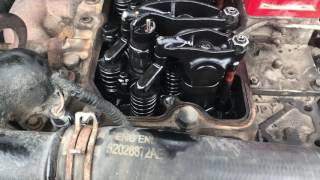
- Injector Harness Connector Nuts — The two small nuts securing the wire eyelets to the top of each injector solenoid under the valve cover.. These are a critical failure point. If they are loose, they cause an open circuit. If they are over-torqued, the solenoid post can break, causing an open circuit. They can also short against rocker arms if the wires are not routed correctly.
Real Owner Repair Stories
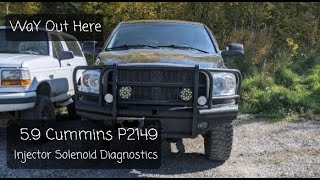
- YouTube channel 'WaY Out Here' (Dodge Ram with 5.9L Cummins (year not specified, but common rail)) — Check engine light with codes P2149 and an injector code (P0205 implied by bank fault).
❌ Tried (didn't work) Initial diagnosis pointed to a bad injector.
✅ What actually fixed it The owner tested the injector solenoid resistance directly at the injector and found it was ~1.2 Ohms, while other injectors were ~0.5 Ohms. Instead of replacing the entire expensive injector, he replaced only the injector solenoid (a ~$70 part). The new solenoid measured 0.3 Ohms, and replacing it resolved the codes. - Reddit user on r/Cummins (2003 Ram 2500 5.9L Common Rail) — Sudden loss of power, felt like it 'lost 3 cylinders'. Codes P0205, P0206, and P2149 appeared.
❌ Tried (didn't work) Visually checked wires, which looked okay., Injectors had been replaced 2-3 months prior, suggesting they were not the root cause.
✅ What actually fixed it The user did not post the final fix, but the symptoms (multiple injector codes on the same bank appearing suddenly) strongly point to a failure in the shared wiring harness for cylinders 4-5-6 (Cummins P/N 3966805) or a fault in the PCM driver for that bank, which is a common failure pattern.
OEM Part Supersession History
Bosch 0445120018, 0445120113, 0445120210→Bosch 0445120255 (New), 0986435503 (Reman)— Product evolution, internal updates for reliability.
Heads up: These part numbers are for the 2003-2004.5 engines. They are not directly compatible with 2004.5-2007 engines, which use a different nozzle design.Mopar 05086965AA, Cummins 3957309→Cummins 3966805— Part number consolidation and minor updates.
Heads up: This is the injector wiring harness for cylinders 4-5-6 on 2003-2005 models. It is a common replacement part.
Model Year Variations Within This Range
- 2003-2004 vs 2004.5-2005: The fuel injectors are physically different. Early common rail (03-04) injectors have nozzles with 8 smaller holes and a wider spray angle. Later injectors (04.5+) have 5 larger holes and a narrower spray angle to match a change in the piston bowl design. While the injector bodies are similar, installing the wrong year injector will cause poor combustion, smoke, and high EGTs.
- 1998.5-2002 (24-Valve VP44): These engines use a completely different fuel system (VP44 injection pump) and injectors. The P0205 fault is almost always related to the injector harness that is integrated into the valve cover gasket, as noted in TSB #9002688.
Helpful Videos
We Have This Part in Stock


The information in this article is provided for general reference and educational purposes only. Vehicle specifications, procedures, and part compatibility can vary by production date, trim level, and region. Always consult your vehicle's factory service manual and verify part numbers before purchasing or performing repairs. Safety-critical components such as airbags, seat belts, and braking systems should be installed by a qualified professional.
- Dodge RAM 3500:
- 🧭 Diagnostic Flowchart
- 🎬 Helpful Videos
- 🛍️ Shop This Part
- What's Unique About the 1998-2005 Dodge RAM 3500
- Symptoms You May Notice
- Most Likely Causes
- Rare But Worth Checking
- Diagnosis Steps
- Parts You'll Likely Need
- Related Codes That Often Appear With This One
- Technical Service Bulletins (TSBs) & Recalls
- Platform-Specific Known Issues
- Mechanic-Grade Diagnostic Values
- Scan Tool Commands That Help
- Wiring & Ground Locations
- Real Owner Repair Stories
- OEM Part Supersession History
- Model Year Variations Within This Range
- 🎟️ Get 5% Off