

P0205 on 2014-2020 Ram 3500: Injector #5 Circuit/Open Causes & Fixes
On a Ram 3500 with the 6.7L Cummins, P0205 almost always points to a wiring issue, not the injector itself. The injector wiring harness under the valve cover is the most common culprit, often failing due to heat and vibration. Inspect and test the harness for damage before spending hundreds on a new injector. Also, check for loose terminal nuts on the injector and metal shavings shorting the terminals, a known issue on 2013-2018 models.
- P0205 is an electrical circuit fault for injector #5, not a fuel flow problem.
- On the 6.7L Cummins, always suspect the under-valve-cover wiring harness before the injector itself.
- A multimeter is essential for diagnosis. Check the injector's resistance (should be <1 ohm) and the harness's continuity.
- Swapping the #5 injector with a neighbor (like #6) is a free and definitive way to determine if the injector is the problem.
- Ignoring this code can lead to very expensive damage to the Diesel Particulate Filter (DPF).
What's Unique About the 2014-2020 Ram 3500
On the 6.7L Cummins engine, the injector wiring harness is a well-documented weak point. It is routed under the valve cover where it's exposed to intense heat, oil, and vibration, causing the wires to become brittle and fail over time. This makes a wiring fault a much higher probability than a failed injector, a common misdiagnosis. On the inline-six Cummins, cylinder #5 is the second cylinder from the firewall, and its wiring is part of the rear harness that serves cylinders 4, 5, and 6 (Bank 2).
Diagnostic Flowchart
Tap your situation to follow the diagnostic path that matches what you're seeing on this vehicle.
Generation note: This range covers the end of the fourth generation (2014-2018) and the start of the fifth (2019-2020). While both use the 6.7L Cummins, the 2019+ models use a different high-pressure fuel pump (CP4) which is known to fail and contaminate the fuel system, potentially causing injector codes as noted in TSB 18-099-22 REV. A. This TSB was later superseded by recall Y78. However, the primary causes of an isolated P0205 code (wiring, injector) are consistent across both generations.
Symptoms You May Notice
- Check Engine Light is on
- Rough or uneven idle.
- Engine misfire or stumble, sometimes felt as a 'tap' from the engine.
- Significant loss of power and acceleration.
- Engine may not start, particularly if other injector codes are present.
- Increased fuel consumption.
- White or blue-white smoke from the exhaust at idle (though the DPF on newer trucks may hide this).
- Replacing the fuel injector when the actual problem is the much cheaper and more common wiring harness failure.
- Replacing the injector when the terminal nuts were simply loose.
Most Likely Causes
- Injector Wiring Harness Failure 🔴 High Probability → Shop Engine Wiring Harness The harness is located under the valve cover, where constant exposure to heat and vibration makes wires brittle and prone to cracking, creating an open circuit. This is a widely documented issue in owner forums and is the first place to check.
How to confirm: Remove the valve cover and visually inspect the harness for brittle, cracked, or broken wires, especially around the #5 injector. Test continuity of the two wires for injector #5 from the pass-through connector to the injector connector; resistance should be near zero ohms. A more specific test is to measure resistance from the large connector to each injector nut connection; if any wire exceeds 0.5 Ohms, the harness is faulty.
Typical fix: Replace the injector wiring harness for the affected bank (cylinders 4-6). On some earlier models, this harness is integrated with the valve cover gasket.
Est. part cost: $75-$260 - Failed Fuel Injector #5 🟡 Medium Probability → Shop Fuel Injector The internal solenoid coil of the high-pressure injector can fail from heat cycles and high mileage, creating an open circuit.
How to confirm: Disconnect the injector and measure its resistance with a multimeter. For a 6.7L Cummins, the resistance should be very low, between 0 and 1 Ohm. An infinite reading (OL) means the coil is open and the injector is bad. A definitive test is to swap the #5 injector with an adjacent one (like #4 or #6). Clear the codes and run the engine. If the code changes to P0204 or P0206, the injector is faulty.
Typical fix: Replace the faulty fuel injector. It is highly recommended to also replace the high-pressure connector tube to prevent leaks.
Est. part cost: $300-$600 - Loose or Corroded Electrical Connector 🟡 Medium Probability Vibration can cause the small 8mm nuts securing the wires to the top of the injector to loosen, creating an open circuit. The main pass-through connector on the valve cover can also accumulate dirt or corrosion, leading to a poor connection.
How to confirm: Visually inspect the main harness connector at the valve cover. Remove the oil fill cap and small access cover to check if the terminal nuts on top of the #5 injector are tight. Torque spec is very low, around 11-13 inch-pounds (DO NOT OVERTIGHTEN).
Typical fix: Clean the connectors with electrical contact cleaner and ensure they are secure. Tighten the injector terminal nuts to the correct specification (11-13 in-lbs).
Est. part cost: $0-$10
Rare But Worth Checking
- Failed Powertrain Control Module (PCM): → Shop Engine Control Module (ECM) A failure of the internal injector driver circuit is possible but very rare. This should only be considered after all wiring and the injector itself have been proven to be good. This may be more likely if codes for all three injectors in Bank 2 (P0204, P0205, P0206) are present simultaneously.
- Metal Shavings on Injector Terminals: A Bosch technical tip video specifically noted that on 2013-2018 models, tiny metal shavings from the terminal nuts can fall and create a short between the terminal post and the injector body or other grounded components, triggering circuit codes. Cleaning the area thoroughly with a magnet or compressed air can resolve the issue.
Diagnosis Steps
- Scan for codes and confirm P0205 is present. Note any other codes like P0305, P0204, P0206, or P2149.
- Perform a visual inspection of the main engine harness connector on the driver's side of the valve cover (rear connector for cylinders 4-6) for damage or corrosion.
- Check for loose injector terminal nuts. Remove the oil fill cap and the small plastic cover over the injectors. Using an 8mm deep socket, check if the nuts on top of injector #5 are snug. The torque is extremely light (11-13 in-lbs), so be gentle.
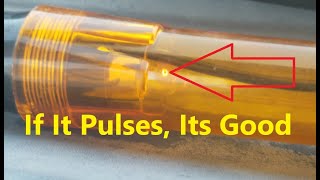
- If accessible, use a 'noid light' on the injector connector to see if the PCM is sending a pulse signal. If the light flashes, the control circuit is likely working up to that point.
- Remove the valve cover to access the internal injector harness and injectors.
- Visually inspect the injector wiring harness for any signs of cracking, chafing, or heat damage, paying close attention to the wiring for injector #5.
- Inspect the area around the injector terminals for any metal shavings that could be causing a short, as highlighted in the Bosch tech tip for 2013-2018 models.
- Disconnect the #5 injector and measure its resistance with a multimeter. It should be less than 1 ohm. If it reads 'OL' or infinite, the injector has failed.
- If the injector resistance is good, test the wiring harness. Check for continuity on both wires from the main pass-through connector to the #5 injector connector.
- As a final confirmation, swap the #5 injector with the #6 injector. Clear the codes and run the engine. If the code returns as P0206, the injector is bad. If P0205 returns, the fault is in the wiring or PCM.
Parts You'll Likely Need
- Fuel Injector Wiring Harness (Bank 2, Cylinders 4-6)
(OEM #5367847 (Cummins), 3287699 (Interchange))— This is the most common failure point on the 6.7L Cummins for a P0205 code due to heat and vibration damage.
Trusted brands: Mopar, Cummins, Bostech
OEM price range: $200-$260
Aftermarket price range: $35-$120 - Fuel Injector
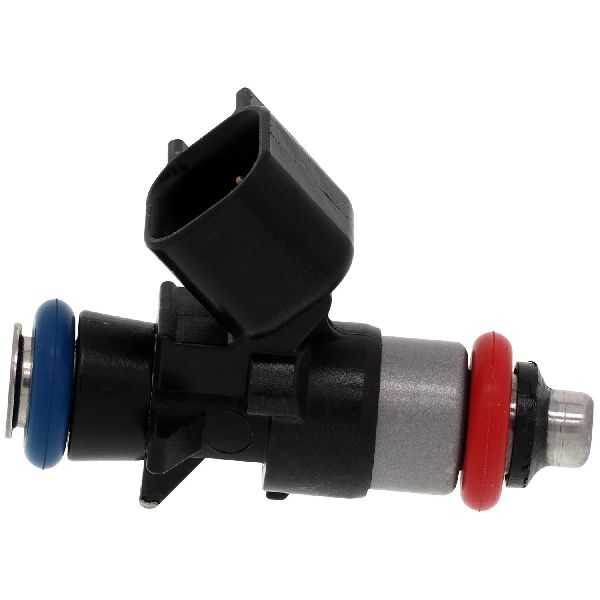
(OEM #0986435518 (Bosch Reman), 68210105AA (Mopar))— If the injector's internal coil has failed, it must be replaced. This is the second most likely cause after wiring.
Trusted brands: Bosch
OEM price range: $400-$600
Aftermarket price range: $300-$500 - Injector Connector Pigtail
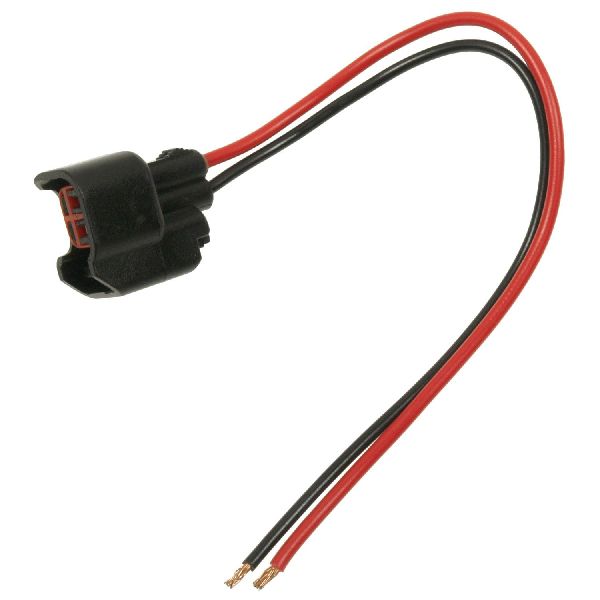
(OEM #FPE-HAR-CUMM-INJ-PT)— If only the main pass-through connector at the valve cover is damaged, a pigtail can be spliced in as a less expensive repair than replacing the whole engine harness. Replaces Cummins P/N 5395297 and 4918587.
Trusted brands: Fleece Performance, Dorman
OEM price range: $25-$40
Aftermarket price range: $15-$30
Related Codes That Often Appear With This One
- P0305 — P0305 means 'Cylinder 5 Misfire Detected.' An electrical fault in the injector circuit (P0205) prevents the injector from firing, which directly causes a misfire in the same cylinder.
- P0204, P0206 — On the 6.7L Cummins, injectors 4, 5, and 6 are on the same circuit bank ('B' or Bank 2). A fault in the shared wiring, a short to ground, or a problem with the PCM driver for that bank can cause codes for all three cylinders to appear together.
- P2149 — This code means 'Fuel Injector Group 'B' Supply Voltage Circuit/Open.' Since cylinder 5 is in Group B (cylinders 4-6), a fault there can trigger this broader group code, often shutting down all three injectors in the bank as a protective measure.
Technical Service Bulletins (TSBs) & Recalls
- 18-099-22 REV. A
- 18-054-21
Platform-Specific Known Issues
- TSB #18-099-22 REV. A (later superseded by recall Y78) notes that on 2019-2020 models, a failing high-pressure fuel pump (CP4) can cause multiple injector circuit codes (P0201-P0206) and a no-start condition due to fuel system contamination.
- A Bosch technical tip video for 2013-2018 models warns that metal shavings from the injector terminal nuts can cause a short circuit, mimicking a failed injector or harness. A thorough cleaning can fix the issue.
Mechanic-Grade Diagnostic Values
- Fuel Injector Solenoid Resistance — expected: Less than 1.0 Ohm, but greater than 0 Ohms (after zeroing meter leads). Failure: An infinite (OL) reading indicates an open coil. A reading of exactly 0 Ohms may indicate an internal short.
- Injector Wiring Harness Continuity — expected: Less than 0.5 Ohms on each wire from the main connector to the injector terminal.. Failure: A reading higher than 0.5 Ohms or an infinite (OL) reading indicates high resistance or an open circuit in the harness.
- Injector Circuit Short to Ground — expected: Infinite resistance (OL) between each injector terminal post and the engine block/head.. Failure: Any continuity or measurable resistance indicates a short to ground in the injector or wiring.
- Injector Pulse Width (Main Event, Scan Tool) — expected: Approx. 0.5 - 0.9 ms at hot idle. Approx. 1.6 - 2.2 ms when towing on a grade.. Failure: Values that are zero, fixed, or do not respond to changes in engine load can indicate a control problem.
- Fuel Rail Pressure (Cranking) — expected: Approximately 4,000 PSI for the engine to start.. Failure: Significantly lower pressure can prevent starting but is not a direct cause of a P0205 circuit code, though it may be a related symptom of a larger fuel system issue.
Scan Tool Commands That Help
- wiTECH, Snap-on, Autel, or equivalent professional scanner: Injector Kill Test / Cylinder Performance Test — Used to isolate a misfiring cylinder. When injector #5 is deactivated via the scan tool, there should be a noticeable change in engine sound/vibration. If there is NO change when #5 is killed, it confirms that cylinder was not contributing, which is consistent with a P0205 fault.
- wiTECH, Snap-on, Autel, or equivalent professional scanner: Injector Quantity Adjustment (IQA) / Flow Rate Programming — This function is required AFTER replacing a fuel injector. Each new injector has a specific calibration code that must be programmed into the PCM to ensure correct fueling and engine balance.
Wiring & Ground Locations
- Bank 2 Injector Harness Connector — On the driver's side of the valve cover, it is the rearmost of the two large injector pass-through connectors. The front connector is for Bank 1 (Cylinders 1-3).. This is the main connection point for the entire circuit for injectors 4, 5, and 6. Testing for power, ground, and signal should begin here before removing the valve cover.
- PCM Connector C1, Pin 37 — On the main PCM connector (C1), Pin 37 is for the Injector #5 Low Side Driver. The wire is typically Dark Blue/Orange.. This is the specific pin at the PCM that controls the ground side of the #5 injector. Testing for continuity from this pin to the injector harness connector can definitively rule out a break in the main engine harness.
- PCM Connector C1, Pin 27 — On the main PCM connector (C1), Pin 27 is for the Injector #5 High Side Driver. The wire is typically Dark Blue/Yellow.. This is the specific pin at the PCM that provides the high side (voltage supply) control for the #5 injector. Testing continuity from this pin can isolate a fault in the main engine harness.
- Engine Block Ground — A primary ground cable runs from the driver's side battery negative terminal to a bolt on the engine block, often near the alternator or below the intercooler boot.. A poor main engine ground can cause a host of intermittent and difficult-to-diagnose electrical issues, including erratic sensor readings and module behavior that could potentially trigger injector codes.
Real Owner Repair Stories
- cumminsforum.com user (2014 Ram 3500 6.7L Cummins) — Intermittent rough running, followed by codes P0205 and P2149 (Injector Group B Supply Voltage Circuit/Open).
❌ Tried (didn't work) Initially suspected a bad fuel injector.
✅ What actually fixed it The owner performed a resistance test on the injector pass-through harness (the harness integrated into the valve cover gasket) and found an open circuit on the wires for injector #5. Replacing the valve cover gasket/harness assembly (Cummins P/N 5367847) resolved both codes and fixed the rough running.
OEM Part Supersession History
3975641, 5264950→5367847— The part was updated with improved materials for better resistance to heat and oil, and more durable conductors to prevent the common open-circuit failures.0445120342 (Bosch New)→0986435518 (Bosch Reman), R8210512AA (Mopar/Bosch Reman)— Standard part lifecycle moving from new production to authorized remanufacturing programs.
Heads up: Ensure the injector is correct for the 2013-2018 model years. Injectors for 2019+ models are physically different and not compatible.
Model Year Variations Within This Range
- 2019-2020: These models use a Bosch CP4.2 high-pressure fuel pump instead of the CP3 pump found in 2014-2018 models. The CP4.2 is known for a failure mode that can contaminate the entire fuel system with metal debris, which can lead to multiple injector circuit codes (P0201-P0206) and a no-start condition, as noted in TSB 18-099-22 REV. A.
- 2019-2020: The fuel injectors for 2019+ models are a different design and are not interchangeable with the 2013-2018 injectors. They operate at higher pressures (2000+ bar) and have different physical characteristics.
Helpful Videos
Used OEM Parts in Stock
New Aftermarket Parts Available


The information in this article is provided for general reference and educational purposes only. Vehicle specifications, procedures, and part compatibility can vary by production date, trim level, and region. Always consult your vehicle's factory service manual and verify part numbers before purchasing or performing repairs. Safety-critical components such as airbags, seat belts, and braking systems should be installed by a qualified professional.
- Ram 3500:
- 🧭 Diagnostic Flowchart
- 🎬 Helpful Videos
- 🛍️ Shop This Part
- What's Unique About the 2014-2020 Ram 3500
- Symptoms You May Notice
- Most Likely Causes
- Rare But Worth Checking
- Diagnosis Steps
- Parts You'll Likely Need
- Related Codes That Often Appear With This One
- Technical Service Bulletins (TSBs) & Recalls
- Platform-Specific Known Issues
- Mechanic-Grade Diagnostic Values
- Scan Tool Commands That Help
- Wiring & Ground Locations
- Real Owner Repair Stories
- OEM Part Supersession History
- Model Year Variations Within This Range
- 🎟️ Get 5% Off