

P0206 on 2008-2011 Cadillac STS 3.6L: Cylinder 6 Injector Circuit Fixes
On a 2008-2011 Cadillac STS with the 3.6L V6, code P0206 is most often caused by a damaged fuel injector wiring harness rubbing against engine components. A GM Technical Service Bulletin (PIP4924D) highlights this issue. Inspect the harness thoroughly, especially near the driver's side cylinder head and fuel line brackets, before replacing the fuel injector.
- P0206 on a 2008-2011 Cadillac STS 3.6L points to an electrical fault in the cylinder 6 fuel injector circuit.
- Before replacing any parts, thoroughly inspect the wiring harness for chafing, especially around the driver's side cylinder head, as this is a very common failure documented in GM TSB PIP4924D.
- A definitive way to test the injector is to swap it with another cylinder and see if the fault code follows the injector.
- Do not confuse this electrical circuit code with a misfire code (P0306), although they almost always appear together.
- This issue is shared across many GM vehicles that use the 3.6L LLT V6 engine, including the CTS, Camaro, Traverse, and Acadia.
What's Unique About the 2008-2011 Cadillac STS
For this generation of Cadillac STS with the 3.6L LLT V6 direct-injection engine, a known issue with the fuel injector wiring harness exists. General Motors issued a Technical Service Bulletin (TSB #PIP4924D) that specifically addresses injector circuit codes (P0201-P0206) caused by the wiring harness rubbing through or having internal wire opens. This chafing often occurs where the harness is routed tightly near the intake plenum, valve cover bolts, sharp edges on fuel line brackets, or the side of the cylinder head, making a thorough visual inspection of the harness a critical first step before assuming the injector itself has failed.
Symptoms You May Notice
- Check Engine Light is on
- Engine misfire or rough idle
- Noticeable engine vibration
- Hesitation or loss of power during acceleration
- Poor fuel economy
- Engine may enter a reduced power 'limp mode'
- Engine may stall in severe cases
- Replacing the spark plug or ignition coil for cylinder 6. While these parts can cause a misfire code (P0306), they will not cause an injector circuit code (P0206). The P0206 code is specifically for the fuel injector's electrical circuit. However, it is wise to check that the ignition coil connector is secure, as a loose connection there can sometimes be mistaken for an injector fault.
Most Likely Causes
- Damaged Fuel Injector Wiring Harness or Connector 🔴 High Probability → Shop Engine Wiring Harness A known issue documented in GM TSB #PIP4924D describes the harness chafing against the intake plenum, valve cover bolts, fuel lines, or cylinder head, leading to an open or short circuit. This is a common failure on the entire GM 3.6L LLT engine family.
How to confirm: Perform a detailed visual inspection of the entire fuel injector wiring harness, especially where it wraps around the driver's side cylinder head and near any metal brackets. Wiggle the harness with the engine running to see if it affects the misfire. Check the connector at the injector for corrosion, damage, or broken locking tabs. Also inspect major harness connectors for poor terminal tension.
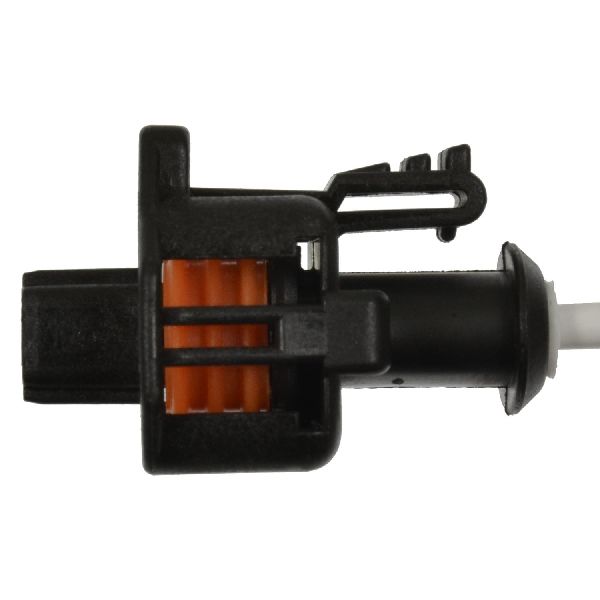
Typical fix: Repair the damaged section of wire with a quality splice and heat shrink tubing. If the connector is damaged, replace it with a new pigtail (e.g., ACDelco PT2712).
Est. part cost: $15-$50 - Faulty Cylinder 6 Fuel Injector 🟡 Medium Probability → Shop Fuel Injector The 3.6L LLT engine uses direct injection (GDI), and the injectors operate under high pressure and can fail electrically over time, causing an open or short in the internal coil.
How to confirm: Swap the cylinder 6 injector with another cylinder (e.g., cylinder 4). Clear the codes and run the engine. If the code changes to P0204, the injector is faulty. Alternatively, test the injector's resistance with a multimeter; for the LLT engine, it should be around 11-14 ohms. A reading of OL (open) or near 0 (short) indicates failure.
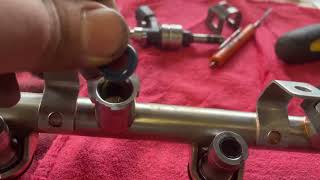
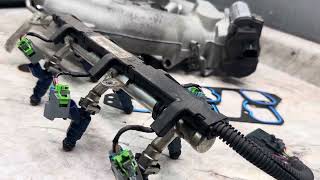
Typical fix: Replace the faulty fuel injector. Accessing the injectors on the 3.6L V6 requires removing the upper intake manifold. 🎬 Watch: Step-by-step guide to 3.6L intake and injector removal It is often recommended to replace the Teflon seal and retaining clip when reinstalling an injector.
Est. part cost: $50-$120
Rare But Worth Checking
- Faulty Powertrain Control Module (PCM): → Shop Engine Control Module (ECM) This is a rare cause. The PCM's internal injector driver can fail. All other possibilities, especially wiring and the injector itself, should be exhaustively ruled out before considering PCM replacement, as it is expensive and requires programming.
- Loose or Corroded Ground Connection: A poor engine ground can cause a variety of erratic electrical issues, including injector circuit faults. Inspect primary engine ground points like G100/G106 on the rear of the right cylinder head for tightness and corrosion.
Diagnosis Steps
- Scan the vehicle for all stored trouble codes and review freeze-frame data.
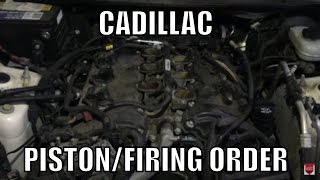
- Locate cylinder 6. On the 3.6L V6, Bank 2 (driver's side) has cylinders 2, 4, and 6, from front to back. Cylinder 6 is the rearmost cylinder on the driver's side, closest to the firewall. 🎬 See this video for the Cadillac V6 cylinder layout
- Perform a thorough visual inspection of the fuel injector wiring harness, paying close attention to the areas mentioned in TSB #PIP4924D (around the intake plenum, valve covers, fuel line brackets, and cylinder head).
- Inspect the electrical connector at the cylinder 6 injector for damage, corrosion, or a loose fit. Check for broken locking tabs.
- Perform a 'wiggle test': With the engine idling, carefully wiggle the wiring harness leading to injector 6 to see if the misfire changes, indicating an intermittent connection.
- Use a 'noid light' to test for an electrical pulse at the injector connector while cranking the engine. A rhythmic flashing light indicates the ECM is sending a signal. 🎬 Watch: How to diagnose a fuel injector circuit malfunction
- If the noid light does not flash, check for 12V power on one of the connector pins with the key on. If power is present, the issue is likely in the ground-side control wire back to the ECM. If no power is present, check fuses and the power supply wire.
- If the noid light flashes, the wiring to the connector is likely okay. The next step is to test the injector itself. Disconnect the injector and measure its resistance with a multimeter. For the LLT engine, it should be approximately 11-14 ohms.
- For a definitive test, swap the cylinder 6 fuel injector with another one on the same bank (e.g., cylinder 4). Clear the codes, run the engine, and see if the code follows the injector (i.e., P0204 appears). If it does, the injector is bad. If P0206 returns, the problem is in the wiring or ECM.
- If all other tests are inconclusive, the ECM may be at fault, but this should be the last component to be considered.
Parts You'll Likely Need
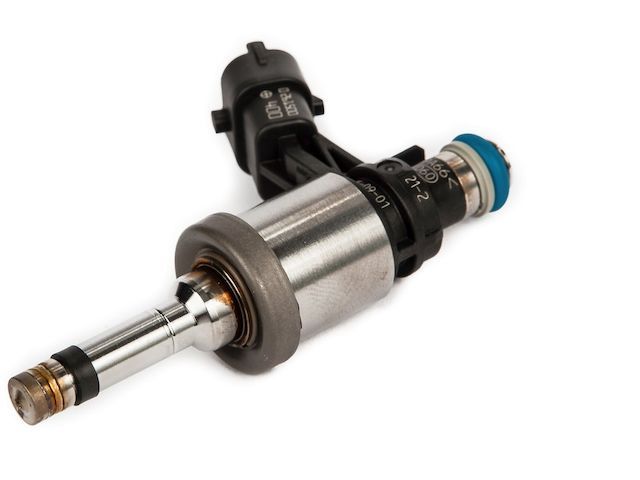
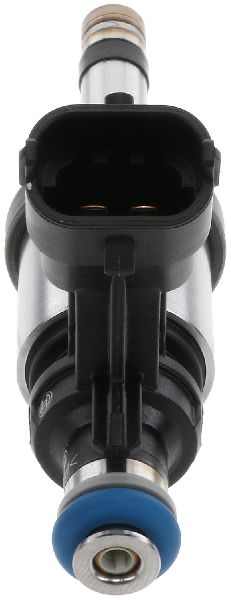
- Fuel Injector
(OEM #12638530, superseded by 12669384)— If the injector's internal coil has failed (open or shorted), it must be replaced. This is the second most likely cause after wiring issues.
Trusted brands: ACDelco, Bosch, Standard Motor Products
OEM price range: $50-$120
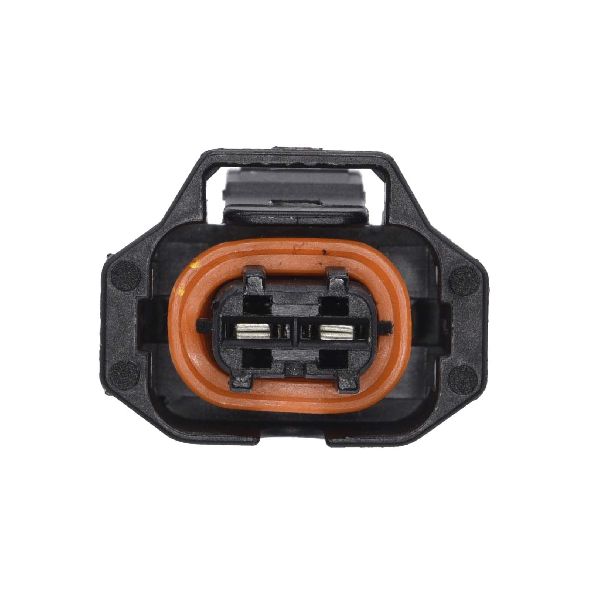
Aftermarket price range: $40-$90 - Fuel Injector Connector Pigtail
(OEM #ACDelco PT2712 (representative))— If the wiring harness is damaged right at the connector, or the connector itself is broken or corroded, a new pigtail is needed to repair the circuit.
Trusted brands: ACDelco, Dorman, Standard Motor Products
OEM price range: $25-$40
Aftermarket price range: $15-$30
Related Codes That Often Appear With This One
- P0306 — P0306 means "Cylinder 6 Misfire Detected." Since a faulty injector circuit (P0206) prevents proper fueling, it directly causes a misfire in that cylinder. These two codes almost always appear together.
- P0201-P0205 — If multiple injector circuit codes are present (e.g., P0202, P0204, P0206), it strongly suggests a systemic problem like a damaged wiring harness common to all injectors on that bank, a blown fuse, or a PCM issue, rather than multiple individual injector failures.
Technical Service Bulletins (TSBs) & Recalls
- TSB Bulletin #PIP4924D: Addresses Service Engine Soon light and misfires with various injector codes (P0201-P0206) due to potential fuel injector wiring harness issues, including chafing on the intake, valve covers, and fuel lines. This bulletin also notes that technicians may find related codes such as P0261, P0262, P0264, P0265, P0267, P0268, P0270, P0271, P0273, P0274, P0276, P0277, P2146, P2149, P2152, P2155, P216A, and or P216D.
Platform-Specific Known Issues
- TSB #PIP4924D: This Technical Service Bulletin specifically addresses engine misfires and injector circuit codes (P0201-P0206) on the 3.6L V6 due to the fuel injector wiring harness chafing on engine components. It is the primary diagnostic document for this issue.
Mechanic-Grade Diagnostic Values
- Fuel Injector Coil Resistance — expected: 11-14 ohms. Failure: A reading of OL (Open Loop/infinite resistance) or near 0 ohms (short circuit) indicates a failed injector.
- Injector Pulse Width at Idle — expected: 2-4 milliseconds (ms). Failure: A value of 0 ms for cylinder 6 while other cylinders show a normal pulse width suggests the ECM has disabled the injector due to a detected fault.
- Key-On Engine-Off Voltage at Injector Connector — expected: ~12V (Battery Voltage) on the power supply pin. Failure: 0V indicates an open in the power feed circuit from the fuse block or ECM.
- Injector Control Circuit Resistance to Ground — expected: 0-1 Ohm (when testing continuity of the wire itself). Failure: High resistance indicates an open in the control wire; a low resistance reading to chassis ground with the component disconnected indicates a short to ground.
Scan Tool Commands That Help
- GM GDS2 / Tech2: Automated Injector Balance Test — This is an advanced functional test to identify a flow issue with an injector that may not be caught by a simple resistance test. The tool commands each injector to fire while monitoring the corresponding drop in fuel rail pressure. If the pressure drop for cylinder 6 is significantly different from the others (GM suggests a >20% variance is an issue), it indicates a faulty injector. This is useful after confirming the wiring is intact.
- GM GDS2 / High-End Aftermarket Scan Tool: Cylinder Power Balance — This bidirectional test allows the technician to individually disable each fuel injector while the engine is running. When cylinder 6's injector is disabled, if there is little to no change in RPM, it confirms that cylinder was not contributing, validating the misfire condition related to the P0206 code.
Wiring & Ground Locations
- Cylinder 6 Injector Control Circuit (Low Side) — Pin 58 on the ECM C1 harness connector.. This is the specific ground-side driver wire that the ECM uses to fire the #6 injector. A break or short on this wire between the ECM and the injector is a primary cause of P0206. Technicians can test for continuity and shorts from this pin.
- Cylinder 6 Injector Control Circuit (High Side) — Pin K658 at the PCM C1 harness connector (in some documentation). Note: Wire colors are more reliable. The power supply wire is typically Pink/Black on this harness.. This is the ignition voltage supply circuit for the injector. While a failure here would likely affect multiple injectors on the bank, a targeted short or open near the injector could isolate the fault to cylinder 6.
- G100 / G106 — On the rear side of the right (passenger side) cylinder head.. These are primary engine and ECM ground points. While a failure here would likely cause multiple codes and widespread issues, a loose or corroded connection can create intermittent and strange voltage problems, including injector circuit faults. Always check that these are clean and tight when diagnosing electrical issues.
- ECM Location — On the 3.6L engine, the ECM is located on the passenger side valve cover.. Knowing the physical location of the ECM is critical for inspecting the harness connections and testing the circuits at their source. The harness section near the ECM is a potential area for damage.
OEM Part Supersession History
12638530→12669384— Standard part evolution for improved reliability or manufacturing process changes.
Heads up: The parts are fully interchangeable. When ordering, you will likely receive 12669384 even if you search for the older number.12632255→12638530— Earlier part number in the supersession chain.
Heads up: This is an older part number, now superseded by 12669384.
Diagnostic Flowchart
Other Known Issues on This Vehicle
Issues unrelated to this code that are worth knowing about as an owner of this generation:
- Premature Timing Chain Stretch 🔴 High — Very common, especially on engines with over 70,000 miles. The issue was exacerbated by the original, overly optimistic Oil Life Monitor (OLM) calibration. (Ref: Special Coverage Adjustment #11340C extended the warranty to 10 years/120k miles. TSBs #PIP3423P and #12-06-01-009F also apply.)
- Normal High-Pressure Fuel Pump Ticking Noise 🟡 Low — This is a normal characteristic of the direct-injection engine. A rapid ticking sound from the engine bay is common and often misdiagnosed as a problem. (Ref: TSB #07-06-04-025M was issued to inform technicians that this noise is normal.)
- Electronic System Malfunctions 🟠 Medium — Owners report intermittent issues with key fobs, the navigation/infotainment unit, and Bluetooth connectivity failing to recognize commands. (Ref: null)
- Difficult In-Tank Fuel Pump Replacement 🔴 High — Occurs upon failure of the low-pressure fuel pump. The vehicle has no fuel pump access panel, requiring the entire fuel tank to be dropped for replacement, resulting in very high labor costs. (Ref: null)
Used vs. New Parts: Buying Guide for This Vehicle
When a used part is the smart pick: For this repair, a used part is generally not recommended for the fuel injector itself. However, sourcing a complete used engine wiring harness from a low-mileage donor vehicle can be a cost-effective solution if a large section of the original harness is damaged or has been poorly repaired in the past.
Donor-vehicle mileage cap: roughly under 75000 miles for the part to have meaningful remaining life.
What to inspect on the donor part:
- For a wiring harness, inspect for any signs of previous repairs (splices, tape), brittleness in the loom, or damage to connector locking tabs.
- Ensure the donor vehicle was not in a front-end collision that could have stressed the harness.
- Verify the part number or engine type matches exactly.
OEM-only on this vehicle (don't cheap out):
- Fuel Injector: Due to the high pressures and precise nature of GDI injectors, OEM (ACDelco) or a top-tier OE manufacturer like Bosch is strongly recommended. Cheap aftermarket injectors are known for high failure rates and inconsistent flow.
- Powertrain Control Module (PCM): If the PCM is condemned, a new or professionally remanufactured unit that can be programmed to the vehicle's VIN is the only reliable option.
Aftermarket brands forum-validated for this vehicle:
- Bosch (often the OE manufacturer for GM)
- Standard Motor Products (SMP)
Brands owners have reported issues with on this vehicle:
- Unbranded, no-name injectors from online marketplaces. These often lack the quality control and material science to handle GDI system pressures and heat, leading to premature failure.
Real Owner Stories
Aggregated from forums and TSBs cited above. Mileages and costs reflect what owners reported in those sources.
2010 Chevrolet Camaro 3.6L LLT V6
Symptoms: The owner reported multiple injector codes, including P0206.
What fixed it: The problem was ultimately traced back to a wiring harness issue, as described in the common TSB for this engine family.
Source hint: Camaro5 Forums - An owner of a 2010 Camaro with the same 3.6L LLT engine reported multiple injector codes, including P0206, which ultimately pointed to a wiring harness problem, corroborating the TSB.
2008-2011 Cadillac STS 3.6L V6
Symptoms: Service Engine Soon light, engine misfires, and various injector circuit codes (P0201-P0206).
What fixed it: The documented fix involves inspecting the fuel injector wiring harness for chafing against the intake plenum, valve covers, or fuel lines, and repairing the damaged wires.
Source hint: TSB #PIP4924D
2010 Cadillac SRX (related GM engine)
Symptoms: Codes P0206 and P0306 were present.
What fixed it: The owner performed a DIY repair, noting the significant difficulty of accessing cylinder 6 on the rear bank of cylinders.
Source hint: CadillacForums.com - Thread '2010 SRX P0206 and P0306'
Related OBD-II Codes
Frequently Asked Questions
Where exactly is cylinder 6 on my 2009 Cadillac STS 3.6L V6?
I have a P0206 code. Is there a specific TSB I should know about for this engine?
For code P0206, is it more likely that the fuel injector failed or that the wiring is bad?
How can I test the cylinder 6 fuel injector myself?
My mechanic thinks the ECM is bad. Is that a common fix for P0206?
Are other GM vehicles with the 3.6L V6 also prone to this wiring issue?
Helpful Videos

We Have This Part in Stock


The information in this article is provided for general reference and educational purposes only. Vehicle specifications, procedures, and part compatibility can vary by production date, trim level, and region. Always consult your vehicle's factory service manual and verify part numbers before purchasing or performing repairs. Safety-critical components such as airbags, seat belts, and braking systems should be installed by a qualified professional.
- Cadillac STS:
- 🧭 Diagnostic Flowchart
- 🎬 Helpful Videos
- 🛍️ Shop This Part
- What's Unique About the 2008-2011 Cadillac STS
- Symptoms You May Notice
- Most Likely Causes
- Rare But Worth Checking
- Diagnosis Steps
- Parts You'll Likely Need
- Related Codes That Often Appear With This One
- Technical Service Bulletins (TSBs) & Recalls
- Platform-Specific Known Issues
- Mechanic-Grade Diagnostic Values
- Scan Tool Commands That Help
- Wiring & Ground Locations
- OEM Part Supersession History
- Other Known Issues on This Vehicle
- Used vs. New Parts: Buying Guide for This Vehicle
- Real Owner Stories
- 2010 Chevrolet Camaro 3.6L LLT V6
- 2008-2011 Cadillac STS 3.6L V6
- 2010 Cadillac SRX (related GM engine)
- Related OBD-II Codes
- Frequently Asked Questions
- 🎟️ Get 5% Off