

P0206 on 2011-2014 Chevrolet Camaro: Cylinder 6 Injector Circuit Fault Causes and Fixes
P0206 on a 5th Gen Camaro indicates an electrical fault with the cylinder 6 fuel injector. This is most often a failed injector, but wiring issues are also common. Diagnosis is key, but expect a DIY cost of $70-$190 for an OEM part, or $250-$600 at a shop.
- P0206 is an electrical fault for the cylinder 6 injector circuit, not a general misfire code.
- **Crucially, identify your engine first.** On the 3.6L V6, cylinder 6 is at the rear on the driver's side. On the 6.2L V8, it's in the middle on the passenger's side.
- A bad fuel injector is the most likely cause, but GM has a TSB that points to wiring issues, so inspect the harness carefully.
- A simple 'injector swap' with a neighboring cylinder is the most effective DIY method to confirm if the injector itself is the problem.
- Do not drive extensively with this code, as it can lead to costly catalytic converter damage.
What's Unique About the 2011-2014 Chevrolet CAMARO
For the 2011-2014 Camaro, the location of cylinder 6 differs significantly between the V6 and V8 engines, which is critical for diagnosis. On the 3.6L V6 (LLT/LFX), it's the rear cylinder on the driver's side (left bank). On the 6.2L V8 (LS3/L99), it's the middle cylinder on the passenger's side (right bank). Additionally, General Motors issued Technical Service Bulletins (like PIP4924D and others for similar platforms) that point to potential wiring harness chafing issues that can mimic a failed injector, making a thorough diagnosis more important than on other vehicles.
Diagnostic Flowchart
Tap your situation to follow the diagnostic path that matches what you're seeing on this vehicle.
Symptoms You May Notice
- Rough, unstable, or shaking idle
- Noticeable loss of engine power and poor acceleration
- Engine hesitation or stumbling
- Check Engine Light is on (may be flashing if the misfire is severe)
- Reduced fuel economy
- The StabiliTrak service light may also illuminate, often alongside the Check Engine Light.
- A smell of raw fuel from the exhaust
- Replacing the spark plug or ignition coil for cylinder 6. While these can cause a misfire code (P0306), they will not cause an injector circuit code (P0206). P0206 is specifically an electrical fault in the injector's control circuit. A user on a forum mistakenly chased a coil issue before realizing the code points specifically to the injector circuit.
Most Likely Causes
- Failed Cylinder 6 Fuel Injector 🔴 High Probability → Shop Fuel Injector Fuel injectors are wear-and-tear components. The internal electromagnetic coil can develop an open or a short circuit over time, leading to an electrical failure detected by the PCM.
How to confirm: Measure the injector's internal resistance with a multimeter; it should be within GM's specified range (typically 11-14 ohms). A reading of infinite ohms indicates an open circuit, while near-zero ohms indicates a short. The most definitive test is to swap the cylinder 6 injector with another cylinder (e.g., cylinder 4). Clear the codes and run the engine. If the code changes to P0204, the injector is confirmed bad.
Typical fix: Replace the faulty fuel injector. It is often recommended to replace all injectors as a set on higher mileage vehicles to ensure balanced fuel flow.
Est. part cost: $70-$190 for a single OEM injector, depending on engine. - Wiring Harness or Connector Fault 🟡 Medium Probability A GM Technical Service Bulletin (PIP4924D) notes that various injector codes, including P0206, can be caused by wiring issues. Engine vibration and heat can cause wires to chafe against brackets (like the ECM/TCM bracket or shock tower), break, or cause the connector pins to lose tension or corrode.
How to confirm: Visually inspect the wiring harness leading to the cylinder 6 injector for any signs of melting, chafing, or breaks. Unplug the connector and check for corrosion, backed-out, or bent pins. Use a noid light to confirm the PCM is sending a pulse signal to the connector. A 'wiggle test' on the harness while the engine is running can sometimes trigger the fault.
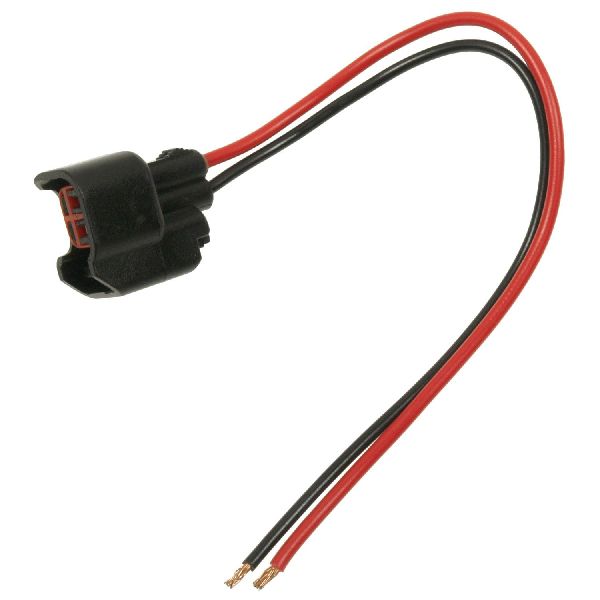
Typical fix: Repair the damaged section of wire or replace the injector connector pigtail.
Est. part cost: $15-$40 for a new connector pigtail. - Faulty Powertrain Control Module (PCM) ⚪ Low Probability → Shop Engine Control Module (ECM) While rare, the internal driver circuit in the PCM that controls the injector can fail. This is almost never the first cause and should only be considered after exhausting all other possibilities.
How to confirm: This is a diagnosis of exclusion. If the injector and the entire wiring circuit (both power and ground pulse wires) have been tested and are known to be good, the PCM becomes the primary suspect. This should be confirmed by a professional technician, often using an oscilloscope to analyze the driver signal directly from the PCM.
Typical fix: Replace and reprogram the Powertrain Control Module.
Est. part cost: $300-$800+
Diagnosis Steps
- Identify Cylinder 6: This is the most important first step. For the 3.6L V6 (LLT/LFX), the cylinders are numbered 1-3-5 on the passenger (right) side and 2-4-6 on the driver (left) side, front to back. Cylinder 6 is the rearmost cylinder on the driver's side. For the 6.2L V8 (LS3/L99), cylinders are 1-3-5-7 on the driver (left) side and 2-4-6-8 on the passenger (right) side. Cylinder 6 is the middle cylinder on the passenger's side.
- Scan for Codes: Read all codes and freeze frame data. Note if P0206 is accompanied by P0306 or other injector codes.
- Visual Inspection: Carefully inspect the wiring harness and connector for cylinder 6. Look for any obvious signs of damage, melting on the exhaust manifold, or corrosion. Check for chafing near the ECM/TCM bracket and shock tower.
- Check for Signal with a Noid Light: Disconnect the injector and plug a noid light into the connector. Start the engine. A rhythmic flashing light indicates the PCM is sending the signal to fire the injector, suggesting the wiring and PCM driver are likely good. No flash or a steady light points to a wiring or PCM issue.
- Test Injector Resistance: Disconnect the injector and use a multimeter set to Ohms (Ω). Measure the resistance across its two terminals. Compare the reading to the manufacturer's specification (typically 11-14 ohms for these models). A reading that is infinite (Open Loop) or near zero (shorted) indicates a bad injector.
- Swap Injectors: If the resistance test is inconclusive, swap the cylinder 6 injector with an adjacent one (e.g., cylinder 4 on a V8). Clear the codes and run the engine. If the code returns as P0204, the injector is faulty. If P0206 returns, the problem is in the wiring or PCM.
- Test Wiring Integrity: If the injector is good but there was no pulse on the noid light, check for continuity on both wires from the injector connector back to the PCM. Check for 12V power on one wire with the key on. Then, check the control wire for shorts to power or ground.
- Final PCM Check: If the injector and wiring are confirmed to be good, the fault lies with the PCM. This should be verified by a professional before replacement.
Parts You'll Likely Need
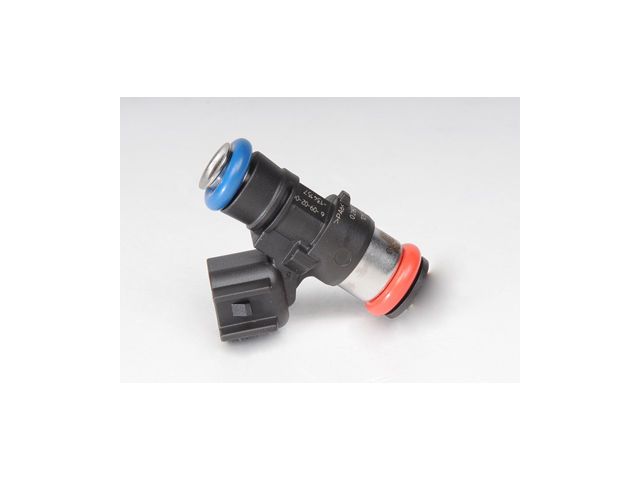
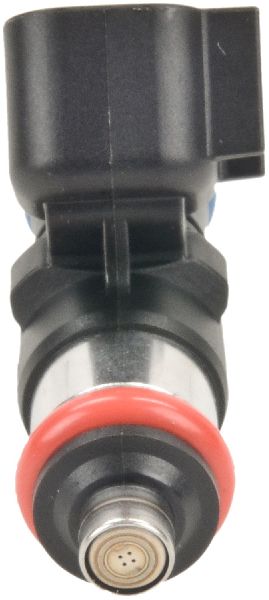
- Fuel Injector (3.6L V6 LLT, 2011)
(OEM #12638530 or 12669384)— This is the most common failure point for a P0206 code. Part number 12669384 is a common ACDelco replacement for the 2010-2011 LLT V6. 12638530 is also specified for the LLT.
Trusted brands: ACDelco, Bosch
OEM price range: $160-$190
Aftermarket price range: $40-$90 - Fuel Injector (3.6L V6 LFX, 2012-2014)
(OEM #12632255)— The LFX engine uses a different injector than the earlier LLT. This is the most common failure point for P0206 on these model years. This part number is sometimes superseded by 12669384.
Trusted brands: ACDelco, Standard Motor Products
OEM price range: $150-$180
Aftermarket price range: $50-$100 - Fuel Injector (6.2L V8 LS3/L99)
(OEM #12576341)— This is the most common failure point for a P0206 code on the V8 models (SS). It is a 42 lb/hr injector.
Trusted brands: ACDelco, Bosch
OEM price range: $70-$100
Aftermarket price range: $35-$60 - Fuel Injector Connector Pigtail
(OEM #ACDelco PT2160 (GM 88988963))— If the wiring is damaged or the connector is corroded at the injector, replacing the pigtail is the standard repair. The connector style is often USCAR EV6.
Trusted brands: ACDelco, Dorman, Standard Motor Products
OEM price range: $25-$40
Aftermarket price range: $10-$20
Related Codes That Often Appear With This One
- P0306 — P0306 means "Cylinder 6 Misfire Detected." Since the P0206 code indicates the injector isn't firing correctly, a misfire on that cylinder is an expected and direct consequence.
- P0201, P0202, P0203, P0204, P0205... — If multiple injector circuit codes are present, it strongly suggests a systemic problem like a damaged wiring harness common to all affected injectors, a ground issue, or a failing PCM, 🎬 Watch: How to diagnose multiple injector circuit codes on GM vehicles. as noted in TSB #PIP4924D.
Technical Service Bulletins (TSBs) & Recalls
- PIP4924D: Mentions that a Service Engine Soon lamp with a misfire may be accompanied by a wide range of injector circuit codes, including P0206, pointing towards potential wiring issues.
- 21-NA-149 (Related Platform): Although for Silverado/Sierra, this TSB is highly relevant as it details engine harness chafing on ECM brackets and shock towers causing P020x codes, a known issue pattern on many GM vehicles.
Platform-Specific Known Issues
- TSB #PIP4924D: General Motors issued this bulletin for various models, including the 2011 Camaro, which addresses a list of injector codes (P0201-P0206, etc.) that can appear with a misfire. It suggests a potential wiring harness issue as a possible cause, making it important to inspect the harness thoroughly before replacing parts.
- Wiring Harness Chafing: While not a Camaro-specific TSB, related bulletins for other GM trucks and SUVs (like 21-NA-149) with similar engine layouts detail common wiring harness chafe points. On the Camaro, technicians often check for the harness rubbing against the corner of the cylinder head, accessory brackets, or the ECM/TCM mounting bracket.
Mechanic-Grade Diagnostic Values
- Fuel Injector Coil Resistance (V8 & V6) — expected: 12 to 17 Ohms. Failure: A reading of 0 ohms (short circuit) or infinite ohms (open circuit) indicates a failed injector.
- Engine Ground Strap Continuity — expected: < 0.1 Ohms. Failure: A higher resistance reading indicates a poor ground connection, which can cause erratic electrical behavior.
- Low-Pressure Fuel System (V6 LLT/LFX) — expected: 40-65 PSI with key on, engine off (KOEO); 40-47 PSI while running.. Failure: Pressure outside these ranges suggests a problem with the in-tank fuel pump or regulator, not the injector circuit itself.
- Low-Pressure Fuel System (V8 LS3/L99) — expected: Approximately 58 PSI, which may taper down towards 48-51 PSI in the upper RPM range.. Failure: Incorrect pressure can affect overall engine performance but won't typically set a P0206 circuit code.
- High-Pressure Fuel System (V6 Direct Injection) — expected: Can range from 500 to over 2500 PSI depending on engine load.. Failure: While not a direct cause of P0206, issues here would present with other codes related to the high-pressure pump or sensor.
Scan Tool Commands That Help
- GM GDS2 / High-End Aftermarket (e.g., Autel): Injector Balance Test / Cylinder Power Balance — This bidirectional test allows the technician to individually disable injectors while the engine is running to observe the RPM drop for each cylinder. A cylinder that shows little or no RPM drop when its injector is disabled indicates a problem with that cylinder (confirming the misfire). The GDS2 can also perform an automated test that momentarily opens each injector and measures the fuel pressure drop, comparing the values across all cylinders to identify a weak or clogged injector.
Wiring & Ground Locations
- Cylinder 6 Injector Control Wire (V8 LS3/L99) — Pin 19 on the X1 (Black, 73-pin) ECM connector. The wire color is typically Yellow with a Black stripe.. This is the specific wire that the ECM uses to ground-pulse and control the cylinder 6 fuel injector. Technicians test this wire for continuity back to the ECM and for shorts to power or ground when diagnosing a P0206.
- Cylinder 6 Injector Control Wire (V6 LLT/LFX) — Pin 52 on the X2 (Black, 73-pin) ECM connector. The wire color is typically Yellow with a Black stripe.. This is the control circuit wire for the cylinder 6 injector on V6 models. A break or short on this wire between the injector and Pin 52 is a primary cause of P0206 after the injector itself has been ruled out.
- G107 (Engine Ground) — On the 3.6L V6, this ground is on the left rear of the engine. On the 6.2L V8, it's on the right rear of the engine.. This is a critical engine block ground. While not directly for the injectors, a poor connection here can introduce electrical noise and voltage drop issues that affect various engine sensors and actuators, potentially causing intermittent or unusual faults.
- G108 (Engine Ground) — On the 3.6L V6, this ground is located on the left side of the engine.. Similar to G107, this ground point is essential for the proper operation of the engine's electrical systems. Verifying that it is clean and tight is a fundamental step in diagnosing any electrical fault.
OEM Part Supersession History
12638530→12669384— Standard part evolution and potential design improvement.
Heads up: Part 12669384 is listed as the replacement for 12638530, which was used on the 2011 LLT V6.12632255→12669384— Part consolidation and streamlining.
Heads up: The LFX V6 injector (12632255) is also shown to be replaced by 12669384, suggesting it may be a universal replacement for both early and late V6 models in this generation.
Model Year Variations Within This Range
- 2011 vs 2012-2014: The V6 engine changed from the LLT (2011) to the LFX (2012). The LFX features redesigned cylinder heads with integrated exhaust manifolds (making traditional headers incompatible), a composite intake manifold, and different fuel injectors and fuel pump. The ECM also changed from a Bosch unit on the LLT to a Delphi unit on the LFX, which affects tuning and diagnostics.
Helpful Videos
We Have This Part in Stock


The information in this article is provided for general reference and educational purposes only. Vehicle specifications, procedures, and part compatibility can vary by production date, trim level, and region. Always consult your vehicle's factory service manual and verify part numbers before purchasing or performing repairs. Safety-critical components such as airbags, seat belts, and braking systems should be installed by a qualified professional.
- Chevrolet CAMARO:
- 🧭 Diagnostic Flowchart
- 🎬 Helpful Videos
- 🛍️ Shop This Part
- What's Unique About the 2011-2014 Chevrolet CAMARO
- Symptoms You May Notice
- Most Likely Causes
- Diagnosis Steps
- Parts You'll Likely Need
- Related Codes That Often Appear With This One
- Technical Service Bulletins (TSBs) & Recalls
- Platform-Specific Known Issues
- Mechanic-Grade Diagnostic Values
- Scan Tool Commands That Help
- Wiring & Ground Locations
- OEM Part Supersession History
- Model Year Variations Within This Range
- 🎟️ Get 5% Off