

P0206 on 2012-2014 Chevrolet Impala: Cylinder 6 Injector Circuit Fault Causes and Fixes
On a 2012-2014 Impala with the 3.6L V6, P0206 most often means the cylinder 6 fuel injector has failed or its wiring is damaged. Cylinder 6 is on the difficult-to-access rear bank (firewall side). A wiring harness chafe, as described in GM TSB #PIP4924D, is a very common cause. Expect a repair cost of $350-$700, with most of that being labor to access the rear bank injectors.
- P0206 indicates an electrical problem with the cylinder 6 injector circuit, not a fuel quality or pressure issue.
- On the 2012-2014 Impala 3.6L, a damaged wiring harness is a very common cause for this code, per GM TSB #PIP4924D. Always inspect the wiring before replacing parts.
- Cylinder 6 is on the rear bank against the firewall, making access difficult. Replacing the injector requires removing the upper intake manifold and is a labor-intensive job.
- A flashing Check Engine Light indicates a severe misfire that can quickly damage the catalytic converter. Avoid driving if the light is flashing.
What's Unique About the 2012-2014 Chevrolet IMPALA
For the 2012-2014 Impala and many other GM vehicles with the 3.6L LFX V6 engine, the fuel injector wiring harness is a known weak point. GM issued Technical Service Bulletin #PIP4924D regarding misfires and various injector circuit codes, including P0206. The bulletin points to the harness being prone to rubbing against engine components like the intake plenum, valve cover bolts, the side of the cylinder head, or fuel lines, leading to chafed wires. This makes a wiring fault a higher-than-usual probability compared to other vehicles where the injector itself is the more common failure point.
Diagnostic Flowchart
Tap your situation to follow the diagnostic path that matches what you're seeing on this vehicle.
Generation note: The 2012-2014 model years span two Impala generations. The 2012-2013 models are all 9th generation. The 2014 model year includes both the 9th generation (as the 'Impala Limited') and the new 10th generation. However, code P0206 applies to the 6-cylinder engine, which in both cases is the 3.6L LFX V6, so the information in this guide is relevant to all 2012-2014 Impalas with the V6 engine.
Symptoms You May Notice
- Check Engine Light is on
- Engine running rough or vibrating, especially at idle
- Noticeable loss of power and poor acceleration
- Engine misfires (may cause a flashing Check Engine Light)
- Reduced fuel economy
- Delayed or difficult startup
- Black smoke from exhaust
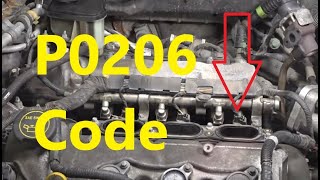
- Replacing the spark plug or ignition coil for cylinder 6. While these can cause a misfire (P0306), they will not cause an injector circuit code like P0206, which is specifically an electrical fault. 🎬 Watch: Understanding the P0206 code and how to fix it.
Most Likely Causes
- Damaged Fuel Injector Wiring Harness 🔴 High Probability → Shop Engine Wiring Harness As documented in GM TSB #PIP4924D, the harness on the 3.6L V6 is known to rub against the intake plenum, valve cover bolts, or cylinder head, causing wires to chafe and short or break. This is a well-documented issue on forums and across multiple GM platforms using this engine.
How to confirm: Visually inspect the wiring harness leading to the cylinder 6 fuel injector. Pay close attention to any point where it contacts another engine component, especially where the harness routes under the intake plenum to the rear bank. Look for worn insulation, shiny rub marks, or exposed copper wire.
Typical fix: Repair the damaged section of wire with a quality splice and heat shrink. Protect the repaired area with split loom tubing and secure it away from the chafe point. In severe cases, the entire bank's injector harness may need to be replaced (GM Part #12621095 for the left/rear bank).
Est. part cost: $5-$150 - Faulty Cylinder 6 Fuel Injector 🟡 Medium Probability → Shop Fuel Injector The 3.6L LFX engine uses Gasoline Direct Injection (GDI), where injectors operate under extreme heat and pressure inside the combustion chamber, making them susceptible to internal electrical failure over time. Carbon buildup can also be a factor, but P0206 specifically points to an electrical fault.
How to confirm: Swap the cylinder 6 injector with an adjacent one on the same bank (e.g., cylinder 4). Clear the codes and drive. If the code changes to P0204, the injector is bad. Alternatively, check the injector's resistance with a multimeter; for the LFX engine, it should be between 1.2 and 1.8 ohms. An open circuit (infinite resistance) or a reading far outside this range indicates a bad injector.
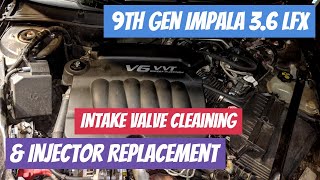
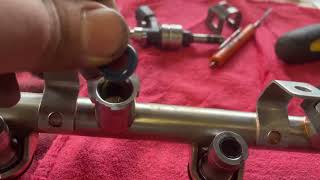
Typical fix: Replace the faulty fuel injector. Since accessing the injectors requires removing the upper and lower intake manifolds, many mechanics recommend replacing all three injectors on that bank (Bank 2) at the same time, along with the intake gaskets. 🎬 See this complete LFX intake removal and injector replacement guide.
Est. part cost: $60-$190 - Bad Connector at Fuel Injector ⚪ Low Probability → Shop Fuel Injector
How to confirm: With the engine off, disconnect and reconnect the injector connector several times. Wiggle the connector while the engine is running to see if it affects the misfire. Inspect the connector for corrosion, bent, or loose pins. The locking tab can become brittle and break.
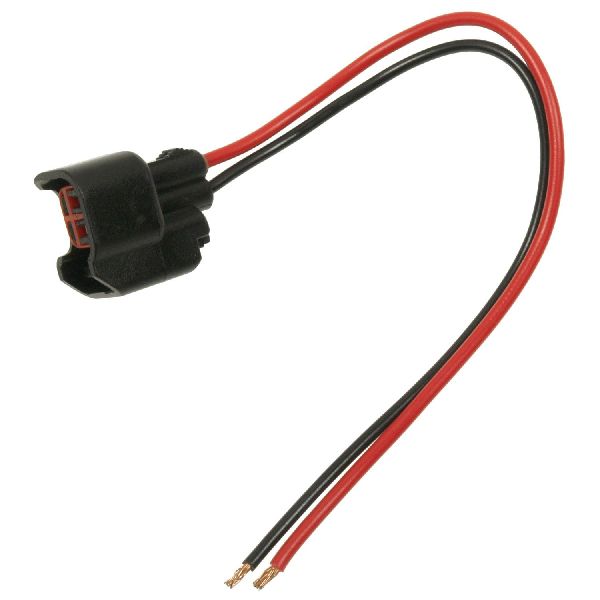
Typical fix: If the connector is damaged, replace it with a new pigtail connector (e.g., ACDelco PT2185), which involves cutting the old one off and splicing the new one in.
Est. part cost: $15-$40
Rare But Worth Checking
- Faulty Powertrain Control Module (PCM): → Shop Engine Control Module (ECM) This is rare, but if the injector and wiring are confirmed to be good, the driver circuit inside the PCM may have failed. This should be the last item to check.
- Corroded or Loose Ground Connection: A technician on the ScannerDanner forum found that multiple injector codes (P0202, P0204, P0206) on a 3.6L V6 were caused by a single corroded ground connection (G113) shared by the injector bank. Checking engine ground points is a valid step if multiple injector codes are present. A wiring diagram for a 2013 Impala shows G113 located on the left side of the automatic transaxle.
Diagnosis Steps
- Confirm the presence of P0206 with an OBD-II scanner. Note any other codes, especially P0306 or other injector codes.
- Locate cylinder 6. On the transverse 3.6L V6, Bank 2 is the rear bank against the firewall. From driver to passenger side, the cylinders are 2-4-6. Cylinder 6 is the rear-most cylinder on the driver's side.
- Visually inspect the wiring harness going to the rear bank of injectors. This is difficult and may require a mirror and flashlight. Look carefully for any signs of rubbing or chafing against the intake manifold, valve cover, fuel lines, or the cylinder head itself, as noted in TSB PIP4924D.
- If no visible damage is found, test the injector circuit. Unplug the connector and use a 'noid light' to see if the PCM is sending a pulse signal while the engine is cranked. If the light flashes, the PCM and wiring are likely okay, pointing to the injector.
- If the noid light does not flash, check for 12V power on one wire of the connector with the key on. If power is present, the issue is in the ground-side control wire back to the PCM or the PCM itself. If no power is present, check fuses and the power-side wiring.
- To definitively confirm a bad injector, perform a resistance test on the injector terminals using a multimeter. A healthy LFX injector should read between 1.2-1.8 ohms. An open circuit (infinite resistance) or a reading outside this range indicates a bad injector.
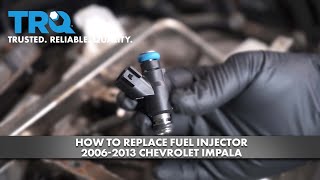
- As a final confirmation, swap the cylinder 6 injector with another cylinder's injector (e.g., cylinder 4). This requires removing the intake manifold. If the code follows the injector (now P0204), the injector is faulty. 🎬 Watch: Step-by-step fuel injector replacement for GM 3.6L engines. If the code remains P0206, the problem is in the wiring or PCM.
Parts You'll Likely Need
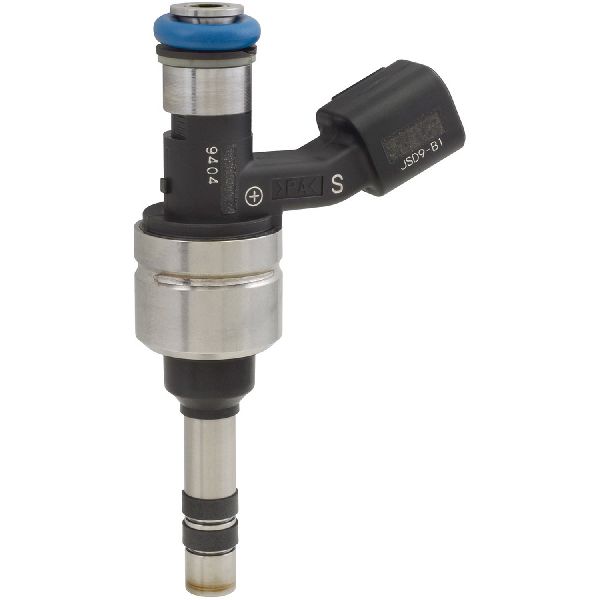
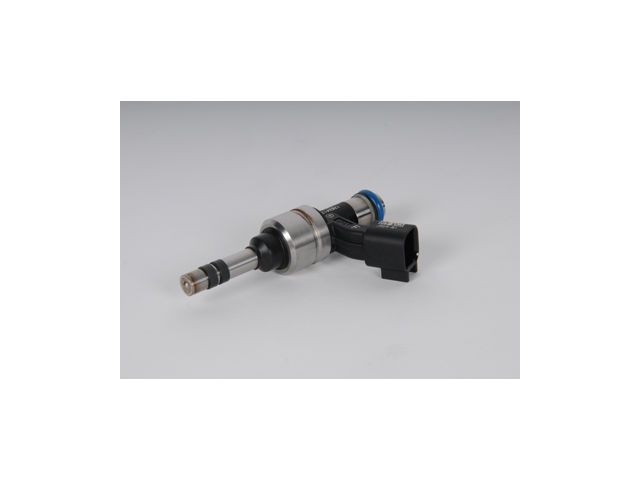
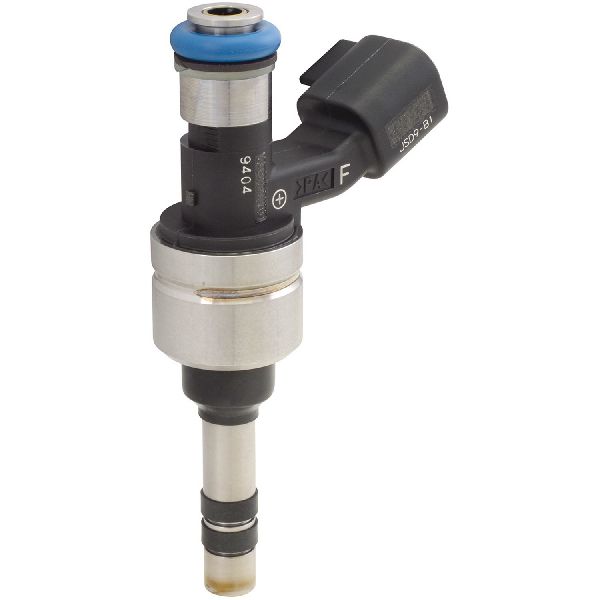
- Fuel Injector
(OEM #12669384)— This is the most likely component to have failed if the wiring is intact. The GDI injectors on the LFX engine are a common failure point. This part number supersedes older numbers like 12632255, 12638530, and 12611545.
Trusted brands: ACDelco, Bosch, Standard Motor Products
OEM price range: $120-$190
Aftermarket price range: $60-$130 - Upper and Lower Intake Manifold Gaskets — These gaskets must be replaced anytime the intake manifold is removed to access the fuel injectors. They are single-use and crucial for preventing vacuum leaks.
Trusted brands: Fel-Pro, ACDelco, Mahle
OEM price range: $40-$70
Aftermarket price range: $20-$50 - Fuel Injector Connector Pigtail
(OEM #88988963)— If the wiring is damaged right at the connector, or the connector's locking tab is broken, replacing the pigtail is the standard repair.
Trusted brands: ACDelco, Dorman
OEM price range: $25-$40
Aftermarket price range: $15-$30 - Injector Wiring Harness (Bank 2)
(OEM #12621095)— If the wiring harness is severely chafed in multiple spots or damaged beyond a simple splice repair, replacing the entire harness for that bank is the best solution. This part number supersedes 12614941.
Related Codes That Often Appear With This One
- P0306 — This code means 'Cylinder 6 Misfire Detected.' A P0206 fault directly causes cylinder 6 to misfire because it is not receiving the correct amount of fuel.
- P0300 — This means 'Random/Multiple Cylinder Misfire.' It can appear if the single-cylinder misfire is severe enough to affect overall engine balance, or if a wiring issue is intermittently affecting multiple injector circuits.
- P219B — This code indicates 'Bank 2 Fuel Trim Imbalance.' Since cylinder 6 is on Bank 2 (the firewall side), a non-firing injector on that bank causes a lean condition, forcing the PCM to add fuel to the entire bank, which can trigger this imbalance code.
- P0202, P0204 — If codes for other injectors on Bank 2 (cylinders 2, 4, 6) appear alongside P0206, it strongly points to a common wiring harness problem or a bad ground connection for that bank, as described in TSB #PIP4924D.
Technical Service Bulletins (TSBs) & Recalls
- PIP4924D: SES light and misfire with injector codes. Instructs technicians to inspect the fuel injector wiring harness for rubbing through or internal opens on various GM V6 models. Specific chafe points mentioned are against the intake plenum, valve cover bolts, fuel lines, and the side of the cylinder head.
Platform-Specific Known Issues
- TSB #PIP4924D: This Technical Service Bulletin from GM directly addresses issues with the fuel injector wiring harness rubbing through against engine components, causing various injector circuit codes, including P0206. This makes wiring inspection a critical first step.
Mechanic-Grade Diagnostic Values
- Fuel Injector Resistance (3.6L LFX GDI) — expected: 1.2 - 1.8 Ohms. Failure: A reading of 0 Ohms (short), infinity/OL (open), or significantly outside the specified range indicates a failed injector.
- High-Pressure Fuel Rail Pressure (at idle) — expected: 1.9-5.0 MPa (276-725 PSI). Failure: While not a direct indicator of a P0206 circuit fault, readings significantly outside this range can point to other fuel system issues.
- Injector Pulse Width (at idle) — expected: 2 - 4 milliseconds (ms). Failure: A value of 0 ms on cylinder 6 while other cylinders show a pulse width indicates the ECM has likely disabled the injector due to the detected fault.
- Key-On Engine-Off Injector Connector Voltage — expected: ~12 Volts (Battery Voltage). Failure: No voltage on the power supply wire of the injector connector indicates a break in the power feed from the fuse block or ECM.
Scan Tool Commands That Help
- GDS2 (GM Dealer/Professional Scan Tool): Fuel Injector Balance Test — This is a crucial test to run after confirming the electrical circuit is intact. It commands each injector to fire and measures the corresponding drop in fuel rail pressure. While P0206 is an electrical code, an imbalanced result can help confirm which cylinder is problematic before disassembly. It's especially useful for identifying leaking injectors which might cause other codes like P2099.
- GDS2 (GM Dealer/Professional Scan Tool): Injector Test / Active Fuel Injector Test (AFIT) — Allows a technician to command a specific injector to pulse on demand. This is used in conjunction with a noid light or oscilloscope to confirm the ECM is capable of sending a signal and that the signal is reaching the injector connector, helping to isolate a wiring vs. ECM problem.
Wiring & Ground Locations
- G113 — On the left side of the automatic transaxle.. This is a shared ground point. A loose or corroded G113 can cause intermittent circuit faults for multiple components, including the potential for multiple injector codes (e.g., P0202, P0204, P0206) to appear simultaneously.
- ECM Connector J2, Pin 52 — On the Engine Control Module (ECM). The ECM on the 3.6L LFX is typically located in the engine compartment, sometimes inside the air cleaner assembly.. This is the specific control circuit pin for the cylinder 6 fuel injector (LT BLU/WHT wire). A continuity test from this pin to the corresponding pin at the injector connector can definitively confirm if the control wire is broken or intact.
- Harness Connectors X160 / X161 — At the rear of the intake manifold.. These are multi-way connectors for the engine harness. Disconnecting the appropriate one allows a technician to test the injector circuits from the ECM side to this point, helping to narrow down the location of a wiring break.
OEM Part Supersession History
12632255, 12638530, 12611545→12669384— Standard part evolution for improved reliability or manufacturing changes.12614941→12621095— Standard part evolution for the Bank 2 (Left Side) injector wiring harness.
Model Year Variations Within This Range
- 2012-2014: The 2012-2013 models use the 3.6L LFX in the 9th generation chassis. The 2014 model year offered the LFX in both the 9th generation ('Impala Limited') and the new 10th generation chassis. While the engine is the same, the ECM (Delphi) and fundamental injector part numbers are consistent for this code, but harness routing and chafe points could vary slightly between the two chassis designs.
Helpful Videos
We Have This Part in Stock


The information in this article is provided for general reference and educational purposes only. Vehicle specifications, procedures, and part compatibility can vary by production date, trim level, and region. Always consult your vehicle's factory service manual and verify part numbers before purchasing or performing repairs. Safety-critical components such as airbags, seat belts, and braking systems should be installed by a qualified professional.
- Chevrolet IMPALA:
- 🧭 Diagnostic Flowchart
- 🎬 Helpful Videos
- 🛍️ Shop This Part
- What's Unique About the 2012-2014 Chevrolet IMPALA
- Symptoms You May Notice
- Most Likely Causes
- Rare But Worth Checking
- Diagnosis Steps
- Parts You'll Likely Need
- Related Codes That Often Appear With This One
- Technical Service Bulletins (TSBs) & Recalls
- Platform-Specific Known Issues
- Mechanic-Grade Diagnostic Values
- Scan Tool Commands That Help
- Wiring & Ground Locations
- OEM Part Supersession History
- Model Year Variations Within This Range
- 🎟️ Get 5% Off