

P0206 on 1998-2003 Dodge Durango 4.7L V8: Injector Circuit Malfunction Causes and Fixes
This code indicates an electrical fault in the cylinder 6 fuel injector circuit. The most common cause is a failed fuel injector, followed by wiring issues. Expect to pay $40-$90 for a new injector and spend 1-2 hours on the repair.
- P0206 means there's an electrical problem with the cylinder 6 fuel injector circuit.
- The most likely culprit is a failed fuel injector on cylinder 6, which is the third cylinder from the front on the passenger side.
- Before replacing the injector, test it with a multimeter and check the wiring with a noid light to avoid misdiagnosis.
- Driving with this code can lead to a rough running engine and may damage your catalytic converter over time.
- This repair is manageable for a DIYer with basic tools and should take 1-2 hours.
What's Unique About the 1998-2003 Dodge Durango
For the first-generation Dodge Durango with the 4.7L V8, the P0206 code is straightforward and typically points to a component failure rather than a systemic design flaw. Unlike some other Dodge engines from the era (like the 5.2L/5.9L Magnum V8s) that were notorious for injector wiring issues inside the valve cover gasket, the 4.7L V8 does not have this specific known weakness. Diagnosis is generally direct, focusing on the injector, its connector, and the associated wiring harness leading back to the PCM.
Symptoms You May Notice
- Check Engine Light is on
- Rough or shaking idle
- Engine misfire (may feel like a shudder or stumble)
- Reduced engine power and poor acceleration
- Increased fuel consumption
- Difficulty starting the engine
- Potential for engine stalling
- Gasoline smell from the exhaust due to unburned fuel
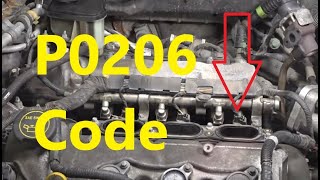
- Replacing spark plugs or ignition coils. While a misfire can be caused by ignition components, the P0206 code specifically points to an electrical fault in the fuel injector circuit, not the ignition system. This code is often accompanied by P0306 (Cylinder 6 Misfire), but P0206 is the cause, and P0306 is the effect. 🎬 See a breakdown of common causes and fixes for P0206.
Most Likely Causes
- Failed Cylinder 6 Fuel Injector 🔴 High Probability → Shop Fuel Injector Injectors are wear-and-tear items. The internal electronic coil can fail over time, creating an open or short circuit. This is the most frequent cause for a P0206 code when wiring damage is not apparent.
How to confirm: Test the injector's resistance with a multimeter. Disconnect the injector and measure across its two pins. A reading outside the manufacturer's spec (typically 10.8-13.2 ohms for this engine) or an 'open' (infinite resistance) reading confirms failure. An alternative is to swap the cylinder 6 injector with an adjacent one (e.g., cylinder 4). Clear the codes and run the engine. If the code changes to P0204, the injector is confirmed bad. A user on Reddit with a 2000 Jeep Grand Cherokee 4.7L fixed a P0206 code temporarily just by unplugging and replugging the connector, indicating a connection issue, but still planned to replace the aging injectors.
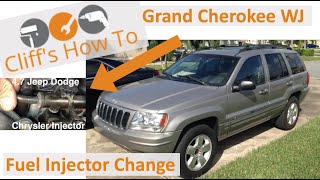
Typical fix: Replace the faulty fuel injector. It's often recommended to replace them as a set on high-mileage vehicles for balanced performance. Always lubricate the new injector's O-rings with clean motor oil before installation to prevent tearing and ensure a proper seal. 🎬 Watch this step-by-step walkthrough for replacing the 4.7L fuel injectors.
Est. part cost: $40 - $90 for a single aftermarket injector. - Damaged Wiring or Connector 🟡 Medium Probability Engine bay heat and vibrations can make wiring insulation brittle and cause connectors to become loose or corroded over time. The wiring harness can chafe against other engine components, leading to a short or open circuit. A manufacturer service bulletin, TSB Bulletin #9002688, specifically warns technicians to ensure that the wiring loom or the connector is not the root cause before replacing injectors for codes P0201 through P0206.
How to confirm: Visually inspect the wiring harness and connector for cylinder 6. Look for any signs of melting, chafing, corrosion, or broken wires. Use a 'noid light' plugged into the injector connector; if it flashes rhythmically while cranking the engine, the wiring and PCM are likely good. If the noid light is dim, steady on, or does not light up, there is a wiring or PCM issue. Perform a 'wiggle test' on the harness with the engine running to see if it induces a stumble, indicating an intermittent connection.
Typical fix: Repair the damaged section of wire or replace the injector pigtail connector.
Est. part cost: $10 - $25 for a new connector pigtail.
Rare But Worth Checking
- Faulty Powertrain Control Module (PCM): → Shop Engine Control Module (ECM) This is the least likely cause. The internal driver circuit for the #6 injector can fail. This should only be considered after the injector and wiring have been thoroughly tested and proven to be good. A technician can verify this by checking for the pulsed ground signal directly at the PCM connector pin for the cylinder 6 injector. Some forum users have reported that a faulty PCM was the ultimate cause after replacing injectors and wiring.
Diagnosis Steps
- Retrieve the trouble code with an OBD-II scanner to confirm P0206 is present. Note any other codes like P0306.
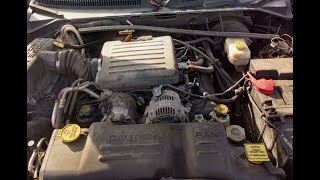
- Locate cylinder #6 on the 4.7L V8 engine. It is the third cylinder back on the passenger side (Bank 2). The passenger side bank contains cylinders 2, 4, 6, and 8, from front to rear. 🎬 Watch this video to visualize the 4.7L cylinder and bank locations.
- Visually inspect the wiring harness and electrical connector for the cylinder 6 fuel injector. Look for any obvious signs of damage, corrosion, or loose connections. Check for chafing against the fuel rail or other components.
- Perform a 'noid light' test. Disconnect the injector and plug a noid light into the harness connector. Crank the engine. A rhythmic flashing light indicates the PCM and wiring are sending the signal correctly, pointing to a bad injector. No light or a steady light points to a wiring or PCM problem.
- Test the injector resistance. Disconnect the injector and use a multimeter set to Ohms to measure the resistance between the two terminals on the injector itself. Compare the reading to the manufacturer's specification (10.8-13.2 ohms). An out-of-spec reading (like 0 ohms or infinite 'OL' ohms) means the injector is faulty.
- If the injector tests good but the noid light test failed, check for power and ground at the injector connector. One wire should have constant battery voltage with the key on, and the other is pulsed ground by the PCM.
- As a final confirmation, you can swap the cylinder 6 injector with another cylinder's injector (e.g., cylinder 4). Clear the codes and run the engine. If the code returns as P0204, the injector is definitively bad. If P0206 returns, the problem is in the wiring or PCM.
- If all wiring and the injector test good, the fault may be in the PCM. This requires advanced diagnosis, often by a professional, to confirm the PCM driver for that circuit has failed. Some specialists can repair the PCM, which can be more cost-effective than replacement.
Parts You'll Likely Need
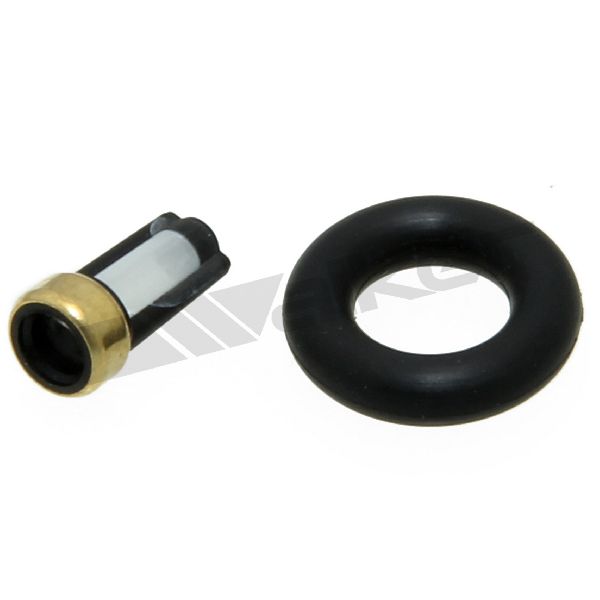
- Fuel Injector
(OEM #53032145AA)— This is the most common failure point for a P0206 code. The internal coil windings fail, causing an open or short in the circuit. This part number fits 2001-2003 Durango and Dakota models with the 4.7L V8.
Trusted brands: Mopar, Bosch, Standard Motor Products (SMP)
OEM price range: $100-$150
Aftermarket price range: $40-$90 - Fuel Injector Connector Pigtail — If the wiring inspection reveals a broken or corroded connector, replacing the pigtail is the standard repair. Heat and age make the plastic locking tab brittle and prone to breaking during removal.
Trusted brands: Dorman, Standard Motor Products (SMP)
OEM price range: $20-$35
Aftermarket price range: $10-$25
Related Codes That Often Appear With This One
- P0306 — P0306 means 'Cylinder 6 Misfire Detected'. Since the P0206 code indicates a fault in the injector circuit for cylinder 6, that cylinder is not receiving the correct amount of fuel, which directly causes a misfire.
- P0300 — P0300 means 'Random/Multiple Cylinder Misfire Detected'. While P0206 points to a specific cylinder, a severe misfire on one cylinder can sometimes affect engine timing and crankshaft speed enough for the PCM to occasionally flag a random misfire code as well.
Technical Service Bulletins (TSBs) & Recalls
- While no TSB is specific to P0206 on the Durango 4.7L, TSB Bulletin #9002688 was issued for other Dodge trucks (including Rams with the 4.7L) for injector circuit codes (P0201-P0206). It warns against immediately replacing the injector and instead advises a thorough inspection of the wiring harness, as shorts and opens in the loom are common. While the Durango harness routing is different, the principle of 'check wiring first' is still highly relevant.
Mechanic-Grade Diagnostic Values
- Fuel Injector Resistance — expected: 10.8 - 13.2 Ohms at 68°F (20°C). Failure: A reading of infinity (OL) indicates an open coil; a reading near zero ohms indicates a shorted coil.
- Injector Power Wire Voltage (Key On, Engine Off) — expected: 12V (Battery Voltage). Failure: No voltage or low voltage suggests a problem with the ASD (Auto Shutdown) relay, its fuse, or the power feed wire.
- Injector Control Circuit Continuity (PCM to Injector) — expected: Less than 5.0 Ohms, ideally less than 1.0 Ohm.. Failure: Resistance higher than 5.0 Ohms indicates excessive resistance or an open in the wiring harness.
- Injector Inductive Kick (Lab Scope) — expected: A sharp voltage spike to over 60V when the PCM de-energizes the injector.. Failure: A missing or weak inductive kick confirms a circuit or injector coil problem, which is what the PCM is looking for when it sets this code.
Scan Tool Commands That Help
- DRB-III or equivalent (e.g., DRB-III Simulator Software): Injector Kill / Cylinder Misfire Test — This bidirectional command allows a technician to manually disable one injector at a time while the engine is running. When the #6 injector is disabled via the scan tool, if there is no change in engine RPM or smoothness, it confirms that cylinder was not contributing in the first place, pointing directly to a failure in that circuit. If disabling it *does* cause the engine to run worse, the injector was working and the problem may be intermittent.
Wiring & Ground Locations
- Cylinder 6 Injector Connector — On the fuel rail, third cylinder from the front on the passenger side of the engine.. This is the primary connection point. The wires at the back of the connector can become brittle and break internally, even if they look fine. The locking tab is also prone to breaking.
- G101 / G102 — Left front of the engine compartment, near the battery. G101 is on the engine block, G102 is on the chassis frame rail.. These are the main engine and chassis grounds. A loose or corroded connection at these points can cause floating voltages and erratic behavior for all engine electronics, including the PCM's injector drivers. While not a specific cause for only P0206, they should be checked for any electrical fault diagnosis.
- PCM Connector C1 — On the passenger side firewall. The PCM on JTEC models (2000-2002) has three large connectors.. The control wire (pulsed ground) for the #6 injector originates here. A continuity test from the specific pin for the cylinder 6 injector at this connector to the injector harness connector is the definitive way to test the wiring harness integrity.
Real Owner Repair Stories
- DodgeForum.com user 'bradford88' (2003 Dodge Durango SLT 4.7L 4x4) — Rough idle, lurching at higher speeds, check engine light with P0203 (same fault, different cylinder).
❌ Tried (didn't work) Replacing the TPS temporarily fixed the issue, but it returned after a month and a half.
✅ What actually fixed it The problem returned immediately and severely after a car wash. The user found water had gotten under the hood and onto the fuse box, wiring, and PCM area, causing a short in the injector circuit. The ultimate fix was drying out and repairing the water-damaged wiring/connections. - DodgeForum.com user discussion (2001 Dodge Durango 4.7L) — Intermittent rough running, codes P0201 and P0205 (same fault, different cylinders).
❌ Tried (didn't work) Replacing the indicated fuel injectors.
✅ What actually fixed it Another user in the thread reported having similar multi-injector circuit codes that were ultimately caused by a faulty PCM. After replacing injectors and checking wiring, replacing the PCM was the final solution. The user recommended an eBay service that remanufactures the original PCM for around $150-200.
OEM Part Supersession History
RL032145AA→53032145AA— This is a standard part number update from a remanufactured (RL) prefix to a new part prefix.
Heads up: These part numbers are interchangeable for the 2001-2003 4.7L V8.
Model Year Variations Within This Range
- 2000-2002 vs 2003: Around the 2003 model year, Dodge began phasing in the Next Generation Controller (NGC) PCM, which has four main electrical connectors, replacing the earlier JTEC (Jeep/Truck Engine Controller) which has three. The NGC PCM integrates the transmission controller. This change also corresponded with a different crankshaft tone ring (16-tooth for JTEC, 32-tooth for NGC). While this doesn't directly change the P0206 diagnosis, it's critical to ensure any replacement PCM is the correct type for the vehicle's year.
Diagnostic Flowchart
Other Known Issues on This Vehicle
Issues unrelated to this code that are worth knowing about as an owner of this generation:
- Engine Oil Sludge Buildup 🔴 High — Common on engines with neglected oil changes or frequent short trips. Can lead to blocked oil passages and catastrophic engine failure. (Ref: A TSB was issued to address condensation ('yellow sludge') under the oil cap in cold weather by providing an insulated oil filler tube and a revised cap.)
- Dropped Valve Seats 🔴 High — A well-documented, catastrophic failure. Overheating greatly increases the risk, but it can happen even on well-maintained engines. The valve seat can fall into the cylinder, destroying the piston and cylinder head.
- Cracked Cylinder Heads / Blown Head Gaskets 🔴 High → Shop Engine Cylinder Head — The 4.7L engine is sensitive to overheating. A single overheating event can lead to warped or cracked cylinder heads and blown head gaskets.
- HVAC Blend Door Failure 🟠 Medium — Very common across this generation of Durango and Dakota. The plastic actuators or the doors themselves break, resulting in an inability to control air temperature or direction (e.g., stuck on heat, no defrost).
- Timing Chain System Wear 🟠 Medium — The timing chain tensioners and guides can wear out, typically after 100,000 miles, leading to chain rattle or, in worst cases, timing jump and engine damage.
Used vs. New Parts: Buying Guide for This Vehicle
When a used part is the smart pick: A used fuel injector from a reputable auto recycler can be a cost-effective option, especially if you can pull it yourself and inspect the donor vehicle. Given the simplicity of the part, failure is usually a clear open/short circuit, which can be tested on the spot with a multimeter.
Donor-vehicle mileage cap: roughly under 120000 miles for the part to have meaningful remaining life.
What to inspect on the donor part:
- Check the resistance of the used injector with a multimeter before purchase; it should be within 10.8-13.2 ohms.
- Inspect the plastic connector housing for cracks or a broken locking tab.
- Look for rust or corrosion on the injector body and electrical pins.
- Ask for the mileage of the donor vehicle if possible; lower is always better.
OEM-only on this vehicle (don't cheap out):
- Powertrain Control Module (PCM) - While used PCMs are available, they often have Vehicle Identification Number (VIN) and SKIM (Sentry Key Immobilizer Module) security mismatches that will prevent the vehicle from starting. It is highly recommended to use a service that provides a remanufactured, VIN-programmed PCM specific to your vehicle.
Aftermarket brands forum-validated for this vehicle:
- Bosch
- Standard Motor Products (SMP)
- Mopar (OEM)
Brands owners have reported issues with on this vehicle:
- Unnamed, no-brand injector sets sold on marketplaces like eBay or Amazon are a gamble. While some may work, forum discussions often contain stories of premature failure, poor spray patterns, or incorrect flow rates causing performance issues.
Real Owner Stories
Aggregated from forums and TSBs cited above. Mileages and costs reflect what owners reported in those sources.
2000 Jeep Grand Cherokee 4.7L
Symptoms: The P0206 code appeared after the vehicle had been sitting for years.
What fixed it: The owner was able to temporarily resolve the code just by unplugging and replugging the injector connector, indicating a poor connection. They still planned to replace the aging injectors.
Source hint: Reddit r/cars
Jeep Grand Cherokee 4.7L — 153000 miles
Symptoms: Sudden catastrophic engine failure with no prior overheating.
What fixed it: The cause was a dropped valve seat which destroyed the piston and cylinder head, illustrating a known weakness of the 4.7L engine family. This was not related to a P0206 code.
Source hint: BobIsTheOilGuy.com
Related OBD-II Codes
Frequently Asked Questions
Where is cylinder #6 on my 1998-2003 Durango's 4.7L V8 engine?
What is the correct resistance for a fuel injector on the 4.7L V8?
Is there a Technical Service Bulletin (TSB) for the P0206 code on my Durango?
How can I test the fuel injector without a multimeter?
Should I replace just the one bad injector or all eight of them?
Besides this injector issue, what other major problems are common on the 4.7L Durango engine?
Helpful Videos
We Have This Part in Stock


The information in this article is provided for general reference and educational purposes only. Vehicle specifications, procedures, and part compatibility can vary by production date, trim level, and region. Always consult your vehicle's factory service manual and verify part numbers before purchasing or performing repairs. Safety-critical components such as airbags, seat belts, and braking systems should be installed by a qualified professional.
- Dodge Durango:
- 🧭 Diagnostic Flowchart
- 🎬 Helpful Videos
- 🛍️ Shop This Part
- What's Unique About the 1998-2003 Dodge Durango
- Symptoms You May Notice
- Most Likely Causes
- Rare But Worth Checking
- Diagnosis Steps
- Parts You'll Likely Need
- Related Codes That Often Appear With This One
- Technical Service Bulletins (TSBs) & Recalls
- Mechanic-Grade Diagnostic Values
- Scan Tool Commands That Help
- Wiring & Ground Locations
- Real Owner Repair Stories
- OEM Part Supersession History
- Model Year Variations Within This Range
- Other Known Issues on This Vehicle
- Used vs. New Parts: Buying Guide for This Vehicle
- Real Owner Stories
- 2000 Jeep Grand Cherokee 4.7L
- Jeep Grand Cherokee 4.7L — 153000 miles
- Related OBD-II Codes
- Frequently Asked Questions
- 🎟️ Get 5% Off